
TL;DR

Get cleaning gear delivered free — and shop member deals
- Fast, free delivery on millions of items
- Access to Prime Big Deal Days deals on October 6–7
- Prime Video, Amazon Music and more included
Ideal Home reports that pest-control experts recommend spraying diluted eucalyptus oil near likely spider entry points as a low-cost autumn deterrent. The advice is based on expert comments, not evidence in the source that the spray reliably keeps spiders out; it should be treated as one measure alongside sealing gaps and routine cleaning.
Ideal Home has reported that pest-control experts recommend diluted eucalyptus oil as one possible way to discourage spiders from settling around homes during the UK autumn season. The suggested spray is a household measure, not a guaranteed fix: the experts quoted say it works best alongside steps such as sealing gaps and clearing webs.
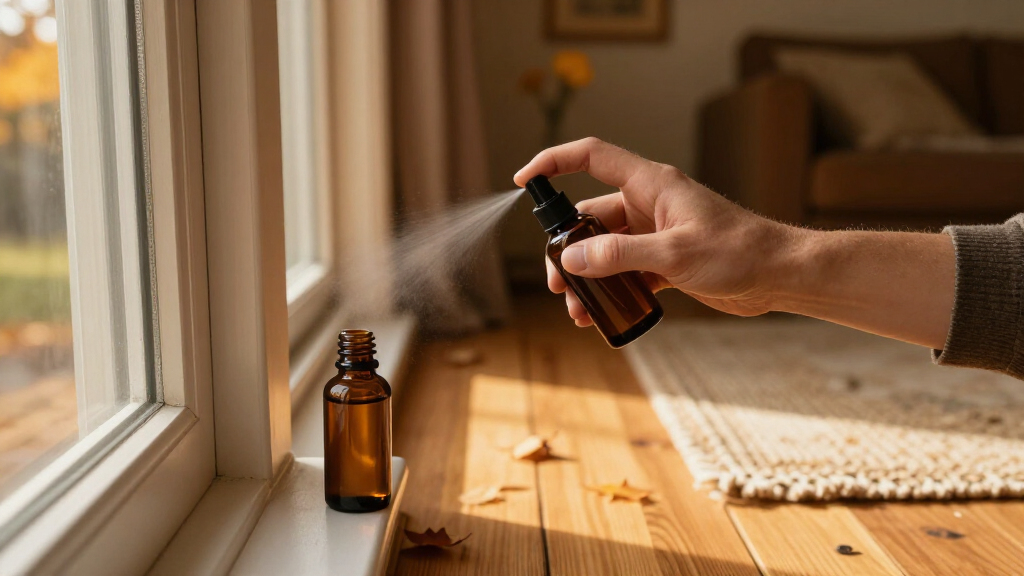
The article’s recipe is to mix 15 to 20 drops of eucalyptus essential oil into a spray bottle of water. Mosh Latifi, co-owner of EcoCare Pest Management, advises applying it around skirting boards, window frames, door frames and corners where spiders are often seen, then refreshing the spray every week or two as its scent fades.
Latifi also suggests placing fresh eucalyptus branches near entry points or diffusing the oil in rooms where spiders are active. The source does not provide test results comparing these approaches or specify how much water to use, so the recipe is practical advice attributed to the pest-control professional rather than a measured, independently verified treatment standard.
Dan Steward, managing director of Shield Pest Control, says eucalyptus’s strong scent may interfere with spiders’ use of chemical cues as they move through their surroundings. Both experts frame it as a preventive deterrent, not a way to eliminate spiders already in a home or stop them entering through open routes.
A Scent Is Not a Barrier
For people looking for a low-cost alternative to conventional pest products, the recommendation offers a simple household option that also has a fresh, spa-like scent, according to the source. But readers should distinguish the appealing scent and expert rationale from proof of effectiveness: Ideal Home’s report provides professional advice, not controlled evidence that eucalyptus spray prevents spider entry.
The distinction matters because a scent cannot close the cracks or openings spiders may use to get indoors. The experts therefore recommend combining any scent-based approach with practical home maintenance, including checking doors and windows for gaps, reducing clutter and damp, and removing webs and egg sacs. Those steps address access and places spiders may settle rather than relying on scent alone.
eucalyptus essential oil spray for spiders
As an affiliate, we earn on qualifying purchases.
As an affiliate, we earn on qualifying purchases.
Autumn Advice for UK Homes
The report frames the recommendation around the UK’s autumn spider season, when householders may notice more spiders indoors. It also notes that UK-native spiders are not generally considered dangerous, while recognising that some people prefer not to have them in their homes. Its focus is humane prevention rather than extermination.
Eucalyptus is not the only approach mentioned. The article suggests shutting windows and doors after 7 p.m. to reduce possible entry, while acknowledging that its central recommendation is a scent-based measure. It contrasts eucalyptus’s fresh aroma with vinegar’s pungent smell, but does not establish that either scent is more effective through comparative testing.
How Well the Spray Works
The report does not cite trials, measurements or a success rate for eucalyptus spray, and it gives no comparison with untreated homes or other deterrents. How much protection a particular household might get is therefore not established by the source. The professionals’ comments explain why they consider eucalyptus worth trying, but do not confirm that it will keep spiders out.
It is also unclear how long the scent remains effective in different rooms or conditions, and the article does not specify the volume of water for the suggested 15-to-20-drop mixture. Readers should not interpret “chemical-free” as meaning risk-free: the source does not discuss precautions for using essential oils around children, pets or sensitive surfaces. Its advice is to use the spray as one measure, not as a proven or complete solution.
Combine Prevention Measures
The next steps suggested in the report are routine prevention: apply the diluted spray where spiders are regularly seen and refresh it every week or two if using it, while checking windows and doors for openings. Householders can also reduce clutter and damp and remove webs and egg sacs, as Steward recommends. Closing windows and doors after 7 p.m. is another measure proposed by the article.
Ideal Home’s report does not announce a study, official guidance change or follow-up test. The effectiveness of eucalyptus remains uncertain based on the material provided; readers seeking a more definitive assessment would need evidence beyond the expert recommendations cited in the article.
Key Questions
How do you make the eucalyptus spray described in the report?
Ideal Home quotes pest-control professional Mosh Latifi recommending 15 to 20 drops of eucalyptus essential oil in a spray bottle of water. The article does not state the volume of water, so it does not provide a fully specified concentration.
Where should the spray be applied?
Latifi recommends areas where spiders are regularly seen, including skirting boards, window frames, door frames and corners. He says to refresh the spray every week or two as the scent fades.
Does eucalyptus spray guarantee that spiders will stay out?
No guarantee is reported. The experts describe eucalyptus as a possible deterrent and advise combining it with steps such as sealing gaps and reducing clutter. The source gives no test results or measured success rate.
What other steps does the article recommend?
The report advises checking and sealing small gaps around windows and doors, reducing clutter and damp, and regularly removing webs and egg sacs. It also suggests closing windows and doors after 7 p.m. to reduce possible entry.
Source: rss
Fall Picks
fall essentials
As an affiliate, we earn on qualifying purchases.