TL;DR

Get cleaning gear delivered free — and shop member deals
- Fast, free delivery on millions of items
- Access to Prime Big Deal Days deals on October 6–7
- Prime Video, Amazon Music and more included
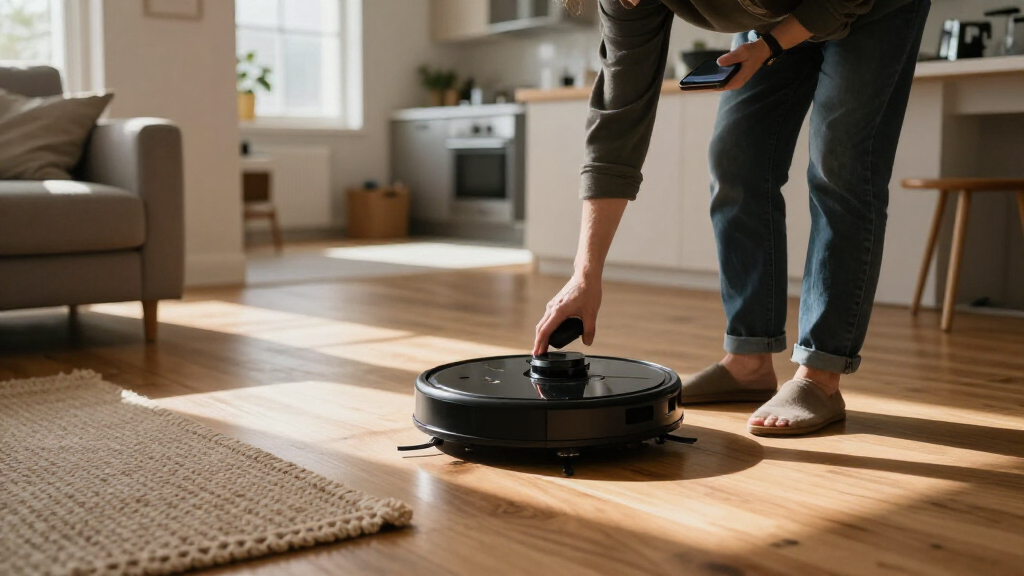
The FCC added Matic’s robot vacuum, model 4MA0001, and charging dock, model 4DK0008, to a waiver list on October 2. The Verge reports the waiver is not needed for those products’ previously approved radios, and Matic assembles its robots in California. The decision’s practical effect is unclear as the FCC reviews its restrictions and Matic works to source more components in the United States.
The Federal Communications Commission added Matic’s robot vacuum and charging dock to a waiver list on October 2, but the decision does not appear to be necessary for the products currently being sold: their radio components had already received FCC approval. The waiver names the Matic 4MA0001 and dock model 4DK0008, rather than approving Matic products as a whole.
The Verge reported that the FCC waiver permits the named radio products to be imported, marketed and sold in the United States. But the outlet said the two models’ radios were approved years earlier, before the commission’s restrictions on certain foreign-made drones, robots and routers. Those restrictions, according to the report, apply to future products and do not bar existing products whose radios have already been approved.
The approval structure also matters: Matic’s robots use an Intel AX210 Wi-Fi and Bluetooth chip, an off-the-shelf component that has its own FCC approval. The Verge reported that Matic assembles its robots in Mountain View, California, so the company does not need to import the robots themselves. The waiver is specific to the named models, not a general authorization covering future Matic devices.
Matic co-founder and CEO Mehul Nariyawala told The Verge that the company’s core compute platform comes from Nvidia and that it sources other critical components from U.S. companies when possible. He said the company has expanded its production operation in Mountain View and moved its offices to Menlo Park. Nariyawala also told the outlet that annual shipments had grown from 1,500 robots a year earlier to 17,000.
A Narrow Waiver Amid FCC Scrutiny
The waiver’s immediate value for customers and retailers is uncertain because the named products already had approved radios. Its significance may lie more in the regulatory uncertainty facing connected devices: the FCC is reviewing how its restrictions apply and, as The Verge reported, considering steps that could close existing gaps in the rules.
For manufacturers, the distinction between a product’s radio component and the finished device can shape whether a model can be sold or imported. A waiver covering two specific models does not necessarily protect later products, even if they use similar technology. The FCC’s approach could affect companies planning new devices, particularly those relying on overseas manufacturing or components.
Matic’s U.S. assembly may reduce one potential exposure, but the company has acknowledged it does not yet source 65 percent of its components from U.S. suppliers, the threshold cited in the report for qualifying as Made in the US. The waiver could prove useful if foreign-sourced parts become relevant under changing rules, though the FCC has not granted the company blanket approval for future robots.
As an affiliate, we earn on qualifying purchases.
How Matic Fits the FCC Rules
The FCC restrictions described in The Verge report concern certain foreign-made drones, robots and routers. They do not automatically remove every existing device from the U.S. market: the report says products with previously approved radio equipment are treated differently from future products seeking approval.
The FCC has issued broader waivers in some cases, including for Asus and Netgear routers, according to The Verge. Matic’s waiver is narrower: it names one robot model and one charging dock. The article also reported that the commission is weighing whether manufacturers should disclose all components in their devices and has taken retroactive action against some companies it believes are evading the rules.
Matic says it is increasing domestic production and looking for more U.S. suppliers. Nariyawala told The Verge that the company converted a roughly 24,000-square-foot Mountain View facility from a combined research and production space into a production facility, while relocating its office to Menlo Park. Those steps are relevant to the waiver debate, but they do not change the approval’s model-specific scope.
What the Waiver Covers Next
The available reporting does not explain why the FCC added these already-approved models to the waiver list, or whether the action changes their current import, marketing or sales status in practice. It is also unclear whether the waiver would protect Matic if future rules affect components beyond radio approvals or apply to domestically assembled products using foreign parts.
The FCC’s review could alter how manufacturers are treated, but no final policy changes are specified in the source report. Matic has not received a blanket waiver for future models, and the report does not identify a timeline for additional FCC decisions. The company’s claims about shipment growth and its position among U.S.-built floor-cleaning robots are attributed to its CEO.
Matic’s Sourcing and FCC Review
Matic says it is seeking additional U.S. suppliers and intends to rely less on foreign components as production grows. Whether those efforts change the company’s exposure to FCC restrictions will depend on the rules the commission adopts and on which components those rules cover.
The FCC is still considering how to address potential gaps in its restrictions, including possible component-disclosure requirements, according to The Verge. No timetable or final decision is provided in the report. For now, the waiver applies to the 4MA0001 robot and 4DK0008 dock; the status of future Matic models remains a separate question.
Key Questions
Which Matic products received the FCC waiver?
The waiver names the Matic 4MA0001 robot and its 4DK0008 charging dock, according to The Verge.
Did the waiver newly approve the Matic robot’s radios?
No, according to The Verge. The report says the radios in the two named products had already received FCC approval years earlier. The robot uses an Intel AX210 Wi-Fi and Bluetooth chip with its own approval.
Does the waiver cover future Matic robots?
The reported waiver is specific to two model numbers. It is not a blanket approval for all Matic products or future models.
Why could the waiver matter if the robots are made in California?
Matic assembles its robots in California, but it also uses components sourced outside the United States. The waiver’s practical effect is unclear, though it could become relevant if FCC rules change how those components are treated.
What happens next with the FCC restrictions?
The FCC is reviewing its restrictions and considering possible changes, including component-disclosure requirements, according to The Verge. The report gives no timetable for a final decision.
Source: rss
Fall Picks
fall essentials
As an affiliate, we earn on qualifying purchases.