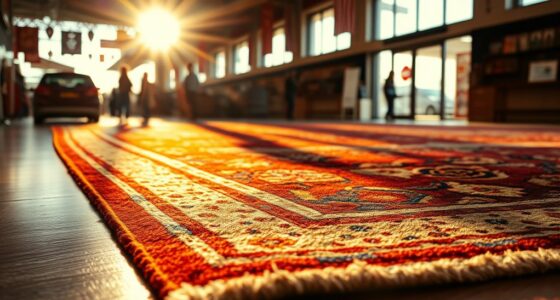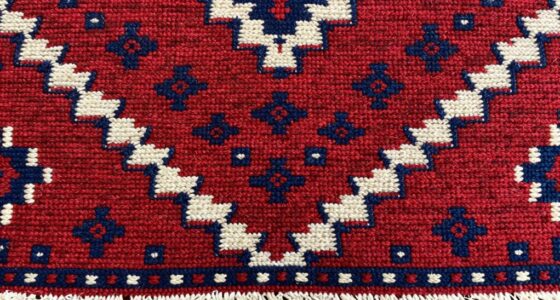
To photograph rugs for online resale, use a good camera or smartphone with a macro or zoom lens, and keep it steady on a tripod. Make certain the rug is clean, flat, and well-lit with natural or diffused lighting, avoiding harsh shadows. Capture multiple angles, including close-ups of patterns and textures, and include objects for scale. Adjust settings to highlight details and true colors. For more tips on making your rugs look irresistible online, keep exploring this guide.

Get cleaning gear delivered free — and shop member deals
- Fast, free delivery on millions of items
- Access to Prime Big Deal Days deals on October 6–7
- Prime Video, Amazon Music and more included
Key Takeaways
- Use a high-quality camera with macro or zoom lenses and a tripod for sharp, detailed images.
- Capture the rug from multiple angles, including top-down and close-ups of textures and patterns.
- Ensure even, diffused lighting using natural light or reflectors to highlight colors and details.
- Display the rug in a well-styled space with scale references like furniture or hands.
- Edit images to enhance sharpness, correct colors, and crop out distractions for a professional presentation.
As an affiliate, we earn on qualifying purchases.
Choosing the Right Equipment for Rug Photography
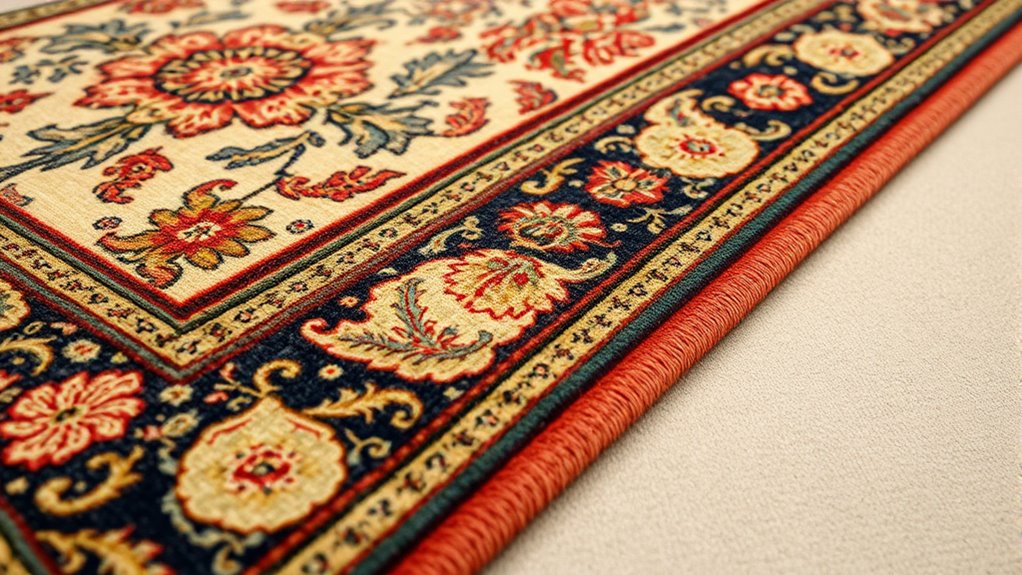
To capture the true beauty of rugs for resale, choosing the right equipment is essential. You’ll need a good digital camera with a macro or zoom lens to guarantee sharp, detailed images. A DSLR or mirrorless camera offers better control over focus and lighting, but a high-quality smartphone can work if it has a strong camera. Use a tripod to keep your shots steady and prevent blurriness. Natural light is ideal, so shoot near windows or outdoors, but if indoors, invest in soft, diffused lighting to avoid harsh shadows. A remote shutter release or timer helps reduce camera shake. Ultimately, consider a color calibration tool to ensure your images reflect the true colors of the rug, making your photos more appealing to buyers. Additionally, understanding emerging machine learning tools can help optimize image processing workflows for more consistent and vibrant photos.
Preparing Your Rug for the Perfect Shot

Before you start capturing your rug’s details, it’s important to prepare it properly. First, lay it flat on a clean, smooth surface to eliminate wrinkles and creases. Use a gentle vacuum or a soft brush to remove dust, dirt, and loose fibers that could distract from the rug’s features. If there are any stains or spots, address them with appropriate cleaning methods, ensuring the rug looks pristine. Adjust the rug’s position so its pattern and texture are fully visible and evenly displayed. Check for any damage or irregularities and fix or note them for transparency. Finally, remove any nearby objects or clutter that might interfere with the shot. Proper preparation guarantees your rug looks its best, making the photographs more appealing to potential buyers. Additionally, ensuring the rug is free of clutter buildup can help showcase its true colors and design.
Mastering Lighting Techniques to Highlight Details
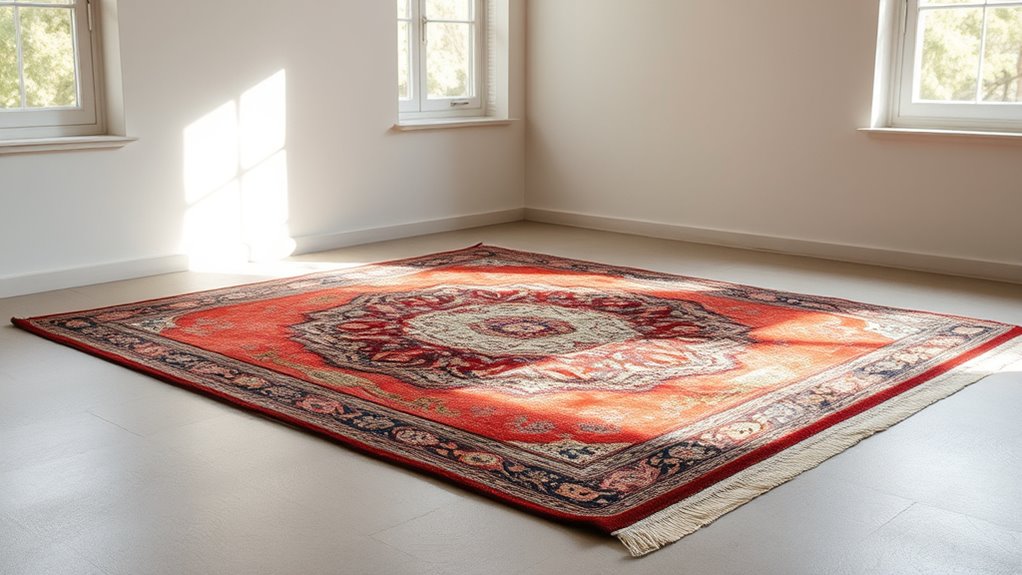
Using natural light sources can make your rug’s details pop, so try positioning it near windows during the day. Be careful to avoid overexposure, which washes out colors and textures, by adjusting your camera settings or changing angles. Reflective surfaces like white boards or foam boards can help bounce light evenly, highlighting intricate patterns without harsh shadows. Incorporating best lighting techniques can further enhance the clarity and vibrancy of your rug photographs.
Use Natural Light Sources
Natural light is one of the best tools for capturing the true colors and intricate details of rugs. To make the most of it, shoot near large windows or outdoors during the day when sunlight is soft and diffuse. Avoid harsh midday sun, which can cause unwanted shadows and overexposure. Instead, opt for overcast days or position your rug so that indirect sunlight evenly illuminates it. Use curtains or sheer fabrics to diffuse direct light if needed. By leveraging natural light, you’ll reveal the richness of the rug’s hues and highlight the craftsmanship’s fine details. Keep your camera steady and experiment with angles to find the best lighting effect. This approach ensures your photos accurately showcase your rug’s beauty for potential buyers. Additionally, understanding contrast ratio can help you adjust your camera settings to better capture the depth and richness of the colors under natural lighting conditions.
Avoid Overexposure Risks
To effectively highlight the intricate details of your rug, it’s essential to prevent overexposure, which can wash out colors and obscure fine craftsmanship. Overexposure occurs when too much light hits your camera sensor, resulting in bright spots and loss of detail. To avoid this, start by adjusting your camera’s exposure settings, lowering the exposure compensation if necessary. Use diffused natural light or soft artificial lighting to create even illumination without harsh highlights. Keep an eye on your camera’s histogram; if it leans heavily toward the right, reduce the exposure. Take test shots and review them carefully, ensuring that shadows reveal texture without losing vibrancy. Properly managing exposure ensures your rug’s colors stay true and its details remain crisp and visible. Additionally, being mindful of cybersecurity vulnerabilities during online listings can help protect your images from unauthorized use or tampering.
Employ Reflective Surfaces
Employing reflective surfaces can markedly enhance your rug photography by adding controlled highlights that emphasize texture and intricate patterns. You can use materials like white foam boards, aluminum foil, or even a reflective reflector to bounce light onto the rug. Position these surfaces strategically to fill in shadows and create a balanced, well-lit appearance. This technique helps bring out the depth and detail of the rug’s fibers and motifs without overexposing the image. Be mindful of the angle and distance; too much reflection can cause glare or hotspots. Experiment with different reflective surfaces and positions to find the perfect balance that enhances your rug’s characteristics. Mastering this technique will ensure your online listings showcase the rug’s true beauty, attracting more buyers.
Finding the Best Angles and Composition

To make your rug stand out, focus on capturing the key details that showcase its unique qualities. Use natural lighting to avoid harsh shadows and bring out the true colors and textures. Choosing the right angles and composition guarantees your photos attract potential buyers and accurately represent the piece.
Highlight Key Details
Capturing the rug’s true beauty depends on finding the right angles and composition. Focus on highlighting the key details that make the rug unique, like intricate patterns, textures, or borders. Experiment with different perspectives—shoot from directly above to showcase the full design, or at a slight angle to add depth. Use a wide shot to present the entire rug, but also include close-ups of standout features such as detailed motifs or fibers. Keep the composition balanced, ensuring the rug’s most attractive elements are clearly visible and centered. Avoid clutter in the background, and ensure the rug is the focal point. Well-placed angles and thoughtful framing help potential buyers appreciate the craftsmanship and quality, increasing your chances of a successful sale. Additionally, paying attention to lighting conditions can significantly enhance the rug’s appearance and reveal its true colors and textures.
Use Natural Lighting
Natural lighting can dramatically enhance your rug photos by revealing true colors and textures. To find the best angles, shoot near large windows or outdoors during the day when sunlight is soft and diffused. Avoid harsh midday sun, which can create strong shadows and wash out colors. Instead, opt for morning or late afternoon light for a warm, even glow. Position your rug so the light hits it at an angle, highlighting its texture and details. Move around to discover the most flattering perspective, ensuring the entire rug is evenly lit. Use reflectors or white surfaces to bounce light into shadowed areas if needed. Good natural lighting makes your rug appear more appealing and true to life, helping buyers get an accurate sense of its quality. Additionally, understanding digital literacy can help you utilize photo editing apps to enhance your images further.
Editing Your Photos for Clarity and Color Accuracy

When editing your photos for clarity and color accuracy, focus on enhancing sharpness and reducing any blurriness that might obscure rug details. Correct the sharpness carefully to bring out intricate patterns without introducing noise. Correct color balance to ensure the hues are true to the actual rug, helping buyers see its real beauty. Use cropping tools to eliminate distractions and center the rug properly. Consider brightness and contrast tweaks to make the image pop, but avoid overdoing it. Additionally, understanding the importance of optimal angles can help you choose the best perspective to showcase the rug’s features effectively.
Key points to remember:
- Sharpen images to highlight details
- Adjust color balance for true-to-life hues
- Crop to remove distractions and focus on the rug
These steps will give your photos a professional look, helping buyers make confident decisions.
Tips for Showcasing Texture and Size Effectively

To showcase a rug’s texture and size effectively, focus on creating images that convey depth and scale clearly. Use side lighting or raking light at a low angle to highlight the pile’s texture, casting shadows that reveal its thickness and pattern. Incorporate objects like furniture or a person’s hand to give viewers a sense of scale, helping them visualize the rug’s size in a real space. Take close-up shots of detailed areas to emphasize texture, but also include wider shots that show the overall dimensions. Keep the camera steady and use a tripod if needed to avoid blurriness. By balancing detailed close-ups with contextual shots, you ensure potential buyers understand the rug’s tactile qualities and true size. Additionally, framing the rug within a well-decorated bedroom environment can help buyers envision how it will look in their own space.
Frequently Asked Questions
How Can I Photograph Rugs in Low-Light Environments Effectively?
In low-light environments, you can still take clear, attractive rug photos by maximizing available light. Use a tripod to stabilize your camera or phone to prevent blur. Open your aperture wide to let in more light, and increase the ISO settings carefully to avoid noise. If possible, add extra light sources like lamps or softboxes. Shooting during the day near windows also helps make sure your images are bright and detailed.
What Camera Settings Are Best for Capturing True Color Accuracy?
You might worry about color accuracy, but don’t let that prevent you. Use a camera with manual settings or a good smartphone camera. Set the white balance to daylight or auto, and shoot in RAW if possible. Keep ISO low to avoid grain, and use a small aperture for sharp details. Adjust exposure carefully to prevent colors from looking washed out or overly dark—this ensures your rug’s true colors shine through.
How Do I Prevent Reflections and Glare on Shiny Rug Surfaces?
To prevent reflections and glare on shiny rug surfaces, you should control your lighting setup. Use diffused light sources, like softboxes or umbrellas, to soften harsh reflections. Position your lights at angles that avoid direct reflection into your camera lens. Additionally, shoot with a polarizing filter to reduce glare and reflections. Adjust your camera’s angle slightly if needed to minimize shiny spots, ensuring the rug’s true color and texture are captured clearly.
What Background Options Work Best to Showcase Different Rug Styles?
Ever wonder what background makes your rug stand out? You should try neutral tones like white, beige, or soft gray—they highlight colors without distraction. For bold or patterned rugs, a simple solid background keeps focus on the design. Experiment with textures like matte paper or fabric to add depth. Avoid busy or reflective surfaces that steal attention or cause glare. The right background frames your rug beautifully and appeals to potential buyers.
How Can I Photograph Large Rugs That Don’T Fit in a Standard Frame?
When photographing large rugs that don’t fit in a standard frame, you should use a wide-angle lens or stitch multiple photos together to create a full image. Position your camera on a tripod for stability and shoot from a higher vantage point to capture the entire rug. Guarantee proper lighting to avoid shadows and reflections. Editing software can also help straighten and enhance your photos for a professional look.
Conclusion
With these tips, you’ll turn your rug photos into compelling stories that draw buyers in, much like a skilled painter bringing a canvas to life. Focus on lighting, angles, and clarity to showcase every intricate detail, making your online display as inviting as a cozy, well-worn treasure. Remember, your images are the window through which buyers glimpse the soul of your rug—craft them carefully, and watch your sales weave their magic.
Fall Picks
fall essentials
As an affiliate, we earn on qualifying purchases.