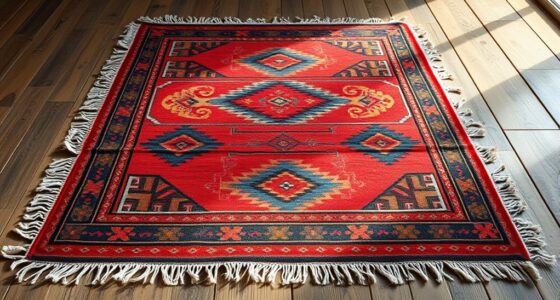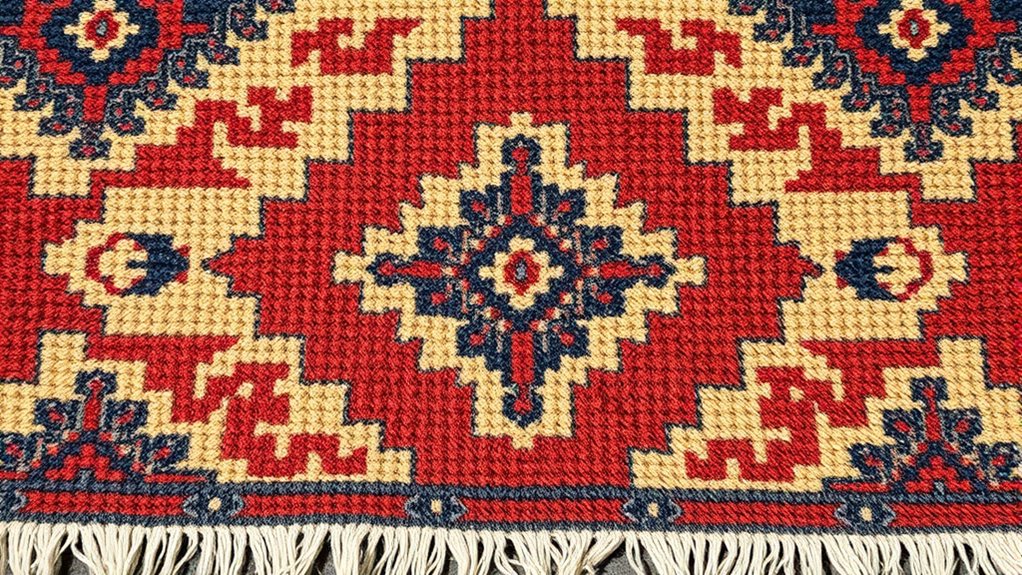

Antique Caucasian rugs are rich in symbols and stories that reflect their tribal origins and cultural beliefs. You’ll find patterns that tell stories of legends, social status, and spiritual protection, often created with natural dyes in meaningful colors like red and indigo. These intricate designs, passed down through generations, showcase regional craftsmanship and serve as visual narratives of history and identity. Continuing your exploration reveals even deeper meanings woven into these timeless textiles.
Key Takeaways
- Symbols in Caucasian rugs encode tribal stories, social hierarchies, and spiritual beliefs through geometric motifs and motifs.
- Knotting techniques and patterns reflect cultural identity, community values, and protective symbolism passed down across generations.
- Natural dyes like red and indigo symbolize vitality, protection, and spirituality, conveying deeper cultural messages.
- Rug designs depict legends, myths, and daily life, serving as visual storytelling and preserving cultural narratives.
- Proper preservation of antique Caucasian rugs maintains their intricate symbols and stories for future cultural appreciation.

Rug & Kilim Caucasian Tribal Rug in Red with Camel Pictorials
- Design Inspiration: Inspired by tribal and Caucasian rugs
- Size: 2×3 feet
- Material: Hand knotted wool
As an affiliate, we earn on qualifying purchases.
As an affiliate, we earn on qualifying purchases.
The Cultural Significance Behind Traditional Patterns

Traditional patterns on Caucasian rugs are more than just decorative elements; they serve as visual storytelling that reflects the weavers’ cultural identity and beliefs. Knotting techniques play a crucial role, with specific methods like symmetrical or asymmetrical knots creating unique textures and patterns that carry meaning. These techniques influence how the designs appear and their overall symbolism. Dye symbolism is equally important; natural dyes are chosen carefully, with colors representing concepts like protection, fertility, or spirituality. For example, red often signifies happiness and vitality, while indigo can symbolize power or protection. Each pattern and color choice is deliberate, often passed down through generations, allowing the weavers to embed their cultural stories and values into every rug.
Symbols Representing Tribal Identity and Beliefs
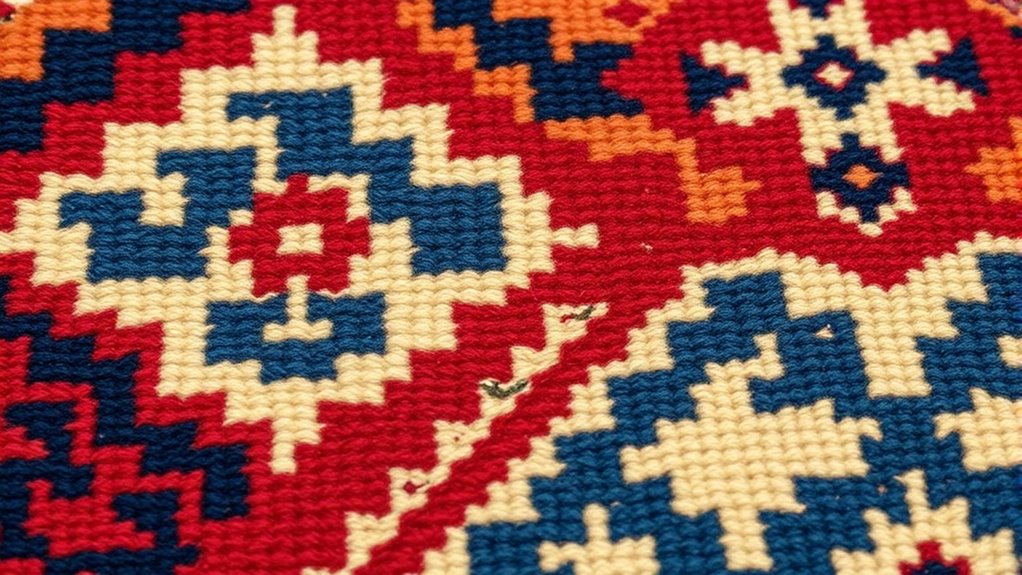
Symbols woven into Caucasian rugs serve as powerful markers of tribal identity and spiritual beliefs. Knot symbolism often reflects community values or spiritual protection, with specific knot types signifying different meanings. For example, certain knots represent unity or strength, serving as talismans against evil. Additionally, cultural symbols embedded in the knot patterns can encode stories and social hierarchies unique to each tribe. Dye symbolism also plays an essential role; natural dyes are chosen deliberately to convey messages. Red dyes might symbolize vitality or protection, while indigo can represent spirituality or wisdom. These color choices and knot patterns aren’t random—they encode tribal stories, beliefs, and social status. In addition, the use of traditional color symbolism and knot patterns enhances the cultural significance of each rug. By examining these symbols, you gain insight into the tribe’s worldview and cultural values. Understanding knot and dye symbolism helps you appreciate the deeper significance behind each rug, beyond its aesthetic appeal. Recognizing symbolic meanings associated with specific motifs deepens your appreciation of the craftsmanship and cultural context. Moreover, the techniques used in creating these intricate patterns reveal much about the artisans’ skills and cultural heritage. Furthermore, symbolic motifs often serve as protective charms, believed to safeguard the household or individual from harm.
The Stories Woven Into Rug Designs
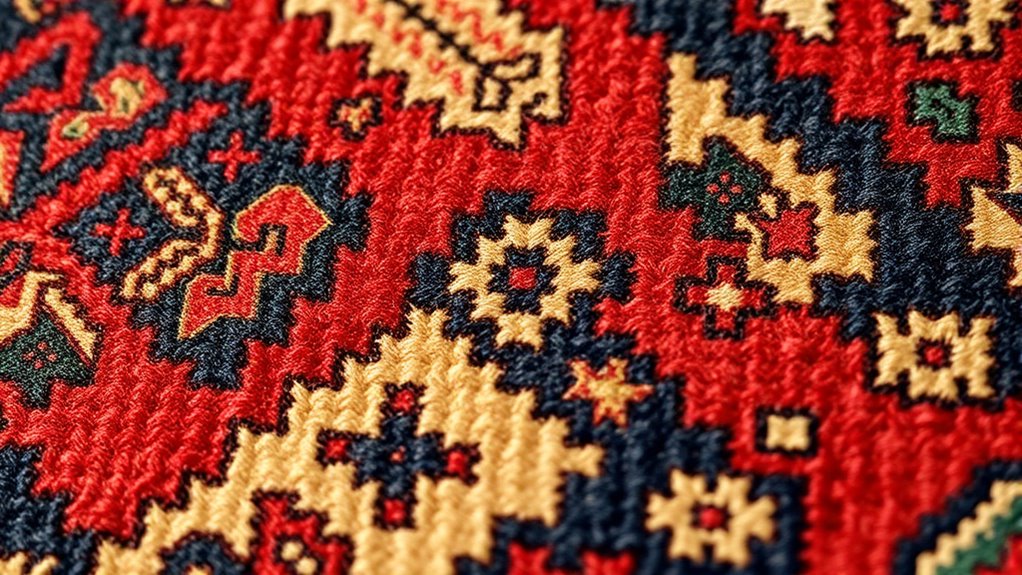
Each Caucasian rug tells a story, woven into its intricate patterns and motifs that reflect the history, myths, and daily life of the tribe. The weaving techniques used create textured layers, while dyeing methods add vivid symbolism—each color representing emotions, nature, or spiritual beliefs. You can feel the narrative in the geometric shapes and symbols, which often depict legendary tales or ancestral memories. The careful craftsmanship makes these stories timeless, passed through generations. Recognizing color symbolism in the patterns can reveal hidden messages or spiritual insights embedded within the designs. Additionally, understanding the weaving techniques offers deeper insight into the cultural significance and skill involved in crafting these textiles. Embracing mindful decluttering can also help in preserving and appreciating these cultural artifacts by creating space to honor and display them thoughtfully. Appreciating the cultural significance behind each motif enhances the connection to the stories they embody.
Materials and Techniques as Cultural Narratives
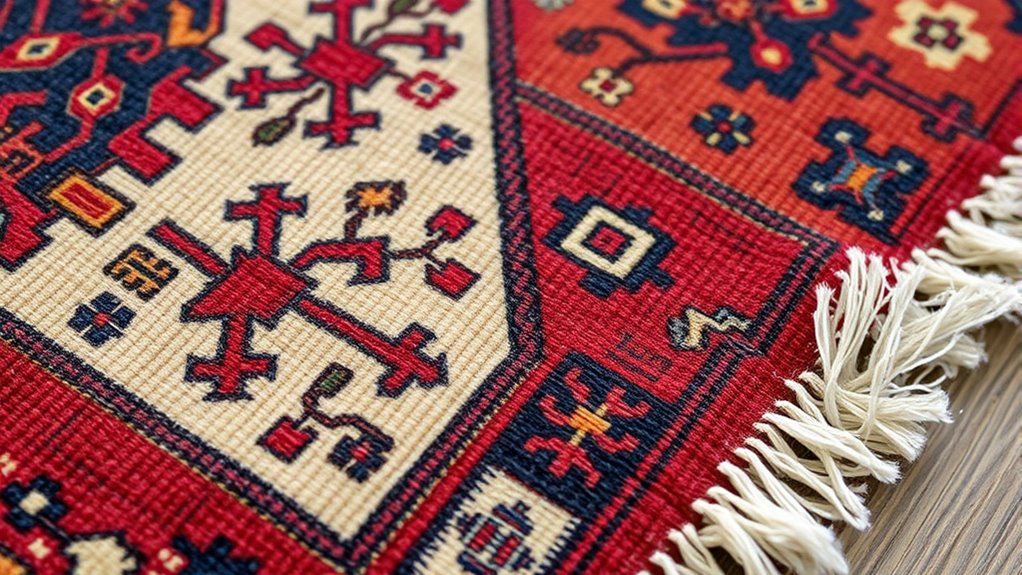
Materials and weaving techniques in Caucasian rugs serve as powerful cultural narratives, revealing much about the tribes’ values, environment, and social structures. The weaving patterns often reflect symbolic meanings, with geometric designs representing protection, fertility, or spiritual beliefs. You’ll notice the variety in dyeing techniques, where natural dyes derived from plants, insects, and minerals create rich, vibrant colors that hold cultural significance. The choice of materials—such as wool, cotton, or silk—also indicates regional resources and social status. Techniques like knotting styles and weaving methods are passed down through generations, embodying tribal identity and craftsmanship. These methods are more than functional; they are visual stories woven into each rug, preserving cultural memory and communal identity. Additionally, the traditional weaving methods are integral to maintaining cultural continuity and expressing regional identities, with many of these techniques preserved through cultural heritage practices.
Preserving Heritage Through Antique Caucasian Rugs
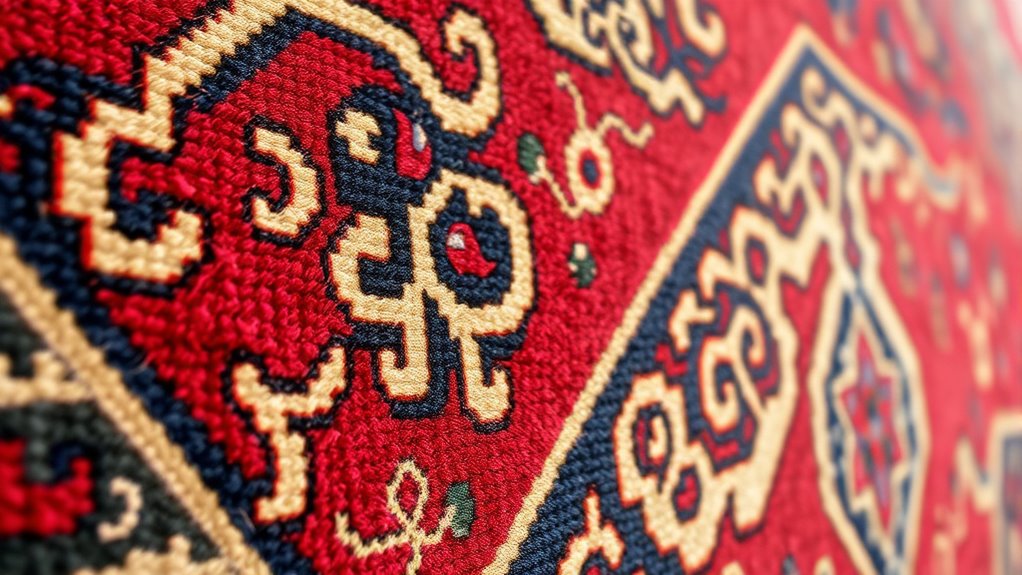
How do antique Caucasian rugs serve as essential links to cultural heritage? They preserve stories, symbols, and craftsmanship passed down through generations. In modern interior design, these rugs add authenticity and depth, connecting contemporary spaces to history. To protect this heritage, proper rug cleaning techniques are crucial; gentle cleaning preserves delicate fibers and vibrant dyes. Regular maintenance keeps the rugs intact, ensuring their stories endure for future appreciation. By choosing specialized cleaning methods, you prevent damage from dirt, moisture, and wear. Displaying and caring for antique Caucasian rugs isn’t just about aesthetics—it’s about honoring a rich cultural legacy. Glycolic acid treatments and proper maintenance are vital for preserving the vibrant colors and intricate details of these historical textiles. Your efforts in preservation help keep these beautiful symbols alive, allowing future generations to learn from and admire their intricate histories. Additionally, understanding the significance of symbolism and storytelling in these rugs enriches the preservation process, emphasizing their importance beyond mere decoration. Recognizing the artistic techniques used in weaving these textiles also enhances appreciation and helps guide appropriate preservation methods. Exploring the cultural context behind these designs deepens the connection and respect for their origins. Incorporating restoration methods based on traditional techniques can further ensure that these treasured items are maintained authentically.
Frequently Asked Questions
How Do Antique Caucasian Rugs Influence Modern Interior Design?
You can enhance your modern interior design by incorporating antique Caucasian rugs, which bring rich cultural symbolism and unique patterns. These rugs add warmth and character, creating a striking contrast with sleek, contemporary furniture. Their intricate designs and storytelling qualities elevate your interior aesthetics, making spaces feel more authentic and inviting. Embracing these rugs allows you to blend tradition with modernity, giving your home a distinctive and meaningful touch.
What Are the Most Rare and Valuable Caucasian Rug Motifs?
You’re in for a treasure hunt! The rarest Caucasian rug motifs are truly mesmerizing, featuring invaluable symbols like the ram’s horn, dragon, or intricate tribal patterns. These rare motifs hold deep cultural meanings and are incredibly sought after, making them extraordinarily valuable. Recognizing these symbols not only adds beauty but also connects you to centuries of tradition. Their rarity makes them the crown jewels of any collection, truly a collector’s dream.
How Can I Verify the Authenticity of an Antique Caucasian Rug?
You can verify an antique Caucasian rug’s authenticity by getting a professional rug appraisal, which assesses its age, origin, and condition. Look for authenticity markers like unique weaving techniques, natural dyes, and aged wear patterns. Research the rug’s provenance and compare it with reputable sources. These steps help guarantee you’re investing in a genuine piece, giving you confidence in its value and history.
What Is the Average Age and Historical Period of These Rugs?
Imagine time as a thread woven into each rug. The average age of Caucasian rugs spans from the late 19th to early 20th century, reflecting their historical period. You’ll see these through weaving techniques passed down generations and vibrant dye sources like natural indigo and madder. These elements tell stories of craftsmanship and culture, helping you trace a rug’s story and appreciate its age and origins.
Are There Specific Care Tips for Preserving Antique Caucasian Rugs?
To preserve your antique Caucasian rugs, you should follow proper cleaning techniques and storage methods. Regularly vacuum gently to remove dust without damaging fibers, and avoid harsh chemicals. When storing, keep them in a cool, dry place away from direct sunlight, and roll them instead of folding to prevent creases. Using breathable covers helps protect against pests and moisture, ensuring your rug stays in great condition for years to come.
Conclusion
Think of each antique Caucasian rug as a living tapestry, a storybook spun from threads of history and tradition. As you admire its patterns and symbols, you’re tracing the heartbeat of a culture, feeling its whispers in every knot. These rugs are like timeless melodies, carrying voices from the past into your present. By preserving them, you keep the song alive, ensuring their stories continue to dance through generations.