To interpret rug cleaning codes on ISO tags, look at the symbols that indicate cleaning methods, drying instructions, and water or temperature limits. For example, icons with water or bubbles show cleaning types, while circles inside squares specify tumble drying options. Pay attention to symbols for delicate fabrics or specific handling needs. Accurate understanding helps prevent damage and preserve your rug’s quality. Keep exploring, and you’ll discover detailed tips to care for your rug properly.
Listen free for 30 days with Audible
Thousands of audiobooks and originals — cancel anytime.
As an affiliate, we earn on qualifying purchases.
Key Takeaways
- Recognize symbols such as buckets, triangles, circles, and squares to identify washing, bleaching, dry cleaning, and drying instructions.
- Pay attention to dots or lines within symbols to determine temperature, water level, or drying method specifics.
- Follow water usage indicators (small or large drops) to prevent fiber damage during cleaning.
- Observe drying symbols, including tumble dry or flat drying icons, to avoid shrinkage or warping.
- Always adhere to special handling symbols for delicate or fragile rugs to prevent tearing, color bleeding, or fiber deterioration.
As an affiliate, we earn on qualifying purchases.
Understanding the Purpose of ISO Rug Cleaning Labels
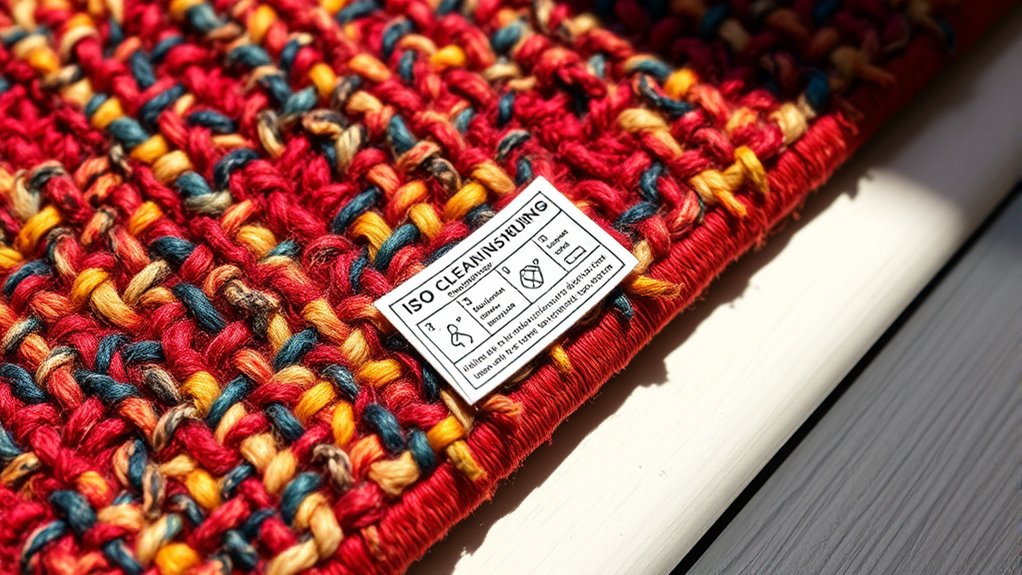
Understanding the purpose of ISO rug cleaning labels is essential because these labels provide clear instructions on how to care for your rug properly. They act as a quick reference to help you avoid damaging your rug during cleaning or maintenance. By following these labels, you ensure the longevity and appearance of your rug, saving you time and money. The labels are standardized, so they communicate essential information reliably across different rugs and manufacturers. This consistency helps you understand whether a rug can be machine washed, cleaned with certain chemicals, or requires professional care. Recognizing the purpose of these labels empowers you to make informed decisions, prevent mishandling, and extend your rug’s lifespan. Proper understanding is the first step towards effective and safe cleaning practices. Additionally, being aware of lifestyle considerations can help you maintain your rug in a way that supports your overall well-being and home environment.
Common Symbols and Their Meanings
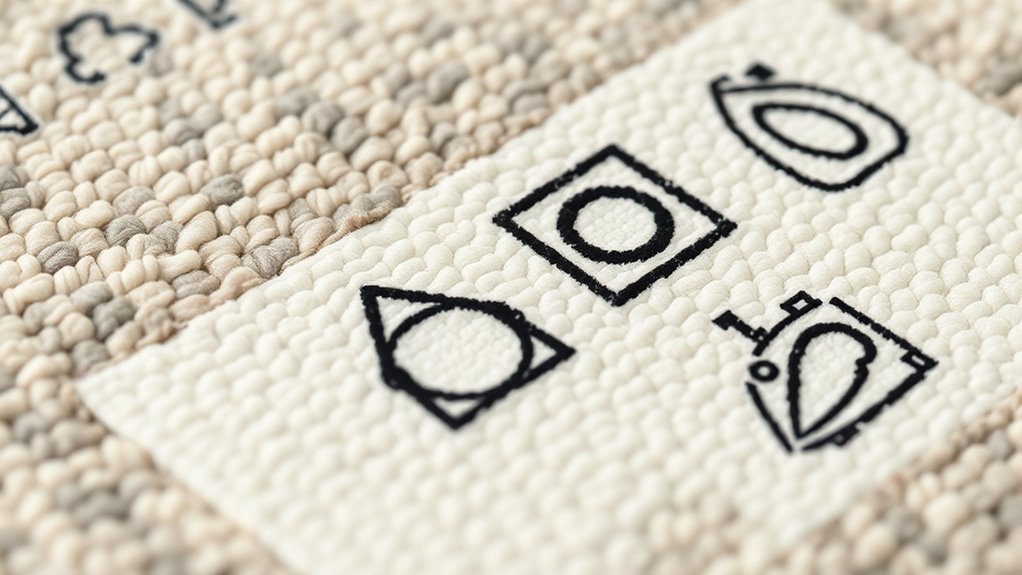
Understanding the symbols on your rug’s label helps you care for it properly. Recognizing these icons makes it easier to follow cleaning instructions accurately. Let’s explore how to interpret common symbols and what they mean for your rug’s maintenance.
Recognizing Cleaning Symbols
Have you ever looked at your rug’s cleaning code and felt unsure what the symbols mean? Recognizing cleaning symbols is essential for proper care. Common symbols include a bucket of water indicating washing, with variations like a line underneath to show gentle cleaning. A triangle signifies bleaching; a blank triangle means bleaching is safe, while a crossed-out triangle indicates no bleach. An iron symbol points to ironing instructions—dots show temperature levels. A circle represents dry cleaning; letters inside specify the solvent used. A square with a circle inside indicates tumble drying; dots again show heat settings. Learning these symbols helps you quickly identify what cleaning methods are safe, preventing damage and ensuring your rug stays in good condition. Understanding labeling standards can further improve your ability to interpret care instructions accurately.
Interpreting Care Instructions
Interpreting care instructions on your rug’s label is straightforward once you know what the symbols mean. Common symbols include a bucket with water, indicating washing instructions, and a hand or no hand, showing whether hand washing or machine washing is allowed. A triangle suggests bleaching, with a blank triangle meaning any bleach is okay, but a crossed-out triangle indicates no bleach. An iron symbol points to ironing guidelines, with dots showing temperature levels—one for low, two for medium, three for high. A circle signifies dry cleaning instructions, with letters indicating specific solvents. Pay attention to these symbols to prevent damage. Following these symbols ensures proper care, helping your rug stay vibrant and intact over time. Additionally, understanding proper cleaning methods can help extend the lifespan of your rug and maintain its appearance.
Deciphering Cleaning Method Icons
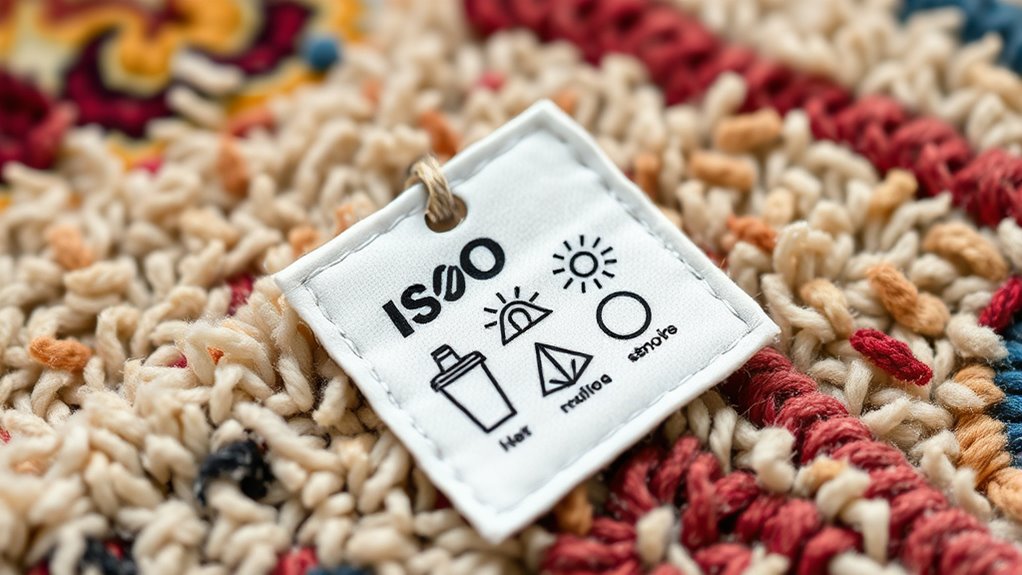
You’ll want to recognize the cleaning symbols on your rug to understand the proper care. Interpreting these icons correctly guarantees you choose safe and effective cleaning methods. Let’s explore how to identify and understand these icons for the best results. Being aware of automation in business can also inspire you to adopt the latest cleaning technologies for more efficient maintenance.
Recognizing Cleaning Symbols
Ever wonder what those symbols on your rug cleaning tags really mean? Recognizing cleaning symbols helps you choose the right cleaning method without guesswork. These icons are designed to be simple and universal, representing specific actions. For example, a spray symbol indicates dry cleaning, while a bucket with water shows wet cleaning. Pay attention to the shape and lines—sometimes, a crossed-out icon warns against certain methods. To clarify, here’s a quick guide:
| Symbol | Meaning |
|---|---|
| Spray | Dry cleaning |
| Bucket | Wet cleaning |
| Crossed-out | Do not clean this way |
Knowing these symbols guarantees you don’t damage your rug and maintain its appearance longer. Recognizing cleaning symbols is an essential step before choosing any cleaning process. Utilizing industry trends and understanding industry standards can further ensure proper care and maintenance of your rugs.
Interpreting Icon Meanings
Understanding cleaning method icons is essential for choosing the right approach for your rug. These icons visually represent specific cleaning techniques, helping you avoid damage. For example, a symbol with a water bucket indicates wet cleaning, while a crossed-out bucket means it’s not allowed. A brush icon suggests dry cleaning, and a circle with a letter specifies professional cleaning methods like steam or solvent cleaning. Pay attention to these symbols to ensure you select safe and effective cleaning methods. Misinterpreting icons can lead to discoloration, fiber damage, or shrinking. Always cross-reference the symbols with the accompanying legend or guide. Properly reading these icons can prevent costly mistakes and extend the life of your rug. By understanding these icons, you’ll confidently determine the appropriate cleaning process, preserving your rug’s appearance and longevity.
Recognizing Drying Instructions and Symbols
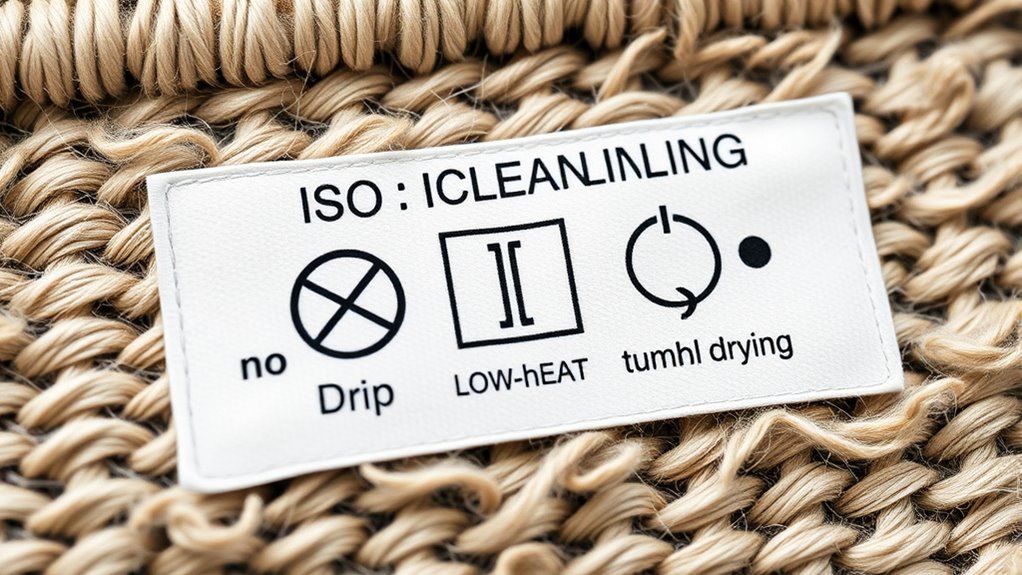
Recognizing drying instructions and symbols is essential for maintaining your rug’s quality and preventing damage. These symbols tell you the best way to dry your rug without causing shrinkage, warping, or color fading. Look for icons that depict air circulation, tumble drying, or flat drying. A circle inside a square usually indicates tumble drying, with dots signifying heat levels—one dot for low heat, two for medium, and three for high. A line beneath a symbol often means flat drying is recommended. If there’s a crossed-out symbol, avoid drying by that method. Understanding these symbols helps you choose the safest drying process, ensuring your rug stays vibrant and intact longer. Proper drying is a key step in preserving your rug’s appearance and durability. Additionally, knowing about home theatre projectors can help you set up an optimal viewing environment that complements your well-maintained space.
Identifying Specific Treatment Codes
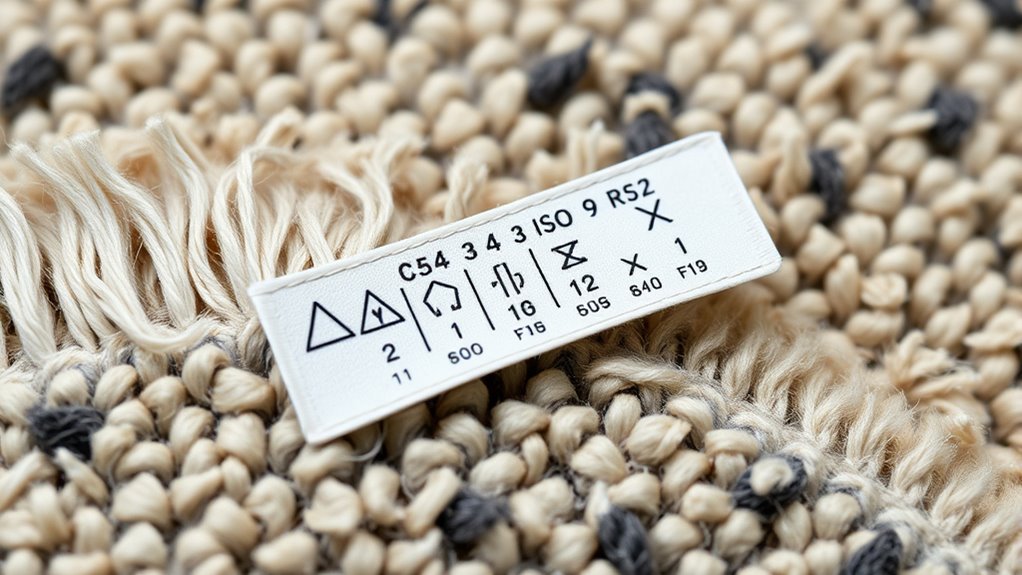
To properly care for your rug, you need to identify specific treatment codes on the label, which indicate recommended cleaning methods or special handling instructions. These codes help guarantee you don’t damage your rug during cleaning. Look for symbols or letters that specify treatments like stain removal, odor elimination, or delicate handling. Recognizing these codes prevents costly mistakes and prolongs your rug’s lifespan. Being aware of cleaning codes ensures you select appropriate methods tailored to your rug’s fiber type and construction.
Interpreting Temperature and Water Usage Indicators
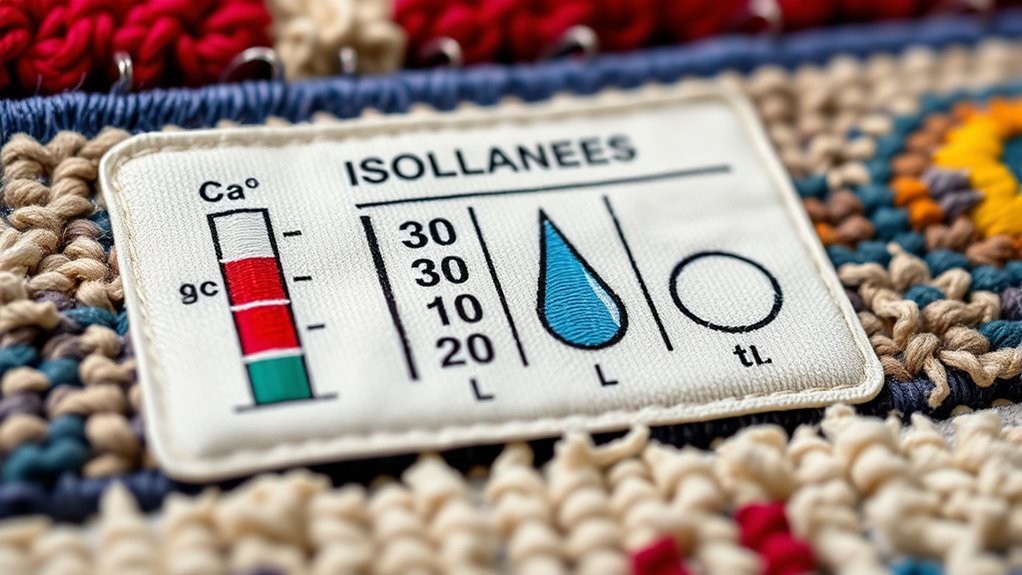
Interpreting temperature and water usage indicators on rug cleaning labels is essential for effective and safe maintenance. These symbols tell you the appropriate cleaning method, ensuring you don’t damage the rug. A temperature icon with a single dot indicates cold water cleaning, while two dots suggest warm water, and three dots mean hot water. Using the wrong temperature can cause shrinkage or color bleeding. Water usage symbols guide you on whether to use minimal, moderate, or maximum water. A small drop signifies light water use, suitable for delicate rugs, while larger drops indicate heavier water application. Following these indicators helps protect your rug’s fibers and colors, preventing damage during cleaning. Proper understanding of cleaning technologies can further enhance your care routine. Always match your cleaning process to these symbols for ideal results.
Handling Special Symbols for Delicate Rugs
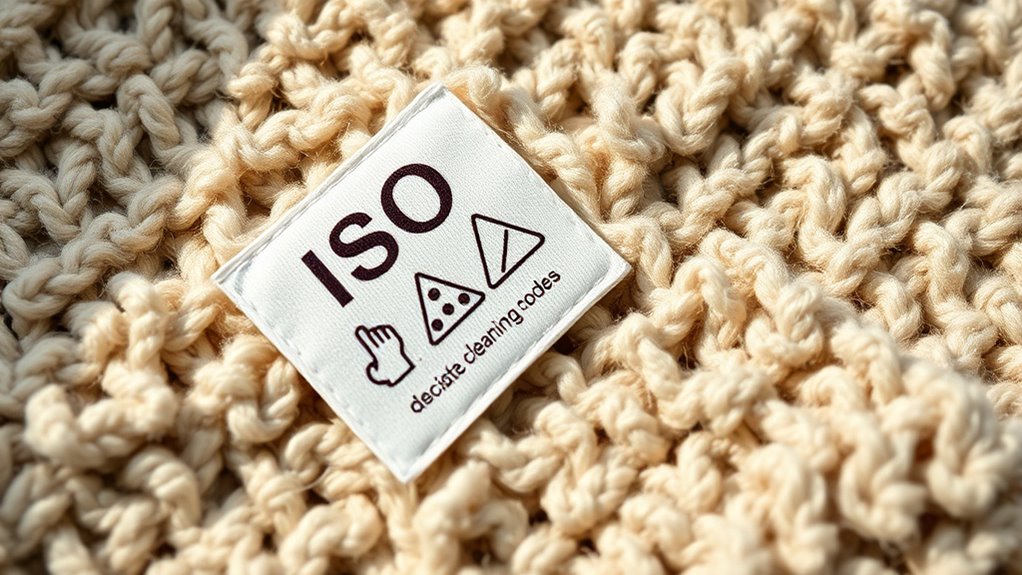
When you see symbols indicating special handling for delicate rugs, it’s important to follow them closely to prevent damage. These symbols guide you on how to treat fragile fabrics and intricate fibers properly. Ignoring them can lead to tears, color bleeding, or fiber deterioration. Using appropriate skincare routines like gentle cleaning methods, such as hand washing or low-pressure steam, can help maintain the rug’s integrity.
Follow rug symbols carefully to prevent tears, color bleeding, and fiber damage.
- Use gentle cleaning methods, like hand washing or low-pressure steam.
- Avoid harsh chemicals or bleach that could weaken delicate fibers.
- Limit exposure to excessive heat or direct sunlight.
- Opt for mild detergents specifically designed for delicate textiles.
- Handle the rug carefully, supporting it fully during cleaning to prevent stretching or tearing.
Tips for Properly Following Care Instructions

Care instructions are your guide to maintaining your rug’s beauty and longevity, so it’s essential to read and follow them carefully. Always start by checking the label for specific symbols and notes. If a cleaning method or temperature is recommended, adhere strictly to those instructions to avoid damage. Use gentle cleaning products if specified, and avoid harsh chemicals unless approved. When vacuuming, follow the suggested frequency and avoid aggressive agitation that could loosen fibers. If the label indicates a dry-clean-only rug, don’t attempt to wash it at home. Remember, paying close attention to care instructions helps preserve color, fiber integrity, and overall appearance. When in doubt, consult a professional before proceeding, but always respect what the tags recommend for the best results.
When to Seek Professional Rug Cleaning Assistance

Even with careful attention to care instructions, some stains or damage require professional expertise. You should consider professional rug cleaning if you notice persistent stains, strong odors, or color fading that DIY methods can’t resolve. Additionally, if your rug is antique, delicate, or valuable, entrusting it to experts guarantees proper handling and preservation. Damage from pet accidents, mold, or water leaks also warrants professional intervention to prevent further harm. Regular professional cleaning can extend your rug’s lifespan and maintain its appearance.
Some stains, odors, or damage should be handled by professionals to preserve your rug’s beauty and longevity.
- Stubborn stains that resist home cleaning
- Persistent or foul odors
- Significant color fading or dye bleeding
- Damage from mold, water, or pet accidents
- Rug’s valuable or antique status
Frequently Asked Questions
How Often Should I Check Rug Cleaning Labels for Updates?
You should check rug cleaning labels regularly, ideally every time before you clean your rug. Labels can be updated with new cleaning instructions or symbols, so staying current helps you avoid damage. Make it a habit to review the label each time you plan a cleaning session. This way, you guarantee you’re using the right methods and products, keeping your rug in good condition over time.
Are There Differences Between International Rug Cleaning Symbols?
Imagine you’re cleaning a Persian rug from Turkey and notice different symbols on the label. Yes, international rug cleaning symbols vary by region, reflecting local standards and practices. For example, European symbols might emphasize eco-friendly detergents, while Asian ones focus on gentle processes. These differences help you choose appropriate cleaning methods, ensuring your rug stays pristine. Always check the specific symbols to follow proper care instructions based on your rug’s origin.
Can Cleaning Codes Vary Between Rug Manufacturers?
Yes, cleaning codes can vary between rug manufacturers. You might notice different symbols or instructions even for similar rugs. Manufacturers often develop their own codes based on specific materials or care requirements. It’s essential that you thoroughly check each rug’s label or tags before cleaning. Doing so helps ensure you follow the correct procedures, preventing damage and keeping your rugs looking their best.
What Should I Do if Symbols Are Faded or Unclear?
Imagine trying to read a map with faded lines—it’s frustrating, right? If your rug’s symbols are unclear, don’t guess. Instead, contact the manufacturer or a professional cleaner for guidance. You could also check the rug’s tags or website for updated info. Clear symbols ensure you choose the right cleaning method, protecting your rug’s beauty and lifespan. When in doubt, expert advice is your best compass.
Are There Eco-Friendly Cleaning Options Indicated by Symbols?
You might notice some symbols indicating eco-friendly cleaning options on your rug’s ISO tag. Look for symbols like leaves, water droplets, or recycling icons, which often signify environmentally safe methods. These symbols guide you to choose cleaning products that are biodegradable, non-toxic, or water-efficient. If you’re unsure, check with your professional cleaner or manufacturer to confirm which symbols indicate eco-friendly practices, ensuring you make a sustainable choice.
Conclusion
Understanding ISO rug cleaning codes helps you care for your rug properly and extend its life. Did you know that properly maintained rugs can last up to 50% longer? By learning to read these labels, you’ll avoid damage and keep your rug looking its best. So next time you see those symbols, remember they’re your guide to safe and effective cleaning—making your home not just beautiful, but also well-cared for.
College move-in / dorm season Picks
dorm essentials
As an affiliate, we earn on qualifying purchases.