
The environmental history of dye plants used in rugs shows how ancient cultivation and trade shaped ecosystems and cultures. Artisans harvested plants responsibly, preventing depletion and maintaining ecological balance. Trade routes like the Silk Road spread dyeing techniques, introducing new plants and colors while fostering sustainable practices. These exchanges influenced local environments and enhanced textile durability. To discover more about this interconnected history and its ongoing impact, keep exploring this fascinating subject.
Key Takeaways
- Traditional rug dyes originate from sustainably harvested plants, maintaining ecological balance and supporting local ecosystems.
- Historic trade routes facilitated the exchange and cultivation of dye plants, influencing environmental and cultural landscapes.
- Responsible harvesting practices, such as selective collection, prevent overexploitation of dye plant populations.
- Cultivation and trade of dye plants impacted regional ecosystems and promoted environmental awareness among artisans.
- Technological and cultural exchanges along trade routes improved sustainable dyeing techniques and preserved ecological health.
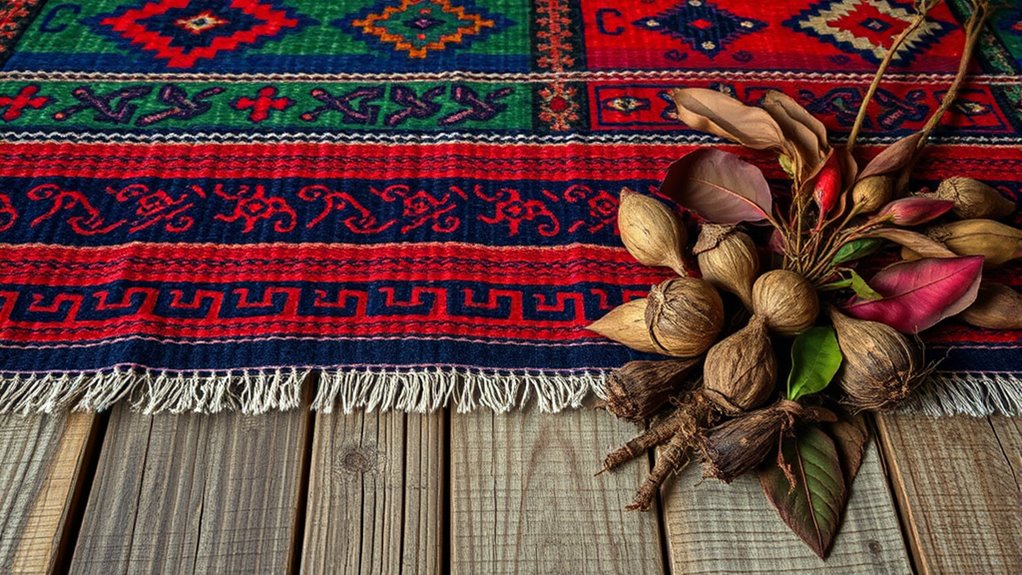
Throughout history, the vibrant colors seen in traditional rugs result from dye plants that’ve shaped both craftsmanship and ecosystems. These plants, carefully cultivated and harvested, have long been integral to the art of rug making, linking cultures through ancient trade routes and sustainable practices. When you explore the origins of these dyes, you’ll see how the methods of harvesting and trade influenced not just the aesthetics of textiles but also the health of local environments.
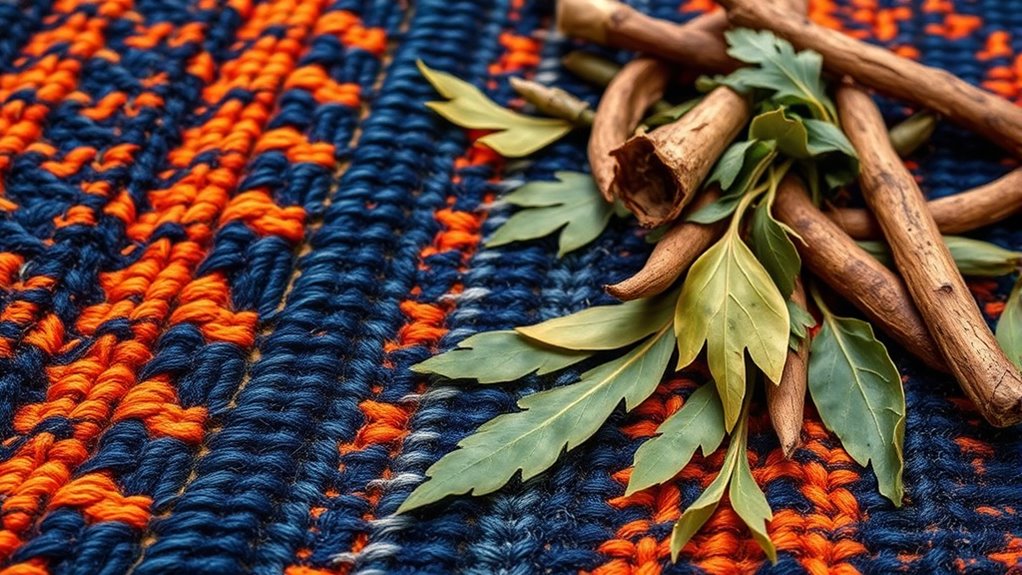
Sustainable harvesting has always been crucial to preserving the natural resources behind these dyes. In the past, artisans and traders understood the importance of collecting plant materials responsibly, ensuring that wild populations wouldn’t be depleted. Instead of overharvesting, they would often gather only what was necessary, allowing plants to regenerate naturally. This approach not only protected ecosystems but also maintained the quality of the dyes. For example, madder root, used for red hues, was typically harvested with care, with roots dug selectively to prevent damage to the plant’s habitat. Such practices ensured that communities could continue producing dyes for generations without exhausting their natural resources, reinforcing a cycle of sustainability woven into the cultural fabric.
The development of historical trade routes further shaped the availability and diversity of dye plants. As trade expanded along routes like the Silk Road, different cultures exchanged knowledge, plants, and techniques. You can imagine how traders carried not just goods but also seeds and cuttings, introducing new dye plants to different regions. This exchange enriched local dyeing traditions and allowed for a broader palette of colors. For instance, indigo, a deep blue dye, traveled from India and Persia to Europe via these routes, transforming textile arts across continents. These routes also fostered the exchange of sustainable harvesting techniques, encouraging communities to adopt practices that balanced economic needs with ecological preservation. Additionally, the understanding of colorfastness and proper harvesting methods contributed to the longevity and vibrant appearance of dyed textiles.

Honey Oak Natural Tie Dye Kit | 3 Color Extract Set – Olive Green, Sunflower Yellow, Turkey Red | Plant-Based Fabric Dyes for Shibori & DIY Fabric Art | Easy to Use Craft Kit
- Natural & Non-Toxic: Made from 100% natural, chemical-free sources
- Vibrant Long-Lasting Colors: Includes Olive Green, Sunflower Yellow, Turkey Red
- Complete DIY Kit: Includes dyes, apron, tablecloth, gloves, bands, instructions
As an affiliate, we earn on qualifying purchases.
As an affiliate, we earn on qualifying purchases.
Frequently Asked Questions
How Have Modern Synthetic Dyes Impacted Traditional Dye Plant Use?
You might notice that synthetic alternatives have largely replaced traditional dye plants, making dyeing faster and more affordable. However, this shift impacts cultural preservation, as artisans lose connection to age-old practices and knowledge. While synthetic dyes offer convenience, they often lack the depth and richness of natural colors. Balancing modern innovation with respect for traditional dye plant use can help preserve cultural heritage while embracing new technologies.
Are There Ongoing Conservation Efforts for Rare Dye Plant Species?
Think of dye plants as vibrant threads in a tapestry, and conservation efforts as the loom stitching them together. Yes, ongoing initiatives focus on dye plant preservation and habitat restoration. They protect rare species from extinction, restore native environments, and guarantee future generations can still access these natural dyes. By supporting these efforts, you help keep the colors of history alive and the ecosystems healthy.
What Are the Cultural Significance of Dye Plants in Different Rug-Making Regions?
You see that dye plants hold deep cultural symbolism and ritual use in many rug-making regions. They often represent spiritual beliefs, social status, or community identity. For example, certain colors derived from these plants are used in sacred ceremonies or to mark important life events. You can appreciate how these natural dyes connect people to their traditions, making each rug not just a craft but a meaningful cultural artifact.
How Does Climate Change Threaten Dye Plant Habitats Worldwide?
Climate change critically threatens dye plant habitats worldwide through climate impact and habitat loss. Rising temperatures, unpredictable weather, and shifting rainfall patterns disrupt ecosystems, making it harder for these plants to thrive. You might notice dye plants becoming scarce or disappearing altogether, which affects sustainable rug-making traditions. Protecting these habitats is essential to preserve cultural heritage and maintain biodiversity amid ongoing environmental challenges.
Can Dye Plants Be Sustainably Cultivated for Commercial Rug Production?
Yes, you can sustainably cultivate dye plants for commercial rug production by embracing organic farming practices that promote biodiversity conservation. By choosing eco-friendly methods, you help safeguard local ecosystems and ensure healthy plant growth. This approach minimizes environmental impact, supports diverse habitats, and secures a steady supply of vibrant dyes. Sustainable cultivation not only benefits the environment but also guarantees high-quality, eco-conscious rugs that appeal to environmentally aware consumers.
Conclusion
While some might argue that traditional dye plants are outdated in modern textile production, embracing their environmental history reveals sustainable practices rooted in nature. By understanding the ecological impact of these plants, you can appreciate how ancient methods align with eco-friendly values today. Incorporating this knowledge doesn’t mean abandoning innovation but rather enriching it with sustainable traditions that honor both cultural heritage and environmental health. In doing so, you support a more conscious and responsible approach to rug dyeing.