To properly dry a rug indoors, you need good airflow, moisture control, and patience. Start by removing excess water with blotting and vacuuming, then clear the space and elevate the rug to promote circulation underneath. Use fans and a dehumidifier to speed up the process while maintaining low humidity. Avoid blocking airflow or using harsh chemicals. Following these steps helps prevent mold and keeps your rug looking its best—more tips await to guarantee success.
Open a free Amazon Business account
Business pricing, bulk buying and tax-exempt orders.
As an affiliate, we earn on qualifying purchases.
Key Takeaways
- Ensure proper airflow using fans and open windows to promote even drying and prevent mold growth.
- Elevate the rug and clear furniture to improve air circulation underneath and around it.
- Gently blot excess moisture with towels and use a dehumidifier to control humidity levels.
- Avoid over-drying or blocking airflow, which can trap moisture and damage fibers.
- Regularly inspect the rug for dampness, and promptly address any signs of mold or mildew during drying.
As an affiliate, we earn on qualifying purchases.
Why Proper Indoor Rug Drying Is Essential for Your Rug’s Longevity
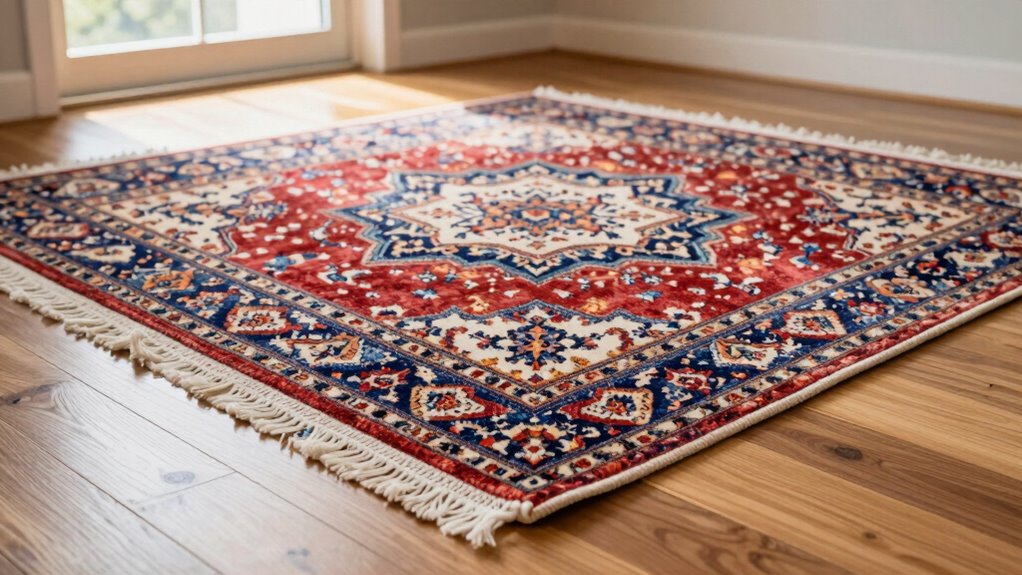
Properly drying your rug indoors is essential because it prevents mold, mildew, and unpleasant odors that can develop when moisture is trapped. Different rug materials, such as wool, cotton, or synthetic fibers, have specific drying needs. For instance, wool rugs require a gentle drying process, as they absorb moisture slowly, increasing the risk of damage if dried too quickly. Conversely, synthetic rugs tend to dry faster but still need careful handling to avoid warping or shrinking. The drying time directly impacts your rug’s longevity; rushing the process can cause fibers to weaken or develop mold spots. Taking the time to guarantee thorough, appropriate drying helps preserve your rug’s texture, color, and structure, extending its life and maintaining a fresh, clean appearance. Additionally, understanding the material composition of your rug can help tailor the drying method to ensure optimal results.
How to Dry Your Rug Indoors: A Step-by-Step Guide
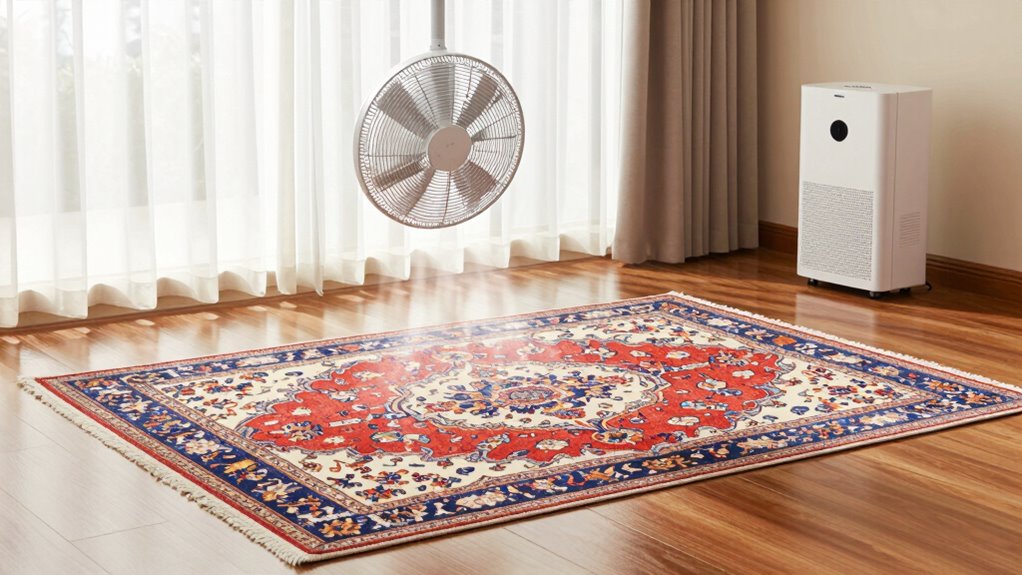
To dry your rug indoors effectively, start by preparing your space with adequate ventilation and a clean area. Next, remove excess moisture using towels or a wet/dry vacuum to speed up the drying process. It is also beneficial to explore different content formats that can help you monitor and optimize the drying process. Finally, make certain proper airflow by opening windows or using fans to help your rug dry evenly and thoroughly.
Prepare Your Space
Have you cleared enough space for your rug to dry thoroughly? Start by rearranging furniture to create a clear area, ensuring nothing obstructs airflow. This promotes proper air circulation, which is crucial for efficient drying. Protect your floors by placing towels, old blankets, or plastic sheeting underneath the rug. Floor protection guards against moisture seepage and helps keep your space clean. Make sure the area is well-ventilated, with open windows or fans running nearby to promote airflow. Keep pets and children away to avoid disturbance. Creating an organized, protected, and ventilated space is essential for efficient indoor drying. With the right setup, your rug will dry faster, preventing mold and lingering odors.
Remove Excess Moisture
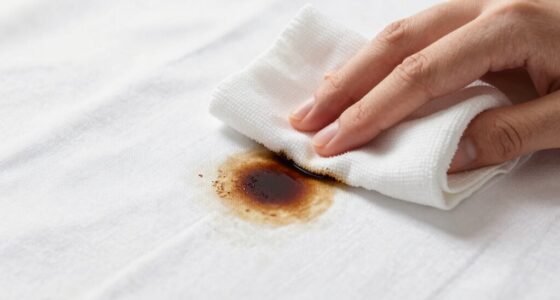
Before you start drying your rug completely, it’s important to remove as much excess moisture as possible. This step helps prevent mold and speeds up drying. First, gently blot the rug with clean towels to absorb surface water. Next, consider dust removal and stain treatment: vacuum thoroughly to pick up dust and dirt, and treat any stains with appropriate cleaning solutions before drying. Removing excess moisture reduces the risk of lingering odors and mildew. Additionally, using portable and efficient drying tools can help ensure your rug dries evenly and quickly, especially in indoor environments where airflow might be limited. Effective drying techniques are essential for maintaining a fresh and clean rug.
Ensure Proper Airflow
Ensuring proper airflow is essential for efficient drying and preventing mold growth. You should pay attention to airflow patterns around your rug, making sure air moves evenly across its surface. Proper ventilation techniques include opening windows and doors to create cross-ventilation, which accelerates moisture evaporation. Use fans to direct airflow over the rug, but avoid blowing directly onto it, as this can cause uneven drying. Keep the air circulating consistently to avoid stagnation that promotes mold. Adjust your ventilation setup based on humidity levels and room size. Air circulation is a critical factor in achieving thorough indoor drying and maintaining the rug’s quality. By maintaining steady airflow, you help moisture escape more quickly, reducing drying time and safeguarding your rug’s integrity. Effective airflow patterns are key to a safe, thorough indoor drying process.
How to Tell When Your Rug Is Fully Dry and Ready to Use
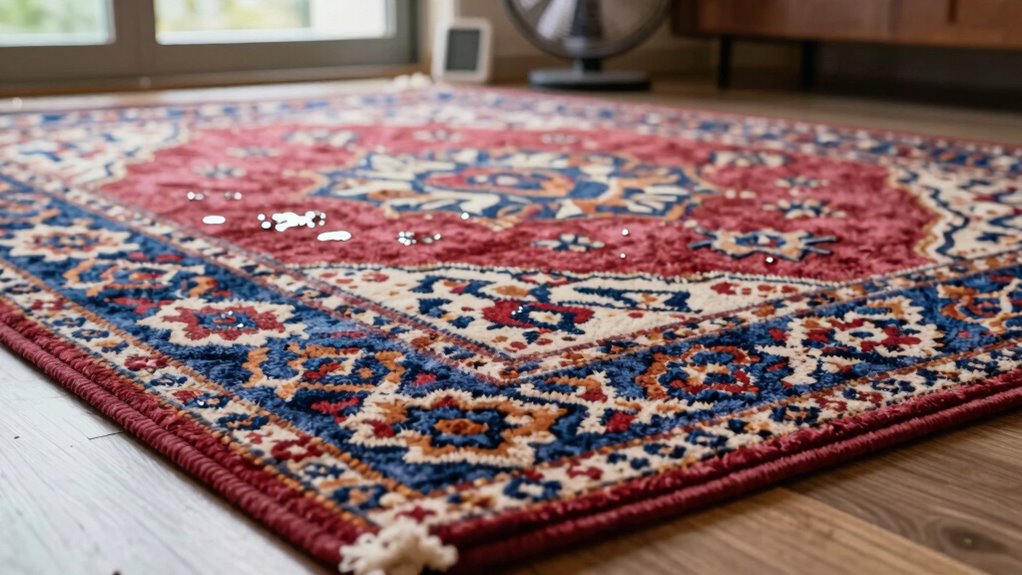
Knowing when your rug is fully dry is essential to prevent mold, mildew, or damage. To check if it’s ready, consider the rug material, as different fabrics dry at different rates. For example, wool rugs may retain moisture longer than synthetic ones. Look for signs like no dampness when you press lightly on the surface, and ensure the backing feels dry to the touch. Be cautious of color fading, which can occur if the rug dries unevenly or too quickly. Additionally, using smart security locks and office gear can help protect your space during the drying process by ensuring only authorized access.
- Feel the surface for dampness or stiffness
- Check the rug’s backing for dryness
- Observe color consistency, avoiding fading or patchiness
Speed up Indoor Rug Drying With Fans and Dehumidifiers
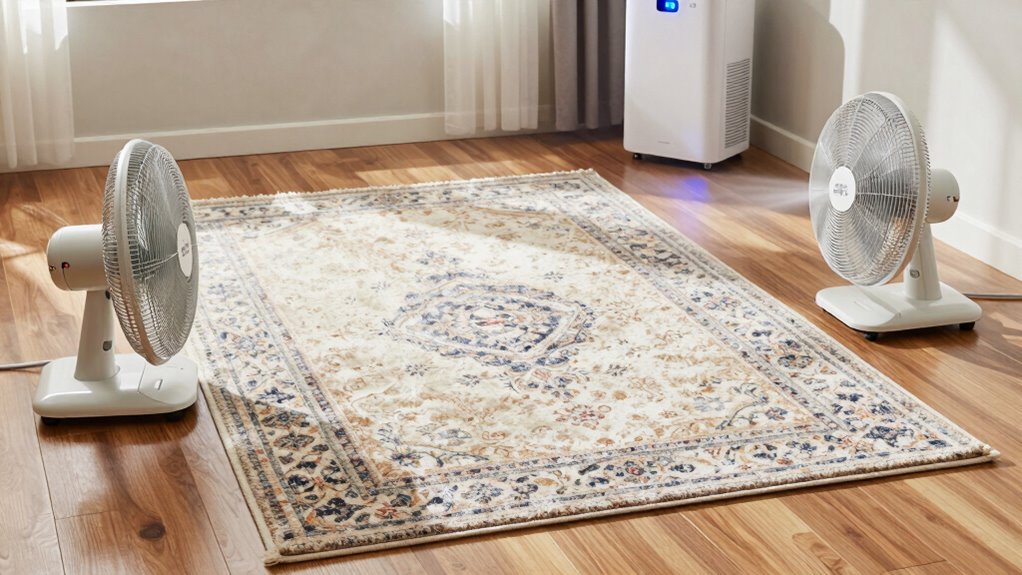
To speed up your rug drying process, proper fan placement is key—you want to promote even air circulation without blowing directly on the fibers. Adjust your dehumidifier settings to remove excess moisture efficiently, ensuring the air stays dry. Optimizing your POS and consumer tech can help monitor humidity levels and airflow for more precise drying. By optimizing air movement and humidity levels, you’ll dry your rug faster and prevent mold or mildew growth.
Optimal Fan Placement
Proper placement of fans is key to speeding up indoor rug drying. You want to guarantee the airflow direction promotes even moisture removal without causing damage. Position fans around the rug, pointing toward its surface, but avoid blowing directly onto it for extended periods. Keep fans at a distance to prevent over-drying or uneven drying. Adjust the fan placement to create consistent airflow that circulates air across the entire rug. Ensuring proper air circulation helps prevent mold growth and maintains the rug’s integrity.
Dehumidifier Settings Adjustments
Adjusting your dehumidifier settings correctly can substantially speed up indoor rug drying when used alongside fans. Set your dehumidifier to a high or maximum moisture control level to effectively remove excess humidity from the air. This helps prevent the rug from lingering in damp conditions, reducing the risk of mold and odors. Keep an eye on the humidity levels and aim to maintain them around 40-50%. If your dehumidifier has a humidity target setting, select a lower percentage for faster drying. Regularly check the device to ensure it’s functioning properly. Proper moisture regulation is essential to drying your rug efficiently and safely. By fine-tuning your dehumidifier settings, you create an ideal environment for moisture to escape quickly. Monitoring indoor air quality can also help ensure that mold and dust mites do not proliferate during the drying process.
Air Circulation Optimization
Enhancing air circulation is key to speeding up indoor rug drying, especially when using fans and dehumidifiers together. Proper ventilation techniques help create ideal airflow patterns that remove moisture efficiently. Position fans to direct air across the rug’s surface, avoiding stagnation. Use dehumidifiers to lower humidity levels and support airflow. Keep doors and windows open, if possible, to improve overall ventilation. Adjust fan speeds to prevent overly turbulent airflow that could damage the fibers. Consistent circulation prevents mold and mustiness, ensuring a quicker dry. Effective airflow management is essential for achieving optimal drying times.
Common Mistakes to Avoid When Drying Rugs Indoors

Drying rugs indoors can seem straightforward, but many people make simple mistakes that can prolong the drying process or damage the rug. One common error is using chemical treatments that aren’t suitable for indoor drying, which can harm both the rug and indoor air quality. Additionally, neglecting proper rug padding can cause uneven drying and potential warping. Avoid placing the rug directly on damp surfaces or thick padding that traps moisture. Instead, elevate the rug and use breathable materials underneath. Be cautious of overloading the space with furniture or objects that block air circulation, which hampers drying. Proper awareness of these pitfalls helps prevent mold, mildew, and damage, ensuring your rug dries efficiently and safely indoors.
| Mistake | Consequence |
|---|---|
| Using inappropriate chemical treatments | Damage to fibers and indoor air quality |
| Ignoring rug padding material choices | Trapped moisture, uneven drying |
| Blocking air circulation | Prolonged dampness and mold risk |
How to Prevent Mold and Mildew During the Drying Process
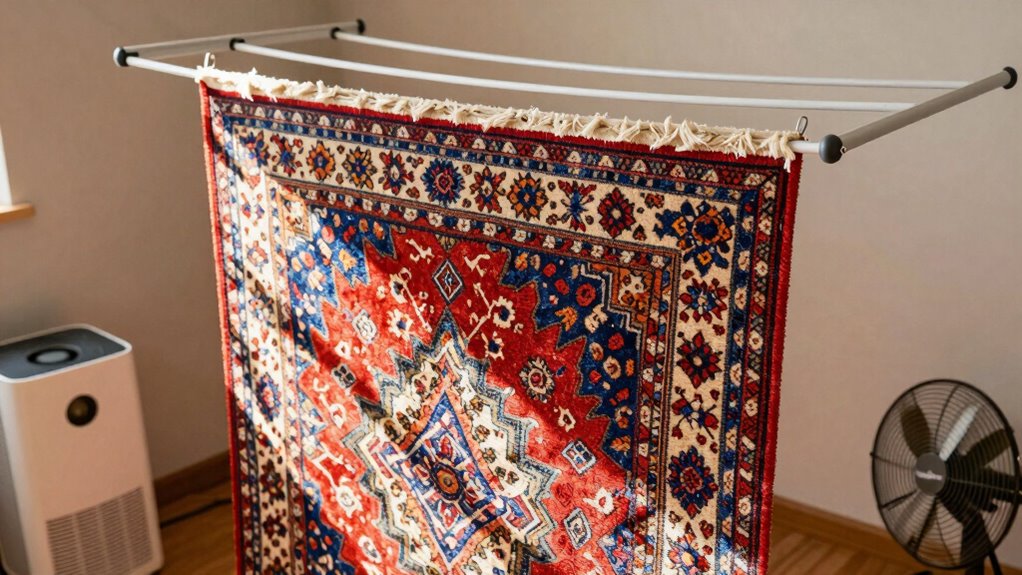
To prevent mold and mildew from developing during the indoor drying process, you need to focus on controlling moisture and ensuring proper airflow. Excess moisture creates an ideal environment for mold prevention and mildew control. Keep the room well-ventilated by opening windows or using fans to circulate air. Use a dehumidifier to lower humidity levels, ideally between 30-50%. Regularly check your rug for damp spots, and avoid over-drying, which can trap moisture.
- Use fans or open windows to improve airflow
- Maintain low humidity with a dehumidifier
- Regularly inspect the rug for dampness and dry promptly
Tips for Keeping Your Rug Fresh and Looking Great After It’s Dry
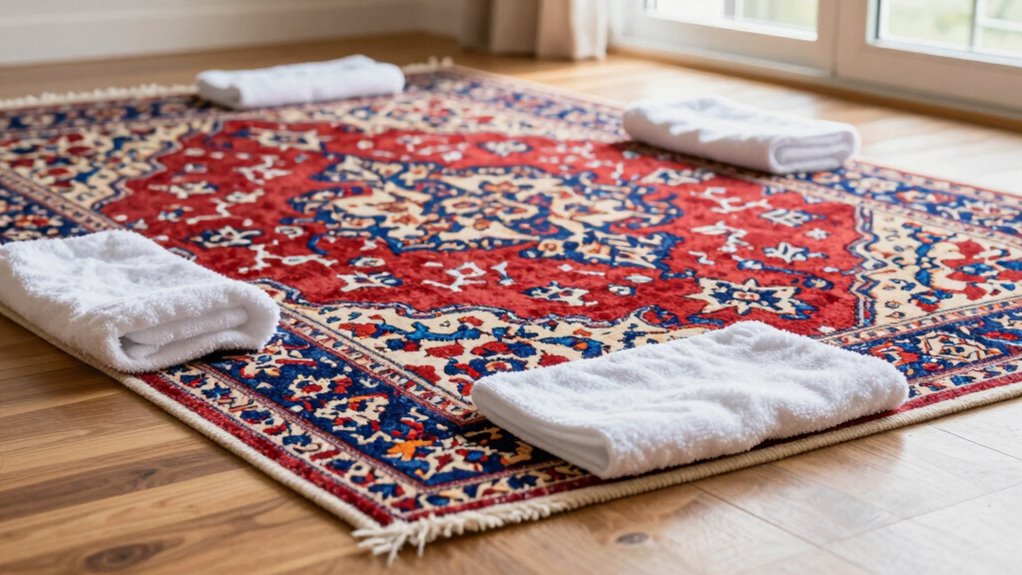
Once your rug is completely dry, taking a few simple steps can keep it looking fresh and vibrant for years to come. Regular rug cleaning helps remove dirt and dust that can dull its appearance over time. To maintain its freshness, vacuum your rug frequently, especially in high-traffic areas. If you notice any lingering odors, consider using odor removal techniques like baking soda or specialized deodorizers designed for rugs. Spot clean stains promptly to prevent them from setting and impacting the overall look. Avoid heavy foot traffic until your rug is fully dry to prevent dirt from settling in. By staying consistent with these tips, you’ll preserve your rug’s appearance and keep it smelling clean and inviting.
Frequently Asked Questions
Can I Dry a Rug Indoors During Humid Weather?
Yes, you can dry a rug indoors during humid weather, but humidity concerns mean you’ll need good indoor air circulation. To speed up drying, open windows, use fans, and run a dehumidifier to reduce moisture in the air. Avoid hanging the rug in damp spaces or areas with poor airflow, as this can prolong drying and cause mold. Proper ventilation guarantees your rug dries thoroughly and stays in good shape.
How Long Should I Wait Before Walking on the Rug After Drying?
You should wait at least 24 to 48 hours before walking on the rug after drying. This allows the moisture to fully evaporate, reducing your foot traffic’s impact and preventing rug damage. Walking on it too soon can reintroduce moisture, cause mold, or damage fibers. Be patient, and check for dryness by feeling the rug’s surface; if it feels damp, give it more time before stepping on it.
Is It Safe to Use Heat to Speed up Indoor Rug Drying?
Using heat to speed up indoor rug drying isn’t always safe, as it can cause damage or uneven drying. For better heat safety and drying speed, avoid high heat sources like space heaters directly on the rug. Instead, use fans and good airflow to dry your rug faster and safely. Always monitor the process closely to prevent overheating or any potential fire hazards, ensuring your rug dries thoroughly without risks.
What Are the Best Materials for Indoor Rug Drying Equipment?
You should use absorbent towels to quickly soak up excess moisture and breathable covers to protect your rug while drying. These materials are ideal because absorbent towels efficiently remove water, reducing drying time, while breathable covers prevent trapped moisture and mold growth. Together, they create a safe, effective indoor drying setup, helping your rug dry evenly without damage or unpleasant odors.
How Can I Prevent Color Fading During the Drying Process?
To prevent color fading during drying, you should focus on color preservation and dye stability. Keep the rug out of direct sunlight, which can cause colors to fade quickly. Use fans or dehumidifiers to gently dry the rug at a moderate temperature, avoiding excessive heat that can weaken dyes. Regularly turn or rotate the rug to ensure even drying, maintaining dye stability and vibrant, long-lasting colors.
Conclusion
Properly drying your rug indoors is key to preserving its beauty and longevity. By following the right steps and avoiding common mistakes, you guarantee your rug stays fresh and mold-free. Remember, rushing the process can cause more harm than good—so will you take the time to do it right? With patience and care, you’ll enjoy a clean, vibrant rug that lasts for years to come. Isn’t your home worth the effort?
College move-in / dorm season Picks
dorm essentials
As an affiliate, we earn on qualifying purchases.