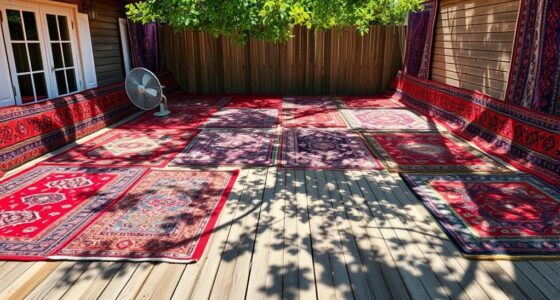
To store rugs long-term, roll them with the pile facing inward and keep the roll loose and firm. Wrap the rug in breathable materials like cotton or muslin, avoiding plastic. Store it in a cool, dry, well-ventilated space away from direct sunlight, high humidity, or pests. Elevate the rug off the ground on pallets or shelving, and inspect periodically for pests or mold. For detailed tips to keep your rug in great shape, continue exploring the best practices.
Key Takeaways
- Roll rugs with the pile inward, wrapping loosely in breathable materials like cotton or muslin to prevent creases and moisture buildup.
- Store in a cool, dry, well-ventilated area with stable humidity around 50%, avoiding basements and attics.
- Elevate the rug off the ground on pallets or shelving to improve airflow and prevent dampness contact.
- Use silica gel packs or moisture absorbers inside storage containers to control humidity levels.
- Regularly inspect stored rugs for pests, mold, or moisture issues, and address problems promptly to maintain condition.

Storing rugs properly is essential to preserve their quality and appearance over time. When you plan for long-term storage, the way you handle and prepare your rug can make all the difference in preventing damage and maintaining its beauty. One of the most effective methods is proper rolling. Instead of folding the rug, which can create creases and weaken fibers, you should carefully roll it up with the pile facing inward. This technique helps prevent creases and reduces stress on the fibers, keeping the rug in better shape for years to come. As you roll, make sure to keep the rug loose but firm enough to avoid unnecessary wrinkles. Use a breathable material like cotton or muslin to wrap the rolled rug, avoiding plastic, which can trap moisture and cause mold or mildew. Proper rolling combined with protective wrapping ensures your rug remains in pristine condition during storage.
Moisture control is another critical aspect of long-term rug storage. Excess moisture can lead to mold, mildew, and deterioration of fibers, while too little can cause dryness and brittleness. To prevent these issues, you should store your rug in a cool, dry, and well-ventilated space. Before storing, thoroughly clean the rug to remove dust, dirt, and allergens that could attract pests or cause deterioration over time. You can vacuum both sides and, if necessary, have it professionally cleaned. Once cleaned, ensure the storage environment maintains consistent humidity levels—ideally around 50%. Using silica gel packs or moisture-absorbing products inside the storage area can help regulate humidity and keep the environment dry. Avoid basements or attics that are prone to extreme temperature fluctuations and high humidity, as these conditions accelerate fiber decay and attract pests. Additionally, choosing specialized storage containers designed for textiles can further protect your rug from environmental damage and pests.
In addition to proper rolling and moisture control, consider elevating the stored rug off the ground. Placing it on a pallet or shelving prevents direct contact with damp floors and allows air to circulate around it. This airflow is crucial in reducing the risk of mold and mildew growth. Also, periodically check on your stored rug, inspecting for any signs of pests, mold, or moisture buildup. If you notice any issues, address them immediately by cleaning or re-ventilating the storage space. Proper storage isn’t just about putting your rug away; it’s about creating an environment that safeguards its integrity and prolongs its lifespan. With attention to proper rolling and moisture control, your rug will stay beautiful and intact, ready to be displayed or used again when you need it.
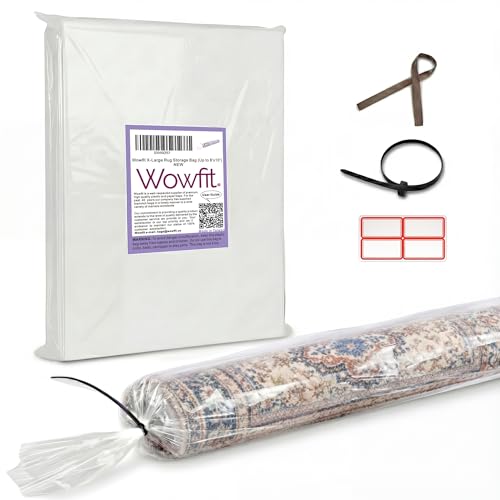
Wowfit X-Large Plastic Rug Storage Bag with Zip Tie, Heavy Duty Fits Rug up to 8'x10', Perfect for Moving, Packing and Shipping
Universal Rug Storage Bag – Designed to help you store, pack, move, or ship your area rugs, runners,…
As an affiliate, we earn on qualifying purchases.
As an affiliate, we earn on qualifying purchases.
Frequently Asked Questions
How Often Should I Check on My Stored Rugs?
You should check on your stored rugs every 3 to 6 months. During these inspections, vacuum cleaning helps remove dust and prevent pests, while pest inspection guarantees no insects have found a home. Look for signs of mold, moisture, or pests, and air out the rugs if needed. Regular checks keep your rugs in good condition and prevent long-term damage, ensuring they stay fresh and protected.
Can I Store Rugs Outdoors Long-Term?
Storing rugs outdoors long-term is like leaving a treasure chest exposed to the elements—you risk damage. While it’s possible, you must weatherproof your rug first. Use outdoor storage solutions that protect against moisture, UV rays, and pests. Confirm your rug is clean, dry, and rolled with the pile inward. Regularly check on it, even outdoors, to prevent mold and deterioration. Proper weatherproofing considerations are key to preserving your rug outside.
What Are the Signs of Mold or Pest Damage?
You’ll notice mold or pest damage through musty odors, discoloration, or small holes in your rug. Mold prevention involves keeping the storage area dry and well-ventilated. Regular pest inspection is essential—look for tiny holes, larvae, or droppings. If you spot any signs, take immediate action to clean, treat, or air out your rug to prevent further damage and preserve its condition.
Is It Better to Roll or Fold a Rug for Storage?
When it comes to rug rolling techniques, rolling is generally better than folding for long-term storage. It minimizes creases and stress on the fibers, helping your rug stay in good shape. Folding versus rolling can lead to permanent creases, which weaken the material over time. You’d do well to carefully roll your rug, keeping it loose and protected, ensuring it remains vibrant and intact for years to come.
How Do Climate Differences Affect Rug Storage Choices?
Climate differences substantially impact your rug storage choices. You should prioritize humidity control to prevent mold and mildew in humid areas, and guarantee temperature stability to avoid fiber damage from extreme fluctuations. In dry climates, maintain consistent humidity levels to keep your rug in good condition. Using a climate-controlled environment helps protect your rug from moisture, pests, and temperature-related deterioration, ensuring it stays preserved long-term.

15 Pcs 20 Gram Silica Gel Packs, Transparent Desiccant, Desiccant Packets for Storage, Moisture Packs for Spices Jewelry Shoes Boxes Electronics Storage
GOOD ADSORPTION CAPACITY: Silica gel desiccant is a highly active adsorption material, has good thermal properties and chemical…
As an affiliate, we earn on qualifying purchases.
As an affiliate, we earn on qualifying purchases.
Conclusion
Remember, storing your rugs properly isn’t just about protecting them—it’s about preserving memories and family history. When you follow these best practices, you might find that years later, a forgotten rug becomes the centerpiece of a new story. Sometimes, the smallest effort now can lead to a beautiful surprise down the line. So, handle your rugs with care, and who knows? One day, you might stumble upon a treasured piece you thought was lost forever.
Wowfit X-Large Plastic Rug Storage Bag with Zip Tie, Heavy Duty Fits Rug up to 8'x10', Perfect for Moving, Packing and Shipping
Universal Rug Storage Bag – Designed to help you store, pack, move, or ship your area rugs, runners,…
As an affiliate, we earn on qualifying purchases.
As an affiliate, we earn on qualifying purchases.
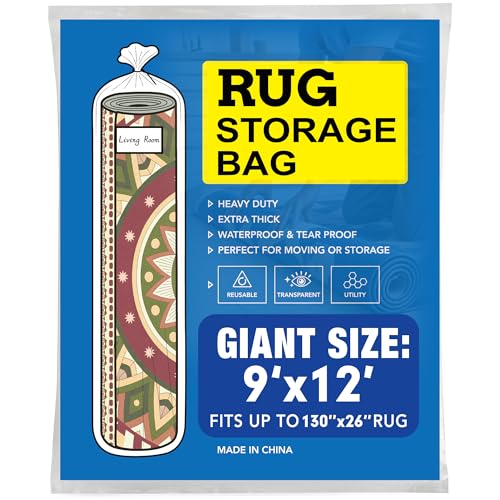
Plastic Rug Storage Bag with Zip Tie,4 Mil Heavy Duty Carpet Wrap Bag, Fits Rolled Carpet Up to 9 x 12 Feet, Ideal for Moving, Packaging, Shipping and Storage, Large Size, 130 x 26 inches
Effortless Storage and Transport: We are excited to introduce our plastic rug storage bag, thoughtfully designed to make…
As an affiliate, we earn on qualifying purchases.
As an affiliate, we earn on qualifying purchases.