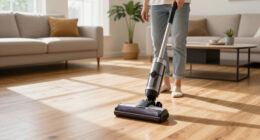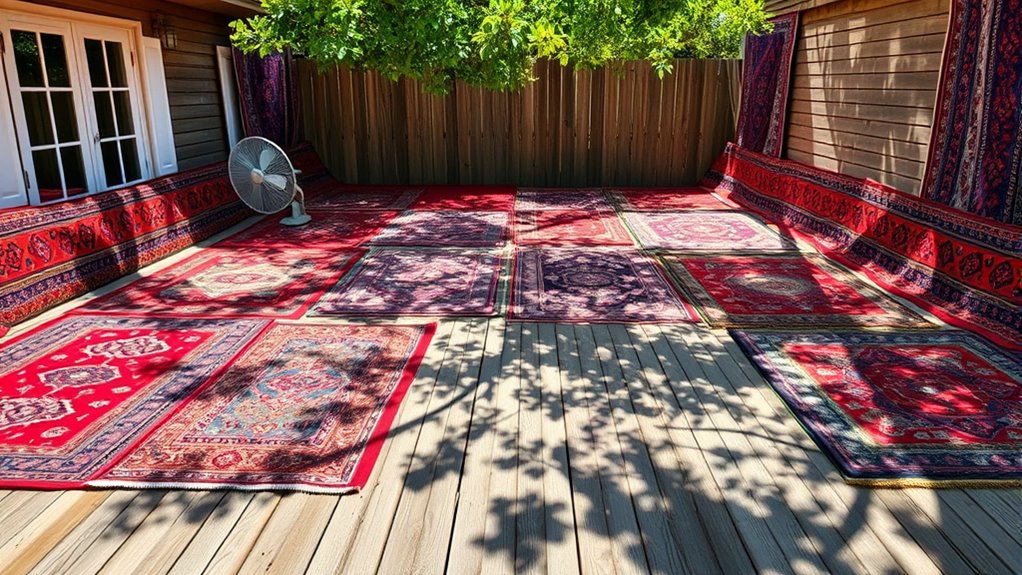
After cleaning your rug, promptly remove excess water using a wet/dry vacuum and elevate it on small blocks for airflow underneath. Use fans directed at the rug to boost air circulation, and consider a dehumidifier or open windows to reduce humidity. Check periodically to monitor drying progress, adjusting fans and room conditions as needed. Allow enough time—sometimes over a day—to prevent mold and ensure a thorough dry. Continue exploring for more effective tips to accelerate drying.
Listen free for 30 days with Audible
Thousands of audiobooks and originals — cancel anytime.
As an affiliate, we earn on qualifying purchases.
Key Takeaways
- Immediately remove excess water with a wet/dry vacuum to speed up drying.
- Use fans and elevate the rug to promote even air circulation underneath and on the surface.
- Control humidity with dehumidifiers or air conditioners to prevent prolonged dampness.
- Check the rug regularly and adjust airflow and humidity settings as needed during drying.
- Allow sufficient time, ranging from a few hours to over a day, for thorough and even drying.
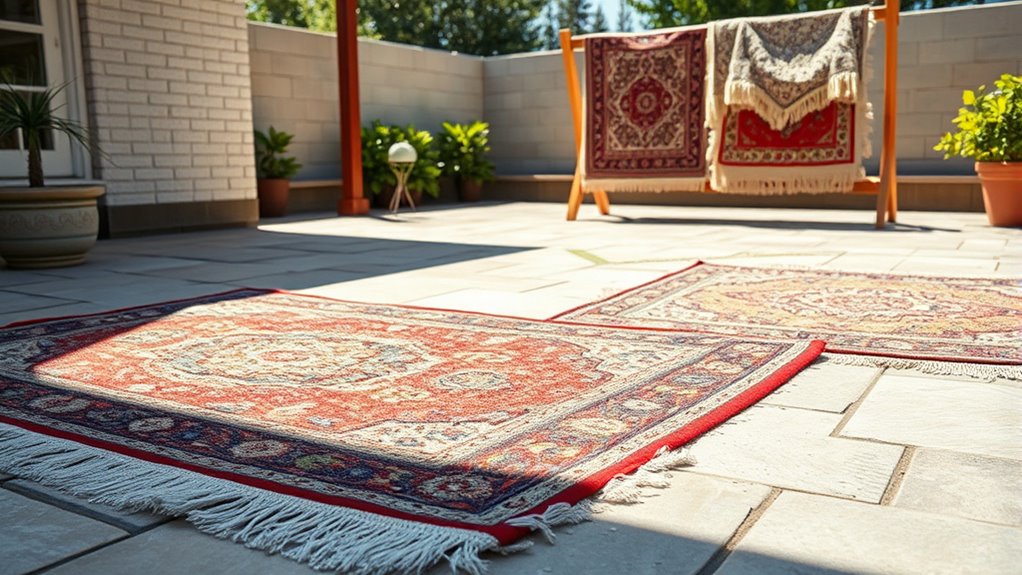
Have you ever wondered how to dry your rugs effectively after cleaning or spills? Proper drying is vital to prevent mold, mildew, and lingering odors. To do this successfully, you need to focus on two key factors: air circulation and moisture control. When you guarantee good air circulation, you accelerate the evaporation process, helping your rug dry faster and more evenly. Without adequate airflow, moisture can get trapped, leading to damp spots that might foster mold growth. Moisture control, on the other hand, involves removing excess water efficiently and managing humidity levels in the room to prevent prolonged dampness. Combining these two elements gives you the best chance at a thorough, quick dry.
Start by removing as much water as possible immediately after cleaning. Use a wet/dry vacuum if available—this tool is especially effective at extracting moisture from deep within the rug fibers. The less water left behind, the easier it is to dry the rug thoroughly. Once you’ve extracted the excess moisture, place fans around the rug to promote air circulation. Positioning oscillating fans or box fans so they face the rug directly helps circulate air evenly across its surface. If you can, elevate the rug slightly on small blocks or furniture to allow air to flow underneath it as well. This prevents moisture from being trapped underneath and speeds up the drying process. Additionally, understanding proper drying techniques can significantly improve your results and prevent future issues.
Remove excess water with a wet/dry vacuum, then use fans and elevation to speed drying.
Controlling humidity in the room is equally important. If the air is too humid, moisture will linger longer in the fibers, delaying drying and increasing the risk of mold. Use dehumidifiers or air conditioners to maintain a comfortable, low-humidity environment. Opening windows and doors can also help, especially if the outdoor air is dry and breezy. Keep in mind that sunlight can assist in drying too, so if possible, place the rug in a sunny spot. Just be cautious about direct sunlight on delicate or colorful rugs, which could cause fading.
Timing is essential when drying rugs. It’s best to check periodically and adjust fans or dehumidifiers as needed. Typically, a rug can take anywhere from a few hours to a day or more to dry completely, depending on its thickness, material, and room conditions. Patience is key—rushing the process by turning off fans too soon or ignoring humidity levels can result in a damp rug that develops mold later. By paying attention to air circulation and moisture control, you guarantee your rug dries thoroughly, maintaining its appearance and longevity.

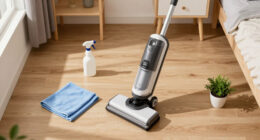
Bissell Crosswave Turbo Vacuum Mop All in One Wet and Dry Vac Combo Hard Floor & Area Rug Cleaner, 3888A
- Supports Pet Foundation: Every purchase helps save pets
- Vacuum and Wash Simultaneously: Cleans better and faster than traditional mops
- Multi-Surface Compatibility: Safe on tile, wood, laminate, rugs, and more
As an affiliate, we earn on qualifying purchases.
As an affiliate, we earn on qualifying purchases.
Frequently Asked Questions
How Long Should I Wait Before Walking on a Freshly Dried Rug?
You should wait at least 24 hours before walking on a freshly dried rug to guarantee proper drying time. This prevents foot traffic from disturbing the fibers and helps avoid mold or mildew growth. If the rug is still damp or slightly damp, give it more time. Always check for complete dryness before stepping on it to maintain its appearance and longevity. Patience ensures your rug stays clean and in good condition.
Can Sunlight Damage or Fade My Rug During Drying?
Imagine the warm sun pouring over your rug like a gentle hug, but beware—exposing it to direct sunlight can cause UV damage and lead to color fading over time. Sunlight’s rays can break down fibers and strip away vibrant hues, dulling your rug’s beauty. To protect your investment, dry your rug in a shaded area or indoors, avoiding prolonged exposure to harsh sunlight during the drying process.
What’s the Best Way to Dry a Rug in Humid Weather?
In humid weather, your best bet is to use fans for rugs to promote airflow and speed up drying. Pair this with indoor dehumidifiers to reduce moisture in the air, preventing mold and mildew. Keep the rug elevated on a drying rack or clean surface to allow air to circulate underneath. Avoid direct sunlight, which can cause fading, and regularly check the rug’s moisture level to prevent lingering dampness.
How Do I Prevent Mold Growth During the Drying Process?
Think of mold prevention like fencing off a garden to keep pests out; you need barriers in place. To prevent mold while drying, guarantee good airflow with fans or dehumidifiers, and avoid over-wetting the rug. Use proper drying techniques, such as spreading the rug evenly and placing it in a well-ventilated area. Regularly check for moisture, and don’t rush the process to keep mold at bay.
Is It Safe to Use a Hairdryer on My Rug?
Using a hairdryer on your rug isn’t the safest option because heat damage can occur, especially if you hold it too close or use high heat settings. Hairdryer safety is important—avoid prolonged use or direct contact with the fibers. Instead, opt for air drying in a well-ventilated space or use a fan to gently speed up the process, reducing the risk of damage and mold growth.
Conclusion
So, remember, drying your rugs properly is like guiding a delicate butterfly—patience and care guarantee they’re fresh and vibrant again. Whether you choose air drying or a fan, timing is everything to prevent mold and mildew. When you give your rugs the right amount of attention, they’ll bounce back like new, bringing warmth and beauty to your space. Keep these techniques in mind, and your rugs will thank you with every cozy step you take.
Flea & tick season Picks
flea and tick prevention
As an affiliate, we earn on qualifying purchases.