When your rug experiences water damage, act quickly by removing excess water with towels or a wet vacuum, and increase airflow using fans or outdoor sunlight to promote drying. Elevate the rug to improve air circulation underneath and use a dehumidifier indoors. Keep an eye out for mold or discoloration, and address any issues immediately to prevent lasting damage. To learn effective strategies for thorough, safe drying and mold prevention, continue with the tips that follow.

Get cleaning gear delivered free — and shop member deals
- Fast, free delivery on millions of items
- Access to Prime Big Deal Days deals on October 6–7
- Prime Video, Amazon Music and more included
Key Takeaways
- Act quickly by removing excess water and stopping further seepage to prevent extensive damage.
- Use fans, sunlight, and dehumidifiers to promote even and efficient drying of the rug.
- Elevate the rug and check underneath to ensure thorough moisture removal and airflow.
- Monitor for mold signs like a musty smell or discoloration, and treat immediately if detected.
- Continue drying until completely moisture-free to prevent mold growth and fiber degradation.
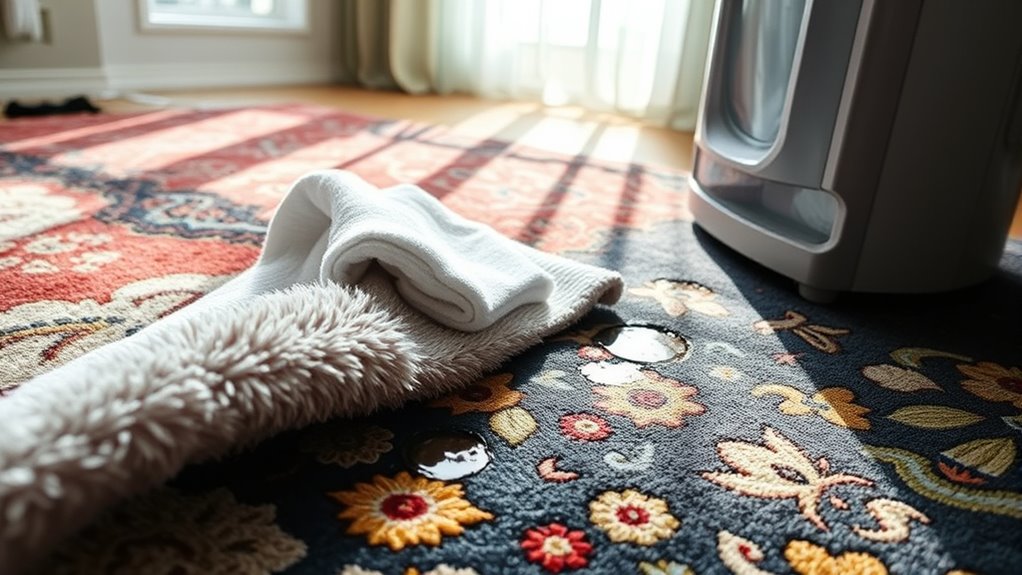
Water damage on rugs can happen unexpectedly, but quick action can prevent lasting harm. When your rug gets soaked, your first priority should be to stop the water from seeping further and causing more extensive damage. Acting promptly not only helps preserve the rug’s appearance but also reduces the risk of mold growth, which can develop within 24 to 48 hours if moisture remains trapped. Mold prevention is vital because mold spores are not visible immediately but can cause health issues and degrade your rug’s fibers over time.
Begin by removing any excess water as soon as possible. If the water is fresh and clean, you can blot the surface with towels or use a wet/dry vacuum to extract as much moisture as you can. The goal is to minimize the water that penetrates deep into the fibers. Once you’ve removed surface water, focus on effective drying techniques. Air circulation is your best friend here. If weather permits, take the rug outside to dry in direct sunlight, as sunlight acts as a natural disinfectant and helps inhibit mold growth. If outdoor drying isn’t an option, set up fans around the rug to increase airflow. Oscillating fans or ceiling fans can considerably speed up the drying process, but ensure they’re positioned to promote even airflow across the entire surface.
Remove excess water promptly and dry with sunlight or fans to prevent mold growth.
Dehumidifiers can be very effective, especially indoors, as they help reduce the ambient moisture level. This is particularly important if you’re dealing with a large or heavily soaked rug. You want to keep the environment as dry as possible to prevent mold spores from settling and growing. During the drying process, periodically check for signs of mold, such as a musty smell or discoloration. If you notice any signs, it’s best to address them immediately with specialized cleaning solutions or consult a professional for mold remediation.
In addition to drying, consider elevating the rug to allow air to circulate underneath. Lifting the edges or placing it on a rack helps moisture escape from the underside, which is often overlooked but essential for thorough drying. Remember, patience is key; rushing the drying process can trap moisture inside, increasing the risk of mold development. Using a dehumidifier can significantly accelerate the drying process and create a more controlled environment for safe moisture removal. By combining quick removal of excess water, proper drying techniques, and vigilant mold prevention, you can save your rug and maintain a healthier home environment. Acting swiftly and methodically minimizes the damage and keeps mold at bay, ensuring your rug remains a beautiful and safe part of your space.
As an affiliate, we earn on qualifying purchases.
Frequently Asked Questions
How Long Does It Take for Rugs to Completely Dry?
It typically takes 24 to 48 hours for rugs to completely dry, depending on humidity levels and airflow. Using drying equipment like fans or dehumidifiers speeds up the process by reducing moisture in the air. To guarantee thorough drying, lift the rug to allow air to circulate underneath and keep the room well-ventilated. Check regularly to prevent mold growth and ensure your rug dries evenly.
Can I Use a Regular Vacuum on Water-Damaged Rugs?
Using a regular vacuum on water-damaged rugs is like trying to catch rain with a sieve. It’s not safe or effective. Regular vacuums aren’t designed for water, risking electrical hazards and damage. Instead, you should carefully remove excess moisture, then clean and dry the rug thoroughly. Keep vacuuming safety in mind, and don’t overdo cleaning frequency—let the rug dry completely before vacuuming again to prevent mold and mildew.
Is It Safe to Walk on a Wet Rug?
It’s not safe to walk on a wet rug because water absorption can make the fibers slippery and increase the risk of falling. To guarantee safety, follow precautions like wearing rubber shoes and avoiding the area until the rug dries completely. Keep in mind that walking on a damp rug can also spread mold and damage the flooring beneath. Prioritize safety and allow the rug to dry thoroughly before stepping on it again.
What Are the Signs of Mold Growth After Water Damage?
You’ll notice signs of mold growth after water damage if you detect a mold smell or see visible spots on your rug. Mold often appears as dark, fuzzy patches or discolored areas that stand out against the fabric. If you see or smell these signs, it’s vital to address the issue promptly. Ignoring mold can lead to health problems and further damage, so act quickly to clean or replace affected areas.
Should I Hire a Professional or Try DIY Restoration First?
When it comes to water damage on your rugs, you’re better off playing it safe than sorry. Start with simple DIY tips like removing excess water and drying thoroughly, but don’t hesitate to call professional services if the damage is extensive or mold is present. Professionals have the tools and expertise to handle stubborn issues, saving you time and potential future headaches. Sometimes, it’s worth bringing in the pros.
Conclusion
Dealing with water damage on your rugs quickly can save you time and money, preventing mold growth and further deterioration. Remember, up to 70% of rugs can be restored if treated promptly, so don’t delay. Act fast by removing excess water, drying thoroughly, and seeking professional help if needed. With prompt action, you can restore your rug’s beauty and longevity, keeping your space safe and clean. Your quick response truly makes all the difference!
Fall Picks
fall essentials
As an affiliate, we earn on qualifying purchases.