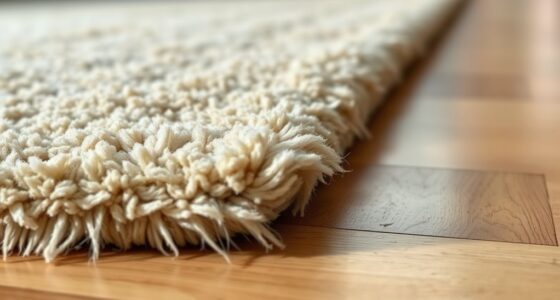

To prevent moth infestations in your wool rugs, start by thoroughly cleaning them, vacuuming both sides and airing them out. Use natural repellents like cedar blocks, lavender sachets, or herbal infusions to keep moths at bay. When storing, roll the rug in breathable fabric, store in a cool, dry place, and keep cedar or lavender inside containers for added protection. Maintaining a clean, dry environment and inspecting regularly helps keep pests away—discover more effective tips if you continue below.
Key Takeaways
- Use natural repellents like cedar blocks, lavender sachets, or herbal infusions to deter moths safely.
- Clean your wool rug thoroughly by vacuuming both sides and airing it out before storage.
- Roll the rug and store it in breathable fabric in a cool, dry, and dark place away from sunlight.
- Place natural repellents inside storage containers and regularly refresh them for ongoing moth prevention.
- Inspect stored and in-use rugs regularly for signs of pests and maintain a clean, dry environment.
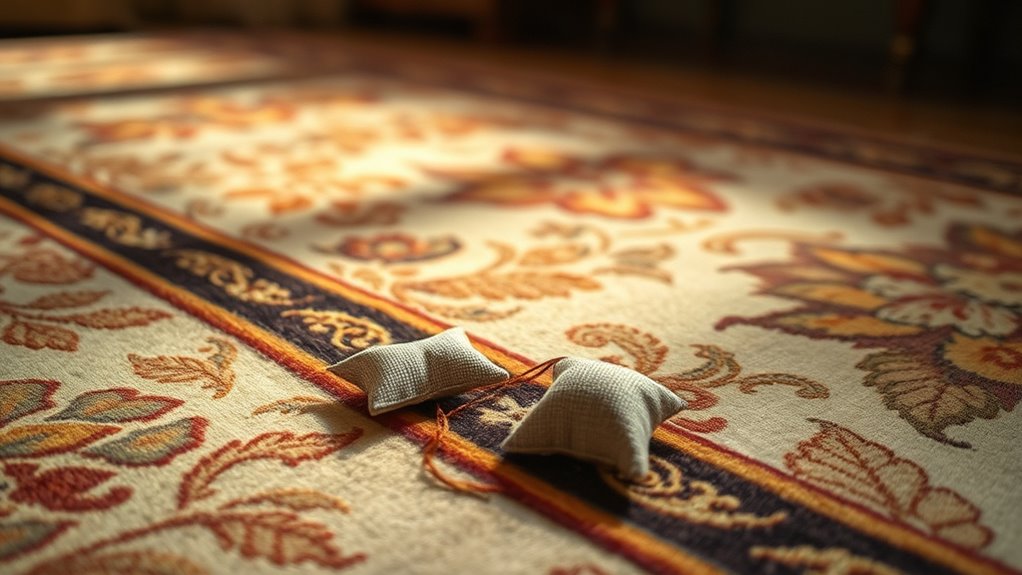
Wool rugs are beautiful and durable, but they’re also vulnerable to moth infestations that can cause serious damage. These tiny pests are attracted to the natural fibers in your rug, and once they settle in, they can quickly create holes and weaken the fabric. To prevent this, you need to take proactive measures, starting with natural repellents and proper storage tips. Natural repellents, like cedar blocks, lavender sachets, or herbal infusions, are excellent options because they smell good and are safe for your home. Cedar is especially effective; its scent deters moths without the use of chemicals. You can place cedar blocks or chips near your rug or hang cedar sachets inside storage containers. Lavender sachets are another popular choice; their pleasant aroma repels moths naturally. You might also consider using herbal infusions made from rosemary, thyme, or mint to create a scent barrier that moths dislike. These repellents are simple to use and don’t require chemical sprays, making them a safe, eco-friendly choice.
In addition to using natural repellents, proper storage tips are essential to keep moths at bay when your rug isn’t in use. Always clean your wool rug thoroughly before storing it. Vacuum both sides to remove dust, dirt, and any potential eggs or larvae. After vacuuming, let the rug air out in a well-ventilated area to make certain any residual odors are minimized. When storing, roll the rug instead of folding it, as creases can trap moisture and promote mold growth. Wrap the rolled rug in breathable fabric like cotton or linen, avoiding plastic, which can trap moisture and encourage pests. Store it in a cool, dry location away from direct sunlight, as heat and light can damage the fibers and attract pests. If you have space, consider using airtight storage containers with natural repellents inside, such as cedar chips or lavender sachets, to add an extra layer of moth protection. Regularly inspecting your stored rugs is vital—check for any signs of pests or damage, and refresh the repellents every few months for ongoing protection. Additionally, maintaining a clean and dry environment helps prevent moth infestations from taking hold in the first place.

Cedar Space Cedar Blocks for Closet Storage,100% Aromatic Red Ceder Blocks Cedar Planks Chips 16pcs for Closet Drawers 100% Natural Wood Chips
CLOSET STORAGE: Cedar Blocks for Clothes Storage – 100% Aromatic Red Cedar Wood Blocks for Closet Storage,red cedar…
As an affiliate, we earn on qualifying purchases.
As an affiliate, we earn on qualifying purchases.
Frequently Asked Questions
Can Moths Infest Wool Rugs Outdoors?
Yes, moths can infest wool rugs outdoors since outdoor moth behavior involves seeking natural fibers like wool. If your wool rug is left outside, it becomes vulnerable to moth damage, risking infestation. To protect your wool rug preservation, keep it clean, dry, and stored in a sealed container when not in use. Regularly inspect for signs of moth activity and take action early to prevent a full-blown infestation.
How Do I Identify Early Moth Infestation Signs?
You can identify early moth infestation signs by closely inspecting your wool rug for fabric damage, such as small holes or frayed areas. Look for larva sightings, which appear as tiny, caterpillar-like larvae moving on the rug’s surface or hiding in the fibers. Additionally, check for fine silk or web-like threads, and feel for musty odors that often accompany moth activity. Acting quickly helps prevent extensive damage.
Are Moth Repellents Safe for Children and Pets?
Yes, many moth repellents are safe for children and pets. Look for child-safe repellents and pet-friendly solutions that use natural ingredients like cedar or lavender. Always read labels carefully and follow application instructions to guarantee safety. Avoid chemical-laden products around kids and animals. Using these safer options helps protect your wool rugs without risking your loved ones’ health. Keep your home secure and pest-free with gentle, effective repellents.
How Often Should I Inspect My Wool Rugs?
You should inspect your wool rugs at least once a month as part of your inspection routine. Regular pest monitoring helps you catch moth activity early before it causes damage. During each inspection, look for signs like larvae, silk, or tiny holes. Pay special attention to hidden areas and corners. Consistent monitoring keeps your rugs safe and preserves their beauty, giving you peace of mind.
Can Professional Cleaning Eliminate Moth Eggs?
Many believe professional cleaning can eliminate moth eggs, but it’s not always guaranteed. While a professional service can substantially reduce eggs and larvae, DIY prevention methods like proper Wool rug storage and regular inspections are vital. To best protect your rug, combine professional cleaning with these preventive steps. Remember, moth eggs are resilient, so consistent care and proper storage are your best defenses against infestation.

Professor Killamoth Cedar Chips and Lavender Sachets (20 Pack) – Stop Clothes Damage – Cedar and Lavendar Home Fragrance Sachets for Drawers and Closets
GREAT SMELLING. Our fragrant Cedar sachets provide that wonderful scent that’s been used for years in clothes closets…
As an affiliate, we earn on qualifying purchases.
As an affiliate, we earn on qualifying purchases.
Conclusion
To keep moths at bay, make your wool rugs a fortress they can’t breach. Regular cleaning, proper storage, and natural repellents form a shield that wards off these tiny invaders. Think of your rug as a treasure chest—protect it fiercely to preserve its beauty and longevity. With consistent care, you’ll ensure your wool rugs remain a stunning, moth-free masterpiece, turning your home into a sanctuary where elegance and protection dance in perfect harmony.

Richards Homewares Moth Away Herbal Non Toxic Natural Repellent, 6-Jumbo Sachets
100% natural ingredients like peppermint, rosemary and thyme
As an affiliate, we earn on qualifying purchases.
As an affiliate, we earn on qualifying purchases.

letsinstyle 92 x 20 Inch Oxford Cloth Drawstring Carpet Storage Pouch, Dustproof Jumbo Rug Storage Bags, Breathable Rugs Moving Carpet Pouches for Indoor Outdoor Carpet Storage Packing
LARGE SIZE: Measuring approximately 234 x 50 cm (92 x 20 inches), this rug storage bag provides ample…
As an affiliate, we earn on qualifying purchases.
As an affiliate, we earn on qualifying purchases.