To protect your antique rugs, store them in a cool, dry, and well-ventilated space away from direct sunlight and fluctuating temperatures. Use breathable covers like cotton or linen—avoid plastic—to prevent moisture buildup. Maintaining consistent humidity levels helps prevent mold and fiber damage. Regular inspections and cleanings also keep pests and dirt at bay. If you want to learn more about optimizing your rug’s preservation, stay with us for more essential tips.

Get cleaning gear delivered free — and shop member deals
- Fast, free delivery on millions of items
- Access to Prime Big Deal Days deals on October 6–7
- Prime Video, Amazon Music and more included
Key Takeaways
- Store antique rugs in a cool, dry, well-ventilated environment to prevent mold, mildew, and fiber deterioration.
- Avoid basements and attics with fluctuating temperatures; opt for climate-controlled storage spaces.
- Keep rugs away from direct sunlight to prevent fading and fiber weakening.
- Maintain low humidity levels to protect fibers and prevent mold growth.
- Regularly inspect stored rugs for pests, mold, or damage, and address issues promptly.

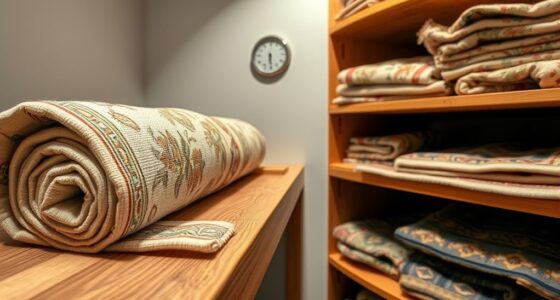
Have you ever wondered how to keep your antique rug looking its best for years to come? Proper climate control and storage are crucial for preserving its beauty and integrity. One of the most critical aspects of protection involves pest prevention. Pests like moths, beetles, and carpet bugs can quickly damage delicate fibers, causing irreversible harm. To prevent infestations, make sure the rug is thoroughly cleaned before storage, removing any dirt, dust, or organic material that might attract pests. Regular inspections are essential—look for signs of damage or small pests, especially in the corners and edges. Using natural repellents, such as cedar blocks or lavender sachets, can also deter unwanted visitors. When handling your antique rug, employ proper handling techniques to avoid unnecessary stress on the fibers. Always lift the rug from its edges, avoiding dragging it across surfaces that could cause fraying or tears. If you need to move it, roll the rug carefully, rather than folding it, to prevent creases and weakening of the fibers. When storing your antique piece, choose a cool, dry, and well-ventilated space. Avoid basements or attics, which often have fluctuating temperatures and humidity levels, increasing the risk of mold or mildew. Instead, opt for a climate-controlled environment to maintain consistent conditions. Before storage, clean the rug thoroughly using gentle vacuuming with a soft brush attachment to remove dust and loose debris. If the rug is particularly fragile, consider professional cleaning to ensure it’s free of pests and dirt without risking damage. During storage, roll the rug with the pile facing inward and wrap it in a breathable cotton or linen fabric—never plastic, which can trap moisture and promote mold growth. Ensure the storage area is free from direct sunlight, which can cause fading, and avoid places with high humidity. When handling your antique rug for cleaning or moving, always use clean gloves to prevent transferring oils or dirt. Be gentle, and avoid using harsh chemicals that might weaken or discolor the fibers. Regularly check on your stored rug, inspecting for signs of pests, mold, or damage. If you notice any issues, address them immediately with appropriate cleaning or pest control measures. Additionally, maintaining proper storage conditions is essential for the longevity of your antique rug, as fluctuations in temperature and humidity can accelerate deterioration. Protecting your antique rug requires attention, gentle handling, and a controlled environment—these steps will help ensure it remains a cherished piece for generations to come.
As an affiliate, we earn on qualifying purchases.
Frequently Asked Questions
How Do I Identify if My Antique Rug Has Mold or Pests?
To identify if your antique rug has mold or pests, look for visible signs like dark spots, fuzzy growth, or a musty smell, which indicate mold detection. For pest identification, check for small holes, frayed edges, or tiny droppings. Carefully inspect the rug’s fibers and backing. If you notice any of these signs, take immediate action to clean and consult a professional for proper treatment.
What Are the Signs of Improper Climate Control Damaging My Rug?
Think of your rug as a delicate dance partner; improper climate control throws off its rhythm. You’ll notice humidity damage causing warping or mold, while fading signs reveal sunlight’s relentless assault. If your rug feels damp or shows discoloration, it’s crying out for better care. Ignoring these signs lets moisture and temperature swings weaken fibers, turning vibrant art into a faded shadow. Keep conditions steady to preserve its timeless beauty.
Can I Store Antique Rugs Outdoors Temporarily?
Storing antique rugs outdoors temporarily isn’t ideal, but if necessary, take precautions. Use a breathable, waterproof cover to shield it from moisture and pests. Keep it elevated off the ground to prevent dampness and ensure proper ventilation. Remember, outdoor storage is a temporary solution—prolonged exposure to weather can harm your rug. Whenever possible, find a sheltered, climate-controlled space for long-term storage to preserve its beauty and value.
How Often Should I Have My Antique Rug Professionally Inspected?
Did you know that antique rugs can last over a century with proper care? You should have your rug professionally inspected at least once a year, especially if it’s in high-traffic areas. Follow a regular maintenance schedule and seek a professional assessment if you notice signs of damage or deterioration. This proactive approach helps preserve your rug’s beauty and value for generations to come.
What Are the Best Materials for Storing Antique Rugs Long-Term?
You should use storage containers made of breathable fabrics like cotton or linen to protect your antique rug long-term. These materials allow air circulation, preventing moisture buildup and mold. Avoid plastic or non-breathable covers, which trap humidity and can damage the fibers. When storing, roll the rug carefully and wrap it loosely in a breathable fabric to maintain its condition and guarantee proper air flow.
Conclusion
To keep your antique rug looking stunning for generations, proper climate control and storage are key. Did you know that fluctuations in humidity can cause up to 30% of damage to delicate fibers? By maintaining stable temperatures and avoiding direct sunlight, you can prevent this costly deterioration. So, take these simple steps—your rug’s beauty and value depend on it. Protect your investment today, and enjoy its timeless charm for years to come.
Fall Picks
fall essentials
As an affiliate, we earn on qualifying purchases.