To use rug pads for preservation and safety, start by choosing the right pad for your flooring and rug size. Measure accurately so the pad fully covers the rug without extending beyond the edges. Place the pad underneath, making sure it aligns with the rug’s corners and edges. Secure the pad to prevent slipping and regularly check for wear, replacing it as needed. Keep your rug safe and in good shape by following these simple steps—you’ll find even more tips ahead.

Get cleaning gear delivered free — and shop member deals
- Fast, free delivery on millions of items
- Access to Prime Big Deal Days deals on October 6–7
- Prime Video, Amazon Music and more included
Key Takeaways
- Measure your rug accurately to select a pad that fully covers the underside without excess.
- Clean the flooring thoroughly before placing the pad to enhance grip and prevent slipping.
- Position the rug with the pad underneath, ensuring edges are aligned and corners are secure.
- Choose a rug pad suitable for your flooring type, such as rubber or felt, to ensure safety and preservation.
- Regularly inspect and replace worn pads to maintain safety, prevent bunching, and prolong your rug’s lifespan.
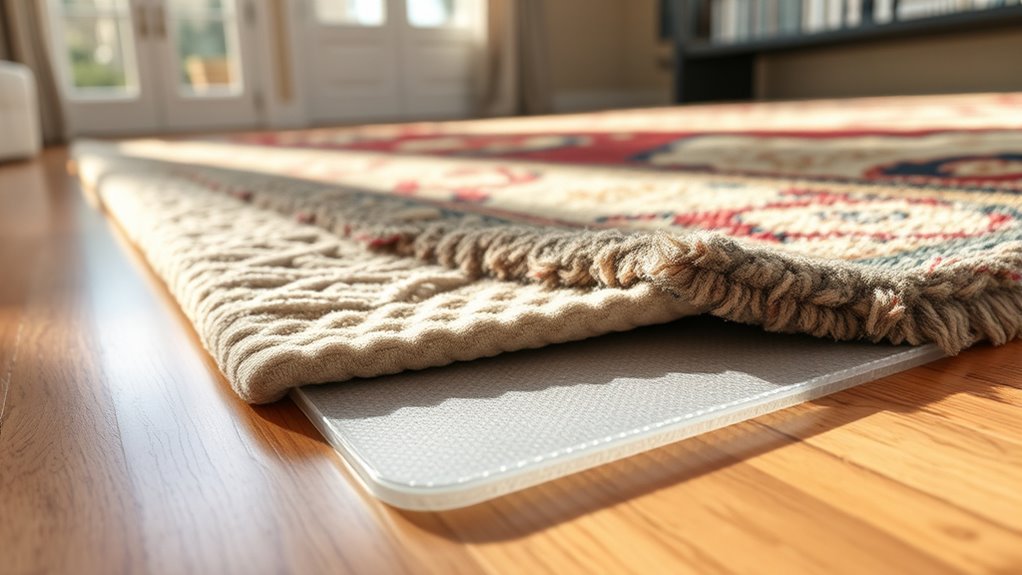
Rug pads are essential for protecting your flooring and guaranteeing safety underfoot. When you place a rug pad beneath your rug, you’re not only safeguarding your floors from potential damage but also enhancing the rug’s overall durability. A good-quality pad provides a cushioning layer that absorbs impact, reducing wear and tear over time. This durability enhancement means your rug stays in better condition longer, preserving its appearance and structural integrity. Additionally, rug pads help prevent the rug from shifting or bunching, which can cause tripping hazards and damage the rug fibers. By keeping your rug securely in place, you minimize the risk of slips and falls, especially in high-traffic areas or households with children and elderly members.
Slip prevention is one of the most vital benefits of using a rug pad. Without one, rugs tend to slide over smooth surfaces like hardwood, tile, or laminate, creating dangerous uneven spots. To maximize slip prevention, choose a pad with a non-slip backing or grip-enhanced material. These specialized pads grip the floor surface firmly, holding the rug steady even during vigorous activity or frequent foot traffic. This stability not only reduces accidents but also keeps your rug looking neat and professional, avoiding unsightly bunching or curling edges. When installing your rug with a pad, ensure the edges are flush and the pad covers the entire underside of the rug, especially at the corners, to prevent slipping at the edges. This meticulous placement offers extra security, making the rug less likely to move unexpectedly.
In addition to safety, using the right rug pad improves the overall comfort of walking or standing on the rug. The added cushioning makes your space more inviting and comfortable, especially in areas where you stand for long periods. When selecting a rug pad, consider the type of flooring you have; for instance, rubber or PVC pads work well on hard surfaces, while felt pads are better suited for carpets or delicate flooring. Properly sized pads are essential too—measure your rug accurately to guarantee the pad covers it completely without excess that could cause bunching. When installing a rug pad, clean your floor thoroughly to remove dust and debris, which can impair the grip and cause the pad to slide. Regularly check the condition of your rug pad, replacing it when worn out to maintain maximum durability and slip prevention.
Ultimately, using a rug pad is a simple, effective way to prolong your rug’s life while creating a safer environment. It’s an investment in both the longevity of your decor and the safety of everyone in your home. By selecting the right pad and installing it properly, you guarantee your rugs stay in place, resist wear, and provide a secure footing for all who walk on them.
As an affiliate, we earn on qualifying purchases.
Frequently Asked Questions
Can Rug Pads Be Used on All Types of Flooring?
Yes, rug pads can be used on most flooring types, but you need to take into account material compatibility to avoid damage. For example, felt pads work well on hardwood, while rubber pads are suitable for tile or vinyl. You also have many aesthetic options, such as transparent or decorative pads, to match your style. Always check manufacturer recommendations to ensure your chosen rug pad won’t harm your flooring.
How Often Should I Replace My Rug Pad?
You should replace your rug pad every 1 to 3 years to guarantee ideal safety and preservation. Don’t wait until it’s visibly worn or causing slipping—these are clear replacement indicators. Rug pad lifespan varies based on traffic and material, so regularly check for signs of deterioration like flattening or crumbling. Replacing it on schedule keeps your rug secure, prevents damage, and maintains a safe, comfortable surface.
Are Rug Pads Safe for Pet and Child Environments?
Yes, rug pads are safe for pet and child environments when you choose the right materials. Opt for non-toxic, natural options like felt or rubber that are free from harmful chemicals. These materials provide pet safety by preventing slips and bumps while keeping your children safe during play. Always check the product labels to guarantee the rug pad is designed for family-friendly spaces, ensuring both safety and durability.
Do Rug Pads Impact Rug Cleaning Routines?
Think of your rug pad as a silent partner, quietly enhancing your cleaning routine. Rug pads can slightly affect vacuum efficiency by creating a barrier that requires extra passes, but they also help stabilize the rug, making stain removal easier. While they may add a layer that needs attention, a well-chosen pad ultimately keeps your rug looking fresh and clean, making your routine more effective and less frustrating.
Can Rug Pads Prevent Slipping on Uneven Surfaces?
Yes, rug pads can prevent slipping on uneven surfaces by providing slip resistance and enhancing rug stability. When you place a rug pad underneath, it creates friction that keeps the rug securely in place, even if the floor is uneven. This added grip reduces the risk of slips and falls, making your space safer. Choose a rug pad with strong slip-resistant features to maximize stability and guarantee peace of mind.
Conclusion
By using rug pads, you’re not just protecting your rug—you’re safeguarding your entire home like a fortress of safety and preservation. Think of it as giving your rugs a secret armor that prevents slipping, extends their life, and keeps your space looking pristine. Don’t underestimate the power of a good rug pad; it’s like having a personal bodyguard for your floors. Invest in one today and watch your home transform into a safer, more beautiful sanctuary.
Halloween Picks
halloween
As an affiliate, we earn on qualifying purchases.