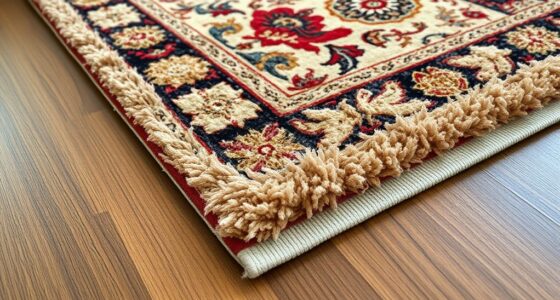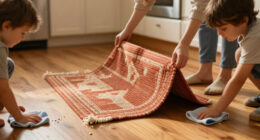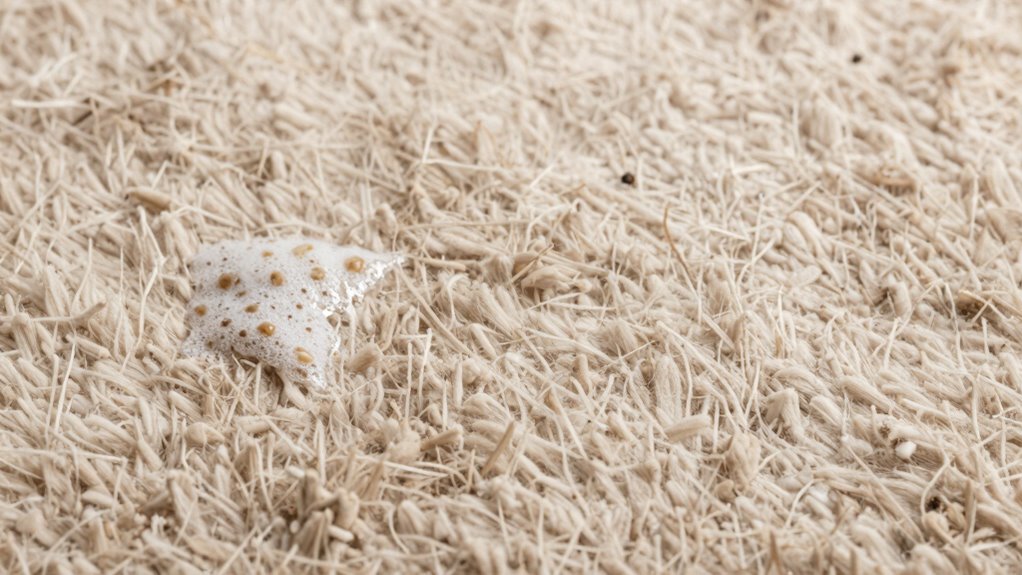

Soap residue on your rug forms a sticky film that traps dirt, making the fibers appear dull and dingy faster. This residue attracts more dust and debris and prevents stains from lifting easily, so your rug looks dirty sooner. Over time, the buildup weakens the fibers and causes colors to fade, shortening its lifespan. To keep your rug looking fresh longer, understanding how to prevent and remove soap residue is key—explore more for solutions.

Get cleaning gear delivered free — and shop member deals
- Fast, free delivery on millions of items
- Access to Prime Big Deal Days deals on October 6–7
- Prime Video, Amazon Music and more included
Key Takeaways
- Soap residue traps dirt and debris, making the rug appear dull and dirty even after cleaning.
- Residue creates a sticky film that attracts more dust and grime over time.
- Residue prevents proper stain removal, allowing stains and dirt to settle deeper into fibers.
- Accumulated soap film dulls fiber luster, diminishing the rug’s brightness and vibrancy.
- Residue weakens fibers, increasing wear and causing the rug to look dirty faster due to deterioration.
As an affiliate, we earn on qualifying purchases.
What Is Soap Residue and Why Does It Matter?

Soap residue is the leftover film that remains on your rug after cleaning with traditional soaps or detergents. This residue can cause your rug’s fibers to deteriorate over time, weakening their structure. As the fibers break down, your rug becomes more vulnerable to damage and wear. Additionally, soap residue can lead to color fading, making your rug look dull and less vibrant. The residue acts as a barrier that prevents dyes from maintaining their original brightness. If you don’t remove this film properly, it can accumulate and make your rug look dirty faster, even after cleaning. Recognizing the importance of avoiding soap residue helps you preserve your rug’s appearance and longevity, keeping it looking fresh and beautiful longer. Proper rinsing techniques can help prevent soap residue buildup and extend the life of your rug.
How Soap Residue Forms and Creates a Film

When cleaning your rug with traditional soaps or detergents, residues can build up because these products often contain ingredients that don’t fully rinse out. This leftover soap forms a thin film on the fibers, trapping dirt and moisture. Soap suds, created during cleaning, contain surfactants that loosen dirt, but if not rinsed thoroughly, they leave behind residues. The pH balance of the soap influences how easily it rinses; unbalanced soaps can leave sticky deposits. Over time, this film attracts more dirt, making your rug look duller. To prevent buildup, it’s important to understand how soap residue forms and affects your rug’s appearance. Additionally, using appropriate cleaning agents can help minimize residue formation and maintain your rug’s brightness.
Why Residue Makes Your Rug Look Duller and Dirtier
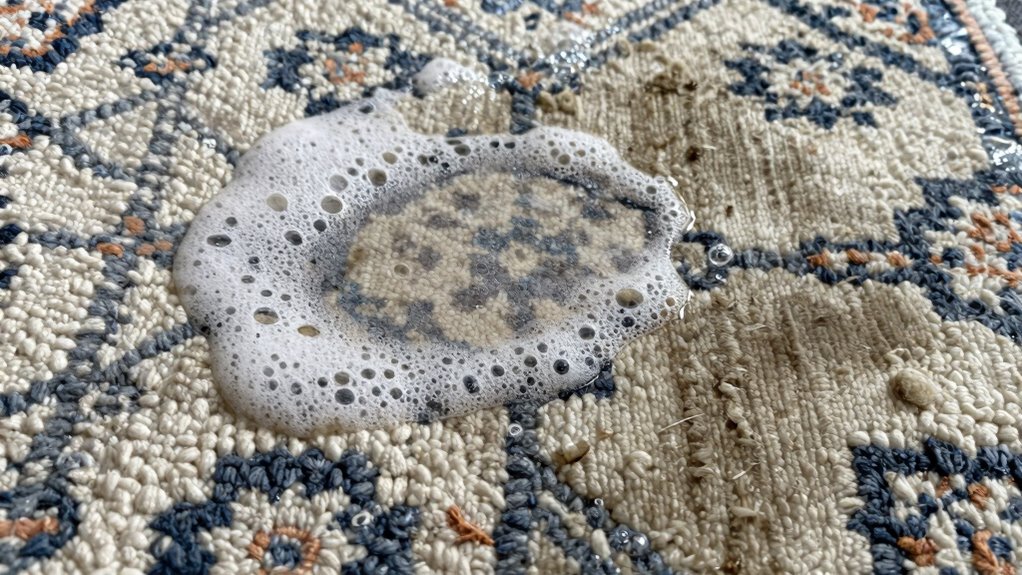
When soap residue remains on your rug, it traps dirt and debris, making the surface look dull and faded. This film also creates a shiny appearance that hides the actual dirt underneath. Plus, the residue can promote bacterial growth, causing your rug to look dirtier even after cleaning. Additionally, soap residue can interfere with proper cleaning by residue buildup, which makes it harder to remove future stains effectively.
Residue Traps Dirt
Residue left behind after cleaning can trap dirt and debris deep within your rug fibers. This buildup acts like a magnet for particles, causing your rug to appear dull and dirty much faster. Over time, the trapped dirt accelerates fiber deterioration, weakening the rug’s fibers and making it look worn out. Additionally, the residue can cause color fading, as dirt particles settle into the fibers and dull the vibrancy of your rug’s design. Instead of removing dirt effectively, soap residue creates a sticky layer that attracts more grime, compounding the problem. This cycle makes your rug look dirtier and duller sooner, even with regular vacuuming. To keep your rug looking fresh, it’s essential to remove all residues thoroughly during cleaning, preventing dirt from becoming trapped and damaging your rug’s appearance. Proper rinsing can help prevent soap residue buildup and extend the life of your rug.
Causes Surface Dulling
Residual soap left behind after cleaning creates a sticky film on your rug’s surface, which considerably dulls its appearance. This film obscures the vibrancy of fibers, making the rug look faded over time. Different fiber types react uniquely; natural fibers like wool may absorb more residue, while synthetic fibers can appear streaky. Additionally, soap residue can cause dye bleeding, where colors run or fade, intensifying the dull look. Here’s a quick overview:
| Fiber Type | Effect of Residue | Dye Bleeding Risk |
|---|---|---|
| Wool | Fades faster | Higher |
| Synthetic | Stays dull longer | Lower |
| Cotton | Becomes duller | Moderate |
The presence of soap residue can also lead to fiber damage, further deteriorating the rug’s appearance and longevity. This dullness results from the residue’s interference with light reflection and dye stability, making your rug look less vibrant and dirtier.
Promotes Bacterial Growth
Left behind soap residue doesn’t just dull your rug’s appearance; it creates a perfect breeding ground for bacteria. When soap isn’t thoroughly rinsed out, it leaves behind residues that encourage bacterial buildup. These bacteria thrive on the lingering soap, multiplying rapidly and leading to foul odors. As bacteria grow, they break down organic materials in the fibers, accelerating dirt accumulation and making your rug look duller and dirtier. The odor proliferation becomes noticeable, often worse than the dirt itself. This bacterial growth not only affects the look and smell of your rug but can also pose health risks. Additionally, microplastics in dust can settle into fibers, further exacerbating indoor air quality issues. To keep your rug fresh and hygienic, it’s vital to remove soap residue completely, preventing bacteria from taking hold and keeping odors at bay.
How Residue Traps Dirt and Accelerates Stains
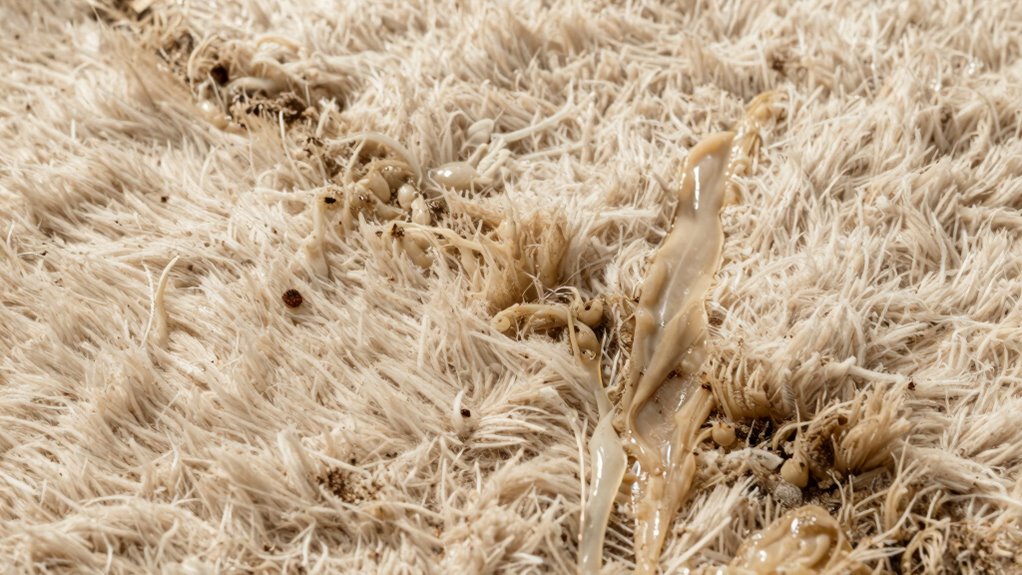
When soap residue isn’t thoroughly rinsed away, it creates a sticky film that attracts dirt and debris. This residue disrupts the pH balance of your rug fibers, making them more vulnerable to staining and damage. As dirt particles cling to the residue, they become embedded deeper into the fibers, making stains harder to remove. The sticky film also hampers fiber protection, weakening the rug’s natural barrier against dirt and spills. Over time, this buildup accelerates the appearance of dirt and stains, causing your rug to look dirty faster. To prevent this, it’s essential to rinse thoroughly and maintain proper pH levels, ensuring your rug’s fibers stay protected and cleaner longer. Residue is a magnet for dirt, speeding up the cycle of dirt accumulation. Understanding the importance of proper cleaning techniques can help maintain your rug’s appearance and longevity.
Cleaning Products That Leave Residue and How to Avoid Them

Many cleaning products contain harsh chemicals that can leave behind residue, making your rug look dull and attracting more dirt. Overusing detergents worsens the problem, leaving a film that’s hard to remove. To keep your rugs clean and fresh, choose gentle, residue-free options and use only the necessary amount. Additionally, selecting cleaning products designed for safe and effective cleaning helps prevent damage to your rugs and maintains their appearance.
Harsh Chemical Ingredients
Harsh chemical ingredients in cleaning products can leave behind stubborn residues that attract dirt and irritate your skin. These chemical contaminants often contribute to residue buildup on your rugs, making them look dingy faster. Many commercial cleaners contain surfactants, fragrances, and preservatives that aren’t fully rinsed away, leading to a sticky film that traps dust and debris. Over time, this residue can become a magnet for dirt, causing your rug to appear dirty even after cleaning. To avoid this, choose natural or eco-friendly cleaning options that are free from harsh chemicals. Look for products labeled as biodegradable or non-toxic, and always ensure thorough rinsing. Additionally, using electric-powered cleaning tools can help improve rinsing efficiency and reduce chemical residues. Your rugs will stay cleaner longer, and your skin will thank you for steering clear of chemical contaminants.
Overuse of Detergents
Using too much detergent during rug cleaning might seem helpful, but it can actually leave behind a stubborn film that attracts dirt and debris. This excess soap accumulation creates a layer of detergent buildup on your rug’s fibers, making it look dull and dirty faster. When you overuse cleaning products, residue remains embedded in the rug, trapping dust and grime. This film not only diminishes the rug’s appearance but also encourages quicker re-soiling. To avoid this, use the recommended amount of detergent and rinse thoroughly to remove soap residues. Opt for eco-friendly, low-residue cleaning solutions and consider professional cleaning if needed. Proper rinsing and moderation prevent soap accumulation, helping your rug stay cleaner longer and maintain its fresh look. Additionally, understanding multi-unit setups for yard care can help maintain outdoor spaces that complement your indoor environment, ensuring a cohesive and well-kept home.
How to Rinse Your Rug Properly and Remove Soap Residue

To guarantee your rug is thoroughly rinsed and free of soap residue, it’s essential to use clean, cold water and gently flood the surface, working from one end to the other. Proper rinsing techniques involve slowly pouring water over the entire rug, ensuring all soap is flushed out without overwetting the backing. Use a wet-dry vacuum or towels to remove excess water after rinsing. Focus on residue prevention by thoroughly rinsing until the water runs clear, indicating all soap has been removed. Avoid rushing this step, as incomplete rinsing can leave behind residue that attracts dirt. Consistent, gentle rinsing ensures your rug remains clean, fresh, and free of soap buildup that causes quicker re-soiling.
Natural and Residue-Free Cleaning Alternatives for Rugs
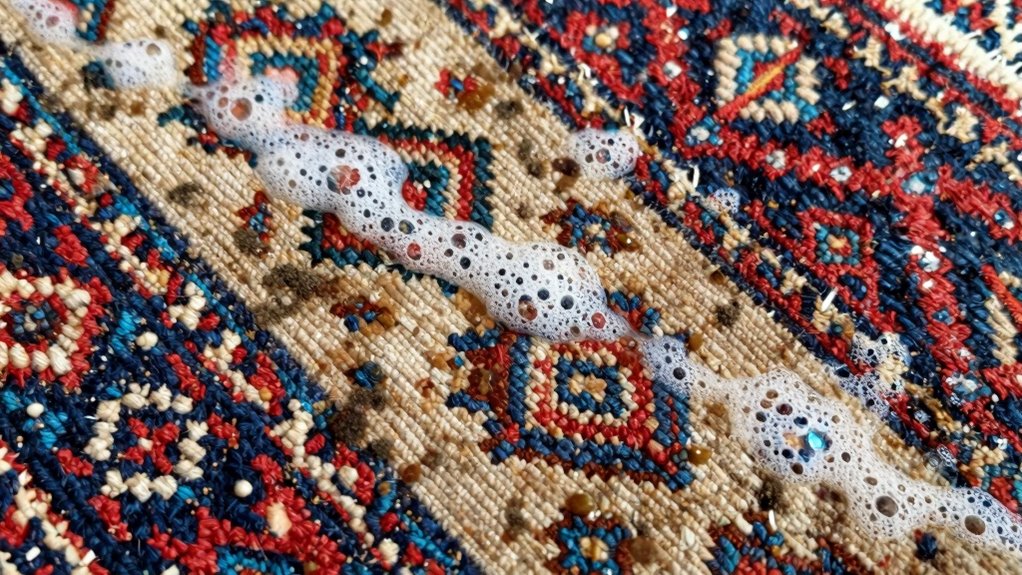
After thoroughly rinsing your rug to remove soap residue, you might want to explore natural cleaning options that are gentle yet effective. Choosing cleaning methods suited to your rug’s fiber types is essential for stain prevention and maintaining its appearance. For natural alternatives, consider baking soda for odor control or white vinegar diluted with water for light stains. These options are residue-free and safe for delicate fibers like wool or silk. Regular vacuuming also helps prevent dirt buildup, reducing the chance of stains setting in. For more stubborn spots, use a soft brush with a mixture of natural soap and water, ensuring minimal residue. These natural methods not only protect your rug’s fibers but also keep it looking fresh without the risk of soap residue making it look dirty faster.
Signs Your Rug Needs a Deep Rinse

Over time, your rug can accumulate dirt, oils, and soap residues that regular vacuuming might not fully remove. Recognizing when it’s time for a deep rinse depends on fiber types and cleaning frequency. If your rug shows certain signs, it’s a clear cue to give it a thorough wash.
Signs include:
- A persistent sticky or greasy feel when you walk on it
- Unpleasant odors lingering despite regular cleaning
- Visible dullness or discoloration in high-traffic areas
- Dirt and soap residue that resists vacuuming or spot cleaning
These indicators suggest soap residue build-up and that a deep rinse is necessary to restore your rug’s vibrancy and cleanliness. Regular maintenance tailored to fiber types helps prevent these issues before they worsen.
Long-Term Effects of Soap Residue on Rug Durability

Persistent soap residue doesn’t just affect how your rug looks and smells; it can also compromise its long-term durability. Over time, soap buildup leads to fiber degradation, weakening the rug’s structure. This makes fibers more prone to tearing and wear, shortening its lifespan. Additionally, soap residue can cause color fading, dulling the vibrancy of your rug’s pattern. To understand this better, consider the following:
| Effect | Explanation |
|---|---|
| Fiber degradation | Residue weakens fibers, reducing strength |
| Color fading | Residue causes dyes to break down or fade |
| Increased wear | Weaker fibers wear out faster |
| Reduced lifespan | Overall durability diminishes |
Regular rinsing prevents these long-term damages and keeps your rug looking vibrant and durable.
Frequently Asked Questions
Can Soap Residue Cause Allergies or Skin Irritation?
Yes, soap residue can cause allergies or skin irritation. When you leave soap behind on your rug, it may trigger soap allergies, especially if you have sensitive skin. This residue can cause skin irritation upon contact, leading to redness, itching, or discomfort. To avoid these issues, make sure to rinse your rug thoroughly after cleaning and choose gentle, allergy-friendly cleaning products.
How Often Should I Deep Clean My Rug to Prevent Residue Buildup?
You should deep clean your rug every 6 to 12 months to prevent soap residue buildup. Regular rug maintenance and proper cleaning frequency help keep residues from accumulating, which can make your rug look dirty faster. Use gentle cleaning methods and avoid over-saturating the fibers. This way, you maintain your rug’s appearance, prevent residue buildup, and extend its lifespan, ensuring it stays fresh and clean longer.
Are There Specific Soap Types That Leave Less Residue?
When it comes to soap types that leave less residue, go for eco-friendly detergents and residue-free soaps. These options are gentle on your rug and won’t leave behind a sticky film that attracts dirt. Always check labels for natural ingredients and avoid heavy-duty chemicals. Using these alternatives helps you kill two birds with one stone—keeping your rug clean longer and protecting your indoor air quality.
Does Washing Machine Cleaning Remove Soap Residue From Rugs?
Yes, washing machine cleaning can remove soap residue from rugs if you run a cleaning cycle regularly, especially with hot water and a washer cleaner. To maximize soap residue prevention, make certain your machine is well-maintained, with no buildup that could transfer to your rugs. Proper washing techniques help keep soap residue at bay, so your rugs stay cleaner longer and resist that dirty look caused by leftover soap.
Can Residue Buildup Lead to Mold or Mildew Growth?
Residue buildup is like planting seeds for mold and mildew growth on your rug. It traps moisture, creating a perfect environment for fungi. To prevent this, focus on mold prevention by thoroughly rinsing your rug after cleaning and ensuring it dries completely. Regular maintenance stops soap residue from acting as a magnet for mold and mildew, keeping your rug fresh and safe. Remember, a dry rug is a mold-free rug.
Conclusion
To keep your rug looking fresh, make sure you rinse thoroughly to prevent soap residue buildup. Did you know that using too much soap can increase cleaning time by up to 50%? Residue not only dulls your rug’s appearance but also traps dirt, making it look dirtier faster. By choosing residue-free cleaning methods, you’ll extend your rug’s lifespan and save time and effort in the long run.
Fall Picks
fall essentials
As an affiliate, we earn on qualifying purchases.