To identify authentic Persian rugs, look for high knot density, often over 200 knots per square inch, which indicates fine craftsmanship. Check for regional motifs—floral designs suggest Kashan, while geometric patterns hint at Baluch origins. Feel the quality—genuine rugs use natural dyes and premium wool or silk. Symmetry and balanced patterns also reveal expert weaving. Spotting these key features helps verify authenticity, and uncovering more details can guide you toward a truly valuable piece.
Key Takeaways
- Check for high knot density, often over 200 knots per square inch, indicating fine craftsmanship.
- Verify regional motifs, such as floral patterns for Kashan or geometric shapes for Baluch, as authentic signatures.
- Assess material quality, ensuring the use of natural dyes and high-quality wool or silk.
- Examine symmetry and balanced designs, reflecting meticulous weaving techniques.
- Confirm the presence of authentic craftsmanship indicators, like natural dyes and regional motif consistency.

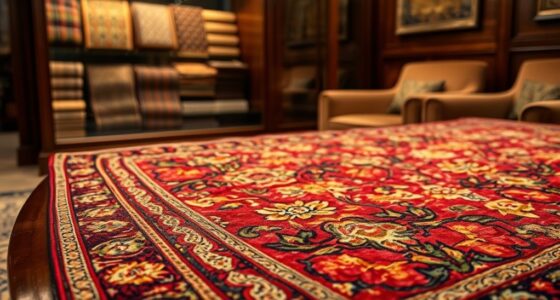
Persian rugs have long been celebrated for their intricate designs, rich colors, and unmatched craftsmanship. When you’re trying to determine if a rug is truly authentic, one of the first features to examine is its knot density. This refers to how closely the individual knots are tied during the weaving process, and it’s a key indicator of quality. The higher the knot density, the finer and more detailed the rug tends to be. Authentic Persian rugs often boast a dense knot count, which results in sharper patterns and more intricate details. You’ll notice that rugs from regions renowned for their craftsmanship, such as Tabriz or Isfahan, typically have higher knot densities, sometimes exceeding 200 knots per square inch. This dense knotting not only enhances the durability of the rug but also reflects the skill and patience of the weaver. Recognizing the knot density can also help you understand the level of craftsmanship, as higher knot counts generally indicate more skilled weaving techniques.
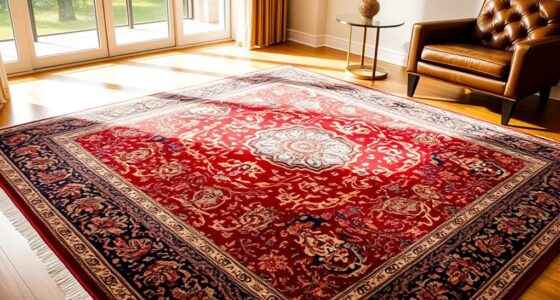
Equally important are regional motifs, which serve as a signature of the rug’s origin. These motifs are distinctive patterns that are characteristic of specific Persian regions, reflecting local traditions, beliefs, and history. For example, a Kashan rug might feature elaborate floral designs, while a Baluch rug might showcase bold geometric shapes. Recognizing these regional motifs can help you verify the authenticity of a Persian rug and appreciate its cultural significance. When you look closely, you might notice that regional motifs are consistently used within a particular area, making them a reliable marker for identifying where the rug was crafted. Authentic Persian rugs often display these motifs with a high level of craftsmanship, carefully woven to preserve the region’s traditional aesthetic.
In addition to knot density and regional motifs, authentic Persian rugs also showcase precise symmetry and balanced designs, which are signs of meticulous craftsmanship. The choice of natural dyes and high-quality wool or silk further distinguish genuine pieces from imitations. As a collector, paying attention to these details will help you make informed decisions, ensuring you invest in rugs that are both beautiful and authentic. Remember, the combination of a high knot density, authentic regional motifs, and craftsmanship details will serve as your best guide in identifying real Persian rugs. These features are not just indicators of authenticity but also hold the story and heritage behind each piece, making your collection all the more meaningful.
Frequently Asked Questions
How Can I Tell if a Persian Rug Is Handmade or Machine-Made?
You can tell if a Persian rug is handmade by examining its weaving techniques and knot density. Handmade rugs typically have irregularities in the weave and knots, showing craftsmanship and unique details. Check the back for tight, consistent knots and uneven edges, which indicate hand-knotting. Machine-made rugs often have uniform knots and a perfectly even appearance. By closely inspecting these features, you’ll confidently distinguish authentic handwoven Persian rugs from machine-made ones.
What Are the Most Common Counterfeit Signs in Persian Rugs?
Counterfeit Persian rugs often betray themselves with glaring weaving inconsistencies and color irregularities that scream “fake” louder than a siren. You should watch out for uneven knots, inconsistent pile height, and unnatural dye patterns. Genuine rugs have balanced, harmonious designs, while fakes tend to show rushed craftsmanship and jarring color mismatches. Trust your instincts—if something feels off, it probably is, and you’re better off inspecting further or consulting an expert.
Which Persian Rug Regions Produce the Most Valuable Pieces?
You’ll find the most valuable Persian rugs from regions with rich historical weaving traditions, like Tabriz, Kashan, and Isfahan. These areas showcase distinctive regional variations in design, color, and craftsmanship, making their pieces highly sought after. Their historical weaving techniques and unique patterns boost their value, especially when well-preserved. Focus on these regions if you want authentic, collectible Persian rugs that stand out for their quality and heritage.
How Does Rug Age Affect Its Value and Authenticity?
You’ll find that rug age markedly impacts its value and authenticity. Older rugs, showing age-related wear and subtle dye fading, often fetch higher prices because they demonstrate craftsmanship and history. However, excessive wear can diminish value, so look for balanced aging signs. Authenticity is confirmed when dye fading occurs naturally over time, not artificially. Trust your eyes and touch to gauge authenticity and appreciate the beauty of age in Persian rugs.
What Tools or Methods Are Best for Authenticating Persian Rugs?
To authenticate Persian rugs, use fiber analysis to examine the materials, ensuring they match traditional wool, silk, or cotton fibers. Dye testing is also essential; authentic rugs often feature natural dyes that age beautifully over time. You can perform these tests yourself with kits or seek a professional appraisal. Combining these methods offers a reliable way to verify the rug’s origin and authenticity, giving you confidence in your collection.
Conclusion
So, now that you’re practically an expert in spotting authentic Persian rugs, don’t let the fancy patterns fool you—sometimes the real deal is hiding in plain sight. Remember, a genuine rug isn’t just about intricate design; it’s about history, craftsmanship, and a bit of patience. Ironically, the more you learn, the easier it is to spot the fakes. Happy hunting—your living room just got a whole lot more genuine!