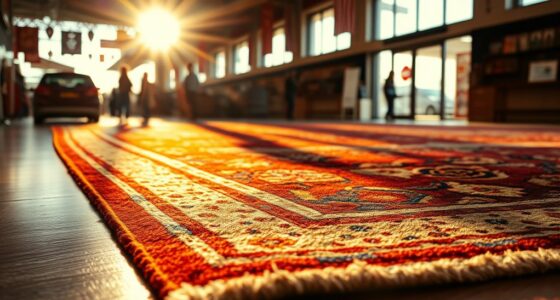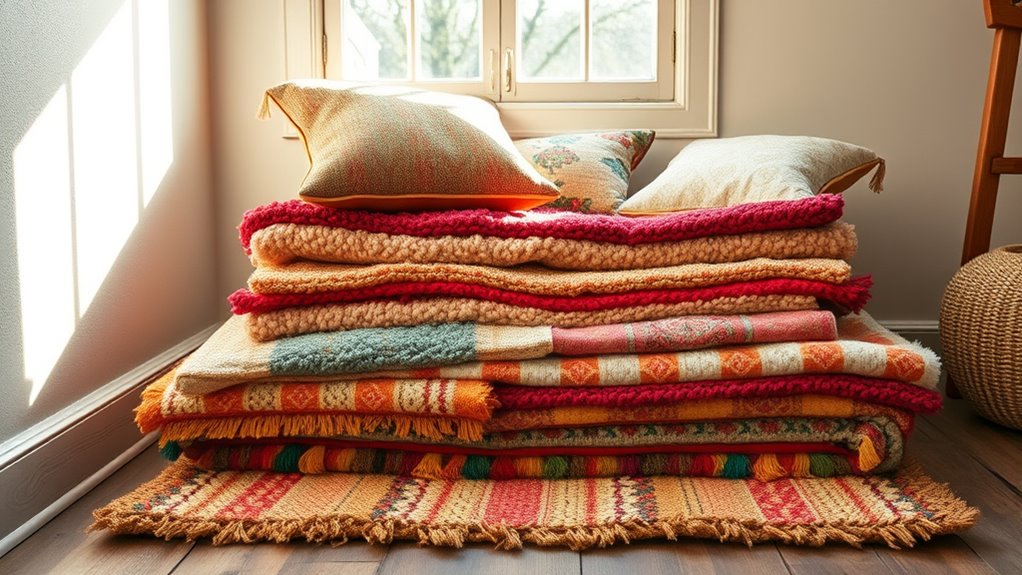

Start by setting a clear budget and focusing on key areas where a rug can make the biggest impact. Look for versatile, well-made pieces in thrift stores, flea markets, and online marketplaces like Etsy or eBay. Mix vintage finds with affordable options, layering for interest. Prioritize quality natural fibers like wool, and don’t rush—explore different styles to find what works for your space. Keep exploring to discover how to build a unique, stylish collection on a budget.

Get cleaning gear delivered free with Prime
- Fast, free delivery on millions of items
- Prime Video, Amazon Music and more included
- Member-only deals all year
Key Takeaways
- Set a clear budget and prioritize high-quality, versatile rugs that anchor rooms and add personality.
- Explore vintage and secondhand sources like thrift stores, flea markets, eBay, Etsy, and Facebook Marketplace.
- Compare prices, look for sales or clearance deals, and focus on natural fibers like wool or jute for durability.
- Mix vintage with affordable contemporary rugs, layering textures and styles for visual interest.
- Be patient, explore widely, and curate a cohesive collection that reflects your personal style over time.
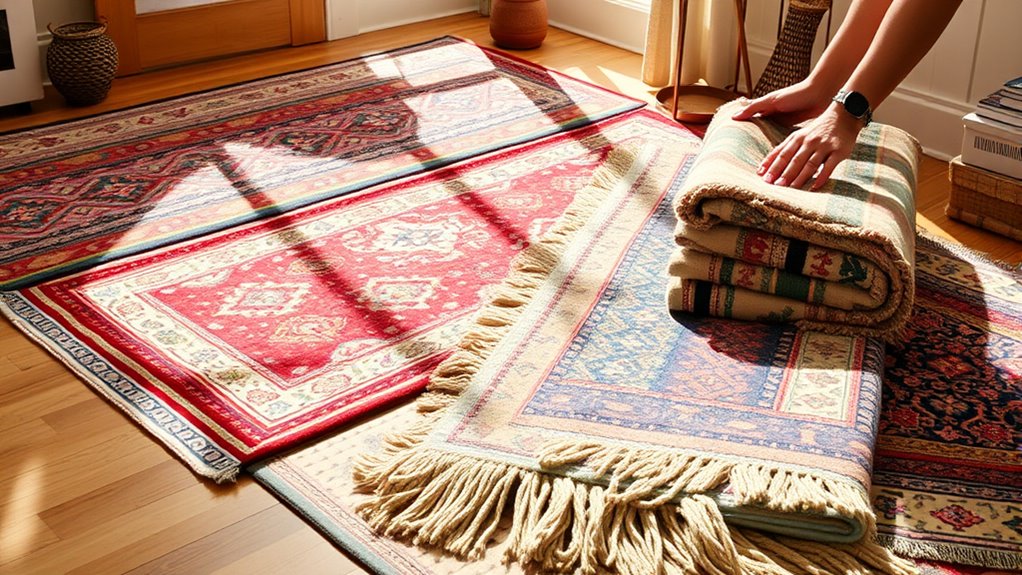
Creating a stylish rug collection doesn’t have to break the bank. When you’re starting out, you want to be strategic about where you look and what you prioritize. One of the best ways to build a diverse collection without overspending is to explore area rugs. These versatile pieces can anchor a room and add personality without requiring a huge investment. Instead of buying multiple new rugs, focus on finding a few high-quality or unique pieces that fit your style. Remember, a well-chosen area rug can transform a space, making it feel more cohesive and inviting. Incorporating cozy textiles like blankets and throws not only enhances comfort but also complements your rug collection, creating a warm and inviting farmhouse bedroom ambiance. Vintage finds are especially great for adding character and uniqueness to your collection. Thrift stores, flea markets, and online marketplaces are treasure troves for vintage rugs that often cost a fraction of retail prices. When browsing, look for authentic patterns, rich textures, and signs of age that add charm. Vintage rugs also offer a sustainable way to decorate, giving new life to pieces that might otherwise be discarded. You don’t need to settle for perfect condition; some wear and tear can add to the rug’s story and appeal. The key is to inspect them closely for damage or stains, ensuring you get a piece that will last with minimal repair. To get started, set a budget and decide how many rugs you want to add initially. Don’t rush into buying the first vintage find you see—compare prices and styles to ensure you’re getting good value. Keep an eye out for sales or clearance sections at local stores, as these often feature discounted area rugs that can be perfect for your collection. Online platforms like eBay, Etsy, or Facebook Marketplace are excellent sources for vintage rugs, often offering unique options at lower prices. When shopping, pay attention to the size and material—natural fibers like wool or jute tend to be more durable and timeless. Mixing vintage finds with more contemporary or affordable area rugs helps keep your collection fresh and dynamic. Layering different textures and styles creates visual interest and reflects your personality. Over time, you’ll develop an eye for quality and style, making it easier to spot hidden gems that fit your budget. Building a rug collection on a budget requires patience and exploration, but with a bit of effort, you’ll curate a collection that’s both stylish and uniquely yours.
As an affiliate, we earn on qualifying purchases.
Frequently Asked Questions
How Can I Identify Authentic Antique Rugs on a Budget?
You can identify authentic antique rugs on a budget by looking for key antique rug indicators like intricate weave, natural dyes, and signs of age such as wear and patina. Use budget antique tips like researching specific styles, consulting reputable sources, and examining craftsmanship closely. Always ask for detailed photos and provenance, and trust your intuition. With careful evaluation, you can find genuine pieces without overspending.
Are There Specific Materials to Prioritize for Affordable Quality Rugs?
Did you know synthetic fibers now make up over 60% of affordable rugs? For quality without breaking the bank, prioritize rugs made from synthetic fibers like polypropylene or polyester—these are durable and budget-friendly. Also, look for natural dyes, which add richness without the high cost of traditional natural dyes. These materials give you a good balance of durability, affordability, and visual appeal for your collection.
What Are the Best Online Platforms for Budget Rug Shopping?
You should check out online marketplaces like Amazon and Wayfair, which offer a wide selection of budget-friendly rugs. Discount retailers such as Overstock and HomeGoods also provide great deals without sacrificing quality. These platforms often have customer reviews, so you can make informed choices. Keep an eye out for sales and clearance sections to maximize savings, and compare prices to find the best options for your rug collection.
How Do Rug Sizes Impact Overall Collection Costs?
Size variations substantially impact your overall collection costs. Larger rugs typically cost more due to increased material and production expenses, while smaller rugs are more budget-friendly. When planning, consider how different sizes fit your space and your budget. Keep in mind that size is a major cost factor, so balancing desired dimensions with affordability helps you build a diverse, cost-effective rug collection without overspending.
Can I Mix Different Rug Styles in One Collection Effectively?
Yes, you can mix different rug styles effectively in your collection. Focus on color coordination to unify diverse patterns and textures, creating a cohesive look. Use style blending intentionally by combining modern and traditional rugs in a way that complements your space. Don’t be afraid to experiment; contrasting styles can add visual interest as long as they share a common color palette or theme, making your collection vibrant and well-curated.
Conclusion
Building a rug collection on a budget is totally doable if you stay patient and creative. Start small, explore thrift stores, and keep an eye out for sales—you’ll be amazed at how quickly your collection grows without emptying your wallet. With each piece, you’ll craft a vibrant, cozy space that feels like a designer’s dream. Remember, your collection can become as legendary as a museum’s — all without breaking the bank!
Halloween Picks
halloween
As an affiliate, we earn on qualifying purchases.