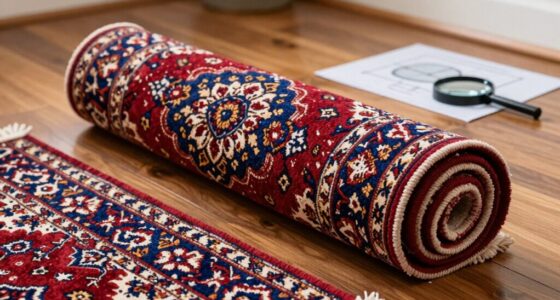
When evaluating a rug’s patina, you should look for signs of natural wear, like gentle fading, soft fibers, and color variations that develop gradually over time, indicating genuine aging. Damage, on the other hand, often shows abrupt tears, stains, or frayed fibers that disrupt the rug’s harmony. Recognizing the difference helps you appreciate its character and authenticity. To get a clearer picture of these subtle cues, keep exploring what makes a rug truly valuable.
Key Takeaways
- Look for subtle, uneven color changes and softening that develop gradually over time as signs of natural wear.
- Identify irregular, abrupt damage such as tears, stains, or frayed fibers indicating actual damage.
- Authentic aging features often enhance the rug’s character, while damage disrupts visual harmony and structural integrity.
- Proper care preserves patina and authenticity markers, whereas damage requires repair to maintain value.
- Recognizing the difference helps in making informed decisions about preservation, restoration, or valuation.
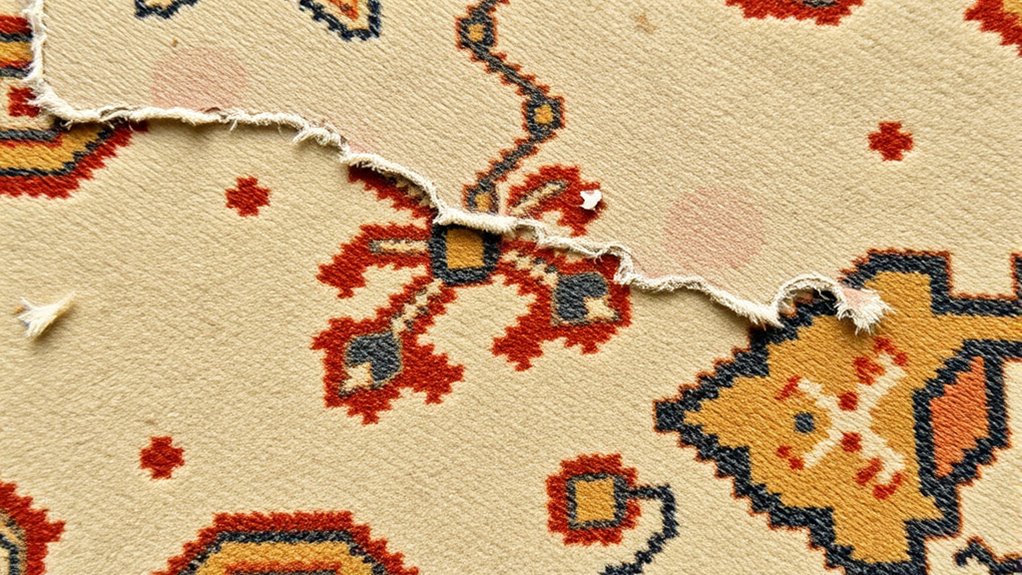
Understanding the difference between natural wear and damage is essential for maintaining your belongings. When it comes to rugs, this distinction often hinges on the concept of patina — the subtle changes that develop over time. Aesthetic aging, or the natural aging process, adds character and depth to your rug, creating what experts call authenticity markers. These markers aren’t flaws; they’re signs that your rug has a history, a story told through its colors, fibers, and textures. Recognizing these signs allows you to appreciate the beauty of genuine aging versus damage that compromises the rug’s integrity.
Natural wear typically manifests through gentle fading, softening of fibers, and slight variations in color. These changes happen gradually and are often uneven, giving your rug a unique, lived-in appeal. This aesthetic aging is highly valued because it indicates the rug’s authenticity and adds to its charm. For instance, a slightly lighter patch or a mellowed hue in certain areas isn’t a sign of neglect but a marker of genuine age. You might notice the pile becoming thinner in high-traffic areas or the edges softening over time. These are natural processes that enhance the rug’s character without diminishing its value.
Additionally, understanding proper care practices can help maintain these authenticity markers and prevent unnecessary damage. In contrast, damage usually appears as irregular, abrupt alterations. You might see tears, burns, stains, or areas where the fibers are frayed or missing. Damage often results from mishandling, accidents, or environmental factors like moisture and pests. Unlike the graceful changes of authentic aging, damage tends to be more disruptive visually and structurally. It can compromise the rug’s durability and aesthetic appeal, making it clear that repair or restoration might be necessary. Spotting these differences is vital because it guides your care approach — preserving the rug’s authenticity markers versus addressing damage that needs fixing.
As an affiliate, we earn on qualifying purchases.
Frequently Asked Questions
How Can I Tell if a Rug’s Patina Is Authentic?
You can tell if a rug’s patina is authentic by examining its vintage charm and surface coloration. Genuine patina develops gradually, giving the rug a rich, uneven tone that feels natural rather than artificially aged. Look for subtle variations, worn areas, and a soft sheen that indicates age. Authentic patina enhances the rug’s character, so trust your eye to distinguish between natural aging and superficial damage or artificial distressing.
Does Age Always Indicate Natural Wear on Rugs?
Age doesn’t always mean natural wear on rugs. Sometimes, aesthetic aging is intentionally created to enhance a rug’s cultural significance or visual appeal. You should look for signs like consistent patina, subtle color changes, and signs of genuine use rather than uniform fading or damage. Authentic patina reflects cultural history and craftsmanship, so evaluate whether the aging appears natural or artificially added to boost the rug’s value and character.
Can Accidental Spills Create a Desirable Patina?
Yes, accidental spills can create a desirable patina by adding unique spill aesthetics and accidental charm to your rug. These marks tell a story, blending imperfections with history, making your piece more intriguing. While some see spills as damage, others appreciate how they contribute to the rug’s character. Embrace these natural imperfections, as they often enhance your rug’s beauty and authenticity over time.
Are Certain Rug Materials More Prone to Mistaken Damage?
Certain rug materials are more prone to mistaken damage due to fiber sensitivity and dye stability. You’ll find that natural fibers like wool and silk can be easily damaged if exposed to harsh chemicals or excessive moisture, while synthetic fibers are generally more resistant. Be cautious with dye stability, as some dyes fade or bleed easily, making it easier to mistake natural wear or spills for damage. Always choose rugs suited to your environment for better longevity.
How Does Cleaning Affect the Appearance of Patina?
Think of cleaning as a gentle rain that can refresh or wash away the charm of your rug’s patina. Cleaning impact varies; it can brighten surface shine, making colors pop, or strip away the aged glow that tells its story. Overdoing it risks dulling the natural wear, so you must strike a delicate balance. Proper cleaning preserves your rug’s character while maintaining its timeless beauty.
Conclusion
Now that you know the difference between natural wear and damage, you can confidently assess your rug’s patina. Remember, a well-loved rug with a beautiful patina tells a story, much like a vintage wine aging gracefully. So, don’t be too quick to call in the repair crew; sometimes, these signs of life add character. With a keen eye, you’ll keep your rug looking elegant—like a true art piece—rather than a mere relic from a bygone era.