To spot reproductions and avoid fake antique rugs, look for natural fibers like wool or silk that develop a unique patina over time. Check for uneven knotting, subtle imperfections, and irregular dyes, as authentic pieces show these signs of craftsmanship. Be wary of overly perfect patterns, uniform colors, and artificial distressing, which often indicate recent production. By paying close attention to these details, you can better distinguish real antiques from fakes—discover more tips to protect your investment.

Get cleaning gear delivered free with Prime
- Fast, free delivery on millions of items
- Prime Video, Amazon Music and more included
- Member-only deals all year
Key Takeaways
- Examine fibers; authentic rugs use natural materials like wool, silk, or cotton, which age and develop a patina over time.
- Check for irregular knotting and craftsmanship imperfections indicative of handwoven, genuine antique rugs.
- Look for uneven fading, wear patterns, and softened fibers that suggest authentic aging versus artificial distressing.
- Beware of overly perfect, symmetrical patterns and uniform colors common in machine-made reproductions.
- Consult with experts to authenticate the rug and identify subtle signs of forgery or modern reproduction.
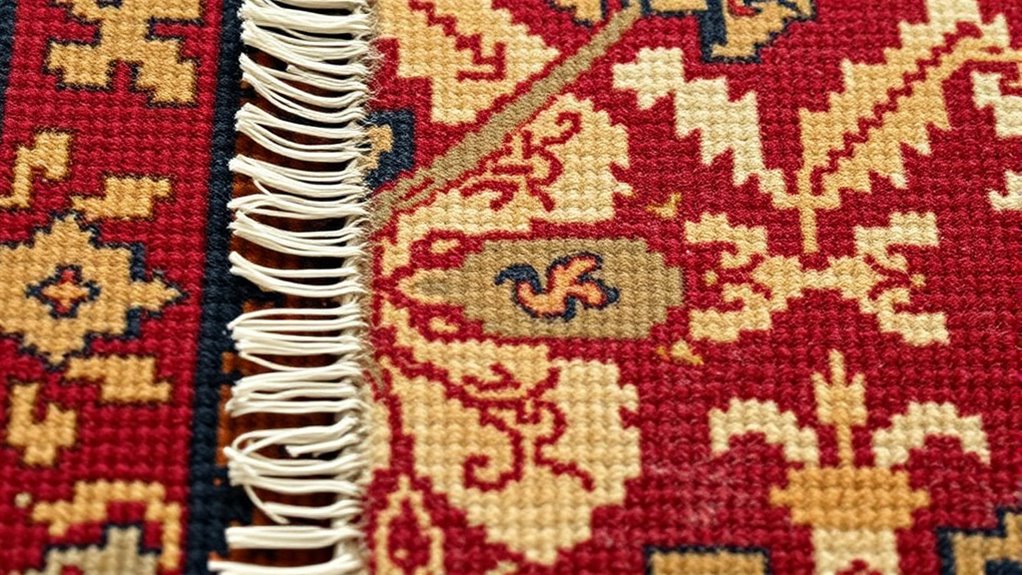
When shopping for antique rugs, it’s essential to be vigilant because fake reproductions often mimic genuine pieces to deceive buyers. Recognizing authentic antique rugs requires more than a quick glance; you need to know the right authentication techniques. These methods help you verify a rug’s age, origin, and authenticity, guaranteeing you don’t fall for a cleverly crafted forgery. One of the most effective authentication techniques involves examining the rug’s materials. Authentic antique rugs are usually made from natural fibers like wool, silk, or cotton, which develop a unique patina over decades. Synthetic fibers, on the other hand, are a common forgery sign, as they tend to look too perfect or uniform, lacking the subtle irregularities of aged materials. Additionally, inspecting the dyes used in the rug can reveal vital clues. Natural dyes tend to fade unevenly over time, creating a more nuanced, complex coloration, while synthetic dyes often appear too uniform and vibrant, a clear indicator of a reproduction.
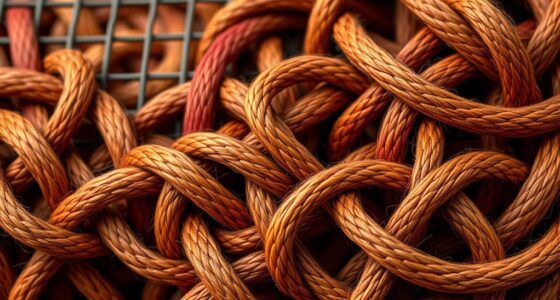
Authentic antique rugs use natural fibers like wool, silk, or cotton that develop a unique patina over time.
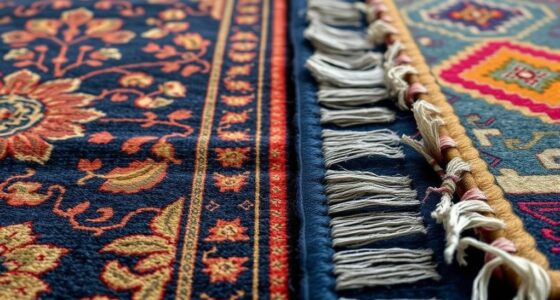
Another essential authentication technique involves closely inspecting the weaving techniques and craftsmanship. Genuine antique rugs often display uneven knotting, slight irregularities, and signs of wear that come with age. These imperfections suggest hand-weaving, a hallmark of authentic pieces. Reproductions, however, often feature machine-made knots or overly perfect patterns that lack the subtle imperfections of handcrafted work. Being attentive to these details can help you avoid common forgery signs, such as overly sharp outlines, repetitive patterns, or unnatural symmetry, which are characteristic of machine-produced reproductions. Moreover, understanding fiber aging can enhance your ability to distinguish authentic pieces from modern reproductions.
Furthermore, the rug’s wear patterns and patina are critical indicators of age. Authentic antique rugs typically exhibit consistent wear in high-traffic areas, with faded colors and softened fibers, especially on the pile’s surface. Fake rugs might show artificial aging, like uneven distressing or artificially faded patches that seem out of place. Be wary of rugs that look too perfect or uniformly worn, as these often signal recent manufacturing or intentional aging designed to mimic genuine patina.
Lastly, it’s wise to consult with experts or appraisers who specialize in antique rugs. They use refined techniques and have extensive experience in spotting forgeries. If you’re unsure about a rug’s authenticity, a professional opinion can save you from investing in a fake. Remember, when you understand proper authentication techniques and recognize common forgery signs, you’re better equipped to distinguish real antique rugs from convincing reproductions. This knowledge helps safeguard your investment and guarantees you bring home a piece with genuine history and value.
As an affiliate, we earn on qualifying purchases.
Frequently Asked Questions
How Can I Tell if a Rug’s Dye Is Authentic?
To tell if a rug’s dye is authentic, look closely at the colors; natural dye sources often produce rich, subtle hues that age beautifully. You can perform a water test—natural dyes typically resist fading or running, while chemical dye indications show brighter, less complex colors that may bleed. Also, check for consistency in color throughout the rug, as natural dyes tend to vary slightly, adding to the piece’s authenticity.
What Are Common Signs of Recent Manufacturing in Antique-Looking Rugs?
Like a wolf in sheep’s clothing, recent manufacturing signs can deceive you. Look for modern dyeing, which often results in unnatural, overly vibrant colors, and check the edges—machine-made edges tend to be too perfect and uniform. Also, inspect the back of the rug for precise, even stitching, unlike hand-crafted antique rugs. These clues reveal the rug’s true age and help you avoid fakes.
Are There Specific Patterns That Indicate a Reproduction?
Certain pattern markers can reveal reproductions, like overly perfect symmetry and inconsistent motifs. If the motifs lack authenticity or feel too uniform, it’s a red flag. Reproductions often use simplified or modernized designs that don’t match traditional craftsmanship. By closely examining these pattern markers and scrutinizing motif authenticity, you can better identify fake antique rugs and avoid purchasing a reproduction.
How Does Rug Aging Differ in Genuine Antiques Versus Reproductions?
Think of rug aging like a well-worn book, rich with stories. In genuine antiques, the aging process shows subtle fiber deterioration, with even color fading and a soft patina from years of use. Reproductions, however, often lack this natural wear, showing uniform color and stiff fibers. You’ll notice fewer signs of fiber deterioration, making the rug appear artificially aged. Authenticity shines through these delicate, genuine signs.
Can a Certificate of Authenticity Guarantee a Rug’s Originality?
A certificate of authenticity alone doesn’t guarantee a rug’s originality, as authenticity certificates can sometimes be forged. You should also verify provenance, which provides a detailed history of the rug’s origin and ownership. Combining these documents with expert appraisal and close inspection helps guarantee you’re buying a genuine antique. Always trust reputable dealers who offer verified provenance and authentic certificates to protect your investment.
Conclusion
By staying vigilant, you can spot fake antique rugs like a hawk spotting prey. Carefully examine the weave, color, and signs of aging to distinguish authentic pieces from imitations. Remember, a genuine antique rug is like a rare diamond—worth the effort to find. So, take your time, do your homework, and trust your instincts. With a keen eye, you’ll avoid fakes and treasure the beauty of authentic rugs for years to come.
Halloween Picks
halloween
As an affiliate, we earn on qualifying purchases.