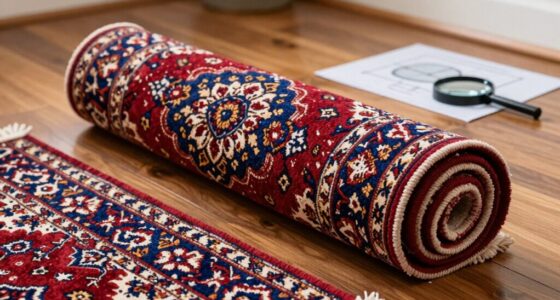
To decide the best time to sell your rug, consider market trends, appraisals, and external factors like seasonal demand and economic conditions. Selling when prices are rising and appraisals are favorable can maximize your profit. Watch for demand peaks during holidays or spring and avoid times of economic uncertainty. By paying attention to these signals, you can time your sale wisely. Keep exploring to discover more tips for choosing the perfect moment.
Key Takeaways
- Monitor market trends and demand fluctuations to identify optimal selling periods.
- Use regular appraisals to assess whether current market conditions favor selling.
- Consider seasonal peaks like spring and holidays when buyer interest is high.
- Evaluate external factors such as economic stability, which influence rug prices.
- Avoid selling during market dips or economic uncertainty to maximize sale value.
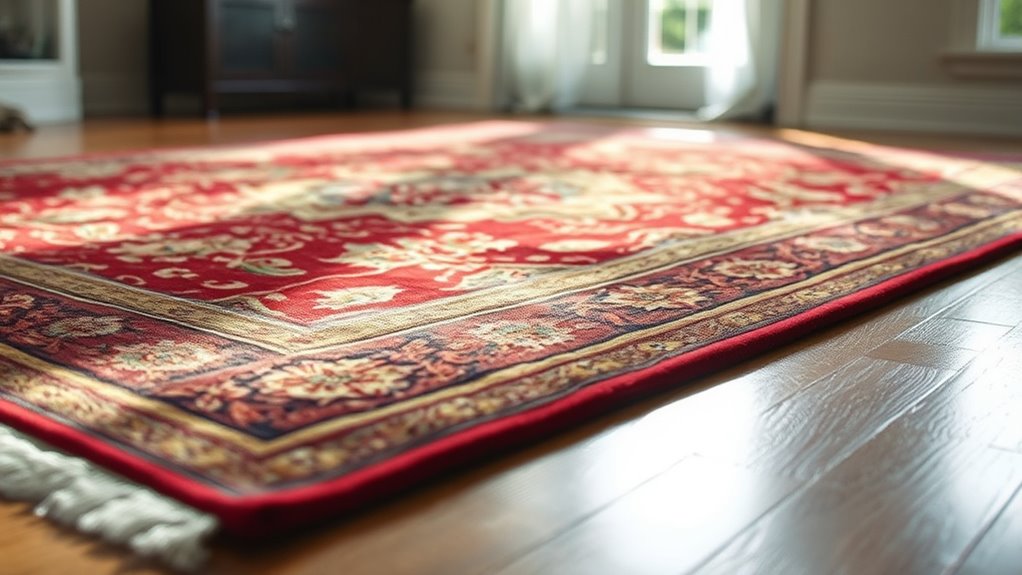
Deciding when to sell a rug can considerably impact its value and your overall satisfaction. Timing your sale correctly ensures you get the best possible price and avoid unnecessary losses. One crucial factor to consider is appraisal timing. Having your rug appraised at the right moment can help you understand its current market value, especially as market fluctuations can significantly influence prices. If you sell too early, you might miss out on potential gains if the market is trending upward. Conversely, waiting too long might cause you to sell when the market dips, reducing your profit or leading to a lower sale price.
Understanding market fluctuations is key to pinpointing the optimal selling time. The rug market, like many collectibles and antiques, can be quite volatile. Prices often rise during periods of increased demand or when specific styles become trendy again. On the other hand, economic downturns or shifts in consumer preferences can cause prices to decline. Keeping an eye on these fluctuations helps you decide whether the timing is right or if you should hold onto your rug a little longer. For example, if you notice a surge in interest in antique or vintage rugs, it might be the perfect time to sell. Conversely, if the market shows signs of decline, delaying your sale could be a smarter move.
You should also consider external factors that influence market fluctuations, such as seasonal demand or global economic conditions. Certain times of year, like the spring or holiday season, tend to see increased interest in home decor and furnishings, which can drive up rug prices. Global economic stability can also influence buyers’ willingness to spend on high-value items like rugs. When economic conditions are strong, buyers are more confident, and prices tend to be higher. If the economy is uncertain, it might be better to wait until conditions improve.
Another aspect to keep in mind is the timing of appraisals. Getting your rug appraised regularly can help you track its value over time, giving you a clearer picture of when market conditions are favorable. If an appraisal indicates your rug’s value is peaking or on the rise, it’s a good signal that now might be the best time to sell. Additionally, understanding the durability of your rug can inform how long it might retain its value or appeal to buyers, influencing your timing decisions. On the other hand, if the appraisal shows a decline or stagnation, waiting might be prudent.
antique rug appraisal kit
As an affiliate, we earn on qualifying purchases.
As an affiliate, we earn on qualifying purchases.
Frequently Asked Questions
How Do Seasonal Trends Affect Rug Resale Value?
Seasonal demand and color trends substantially influence your rug’s resale value. During peak seasons, like spring and fall, more buyers seek rugs, boosting prices. Bright, trendy colors also attract buyers, making your rug more appealing. If you sell when these trends align, you’ll get a better price. Avoid off-season periods when demand drops, and keep an eye on color trends to maximize your rug’s resale value.
What Signs Indicate a Rug Has Increased in Worth?
You notice a rug’s worth has increased when a professional rug appraisal confirms its value has risen, especially if it’s gained attention from collectors. Signs include improved condition, rarity, or historical significance that collectors find appealing. You’ll also see increased demand or offers from collectors, indicating heightened interest. Keep an eye on market trends and appraisals, as these are strong indicators that your rug’s value has appreciated.
Should I Wait for a Specific Market Event to Sell?
Waiting for a specific market event is like catching a wave at the right moment—timing is everything. You should sell during ideal auction timing, when market speculation is high, and demand peaks. Keep an eye on industry trends and market sentiment, but don’t wait too long, or you might miss the best opportunity. Act when conditions seem favorable, ensuring you maximize your rug’s value.
How Do Regional Market Differences Influence Selling Timing?
Regional market differences greatly influence your selling timing. You should pay attention to regional demand, which fluctuates based on local trends and economic factors. Also, consider local competition—if many sellers are offering similar rugs, you might want to wait for a better moment. Being aware of these regional variations helps you choose the most advantageous time to sell, ensuring you get the best price and faster sale.
What Are the Risks of Selling During Market Downturns?
Selling during market downturns risks low market liquidity, making it harder to find buyers quickly. You might have to accept lower offers or wait longer to sell your rug, which could lead to financial losses. Additionally, buyer availability decreases during downturns, so fewer people are interested in purchasing, increasing the chances that your rug stays unsold. Staying patient and monitoring market trends can help you avoid these risks.
seasonal rug sale display
As an affiliate, we earn on qualifying purchases.
As an affiliate, we earn on qualifying purchases.
Conclusion
So, next time you’re waiting for the perfect market moment, remember—selling your rug might just be like waiting for paint to dry. Ironically, the best time could be when everyone else is rushing to sell, and the market’s flooded. Or perhaps, the perfect moment is when you least expect it, like finding a forgotten treasure in your closet. Either way, timing is tricky, but at least you’ll have a great story about the one that got away.
vintage rug market value guide
As an affiliate, we earn on qualifying purchases.
As an affiliate, we earn on qualifying purchases.
rug price trend analysis book
As an affiliate, we earn on qualifying purchases.
As an affiliate, we earn on qualifying purchases.