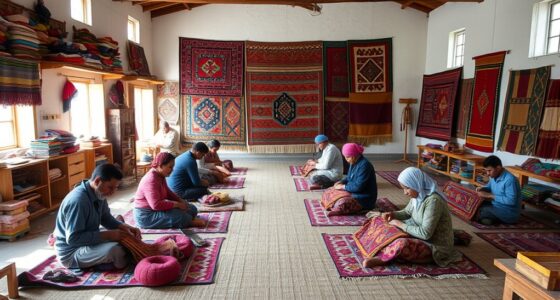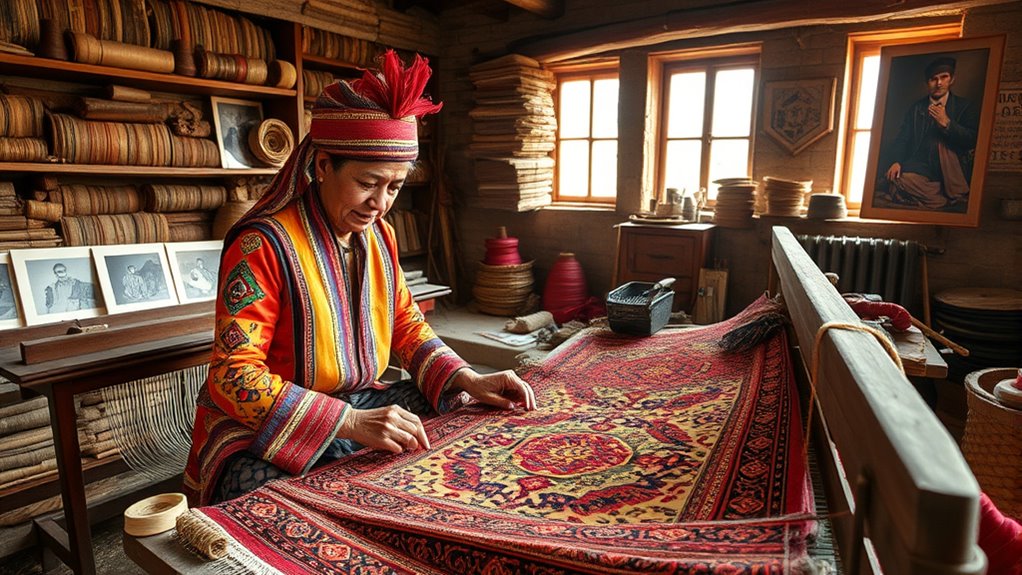

Documenting endangered rug traditions helps you safeguard the unique stories, patterns, and techniques that define communities. By recording artisans’ methods and the cultural meanings behind their designs, you ensure these skills are passed down to future generations. This process protects cultural identities and keeps traditional crafts alive amid modernization. If you want to understand how these efforts can continue to enrich and sustain communities, there’s more to discover ahead.
Key Takeaways
- Documenting weaving techniques and patterns preserves traditional craft knowledge for future generations.
- Recording artisan stories captures cultural narratives and personal histories integral to rug-making heritage.
- Documentation safeguards endangered rug traditions from loss due to modernization and changing social practices.
- Preserving these practices fosters community pride and encourages younger generations to continue traditional weaving.
- Detailed records promote global awareness and appreciation of diverse cultural heritages embedded in rug-making.

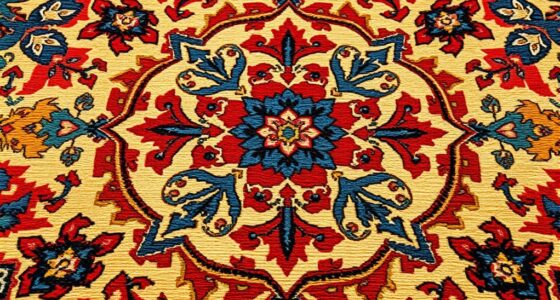
Cultural preservation is essential for maintaining the identity and heritage of communities around the world. When it comes to traditional rug-making, this preservation often hinges on understanding and passing down specific weaving techniques that have been refined over generations. You might find that each knot, pattern, and color choice tells a story unique to its community, serving as a tangible link to the past. By documenting these weaving techniques, you’re helping to safeguard not only the skills involved but also the cultural narratives embedded within each rug. It’s about more than just the craft; it’s about capturing the essence of the artisan stories that breathe life into every piece.
Documenting weaving techniques preserves cultural stories and artisans’ skills, keeping traditional rug-making alive for future generations.
When you explore these weaving techniques, you begin to see how they are intricately tied to the community’s history, environment, and social practices. For example, certain patterns may symbolize local myths or important events, while the materials used reflect the natural resources available in the region. As you record these details, you’re creating a vital record that ensures future generations can learn from and continue these traditions. This effort also promotes appreciation for the artisans behind each piece, recognizing their skills and the cultural significance woven into their work.
Remember, artisan stories are a powerful part of this preservation process. These stories, often shared during interviews or through community recordings, reveal the personal journey behind each rug. They provide context that elevates the craft from simple decoration to a meaningful cultural expression. When you collect these stories, you’re giving voice to artisans who might otherwise be overlooked, emphasizing that each rug is a product of a community’s collective history. Your work helps keep these stories alive, ensuring they’re not lost amid modernity’s rapid changes. Additionally, emphasizing the importance of cultural preservation can motivate communities to take pride in their unique traditions and encourage younger generations to carry on these skills and stories.
handwoven rug preservation book
As an affiliate, we earn on qualifying purchases.
As an affiliate, we earn on qualifying purchases.
Frequently Asked Questions
How Can I Start Documenting Local Rug Weaving Techniques?
You can start documenting local rug weaving techniques by preparing for fieldwork with thorough research and planning. Use interview techniques to engage artisans, asking about their methods and stories behind their craftsmanship. Visit weaving communities, observe their processes, and record videos or take photos. Prepare questions in advance, respect cultural practices, and build trust with artisans. This approach guarantees detailed, respectful documentation of their endangered rug traditions.
What Digital Tools Assist in Preserving Traditional Rug Patterns?
You can use digital tools like virtual galleries and 3D scanning to preserve traditional rug patterns. Virtual galleries let you showcase and share designs globally, ensuring they’re accessible even if the originals are lost. 3D scanning captures intricate details of rugs, creating detailed digital models that preserve craftsmanship and patterns for future generations. These tools help protect cultural heritage and promote appreciation of unique weaving traditions worldwide.
How Do I Connect With Artisans for Oral Histories?
You can connect with artisans by using effective interview techniques like open-ended questions and active listening, which encourage them to share rich oral histories. Engage with the community through local events, markets, or cultural centers where artisans gather. Building trust and showing genuine respect for their craft helps foster relationships. Use social media and online platforms to reach artisans who might be hard to access locally, making your community engagement more impactful.
Are There Funding Opportunities for Cultural Documentation Projects?
Did you know that over 1,000 preservation grants are available annually? You can explore various grant opportunities and preservation funding options for your cultural documentation projects. Many organizations, like the National Endowment for the Arts, support projects that preserve endangered rug traditions. Applying for these grants can help fund interviews, recordings, and research, ensuring these unique practices are documented and protected for future generations.
How Can Schools Incorporate Rug Tradition Preservation Into Their Curriculum?
You can incorporate rug tradition preservation into your school’s curriculum by crafting cultural curricula that highlight the history and techniques of rug making. Organize student exhibitions to showcase their understanding and appreciation of these crafts, encouraging hands-on learning. Invite artisans to demonstrate rug crafting processes, fostering cultural awareness. This approach engages students actively, helps preserve endangered traditions, and promotes respect for diverse cultural heritage through experiential education.

Amazing Circular Weaving: Little Loom Techniques, Patterns, and Projects for Complete Beginners
As an affiliate, we earn on qualifying purchases.
As an affiliate, we earn on qualifying purchases.
Conclusion
By documenting these endangered rug traditions, you help keep a crucial part of cultural history alive. Your efforts guarantee future generations can appreciate the artistry and stories woven into every piece. Isn’t it worth preserving such unique heritage before it’s lost forever? Every rug you help protect is a thread in the rich fabric of our shared human experience, reminding us of the beauty in diversity and tradition.
artisan rug documentation tools
As an affiliate, we earn on qualifying purchases.
As an affiliate, we earn on qualifying purchases.

Houient Music Black Area Rug,5x7ft,Music Classroom Rug Music Record Colorful Rug,Non-Slip Soft Rugs for Living Room Bedroom Apartment Dorm Music Area Rug Music Lovers Recording Studio Music Classroom
【Pattern Design】Add a touch of musical flair to any room with this cool black area rug featuring a…
As an affiliate, we earn on qualifying purchases.
As an affiliate, we earn on qualifying purchases.