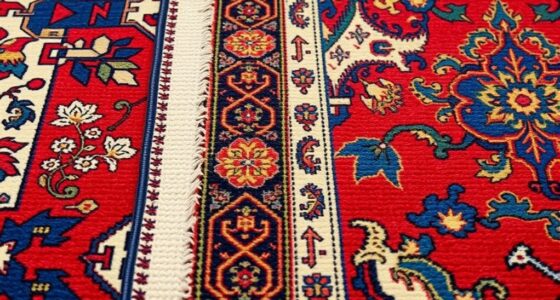
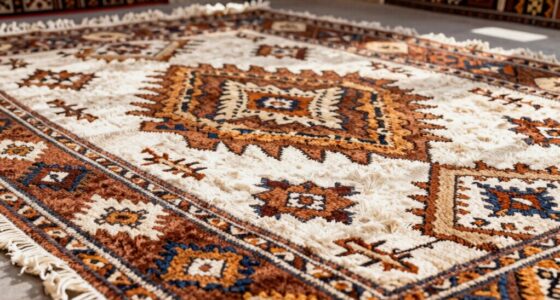
Climate plays a key role in choosing your rug materials and design to guarantee durability and comfort. In humid areas, moisture-resistant options like polypropylene or nylon help prevent mold, while in dry, hot climates, breathable natural fibers like jute or sisal work best. For colder environments, thick wool rugs add warmth. Matching your rug to your climate not only improves longevity but also keeps your space comfortable—if you want to learn how to select the perfect rug for your climate, keep exploring further.
Open a free Amazon Business account
Business pricing, bulk buying and tax-exempt orders.
As an affiliate, we earn on qualifying purchases.
Key Takeaways
- Climate determines the choice of rug materials to ensure indoor comfort and outdoor durability.
- Humid regions favor moisture-resistant, synthetic rugs to prevent mold and damage.
- Hot, dry climates benefit from breathable, natural fibers like jute or sisal for heat management.
- Cold environments require thick, insulating rugs made of wool or polyester for warmth.
- Proper material selection based on climate extends rug lifespan and reduces maintenance needs.

Climate plays a crucial role in determining the best rug materials and designs for your space. When choosing a rug, you need to take into account how the climate affects both indoor comfort and outdoor durability. If you live in a region with high humidity or frequent rain, your rug choices should prioritize materials that resist mold, mildew, and moisture damage. Conversely, in dry, hot climates, breathability and heat resistance become more important. The right material can make a significant difference in how comfortable your space feels and how long your rug lasts.
Choosing the right rug material depends on your climate for optimal comfort and durability.
For indoor spaces, climate influences your comfort levels more than durability. In colder environments, thick, plush rugs made from wool or synthetic fibers like polyester can add warmth and coziness to a room. Wool, in particular, has excellent insulating properties, helping you stay warm during chilly months. If you’re in a hotter climate, you might prefer lighter, low-pile rugs made of natural fibers like jute or sisal. These materials promote air circulation and don’t trap heat, ensuring your space remains cool and comfortable. The goal is to select a rug that complements your climate, enhancing your indoor comfort without making the space feel stuffy or too warm.
When considering outdoor areas or rugs exposed to the elements, durability takes center stage. Outdoor rugs need to withstand rain, sun, and varying temperatures without fading, rotting, or losing their structural integrity. Synthetic fibers such as polypropylene and nylon are popular choices because they resist moisture, mold, and UV damage. These materials are designed to endure outdoor conditions, providing long-lasting durability. Natural fibers like jute or coir can look appealing outdoors, but they tend to deteriorate quickly when exposed to moisture or direct sunlight. If you want a natural look without sacrificing longevity, opt for synthetic options that mimic natural textures but offer superior outdoor resilience.
Matching your rug material to the climate isn’t just about longevity; it also guarantees that your space remains comfortable and inviting. In humid regions, choosing moisture-resistant, easy-to-clean rugs prevents mold growth and odors. In hot, dry climates, lightweight, breathable rugs help maintain a cool environment. Additionally, considering rug maintenance and cleaning needs can significantly impact your rug’s lifespan and appearance. By paying attention to the climate’s demands, you can select a rug that not only fits your aesthetic but also performs well over time, providing both indoor comfort and outdoor durability. Ultimately, understanding your climate helps you make smarter choices, ensuring your rug enhances your space instead of becoming a source of frustration or frequent replacement.

HIYARD Sturdy Front Door Mat, Absorbent Muddy Dirt Resist Welcome Door Mats Outdoor Indoor, Stain and Fade Resistant, Non-Slip Backing Entry Mat Low Profile Doormat for Entryway, 29×17, Beige
- High Absorbency: Effectively captures mud and moisture
- Deep Groove Design: Traps water and debris efficiently
- Non-Slip Backing: Safe, moisture-proof rubber bottom
As an affiliate, we earn on qualifying purchases.
As an affiliate, we earn on qualifying purchases.
Frequently Asked Questions
How Do Humidity Levels Impact Rug Durability?
High humidity levels can negatively affect your rug’s durability by promoting mold, mildew, and fiber deterioration. Humidity effects weaken fiber resilience, causing fibers to become fragile, fray, or warp over time. You should control moisture in your environment, use dehumidifiers if needed, and choose rug materials suited for humid conditions. Proper care guarantees your rug remains resilient and maintains its appearance despite changing humidity levels.
Are Certain Rug Dyes More Resistant to Climate Conditions?
Yes, certain rug dyes are more resistant to climate conditions. Natural dyes, derived from plants and minerals, tend to fade faster in sunlight and humidity, so they may not be ideal for outdoor or high-moisture areas. Synthetic dyes, on the other hand, are more durable and resistant to fading, making them better suited for varying climate conditions. If you want longevity, opt for rugs with synthetic dyes.
Can Climate Change Affect Traditional Rug Patterns?
Yes, climate change can influence traditional rug patterns. As temperatures and weather patterns shift, you might notice alterations in regional motifs and cultural symbolism reflected in rug designs. These changes could lead artisans to adapt patterns to new environmental realities or incorporate new motifs that symbolize climate resilience. Over time, evolving climate conditions could subtly transform the visual language of traditional rugs, blending cultural symbolism with modern environmental influences.
What Maintenance Is Needed for Outdoor vs. Indoor Rugs?
You need to regularly clean, protect, and inspect your rugs for outdoor and indoor use. For outdoor rugs, you should shield them from UV damage, remove debris, and prevent pests by keeping the area tidy. Indoor rugs require vacuuming, spot cleaning, and occasional deep cleaning. Both types benefit from rotating to prevent uneven wear and checking for signs of damage, ensuring your rugs stay vibrant and durable over time.
How Does Temperature Variation Influence Rug Fiber Longevity?
Temperature variation accelerates fiber aging and material degradation in your rugs. When temperatures fluctuate widely, fibers expand and contract, weakening their structure over time. This stress causes fibers to become brittle, fray, and lose their original appearance faster. To protect your rugs’ longevity, keep them in stable environments whenever possible, and choose durable fibers suited for temperature changes. Proper care can markedly extend your rug’s lifespan despite temperature shifts.
Conclusion
Understanding how climate shapes rug materials and design helps you make smarter choices for your space. Did you know that over 60% of rug damage worldwide is caused by improper climate adaptation? By selecting the right materials and designs suited for your environment, you can greatly prolong your rug’s lifespan and maintain its beauty. So, pay attention to your climate, and your rug will thank you with lasting elegance and durability.
Pool season Picks
robotic pool cleaners
As an affiliate, we earn on qualifying purchases.