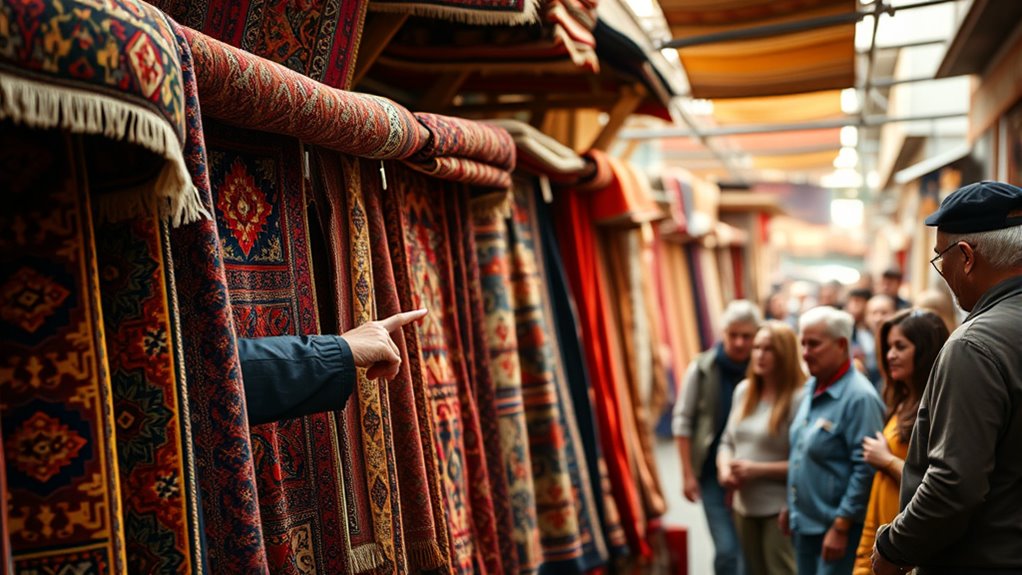
When buying a rug, ask sellers about its material, origin, and care instructions. Find out if it’s made from natural fibers like wool or silk, which may need gentle cleaning, or synthetic options like nylon or polyester for durability and stain resistance. Inquire about pile height, density, and if it’s suited for your space. Understanding these details helps you pick the right rug for your lifestyle. Keep exploring to discover more key questions to ask.
Key Takeaways
- Inquire about the rug’s fiber types to assess durability, maintenance needs, and suitability for your environment.
- Ask about the rug’s origin and craftsmanship to gauge quality and authenticity.
- Clarify recommended cleaning methods for different materials, especially natural fibers like wool or silk.
- Understand the pile height and density to determine texture, comfort, and care requirements.
- Discuss cost, lifespan, and potential material-specific issues to select a rug that fits your lifestyle and budget.
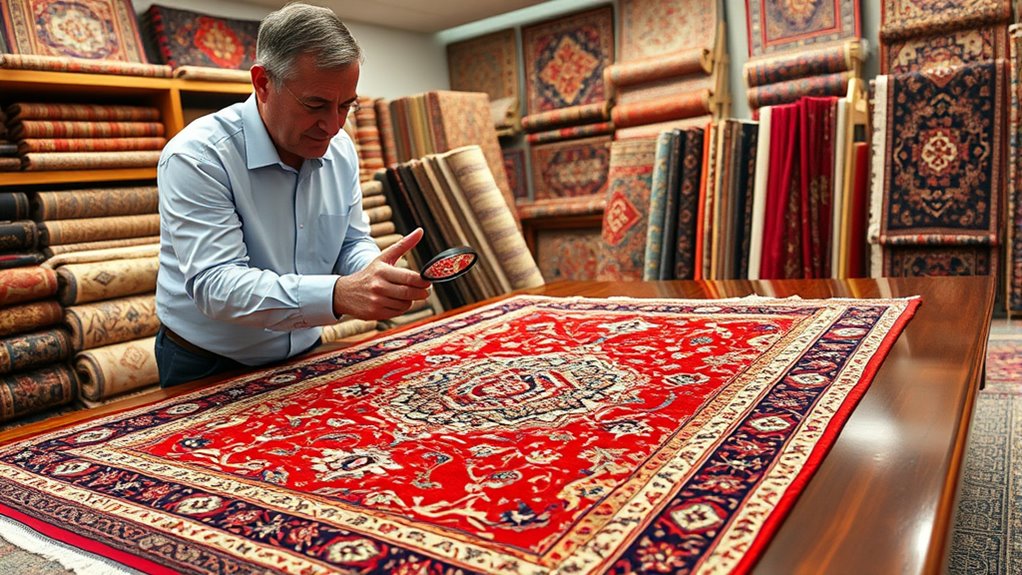
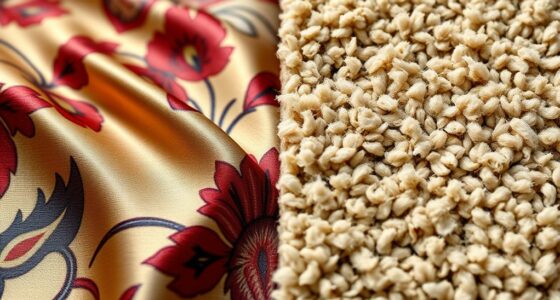
Buying a rug can be a rewarding experience, but it also requires some knowledge to guarantee you make the right choice. One important aspect to consider is understanding the different rug material types, as this will affect how you care for rugs over time. Knowing the materials helps you choose a rug that fits your lifestyle and ensures you can maintain its beauty for years to come. For example, natural fibers like wool and silk are luxurious and durable, but they also require specific cleaning methods. Synthetic options like nylon or polyester are more stain-resistant and easier to care for, making them suitable for high-traffic areas or households with kids and pets. By asking sellers about rug material types, you gain insight into what’s involved in caring for rugs and how they’ll handle everyday wear and tear.
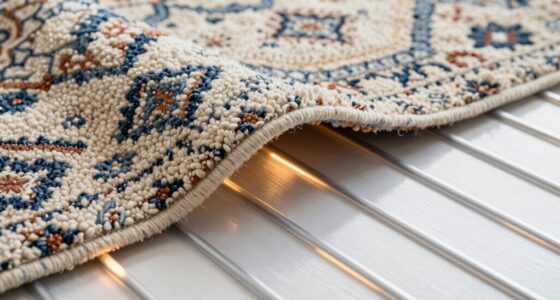
When talking to a seller, don’t hesitate to inquire about the origin of the rug and the specific fibers used. Some rugs may be made from a blend of materials, which can influence their durability and cleaning needs. For example, a wool rug might be soft and warm, but it also needs gentle cleaning and regular vacuuming to prevent dirt buildup. Synthetic rugs, on the other hand, are often more stain-resistant and easier to clean, but they might lack the same natural appeal. Knowing these distinctions helps you plan your rug’s maintenance routine and decide whether a particular material suits your household. Additionally, ask about the rug’s pile height and density, as these factors impact both caring for rugs and their overall look and feel.
Understanding rug material types also guides you in asking the right questions about care instructions. For delicate fibers like silk, professional cleaning might be be recommended, while sturdier materials may be suitable for regular home cleaning. Knowing what to expect in terms of maintenance allows you to budget time and money accordingly and ensures the rug remains a beautiful centerpiece without unnecessary damage. It’s also smart to ask about potential issues specific to certain materials, such as wool’s susceptibility to moth damage or synthetic fibers’ tendency to trap dust. Proper maintenance of rug materials is essential for extending their lifespan and preserving their appearance. Armed with this knowledge, you can confidently decide which rug will hold up best in your environment and how best to care for it.

RUSVILLA 8' x 10' Natural Jute & Wool Area Rug,– Handwoven Mini Check Natural Fiber Rug with 4" Border, Neutral Boho Farmhouse Rug for Living Room Dining Room Bedroom | 0.6" Pile (8' x 10')
🛋️ Versatile Neutral Boho Rug – This 8×10 area rug blends natural jute and wool to create a…
As an affiliate, we earn on qualifying purchases.
As an affiliate, we earn on qualifying purchases.
Frequently Asked Questions
How Do I Determine the Rug’s Authenticity and Origin?
You can determine a rug’s authenticity and origin by inspecting its dye techniques and knot density. Authentic rugs often use natural dyes, which age beautifully and show subtle color variations. Examine the knot density—the higher the density, the better the craftsmanship. Research the patterns and motifs typical of specific regions, and ask sellers for provenance details. These clues help verify the rug’s authenticity and trace its origin effectively.
What Are the Best Practices for Rug Maintenance and Cleaning?
To maintain your rug, regularly remove dirt using gentle vacuuming without the beater bar to avoid damage. Address stains promptly by blotting with a clean, damp cloth and using a mild stain treatment suited for your rug’s material. Avoid harsh chemicals and excessive water, which can cause damage or mold. Regular cleaning preserves your rug’s appearance and extends its lifespan, keeping it looking vibrant and fresh.
How Can I Identify a High-Quality Handmade Rug?
A high-quality handmade rug is like a finely woven story. You can spot it by checking the rug knot density—more knots per square inch usually mean better craftsmanship. Also, analyze the color palette; consistent, well-blended colors indicate skill. Feel the rug’s surface for durability, and examine the back for even, tight knots. These details help you identify a genuine, expertly made piece.
What Should I Consider When Negotiating the Price?
When negotiating the price, consider your bargaining tips by researching fair market value and understanding the rug’s quality. Use pricing strategies like starting with a lower offer and being willing to walk away if the deal doesn’t meet your budget. Focus on the rug’s craftsmanship and rarity to justify your offer, and stay respectful during negotiations to increase your chances of securing a better deal.
How Do I Assess the Durability and Suitability for High-Traffic Areas?
Don’t worry, evaluating durability and suitability for high-traffic areas is straightforward. Focus on material quality—look for rugs made from sturdy fibers like wool or nylon, which offer excellent traffic resistance. Check for dense weaves and tight knots, as these enhance durability. If you can, ask the seller about the rug’s usage history and maintenance, ensuring it can withstand frequent foot traffic without showing excessive wear.

5×7 Area Rug Living Room Rug: Washable Modern Abstract Soft Thin Rug Indoor Floor No Slip Stain Resistant Carpet for Bedroom Dining Room Farmhouse Nursery Home Office – Grey
Beautiful Design Abstract Rug:The 5×7 rug design is unique and trendy, the colors blend with nature, the abstract…
As an affiliate, we earn on qualifying purchases.
As an affiliate, we earn on qualifying purchases.
Conclusion
Now that you know what questions to ask, imagine walking into a store confident, your eyes sharp for details others might miss. The right rug isn’t just about beauty—it’s about understanding its story and quality. But beware—hidden secrets can still lurk beneath the surface. Are you ready to uncover the truth and find that perfect piece? The next step could change everything. The rug of your dreams might be closer than you think—if you just ask the right questions.

Large Plush Shaggy Rug High Pile Fluffy Rug for Living Room, Big Plush Non-Skid Shag Carpet, Soft Shaggy Rugs for Bedroom Indoor Modern Home Decor Tie Dye Camel 9x12ft
Super Soft Feeling: The fluffy rug with high-density sponge interlayer and 100% durable microfiber soft fluff, making you…
As an affiliate, we earn on qualifying purchases.
As an affiliate, we earn on qualifying purchases.

Yuchen Rug Silk Carpet 4×6 Blue Handwoven Traditional Medallion Vintage Luxury Oriental Silk Area Rug for Bedroom
Get Your Royal Handmade Rug from Yuchen Rug Manufacture! Yuchen Carpet specialise in hand knotted rug with silk.
As an affiliate, we earn on qualifying purchases.
As an affiliate, we earn on qualifying purchases.