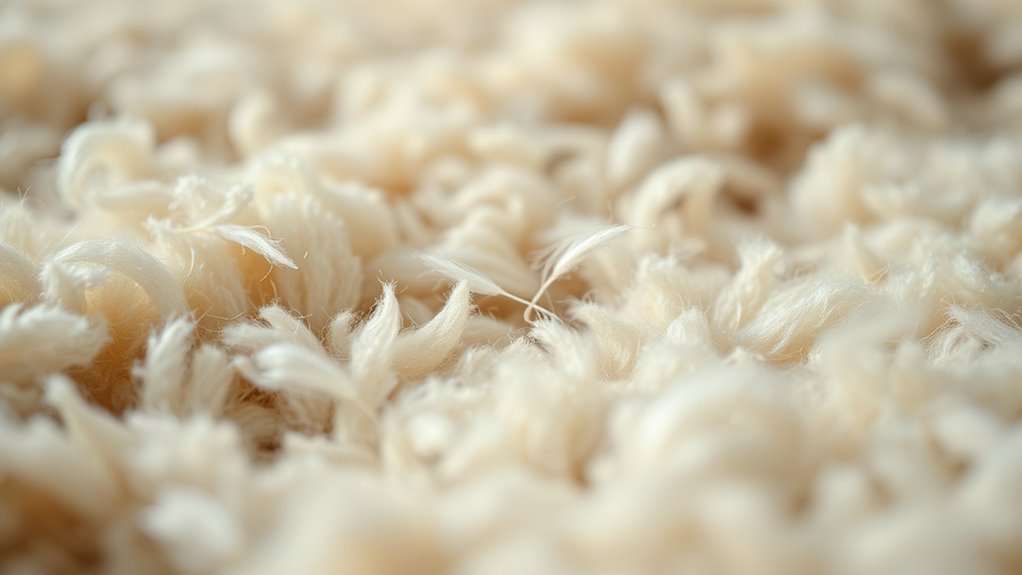

Fiber shedding in new wool rugs is normal during the break-in period and usually decreases over time. It happens because loose fibers are settling and becoming more secure—you might notice some fluff initially. To help minimize shedding, keep your rug clean, avoid heavy traffic, and use proper placement. If shedding persists beyond the first few months or seems excessive, there could be an issue. Continue exploring to learn how to protect and care for your wool rug effectively.
Key Takeaways
- Shedding is normal in new wool rugs due to loose fibers during the break-in period.
- Expect initial shedding to decrease over weeks or months as fibers settle and stabilize.
- Regular gentle vacuuming helps remove loose fibers and speeds up stabilization.
- Excessive shedding beyond the break-in phase may indicate a problem needing professional attention.
- Proper placement and maintenance can minimize shedding and prolong the rug’s lifespan.
Understanding Wool Fiber Shedding
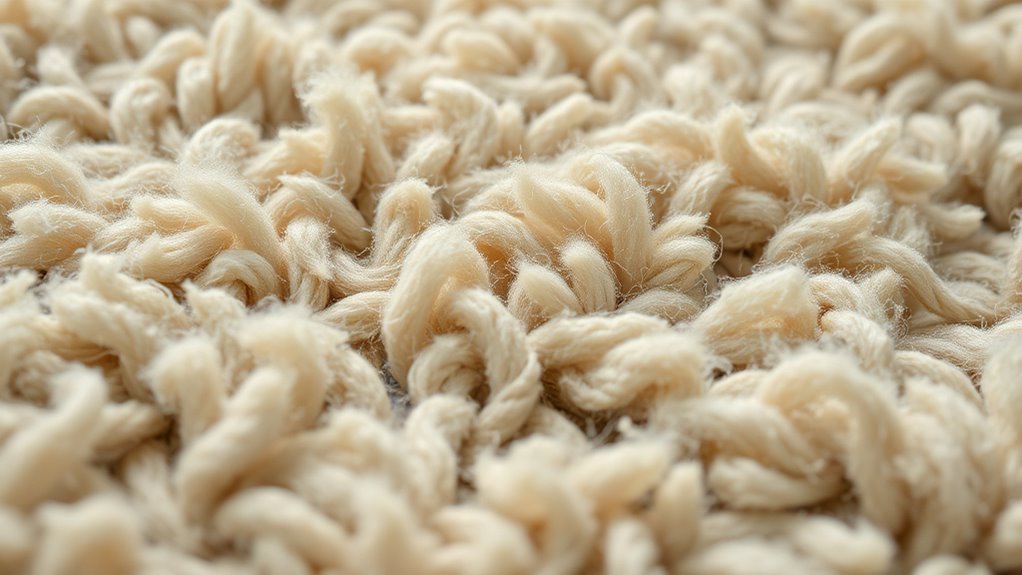
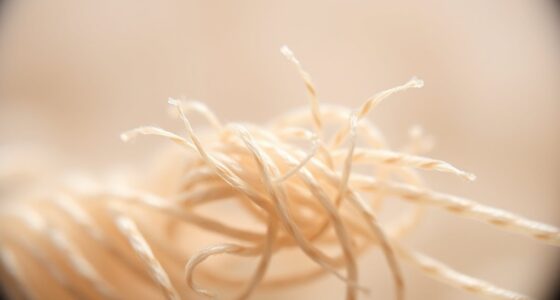
Wool fiber shedding occurs when loose fibers are released from the rug’s surface, a common phenomenon with new or untreated wool rugs. This shedding happens because wool fibers are naturally fuzzy and can loosen over time, especially during initial use. When fibers shed, they often appear as small tufts or fuzz on the rug’s surface or nearby areas. Shedding isn’t necessarily a sign of poor quality; it’s part of the wool’s natural fiber structure. Factors like the rug’s weave tightness, fiber treatment, and cleaning habits influence shedding intensity. Understanding that some shedding is normal helps set realistic expectations. Over time, shedding usually decreases as the fibers settle and the rug’s surface becomes more stable. Additionally, the artistic influence of traditional wool craftsmanship often emphasizes the natural characteristics of wool fibers, including shedding, as part of its authentic beauty.
Why Do New Wool Rugs Shed?
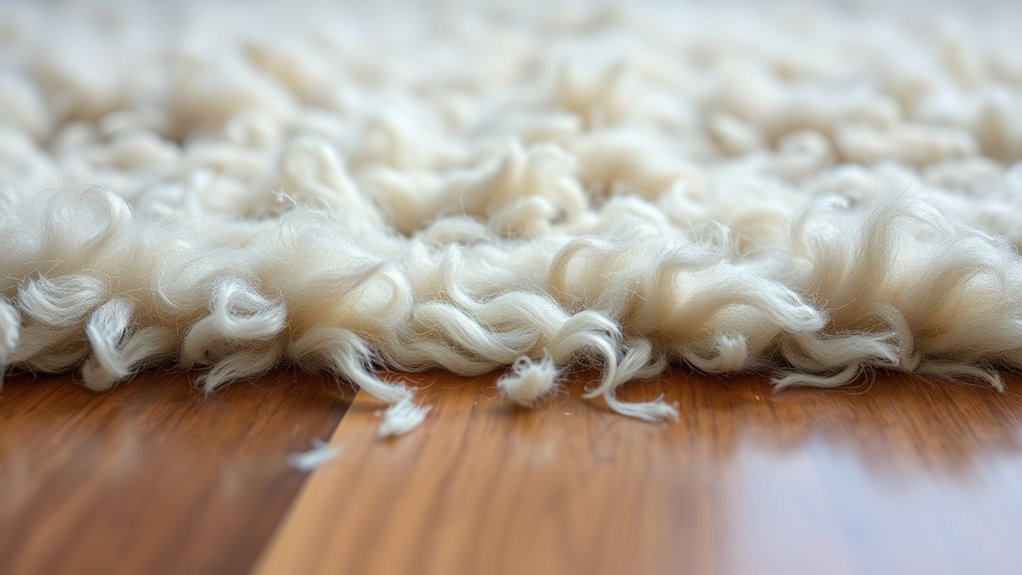
New wool rugs shed primarily because their fibers haven’t yet fully settled into a stable, tightly bound surface. During manufacturing, loose fibers become embedded in the rug’s surface, but they haven’t yet securely attached. As you begin using the rug, foot traffic and movement cause these loose fibers to loosen and fall away. Additionally, the brushing or vacuuming process can dislodge fibers that aren’t firmly anchored. Wool fibers are resilient but naturally prone to shedding until they find their proper place within the rug’s structure. This shedding is a normal part of the rug’s initial life. Over time, as fibers settle and bond more securely, shedding decreases. Understanding this process helps set realistic expectations for what’s normal during the early stages of your rug’s life. Fiber attachment plays a crucial role in reducing shedding as the fibers become more securely bonded.
The Typical Break-In Period for Wool Rugs
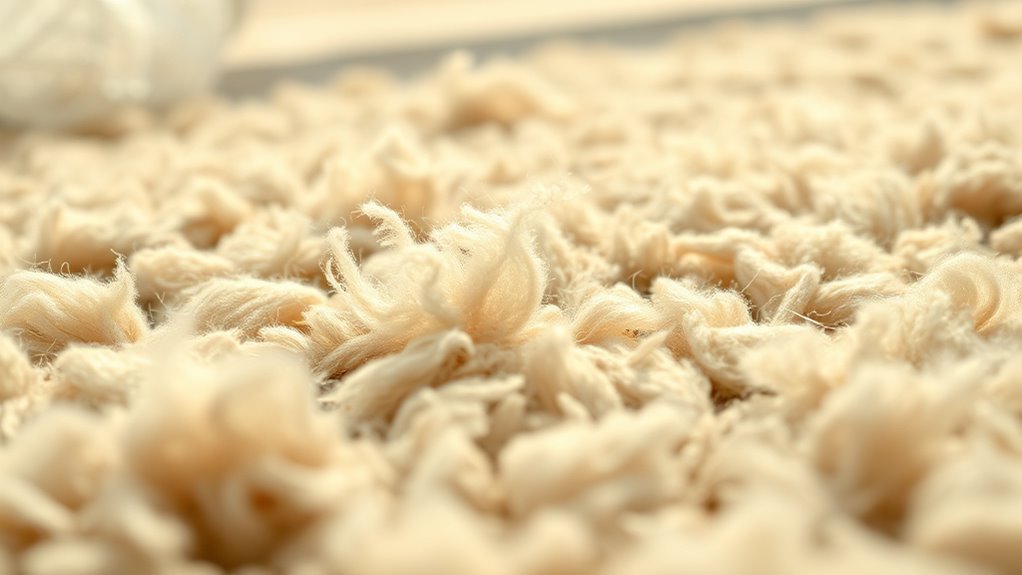
The break-in period for wool rugs typically lasts between a few weeks to a few months, depending on factors like foot traffic and rug thickness. During this time, you might notice some shedding as loose fibers work their way out. This process is normal and usually decreases as the rug settles. Heavier foot traffic can accelerate shedding initially, as fibers loosen with use. Thicker, denser rugs may shed less at first but could take longer to fully stabilize. To help the process, vacuum regularly with a gentle setting to remove loose fibers without damaging the rug. Keep in mind that shedding should diminish over time; if it persists or worsens, it might indicate a different issue. Patience during this period is key to enjoying your new wool rug. Additionally, understanding fiber shedding can help set realistic expectations and ensure proper care during the break-in phase.
Signs That Shedding Is Excessive
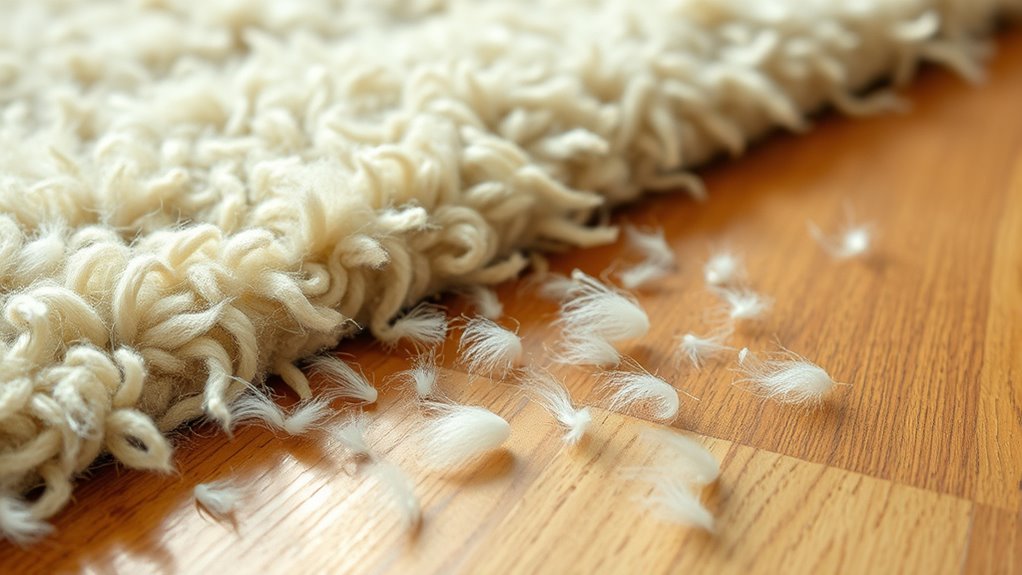
If your wool rug is shedding excessively, you’ll notice persistent loose fibers that don’t stop coming loose. You may also see an unusual buildup of fluff around the rug or on nearby surfaces. Additionally, large clumps of fibers that fall off regularly are clear signs that shedding is beyond normal. Proper maintenance and care can help reduce unnecessary shedding and prolong the lifespan of your rug.
Persistent Loose Fibers
How can you tell if wool rug shedding is becoming a problem? Persistent loose fibers are a key sign. If fibers continue to come loose despite regular vacuuming, it indicates excessive shedding. To evaluate, consider these factors:
- Duration: Are loose fibers present long after the rug’s initial break-in period?
- Quantity: Is the amount of shed fibers overwhelming your space?
- Pattern: Do fibers shed consistently, or only during specific activities like vacuuming or foot traffic?
If you notice fibers freely accumulating or ongoing shedding beyond what’s typical, it suggests the shedding is excessive. This persistent loose fiber problem can affect your rug’s appearance and longevity, and might require professional assessment or specific care adjustments. Additionally, understanding the fiber shedding process can help you better manage and care for wool rugs.
Excessive Fluff Accumulation
When loose fibers start to pile up beyond what normal shedding produces, it’s a clear sign that your wool rug might be experiencing excessive fluff accumulation. You’ll notice a thick layer of fibers gathering on the surface or collecting in corners and along edges. Vacuuming becomes more frequent and less effective because the fluff quickly reappears. If your rug sheds so much that it causes visible build-up on furniture or nearby surfaces, it’s a sign that shedding has become excessive. Additionally, if you see persistent fibers on your clothing or in your hands after light contact, it indicates an abnormal amount of loose fibers. Excessive fluff buildup can signal that the rug is not stabilizing its fibers as it should, which may require professional assessment or more careful maintenance.
Visible Shedding Clumps
Visible shedding clumps are a clear sign that your wool rug is shedding excessively. If you notice large, loose fibers gathering in clumps, it indicates the shedding has gone beyond normal. To assess whether shedding is problematic, consider these signs:
- You find noticeable clumps of wool on furniture or floors regularly.
- The rug leaves behind thick, persistent fuzz that doesn’t settle quickly.
- The shedding worsens over time, despite regular vacuuming and maintenance.
- Proper maintenance and understanding the shedding process can help distinguish normal from excessive shedding.
These signs suggest the rug isn’t just going through a normal shedding phase. Instead, it may require professional cleaning or even replacement. Recognizing these visual cues early helps you prevent excessive fiber loss and preserve the rug’s appearance and longevity.
How to Minimize Shedding and Protect Your Rug
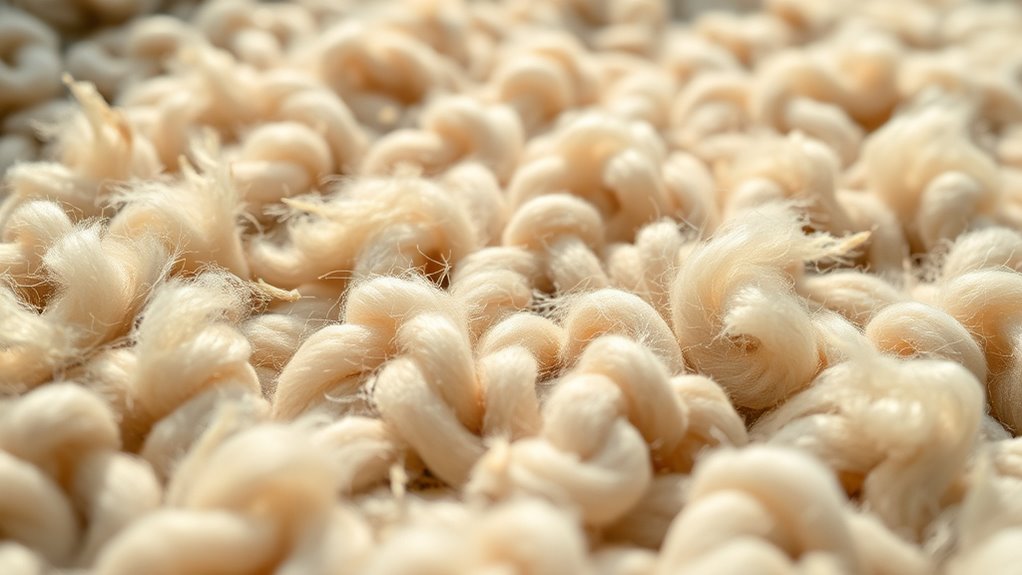
You can reduce shedding by vacuuming your wool rug regularly with gentle, consistent strokes. Placing it in low-traffic areas helps minimize wear and fiber loss. Additionally, cleaning with mild methods and avoiding harsh chemicals protects the fibers and keeps your rug looking its best. Using skincare patches can also help maintain the integrity of delicate fibers by preventing external damage.
Regular Vacuuming Techniques
Regular vacuuming is essential for reducing fiber shedding in wool rugs and maintaining their appearance. To do this effectively, follow these key techniques:
- Use a vacuum with a gentle brush or suction setting to avoid damaging fibers or loosening new sheddings.
- Vacuum in multiple directions to lift loose fibers and ensure thorough cleaning.
- Clean your vacuum’s brush and filters regularly to maintain ideal suction and prevent dirt buildup that can harm the rug.
- Be aware of the privacy policy and cookie preferences that may affect your online experience while researching or purchasing cleaning tools.
Proper Rug Placement
Have you considered how your rug’s placement can impact its shedding and longevity? Placing your wool rug in high-traffic areas can increase friction, leading to more fiber shedding. To minimize this, choose a low-traffic spot or add a rug pad beneath it to reduce movement and wear. Keep your rug away from direct sunlight, which can weaken fibers and cause premature shedding. Avoid placing heavy furniture directly on the rug, as it can crush fibers and damage the backing. Instead, use furniture pads to distribute weight evenly. Additionally, position your rug on a smooth, clean surface to prevent snagging or tearing. Proper placement not only helps reduce shedding but also extends your rug’s lifespan, keeping it looking good longer. Being mindful of the fiber composition can further help in maintaining your wool rug’s quality over time.
Gentle Cleaning Practices
Proper rug placement can substantially reduce shedding, but gentle cleaning practices are equally important to protect your wool rug over time. To minimize fiber loss, follow these tips:
- Use a soft-bristled brush or vacuum with a gentle suction setting to remove surface dirt without pulling fibers.
- Avoid harsh chemicals; instead, opt for mild, wool-safe cleaning solutions to prevent damage.
- Clean spills promptly with a damp cloth, avoiding excessive moisture that can weaken fibers.
- Incorporating automation in business can also help monitor and maintain your rug care routines more effectively.
Proper Care and Maintenance Tips
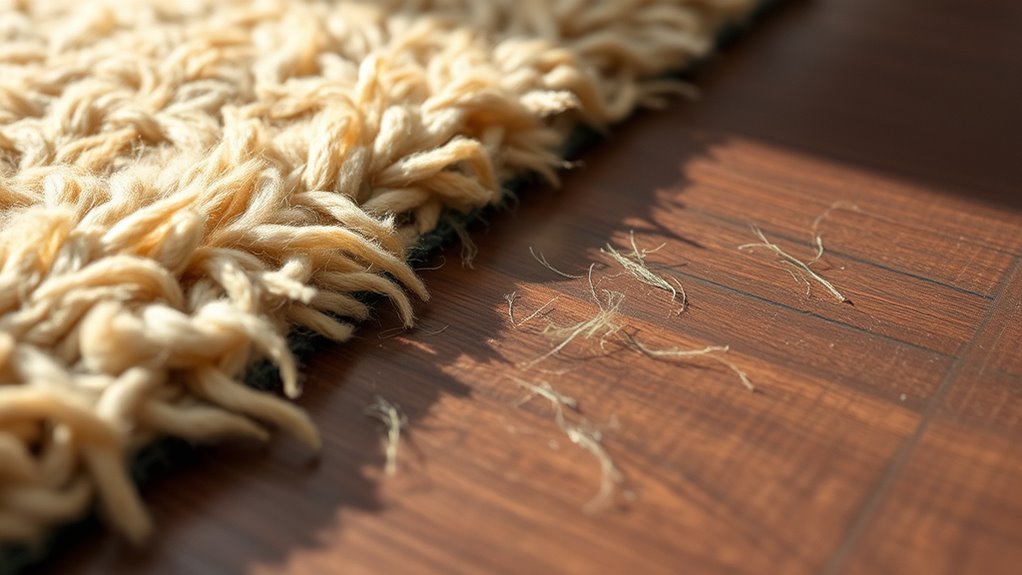
To keep your wool rug looking its best and minimize shedding, it’s essential to follow specific care and maintenance practices. Regularly vacuum your rug using a gentle suction setting to remove loose fibers and dirt without damaging the wool. Rotate your rug every few months to guarantee even wear and prevent areas from becoming more fragile. Avoid placing your rug in direct sunlight, which can weaken fibers and cause uneven fading. When cleaning spills, blot immediately with a clean, damp cloth—don’t rub—to prevent fiber loosening. Use a soft-bristled brush or a lint roller to gently remove any surface fibers or debris. Finally, schedule professional deep cleaning annually to maintain the rug’s integrity and help reduce excessive shedding over time.
When to Seek Professional Help

Knowing when to call in a professional can make a significant difference in maintaining your wool rug’s appearance and longevity. If shedding becomes excessive or persistent beyond the initial break-in period, it’s time to seek expert advice. Consider consulting a professional if:
- The shedding continues for several months without decreasing
- You notice bald spots, fraying, or visible damage
- The rug develops an unpleasant odor or mold
Addressing these issues early can prevent further damage and costly repairs. Professionals can assess whether the shedding is a normal part of the rug’s aging or a sign of underlying problems. Don’t hesitate to reach out if your rug’s condition seems unusual, as timely intervention helps preserve its beauty and durability.
Frequently Asked Questions
Can Environmental Factors Influence Wool Shedding Rates?
Environmental factors definitely influence wool shedding rates. You might notice more shedding if your rug is exposed to sunlight, humidity, or temperature fluctuations. Dry air can make fibers more brittle, leading to increased shedding, while high humidity can help fibers stay intact. Regular vacuuming and proper placement can reduce shedding, but changing environmental conditions can temporarily cause more fibers to fall out.
Does Rug Size Affect Shedding Levels?
You might think larger rugs shed more, but size isn’t the main factor. Instead, fibers loosen during manufacturing and initial use, regardless of rug size. Smaller rugs can shed just as much as larger ones in the beginning. So, don’t worry if your big rug sheds a bit—it’s normal. Regular vacuuming and gentle care help reduce shedding over time, ensuring your wool rug stays beautiful and clean.
Are Synthetic Wool Rugs Less Prone to Shedding?
Synthetic wool rugs are generally less prone to shedding compared to natural wool rugs. Since they’re made from man-made fibers like polyester or acrylic, they don’t have the loose fibers that natural wool sheds during break-in. You’ll likely notice less fiber loss and easier maintenance. However, some shedding can still occur initially. Overall, if shedding bothers you, synthetic options might be a better choice for a cleaner, low-shedding rug.
How Long Does Wool Shedding Typically Last?
You might wonder how long wool shedding lasts. Typically, it’s normal for new wool rugs to shed lightly for the first few weeks. You can expect more noticeable shedding during this period, but it should decrease gradually. Regular vacuuming helps. If shedding persists beyond a few months or becomes excessive, it could indicate a quality issue. Usually, patience and proper care will reduce shedding over time, revealing a beautiful, durable rug.
Can Specific Cleaning Methods Reduce Shedding?
You can reduce shedding by using specific cleaning methods. Regular vacuuming with a brushless suction head helps remove loose fibers, preventing buildup. Gently shaking or beating the rug outdoors also loosens fibers, while avoiding harsh chemicals preserves the wool’s integrity. Periodic professional deep cleaning can remove embedded fibers and dirt, reducing shedding over time. Consistent, gentle maintenance keeps your rug looking fresh and minimizes ongoing fiber loss.
Conclusion
By understanding the shedding cycle, you can confidently care for your wool rug. With patience and proper practices, you’ll prevent unnecessary problems and preserve its beauty. Remember, gentle grooming and timely cleaning keep shedding manageable, making your rug a charming, cherished centerpiece. Stay vigilant, follow care tips, and seek help when needed. Ultimately, a well-maintained wool rug will reward you with warmth, wonder, and woven worth for years to come.