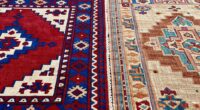
Hand-knotted rugs last longer and age more gradually because they’re made with dense craftsmanship and natural fibers like wool or silk. In contrast, hand-tufted rugs use a simpler process with less durable materials, so they show signs of wear, fraying, and fading more quickly. Understanding these construction differences helps you choose a rug that suits your needs. Stay tuned to discover more about how these factors affect rug longevity and appearance over time.

Get cleaning gear delivered free — and shop member deals
- Fast, free delivery on millions of items
- Access to Prime Big Deal Days deals on October 6–7
- Prime Video, Amazon Music and more included
Key Takeaways
- Hand-knotted rugs have higher knot density and natural fibers, resulting in slower, more gradual aging signs.
- Hand-tufted rugs use less durable fibers and simpler construction, leading to quicker wear and visible deterioration.
- Knotting craftsmanship and fiber quality in hand-knotted rugs promote better resistance to fraying and fading over time.
- Hand-tufted rugs often show faster signs of fraying, uneven pile, and backing cracks due to their less intricate, less durable construction.
- Proper maintenance and environmental factors impact aging differently, with hand-knotted rugs aging more gracefully than hand-tufted ones.
As an affiliate, we earn on qualifying purchases.
How Are Hand‑Knotted and Hand‑Tufted Rugs Made Differently?
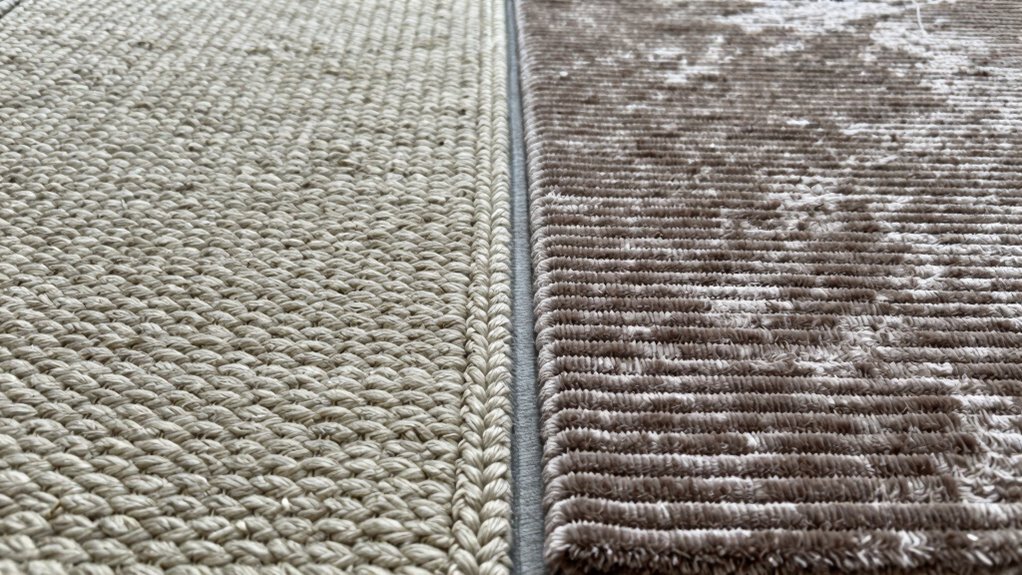
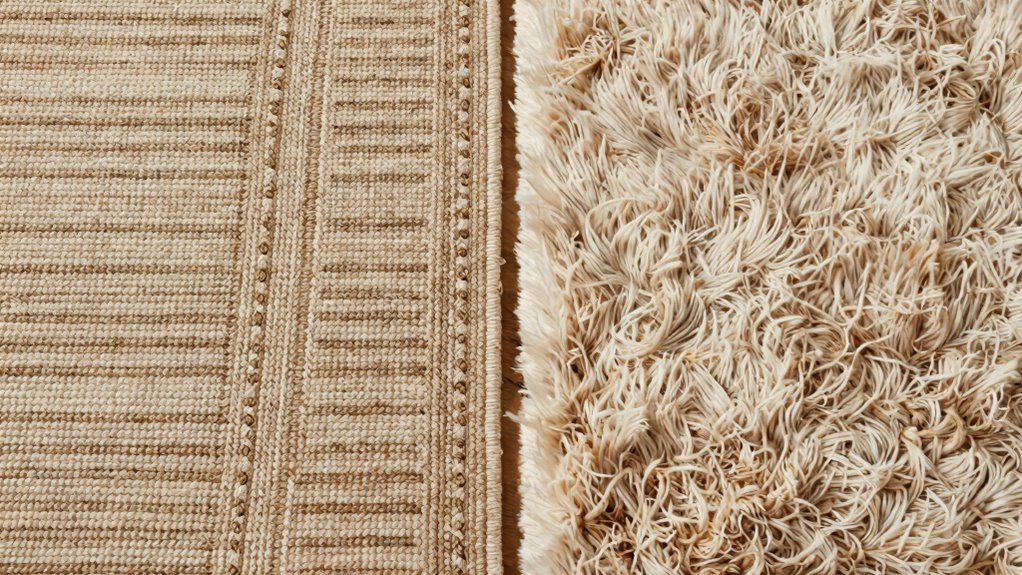
While both hand-knotted and hand-tufted rugs are crafted by skilled artisans, their manufacturing processes differ considerably. In hand-knotting, artisans meticulously tie individual knots into the warp threads, resulting in a high knot density that influences durability and intricacy. This process is labor-intensive but produces a rug with exceptional detail. Material sourcing is vital here, often involving premium wool, silk, or cotton to guarantee quality. Conversely, hand-tufted rugs are made using a tufting gun that punches loops of yarn into a fabric backing. This method is faster and less costly, but typically results in a lower knot density. The choice of materials impacts the rug’s texture and longevity, with sourcing playing a key role in overall quality and appearance. Additionally, understanding the manufacturing techniques helps in assessing the rug’s craftsmanship and value.
What Factors Affect How Rugs Age Over Time?
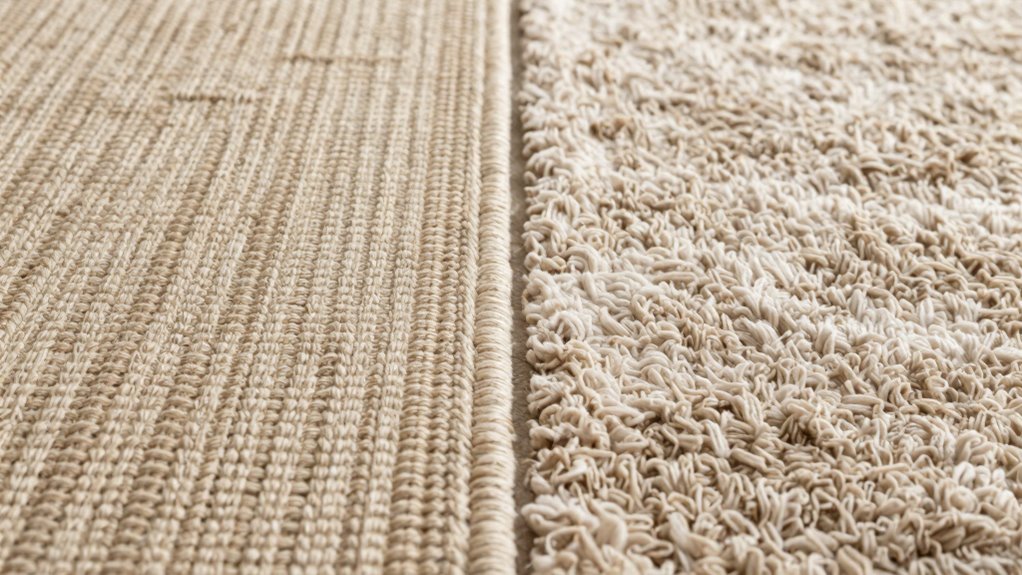
The way a rug ages over time depends heavily on its construction, materials, and how you care for it. Fiber types play a vital role; natural fibers like wool and silk tend to age more gracefully, developing a softer patina, while synthetic fibers may fade or become brittle faster. Dye stability also matters—rug dyes that resist fading and bleeding will maintain their appearance longer, especially with exposure to sunlight and cleaning. Regular cleaning and avoiding harsh chemicals help preserve both fiber quality and color vibrancy. Additionally, proper placement away from direct sunlight minimizes UV damage. Fiber durability significantly influences how well a rug withstands wear and aging. By understanding these factors, you can better protect your rug’s beauty and longevity, ensuring it ages gracefully regardless of whether it’s hand-knotted or hand-tufted.
Why Do Hand‑Knotted Rugs Last Longer Than Hand‑Tufted Rugs?
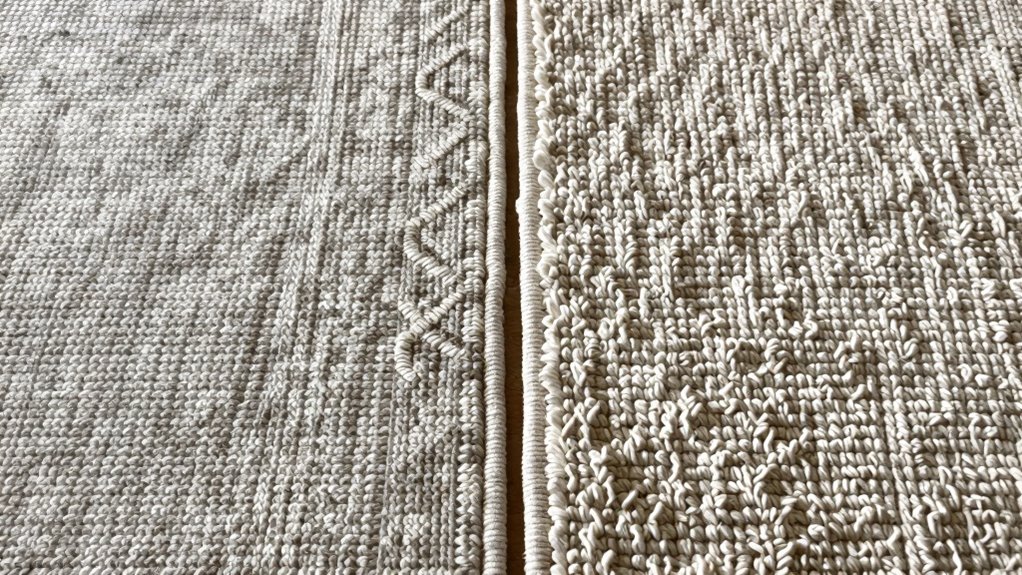
You’ll notice that hand‑knotted rugs tend to last longer because of their higher knot density and stronger construction. The quality of materials used also plays a vital role in durability. These factors combined make hand‑knotted rugs more resilient over time compared to hand‑tufted rugs. Additionally, exploring new content formats can help preserve the integrity of rug designs and materials over the years.
Knot Density and Durability
Hand-knotted rugs typically last longer than hand-tufted ones because they feature a higher knot density, which directly impacts their durability. The more knots per square inch, the stronger and more resilient the rug becomes, enhancing its rug longevity. Higher knot density means the fibers are tightly woven, reducing wear over time. To illustrate, consider this comparison:
| Knot Density | Rug Longevity | Durability |
|---|---|---|
| 40 knots/in² | Moderate | Average |
| 80 knots/in² | High | Improved |
| 120 knots/in² | Very high | Superior |
As you can see, increasing knot density markedly boosts a rug’s lifespan. This quality makes hand-knotted rugs a better investment, especially if you’re after long-lasting beauty and resilience. Additionally, the craftsmanship involved in making hand-knotted rugs often contributes to their overall quality and longevity.
Construction and Material Quality
Because of their intricate construction and superior materials, hand-knotted rugs tend to last longer than hand-tufted ones. The quality of fiber sources plays a crucial role—you’ll often find natural fibers like wool, silk, or cotton, which are durable and age gracefully. Hand-knotting also allows for better control over dye techniques, resulting in richer, more colorfast hues that resist fading over time. In contrast, tufted rugs typically use synthetic fibers or lower-grade materials that wear faster. Additionally, the tight knotting in hand-knotted rugs creates a more resilient structure, while tufted rugs rely on adhesive backing that can loosen or deteriorate. Overall, the craftsmanship, fiber choices, and dye methods all contribute to the lasting beauty and durability of hand-knotted rugs.
How Does Rug Durability Impact Its Appearance as It Ages?
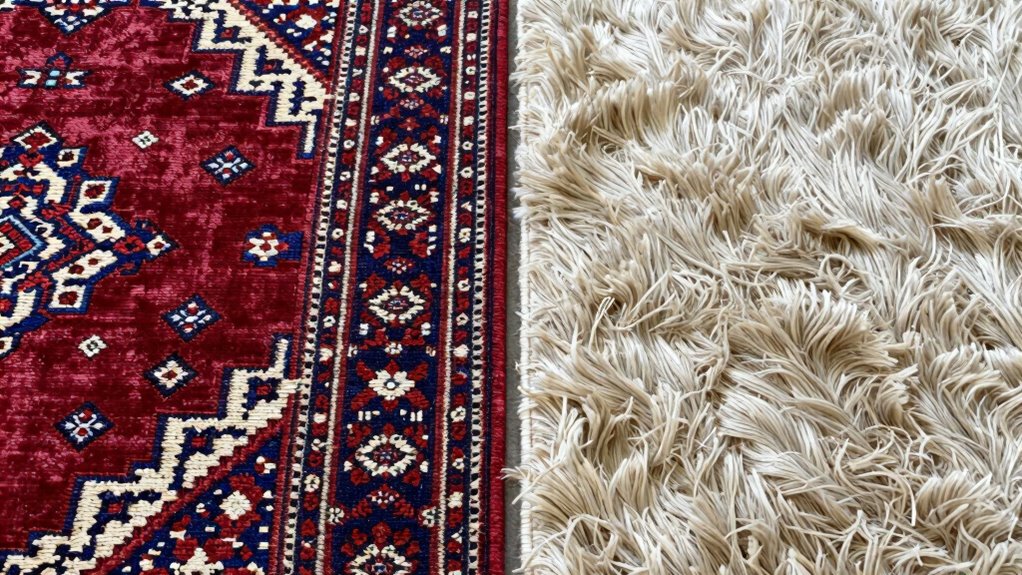
As your rug ages, its resistance to wear and tear plays a big role in how well it maintains its look. Pile density also affects how quickly it shows signs of aging, with denser rugs typically lasting longer. Regular maintenance and easy repair options can help preserve its appearance over time. Additionally, managing humidity levels can prevent damage caused by moisture or dryness, further extending the rug’s lifespan.
Wear and Tear Resistance
The durability of a rug markedly influences how it looks over time, especially as it faces daily wear and tear. Rug materials and dye fastness play vital roles in how well it withstands foot traffic and activity. Hand-knotted rugs typically feature dense, high-quality materials that resist crushing and fading, maintaining their appearance longer. In contrast, hand-tufted rugs often use less durable materials, making them more vulnerable to fraying and color loss over time. Selecting printmaking paper with durable fibers can similarly ensure that artwork ages gracefully and maintains its integrity over years of handling.
Pile Density Effects
Rug pile density directly influences how well a piece maintains its appearance over time, especially as it endures daily use. Higher pile density means more yarns per square inch, resulting in a thicker material that resists crushing and flattening. This increased material thickness helps the rug retain its plushness and vibrant look longer. Additionally, ergonomic considerations can impact overall comfort and longevity, as properly supported foot traffic reduces premature wear. Conversely, rugs with lower pile density tend to show wear more quickly, as fewer yarns are available to support foot traffic. The overall durability depends on both pile density and material thickness; thicker materials with dense piles are better at resisting matting and crushing. As your rug ages, those with higher pile density will generally look newer longer, maintaining their aesthetic appeal despite frequent use.
Repairability and Maintenance
When a rug ages, its repairability and maintenance needs become key to maintaining its appearance. Hand-knotted rugs are easier to repair due to their intricate craftsmanship, making stain removal and rug cleaning simpler without damaging the structure. Hand-tufted rugs, however, can be more challenging to fix, especially if the backing becomes worn or frayed. Regular maintenance is essential for both types, including prompt stain removal to prevent permanent damage. Proper cleaning preserves the fibers and color vibrancy over time. Additionally, knowing how to care for your rug can reduce the need for extensive repairs later on. Northeast regions often feature diverse cultural activities that can inspire unique care ideas for traditional or regional rug patterns.
- Spot clean stains quickly with gentle solutions
- Avoid harsh chemicals that damage fibers
- Schedule professional rug cleaning periodically
- Address repairs early to prevent further deterioration
What Are the Signs That Hand‑Knotted Rugs Are Aging?
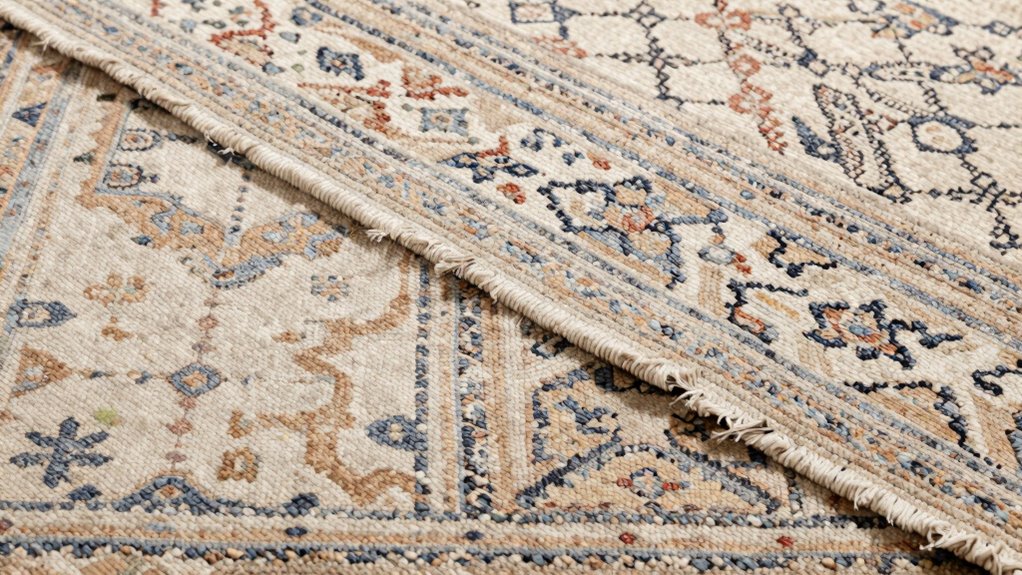
Over time, signs of wear naturally appear on hand-knotted rugs, indicating they’re aging. You might notice areas where the pile becomes thinner or flattened, especially in high-traffic spots. The rug weaving techniques used in creating these rugs can influence how they show age; tightly knotted fibers tend to wear more slowly. Changes in dyeing methods may cause fading or uneven coloration, revealing age-related deterioration. Fraying at the edges or loose knots can also develop, signaling that the rug is nearing the end of its lifespan. Because hand-knotted rugs are crafted with natural materials and intricate techniques, these signs develop gradually, giving you clues about their age and condition. Regular inspection helps you catch early signs of aging and plan for maintenance or preservation. Additionally, understanding support and boundaries in maintenance can help extend the lifespan of your rug.
How Can You Tell if a Hand‑Tufted Rug Is Showing Its Age?
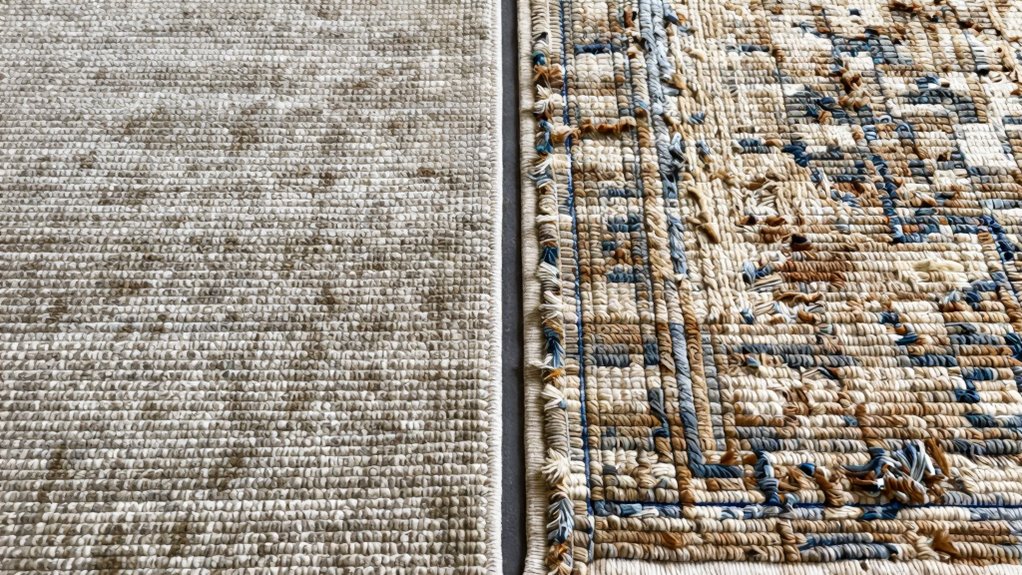
As a hand‑tufted rug ages, subtle changes become noticeable through its surface and structure. You might see rug color fading, especially in high-traffic areas, which dulls its original vibrancy. Fringe fraying is another telltale sign; over time, the edges can become unravelled or worn down. You may also notice the pile becoming uneven or flattened, reducing the rug’s plush feel. Cracks or creases might appear in the backing, indicating structural wear. Finally, loose fibers or small bald patches can develop, revealing the underlying foundation. These signs show your rug is aging, and addressing them early can help you decide whether to restore or replace it. Keep an eye out for these signs to maintain your rug’s beauty and longevity, much like observing the passage of time or clocks and time in a dream.
How Proper Care Can Extend the Life of Your Rug?
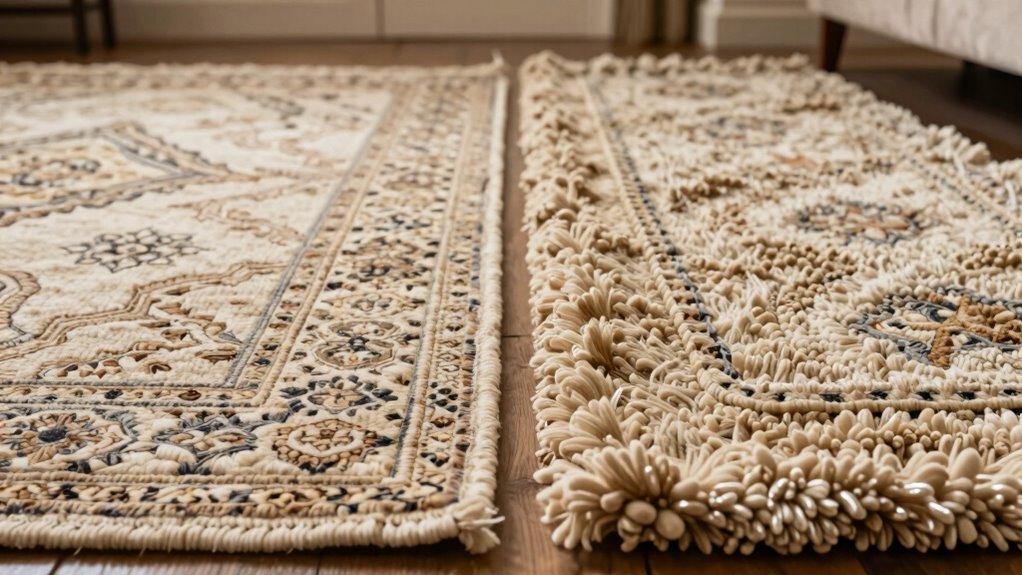
Proper maintenance is key to prolonging the life of your rug and keeping it looking its best for years to come. Regular vacuuming removes dirt that can cause rug color fading and fiber wear, especially in high-traffic areas. Rotate your rug periodically to prevent uneven fading and wear patterns. Be gentle with the fringe—avoid pulling or snagging, as fringing can fray over time. Address spills immediately by blotting with a clean cloth to prevent staining and fiber damage. Keep your rug out of direct sunlight to preserve vibrant colors and prevent fading. Professional cleaning every 12-18 months helps remove deep-seated dirt and grime that can weaken fibers. Proper care not only maintains your rug’s appearance but also extends its durability and overall lifespan.
Choosing the Right Rug Based on Your Lifestyle and Durability Needs?
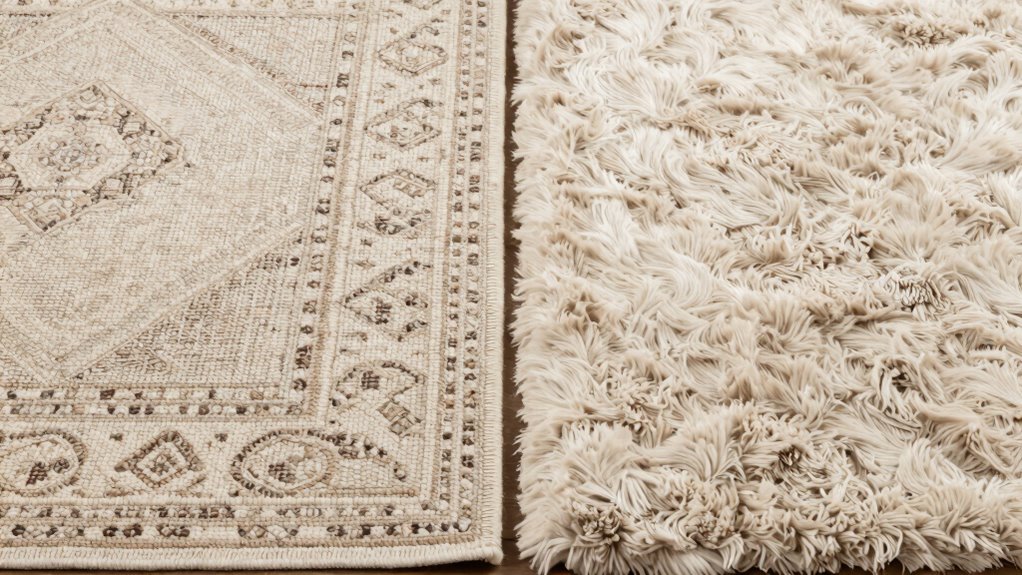
Choosing the right rug depends largely on your lifestyle and how much wear and tear it will endure. If you have kids or pets, opt for durable area rugs with dense fibers. Consider the use of rug padding to prevent slipping and protect your rug’s longevity. For high-traffic spaces, choose tightly woven or hand-knotted rugs that withstand daily use. If your home sees less foot traffic, softer hand-tufted rugs can add comfort without sacrificing too much durability. Also, think about maintenance; some rugs require more frequent cleaning or professional care. Ultimately, matching your rug’s construction to your lifestyle ensures it stays beautiful longer. Remember, a well-chosen rug with proper padding will look better and last longer, no matter your daily activity level.
Frequently Asked Questions
Can Hand‑Tufted Rugs Be Repaired Easily When Damaged?
Hand-tufted rugs can be repaired, but the process isn’t always easy. You’ll need specialized rug repair techniques to fix damage effectively, which often involves patching or re-tufting the affected area. Damage concealment methods help hide imperfections, but the success depends on the extent of the damage. For the best results, it’s advisable to consult a professional who can restore your rug while maintaining its appearance.
How Does the Backing Material Affect Rug Aging?
Your rug’s backing material plays a vital role in its aging process and overall durability. Stronger backing materials, like latex or canvas, provide better support and resist wear over time, prolonging the rug’s life. Conversely, flimsy or poorly attached backings can weaken with age, leading to fraying or loosening. Choosing the right backing material guarantees your rug remains sturdy and attractive, even after years of use.
Are There Specific Cleaning Methods for Prolonging Rug Lifespan?
To prolong your rug’s lifespan, you should regularly perform dirt removal and stain prevention. Think of it like a health routine—vacuum often to lift dirt before it settles deep, and address spills immediately to prevent stains from setting. Avoid harsh chemicals that can damage fibers. Consistent gentle cleaning keeps your rug looking vibrant, prevents premature aging, and preserves its beauty for years.
Do Certain Dyes Cause Faster Fading in Rugs?
Yes, certain dyes can cause faster fading in rugs. Natural dyes tend to resist chemical fading better over time, especially when properly sealed and cared for. Synthetic dyes, however, often fade quicker, especially with exposure to sunlight. To prolong your rug’s vibrant colors, avoid direct sunlight and choose rugs dyed with natural dyes. Regular gentle cleaning also helps preserve the dyes and maintain your rug’s beauty longer.
How Does Foot Traffic Influence the Aging Process of Each Rug Type?
Like a river shaping its banks, foot traffic constantly molds your rugs’ aging process. For hand-knotted rugs, durability is higher, so they withstand frequent footfalls better, aging gracefully over time. Hand-tufted rugs, however, are more vulnerable; heavy foot traffic causes quicker wear and tear. To preserve their beauty, limit excessive foot traffic, use rugs with higher durability, and rotate them regularly, ensuring they age like fine wine.
Conclusion
Think of your rug as a trusted old tree; a hand-knotted rug is like a sturdy oak, standing strong through storms and seasons, aging gracefully. In contrast, a hand-tufted rug is more like a delicate sapling, vulnerable to the elements and showing wear quickly. By choosing wisely and caring properly, you help your rug grow resilient and beautiful over time, becoming a lasting part of your home’s story.
Halloween Picks
halloween
As an affiliate, we earn on qualifying purchases.