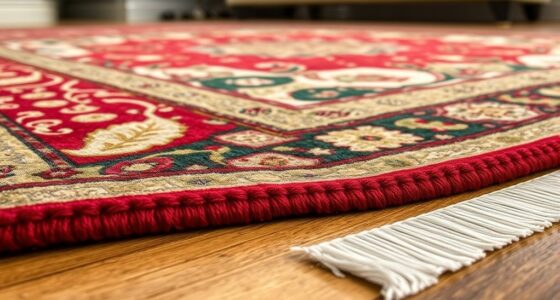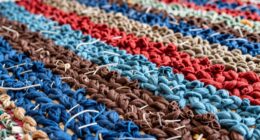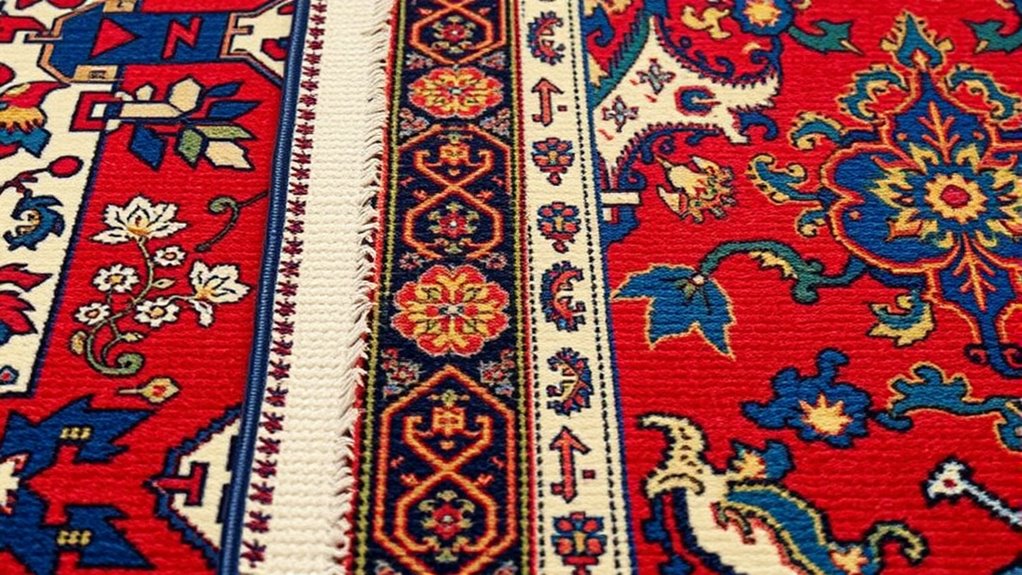
Iconic rug patterns like Heriz, Oushak, and Tabriz showcase unique knotting techniques, vibrant natural dyes, and cultural motifs that tell a story of centuries-old craftsmanship. Heriz rugs feature bold geometric designs with robust knots, while Oushak rugs highlight soft, subtle patterns with earthy hues. Tabriz rugs are known for intricate details and crisp motifs created through fine knotting. If you want to explore the fascinating details behind these timeless styles, you’ll find more fascinating insights ahead.
Key Takeaways
- Heriz rugs are known for bold, geometric patterns with strong, angular motifs reflecting their utilitarian roots.
- Oushak rugs feature soft, relaxed designs with muted, earthy tones and a looser knotting technique for a plush texture.
- Tabriz rugs are distinguished by intricate, detailed motifs and clear, vibrant color transitions achieved through fine Persian knots.
- The knotting and dyeing techniques of each rug type influence their pattern complexity, texture, and color palette.
- These iconic patterns embody centuries of cultural heritage, craftsmanship, and regional artistic traditions.
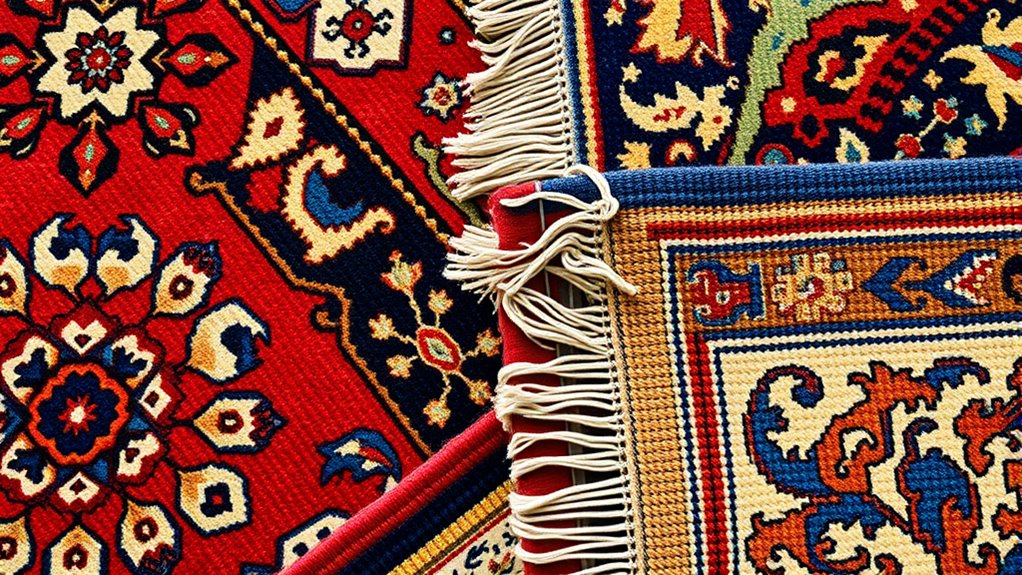
Have you ever wondered what makes a rug truly memorable? It’s often the intricate craftsmanship behind its design—specifically, the knotting techniques and dyeing methods used by artisans. These elements determine not just the rug’s appearance but also its durability and cultural significance. When you examine a Heriz, Oushak, or Tabriz rug, you’re witnessing centuries of tradition woven into every thread.
Knotting techniques are fundamental to a rug’s structure and overall quality. For instance, Tabriz rugs are renowned for their fine, symmetrical knots called Persian knots, which create detailed, crisp patterns. These knots require meticulous skill, allowing for intricate motifs that become clearer with closer inspection. Oushak rugs, on the other hand, often employ a slightly looser knotting technique, giving the pile a softer, more plush feel. Heriz rugs typically feature a more robust, asymmetrical knot, reflecting their utilitarian origins but still showcasing artistic flair. Your choice of knotting method impacts the rug’s texture, longevity, and the level of detail achievable in the design, making it an essential factor in what makes each pattern unique. Additionally, the knotting technique influences the rug’s overall structural integrity and how well it withstands time and use.
Dyeing methods also play an indispensable role. Traditional rug makers often relied on natural dyes derived from plants, minerals, and insects. For example, the vibrant reds in many Heriz rugs come from madder root, while indigo leaves produce deep blues often seen in Tabriz pieces. Oushak rugs are famous for their warm, earthy tones, achieved through natural dyes like pomegranate rind or walnut husks. These natural dyes not only provide rich, long-lasting color but also develop a unique patina over time, adding character to the rug. Modern techniques sometimes incorporate synthetic dyes for consistency, but many collectors still cherish the depth and authenticity of hand-dyed, natural hues.
Together, knotting techniques and dyeing methods define the character of each iconic pattern. When you look at a Heriz, you’re observing a sturdy, boldly patterned rug crafted with strong knots and earthy dyes. A Tabriz, with its detailed medallions and delicate color transitions, owes its beauty to precise knotting and natural dyes. Oushak rugs, with their soft textures and subtle tones, embody relaxed elegance through their specific knotting style and dyeing process. Understanding these craftsmanship elements helps you appreciate why these patterns have endured through centuries and continue to be prized in modern decor.
Frequently Asked Questions
What Are the Historical Origins of Heriz Rugs?
Heriz rugs originate from Persia’s Heris region in Azerbaijan, dating back to the 19th century. You’ll notice Persian tribal motifs in their bold geometric patterns, reflecting local culture and beliefs. The artisans use traditional silk weaving techniques, creating durable rugs with rich textures. These rugs were initially woven for practical use, but their distinctive design and craftsmanship have made them highly prized in the art of rug-making today.
How Do Oushak Patterns Differ From Other Turkish Rugs?
Did you know Oushak rugs feature over 70% more floral motifs than other Turkish rugs? You’ll notice their design motifs emphasize soft, elongated floral patterns and geometric elements, creating a more subdued and elegant look. Their color palettes often include warm, muted tones like ivory, beige, and soft reds. Unlike the bold, angular patterns of Heriz rugs, Oushak designs evoke a calm, sophisticated feel perfect for timeless decor.
What Materials Are Commonly Used in Tabriz Rug Weaving?
You’ll find that Tabriz rugs are crafted from high-quality wool, which makes them durable and soft. They’re often woven with natural dyes, giving vibrant, lasting colors. The wool used is carefully selected for its fine quality, ensuring detailed patterns and intricate designs. This combination of premium wool and natural dyes results in a stunning, long-lasting piece that adds elegance to any space.
Are There Modern Adaptations of Traditional Rug Patterns?
Yes, you’ll find modern adaptations of traditional rug patterns that blend contemporary reinterpretations with modern design influences. Designers often update classic motifs with bold colors, minimalist styles, or abstract elements, creating pieces that honor tradition while fitting today’s aesthetic. These rugs suit modern spaces, offering a fresh take on timeless patterns. So, if you’re looking for a rug that combines history and current trends, plenty of options reflect this stylish fusion.
How Can I Identify Authentic Antique Rugs From Replicas?
To identify authentic antique rugs from replicas, examine dyeing techniques and knot density. Authentic rugs often feature natural dyes with subtle color variations, while replicas may use synthetic dyes that appear uniform. Check the knot density; genuine antiques typically have a higher knot count, indicating craftsmanship and age. Feel the rug’s texture—authentic pieces are usually thicker and more durable, reflecting their quality and history.
Conclusion
As you explore these iconic rug patterns, remember they’re more than just beautiful designs—they’re woven stories and traditions. Each pattern is a guiding star, leading you through centuries of craftsmanship and culture. When you admire Heriz, Oushak, or Tabriz, you’re holding onto a piece of history that connects the past to your present. Let these rugs be symbols of artistry and identity, inspiring you to cherish and preserve their timeless beauty.