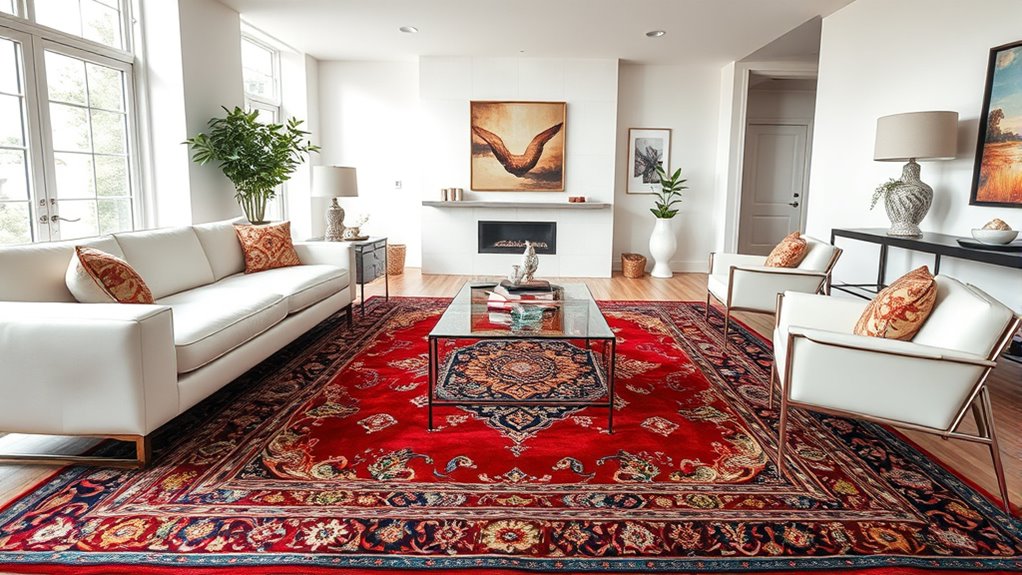

The revival of traditional rugs in modern interiors reflects a desire to blend timeless craftsmanship with contemporary style. You’ll find these rugs adding warmth, rich textures, and cultural storytelling to any space. They serve as focal points or impactful accents, pairing beautifully with minimalist or modern furniture. Handmade with eco-friendly dyes and fibers, they support sustainability and artisanal traditions. Continuing to explore this trend will reveal how these heirloom pieces can transform your home with authentic charm.
Key Takeaways
- Modern interior design increasingly incorporates traditional rugs to add cultural depth and visual interest.
- The eco-friendly, handcrafted nature of these rugs aligns with sustainable and responsible decorating trends.
- Their vibrant patterns and textures serve as focal points, enhancing minimalist and contemporary spaces.
- Using traditional rugs supports artisans, preserves heritage techniques, and promotes authenticity in decor.
- The evolving aesthetic of these rugs allows them to blend seamlessly with modern furniture and design styles.
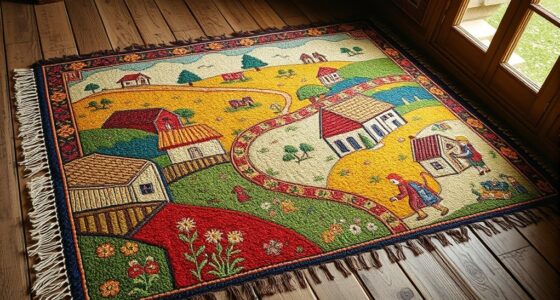
Traditional rugs are making a striking comeback as homeowners and interior designers seek to reconnect with craftsmanship and cultural heritage. This resurgence isn’t just about adding a decorative element; it’s about embracing the stories, history, and artistry woven into each piece. When you choose a traditional rug, you’re not just selecting a floor covering—you’re investing in a piece that carries cultural significance. These rugs often reflect the customs, beliefs, and identities of their regions of origin, making each one a unique artifact of tradition. Whether it’s a Persian masterpiece or a tribal kilim, the stories they tell add depth and character to your living space.
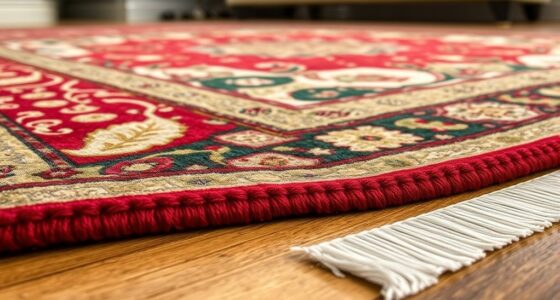
Moreover, the craftsmanship techniques used to create these rugs highlight the skill and dedication of artisans passed down through generations. You’ll find that many of these rugs are handmade, with knotting, weaving, and dyeing processes requiring incredible precision. For example, the intricate knotting in Persian rugs involves hundreds of thousands of knots per square meter, each carefully tied by hand. This meticulous attention to detail results in stunning patterns and durability that machine-made rugs simply can’t replicate. When you bring a traditional rug into your home, you’re celebrating centuries of craftsmanship techniques that demand patience and expertise.
The revival of these rugs also encourages a more sustainable approach to interior design. Handmade rugs typically use natural dyes and fibers, reducing environmental impact compared to mass-produced alternatives. As someone interested in eco-conscious living, you’ll appreciate that these textiles often involve sustainable practices rooted in cultural traditions. Plus, their durability means they age beautifully over time, becoming more charming as they develop a patina that synthetic rugs can’t match.
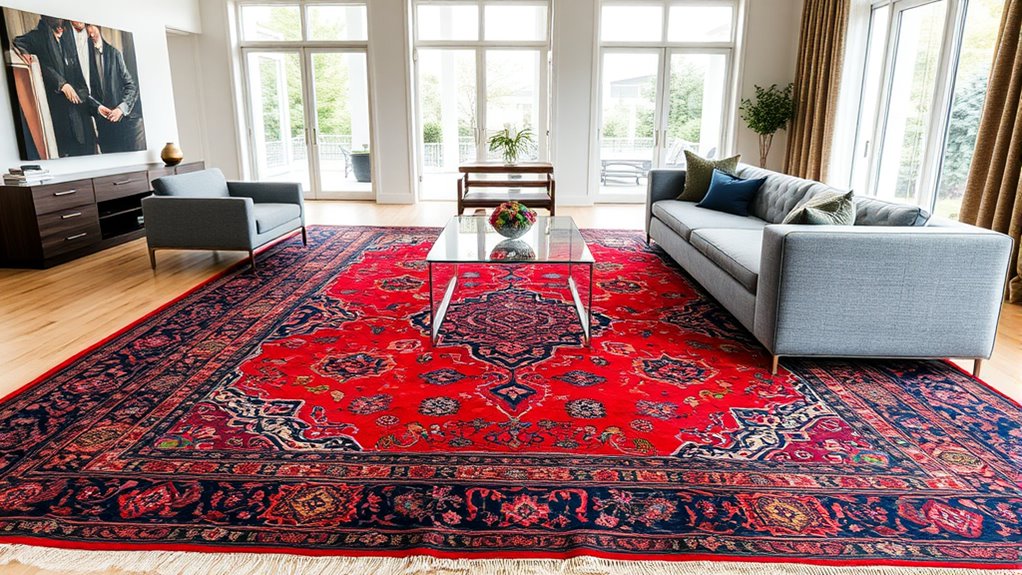
Incorporating traditional rugs into modern interiors allows you to create a striking contrast or a seamless blend of old and new. The vibrant patterns and rich textures can serve as focal points in minimalist spaces, adding warmth and personality. Alternatively, pairing a traditional rug with contemporary furniture can highlight your appreciation for craftsmanship and cultural heritage while maintaining a fresh aesthetic. By choosing a piece that embodies cultural significance and showcases time-honored craftsmanship techniques, you’re not only elevating your decor but also honoring the artisans and traditions that created it.
Additionally, selecting rugs made with natural dyes and fibers supports eco-friendly and sustainable practices. Ultimately, the revival of traditional rugs offers you a way to celebrate artistry, history, and sustainability in your home. They’re more than just decorative accents—they’re stories woven into fabric, crafted with care and purpose, waiting to enrich your living space with authenticity and cultural depth.
Frequently Asked Questions
How Do Traditional Rugs Impact Indoor Air Quality?
Traditional rugs can impact indoor air quality by trapping airborne allergens like dust, pollen, and pet dander, which may be released into the air if not cleaned regularly. They also influence indoor humidity levels; a well-maintained rug can help absorb excess moisture, reducing mold growth. However, if rugs aren’t cleaned properly, they can become sources of allergens, so regular vacuuming and maintenance are essential to keep indoor air fresh and healthy.
What Are the Most Durable Traditional Rug Materials for Busy Households?
A sturdy foundation is key when choosing a traditional rug for busy households. Wool, renowned for its resilience, withstands wear and tear thanks to ancient rug weaving techniques. Additionally, its dye stability guarantees colors stay vibrant over time. You’ll find jute and silk options durable too, but wool stands out. Think of it as a reliable partner, ready to endure the hustle while maintaining beauty and integrity.
Can Traditional Rugs Be Customized to Fit Modern Furniture Styles?
Yes, traditional rugs can be tailored to fit modern furniture styles through rug customization. You can choose specific sizes, shapes, and colors to complement your modern furniture, creating a cohesive look. Many artisans and retailers offer tailored options, allowing you to select patterns and finishes that match your decor. This personalized approach ensures your traditional rug seamlessly integrates into your modern interior, adding both style and comfort.
How Do I Authenticate the Age and Origin of a Vintage Rug?
You can verify a vintage rug by focusing on age verification and origin identification. Start by examining the rug’s materials, weave, and craftsmanship—these reveal its age and place of origin. Don’t hesitate to consult an expert or appraiser who specializes in vintage textiles for accurate insights. Authenticity is key, so verify any markings or signatures and compare your rug’s characteristics with trusted historical references to ensure it’s genuinely vintage.
What Are Eco-Friendly Options for Cleaning and Maintaining Traditional Rugs?
For eco-friendly cleaning and sustainable maintenance of traditional rugs, you should opt for natural cleaning methods. Use gentle, natural solutions like vinegar and baking soda to remove stains and odors, avoiding harsh chemicals. Regular vacuuming with a HEPA filter helps maintain your rug’s beauty while reducing environmental impact. Additionally, rotate your rug periodically to ensure even wear, and avoid excessive moisture to conserve its fibers naturally.
Conclusion
Now, as you roll out that stunning traditional rug, your space transforms faster than a blink—turning a plain room into a vibrant masterpiece. It’s like your home suddenly bursts into life, with colors so rich they seem to dance and patterns so intricate they tell stories. These rugs don’t just decorate; they breathe soul into your interiors, making every glance feel like stepping into a timeless gallery. Get ready to be immersed in a world where tradition and modernity collide beautifully.