Silk rugs offer a luxurious sheen and intricate designs, but they’re more delicate and prone to crushing, making them less durable for high-traffic areas. Wool rugs are sturdy, resist wear, and are easier to maintain with regular vacuuming. While silk provides elegance, it requires careful cleaning and has a shorter lifespan in busy spaces. Want to explore more about how to choose the right one for your needs? Keep going for details.
Key Takeaways
- Wool rugs are highly durable and resistant to wear, making them suitable for high-traffic areas, while silk rugs are more delicate and better suited for low-traffic spaces.
- Silk rugs have a natural radiant sheen that adds elegance, whereas wool rugs typically have a matte finish offering a cozy, casual look.
- Wool rugs are easier to clean and maintain with regular vacuuming and mild detergents, whereas silk requires delicate handling and professional cleaning to preserve its shine.
- Silk rugs generally cost more upfront due to craftsmanship and luxury appeal, but may appreciate in value; wool rugs are more cost-effective and long-lasting.
- Wool is versatile and durable for active lifestyles, while silk enhances formal spaces but needs careful handling to prevent damage.

Yuchen Rug Oriental Silk Rug 2m x 3m Purple Handmade Traditional Vintage Medallion Luxury Silk Area Rug for Living Room
Get Your Royal Handmade Rug from Yuchen Rug Manufacture! Yuchen Carpet specialise in hand knotted rug with silk.
As an affiliate, we earn on qualifying purchases.
As an affiliate, we earn on qualifying purchases.
Comparing Material Strength and Longevity
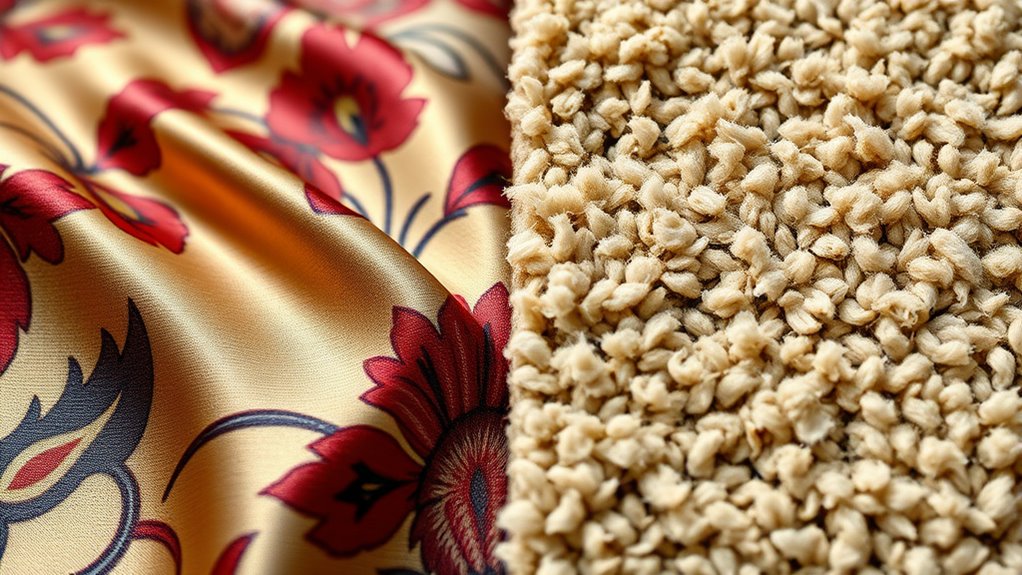
When comparing silk and wool rugs, understanding their strength and longevity is essential. Wool rugs are known for their durability and resistance to wear, making them ideal for high-traffic areas. They can often last for decades with proper care, thanks to their natural resilience. Silk rugs, on the other hand, are more delicate; their fine fibers are prone to crushing and fraying over time. While they may not hold up as long in busy spaces, silk offers exceptional softness and a luxurious feel. If longevity is your priority, wool generally outperforms silk. However, silk’s delicate nature means it requires more careful handling and maintenance. Your choice depends on balancing durability needs with the desired aesthetic and handling requirements.

Rugs USA Melrose Cream, 6' x 9', Handmade, Wool & Cotton, Soft and Cozy, High Traffic, Stain Resistant, Easy Clean, Durable Area Rug for Bedroom, Living Room, Dining Space, Den, Entryway
Natural Materials: Our area rug is crafted from 80% Wool, 20% Cotton and expertly made by hand or…
As an affiliate, we earn on qualifying purchases.
As an affiliate, we earn on qualifying purchases.
Visual Appeal: Sheen and Design Details
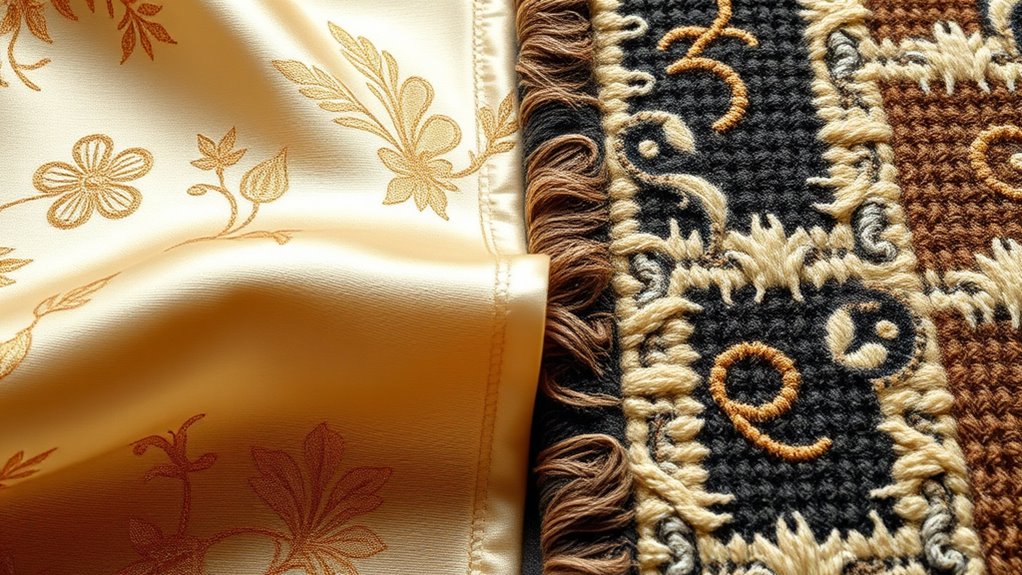
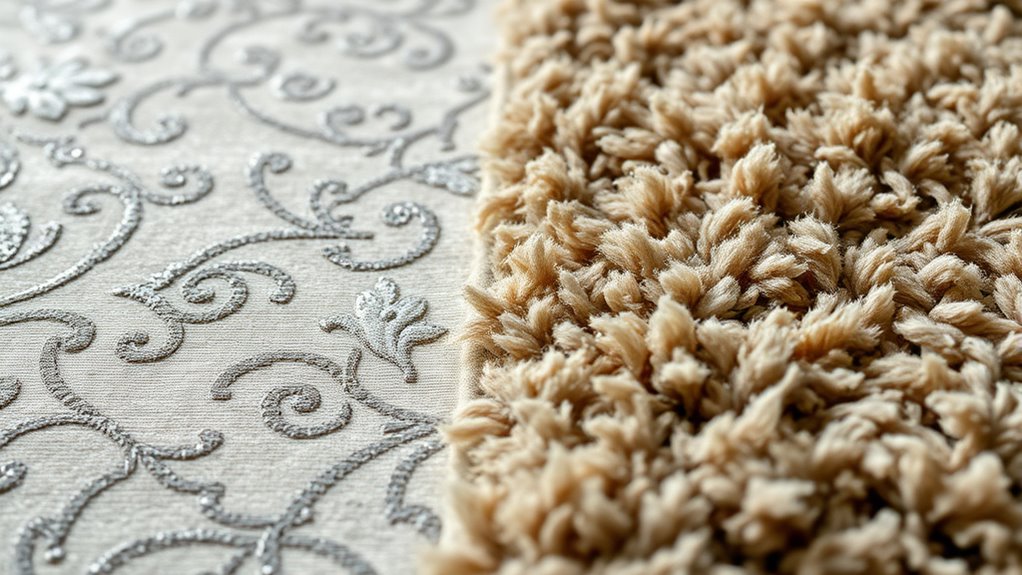
While durability influences a rug’s lifespan, its visual appeal often determines the overall impact on your space. Silk rugs naturally boast a radiant sheen that adds elegance, catching the light beautifully. Wool rugs, in contrast, tend to have a more matte finish, offering a cozy, understated look. Design details also differ: silk rugs often feature intricate patterns and fine craftsmanship, while wool rugs emphasize texture and durability. To help you compare, see the table below: compatibility factors
| Feature | Silk Rugs | Wool Rugs | Effect on Space |
|---|---|---|---|
| Sheen | High, glossy shine | Low, matte finish | Adds luxury vs. cozy ambiance |
| Design Details | Fine, detailed patterns | Textured, bold textures | Elegant intricacy vs. warm simplicity |
| Visual Impact | Bright, eye-catching | Subtle, inviting | Formal elegance vs. casual comfort |

Amazon Basics Deep Cleaning Carpet Cleaner, Stain and Odor Remover, Fresh Scent, 64 fl oz
DEEP CLEAN PERFORMANCE: Our carpet cleaner solution penetrates stains, lifts soils, and eliminates odors right at the source
As an affiliate, we earn on qualifying purchases.
As an affiliate, we earn on qualifying purchases.
Ease of Cleaning and Maintenance Requirements
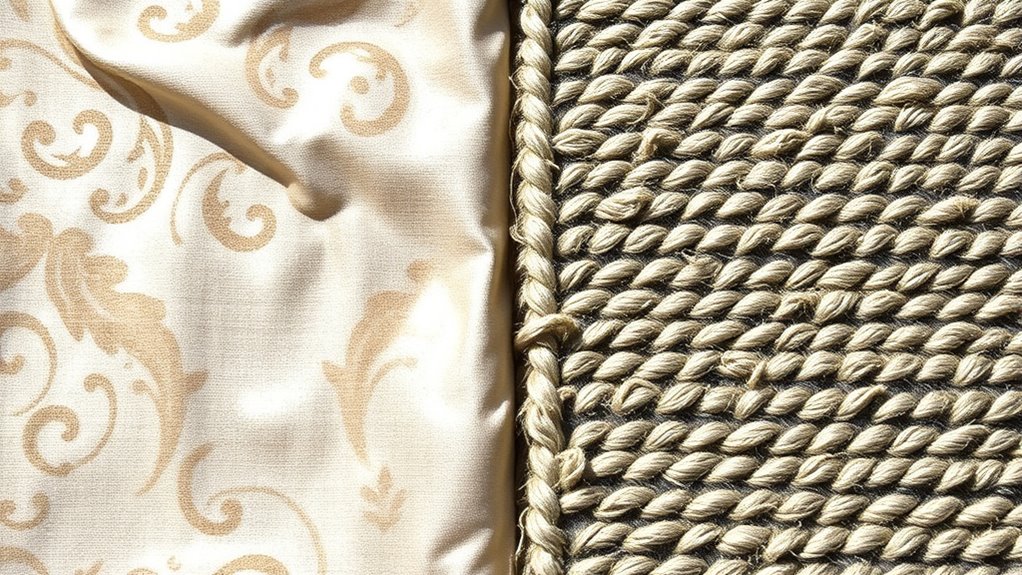
Silk rugs require delicate handling and regular maintenance to preserve their luster, often needing professional cleaning to avoid damage from harsh chemicals or abrasive tools. You should vacuum gently and frequently to remove surface dirt without pulling on the fibers. Spot cleaning must be done carefully with mild solutions, and you should avoid excessive moisture that can weaken the silk. For deeper cleaning, professional services are recommended to ensure the rug isn’t harmed. Wool rugs, on the other hand, are more forgiving. You can vacuum regularly, shake out loose dirt, and use a mild detergent for spot cleaning. Wool’s natural lanolin helps resist stains, making maintenance simpler. Overall, silk demands more gentle, precise care, while wool offers easier upkeep for everyday cleaning. Additionally, choosing the right cleaning method can help maintain the sheen and durability of silk rugs over time.

Coikll Intricate Persian Rug Silk Like Scarfs Square Satin Head Scarf for Women Lightweight Neckerchief
【Perfect Size for Versatility】 Measuring 60×60 CM, this square scarf is designed to be multifunctional, perfect as a…
As an affiliate, we earn on qualifying purchases.
As an affiliate, we earn on qualifying purchases.
Cost Considerations and Investment Value

Silk rugs tend to have a higher upfront cost due to the brand quality, intricate craftsmanship, and luxurious appearance they offer. While this initial investment is significant, it reflects their durability, timeless appeal, and status symbol. Wool rugs, on the other hand, usually cost less upfront, making them more accessible if you’re on a budget. However, consider their longevity: wool rugs often wear better over time and can be more cost-effective in the long run. Silk rugs may appreciate in value, especially antique or designer pieces, turning into smart investments. Wool rugs provide good durability for daily use at a lower price point. Ultimately, your choice depends on balancing your budget today with the potential long-term value and aesthetic appeal you desire. Color fidelity also plays a role in the overall appearance and perception of quality in both silk and wool rugs.
Suitable Environments and Lifestyle Compatibility
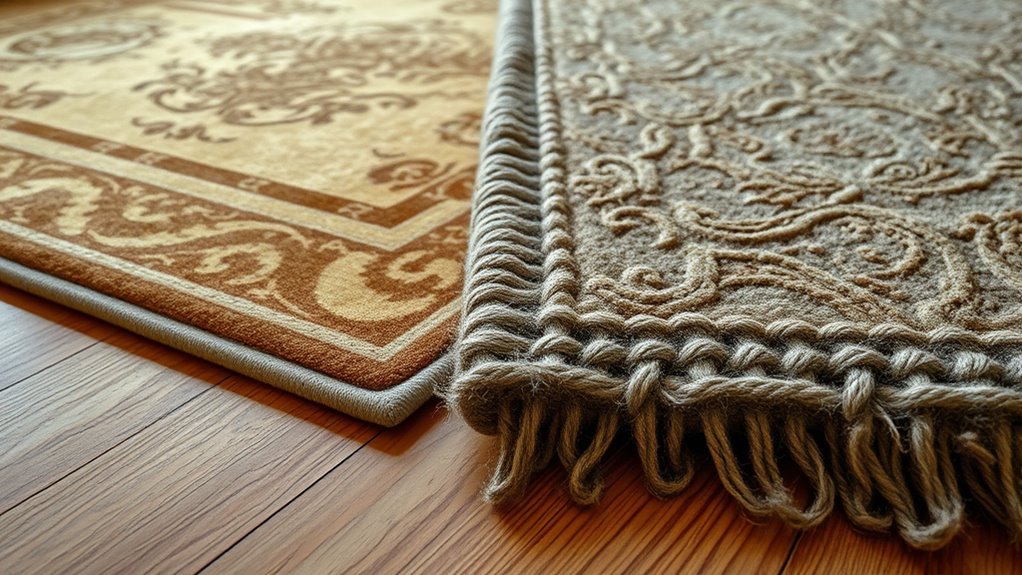
Choosing the right rug depends heavily on your environment and lifestyle. Silk rugs add elegance but are delicate, making them ideal for low-traffic areas or formal spaces. Wool rugs are durable and versatile, suitable for active households and high-traffic zones. Consider your daily routines and how much wear your rug will endure. If you need a rug for ongoing protection against potential damage, understanding ethical hacking principles can help inform your choices.
Frequently Asked Questions
Which Rug Type Is More Resistant to Fading Over Time?
You want to know which rug type resists fading better over time. Generally, wool rugs are more resistant to fading because they contain natural dyes and fibers that handle sunlight and wear well. Silk rugs, while beautiful and shiny, tend to fade faster when exposed to sunlight or frequent cleaning due to their delicate fibers and dyeing process. So, if fading resistance is your priority, wool rugs are the better choice.
How Do Silk and Wool Rugs Perform in High-Traffic Areas?
You might think silk and wool rugs handle high traffic equally, but that’s not true. Wool rugs are naturally resilient, standing up well to frequent use and heavy wear, making them ideal for busy areas. Silk rugs, on the other hand, are delicate; they can show wear quickly and may not hold up as long under constant foot traffic. For durability, wool is your best bet in high-traffic spaces.
Are Silk or Wool Rugs More Allergen-Friendly?
When choosing between silk and wool rugs for allergens, wool is generally more allergen-friendly. Wool naturally resists dust mites and mold, making it easier to keep clean and reduce allergens. Silk, on the other hand, can trap more dust and allergens due to its fine fibers. If you’re sensitive to allergens, wool rugs are a better choice because they’re easier to maintain and less likely to trigger allergies.
Can Both Rug Types Be Dyed or Customized Easily?
Imagine you’re customizing a rug for your living room. Both silk and wool rugs can be dyed or customized, but silk offers a richer color payoff and subtle sheen, making it ideal for intricate designs. Wool, on the other hand, is more forgiving and takes dyes well, especially for bold, vibrant colors. So, whether you prefer a luxurious sheen or durable vibrancy, both options can be tailored to suit your style.
Which Material Offers Better Insulation and Soundproofing Qualities?
When it comes to insulation and soundproofing, wool rugs are your best bet. You’ll notice they naturally trap air, providing better warmth and noise reduction in your space. Silk rugs, on the other hand, focus more on elegance and sheen. If insulation matters most to you, wool offers superior benefits, making your home cozier and quieter. So, choose wool if comfort and soundproofing are your priorities.
Conclusion
Choosing between silk and wool rugs ultimately depends on your lifestyle and style preferences. Wool rugs are known to last up to 10-15 years with proper care, making them a smart investment for durability. Did you know wool fibers naturally resist stains and odors? This makes wool rugs easier to maintain, especially if you have kids or pets. Whichever you pick, understanding their strengths helps you make a choice that brings beauty and practicality into your space.