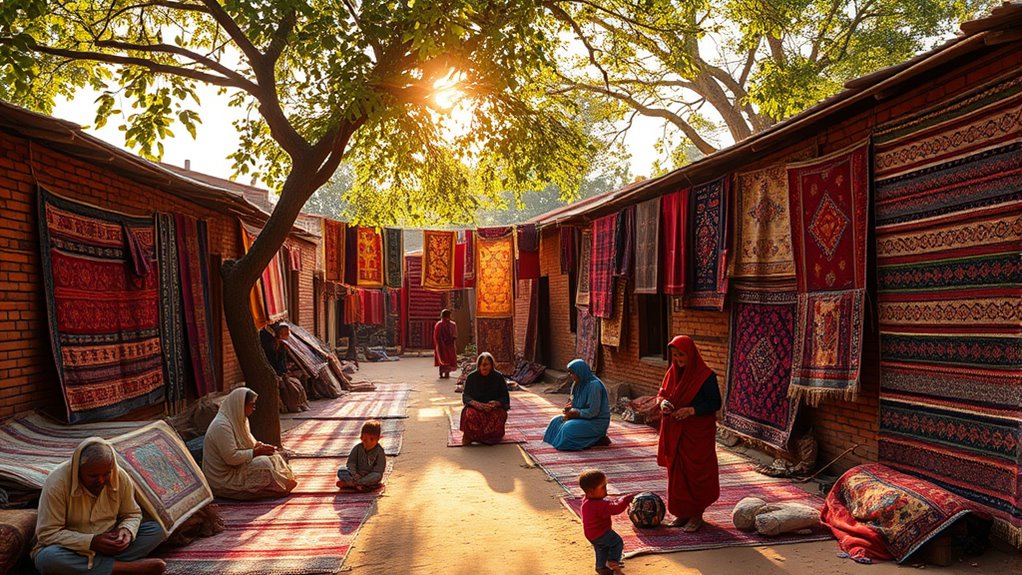
Supporting rug weaving communities boosts local economies by providing artisans with sustainable income and creating new revenue streams beyond agriculture. It helps preserve cultural traditions, stories, and skills that define their identity. By purchasing handmade rugs, you directly invest in these communities, encouraging entrepreneurship and fostering resilience against economic challenges. This cultural and economic support promotes long-term development, empowering artisans and ensuring their craft endures. Keep exploring to discover how these communities sustain themselves and why your support matters.
Key Takeaways
- Rug weaving provides diversified income sources, reducing communities’ reliance on agriculture and mining.
- Supporting artisans boosts local economies through direct sales, investment, and entrepreneurship.
- Preserving traditional crafts sustains cultural heritage and fosters community pride.
- Economic benefits from rug sales enable community development projects like education and healthcare.
- Empowering weavers enhances community resilience against economic and environmental challenges.
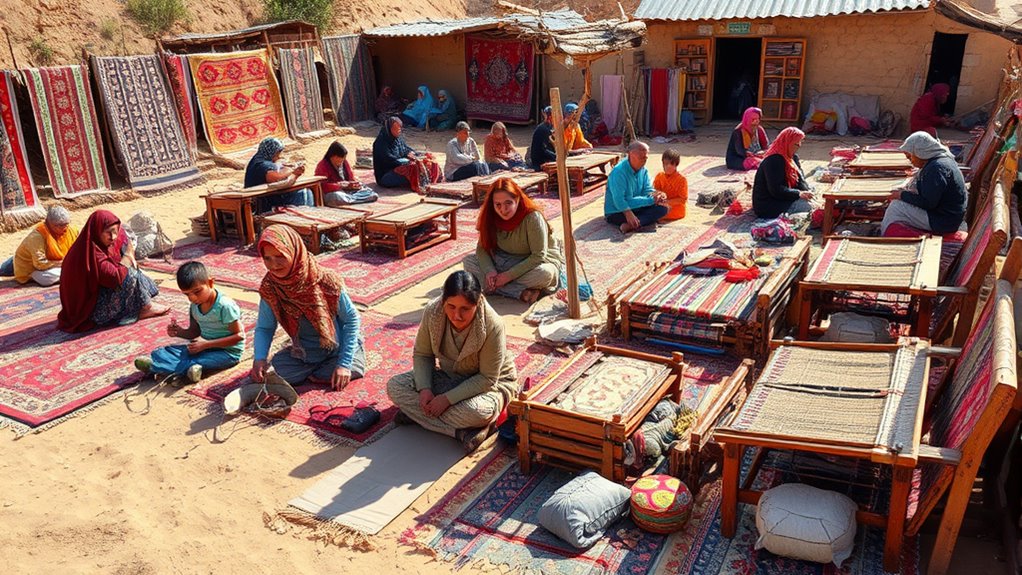
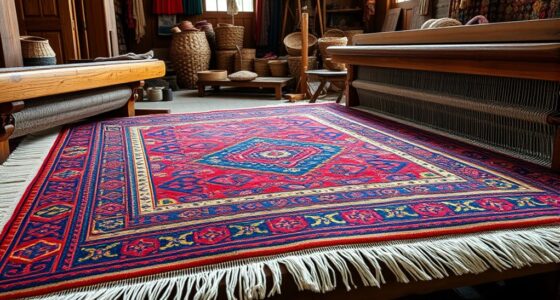
Rug weaving communities play a crucial role in preserving cultural traditions and supporting local economies. When you observe these communities, you see more than just artisans at work; you see custodians of history, language, and identity. The intricate designs, patterns, and techniques they use aren’t random—they’re deeply rooted in centuries of tradition, passed down through generations. By maintaining these practices, you help ensure that cultural preservation remains alive, preventing the loss of unique craftsmanship that defines a community’s heritage. This isn’t just about aesthetics; it’s about safeguarding stories, beliefs, and customs expressed through every knot and color choice.
At the same time, rug weaving communities contribute significantly to economic diversification. When you support local artisans, you’re helping move the economy beyond traditional industries like agriculture or mining, which often dominate rural areas. These communities often rely solely on agriculture, making them vulnerable to market fluctuations or environmental challenges. By engaging in rug weaving, you create new revenue streams that can stabilize local economies. This diversification is vital because it offers resilience, allowing communities to withstand economic downturns or climate-related disruptions. You’re enabling artisans to earn a sustainable income, which can uplift entire families and even entire regions.
Supporting rug weaving communities means more than just purchasing a product; it’s about empowering the artisans behind it. When you buy handmade rugs, you inject money directly into local economies, encouraging entrepreneurship and innovation. Many communities also use these earnings to invest in community development projects, such as schools or healthcare facilities, which further enhance their socioeconomic stability. Additionally, investing in cultural preservation ensures that these traditional skills and stories are passed on to future generations, maintaining their significance. Moreover, the global appreciation for handmade rugs fosters a sense of pride among artisans, motivating them to refine their craft and pass it on to future generations. This cycle of cultural preservation and economic growth creates a powerful ripple effect, strengthening community bonds and fostering sustainable development.
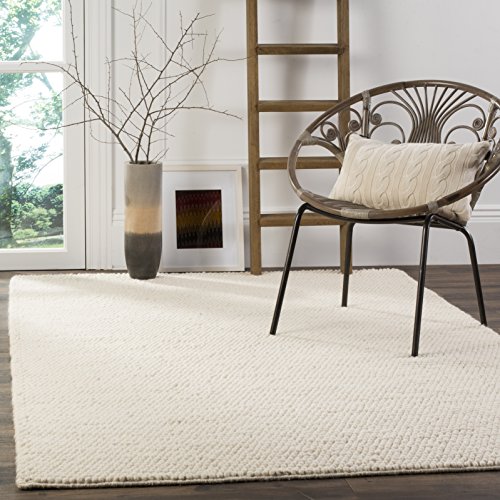
SAFAVIEH Area Rug 6×9 – Natura Collection – Ivory, Handmade Wool Blend, Textured Design, Ideal for Living Room, Bedroom, Dining Space (NAT620A)
[HANDMADE CRAFTSMANSHIP]: Hand-woven by skilled artisans using chunky knotted yarns for a beautifully raised, textured surface that adds…
As an affiliate, we earn on qualifying purchases.
As an affiliate, we earn on qualifying purchases.
Frequently Asked Questions
How Do Rug Weaving Communities Influence Local Education Systems?
You’ll find that rug weaving communities positively influence local education systems by improving educational access and promoting skill development. As community members engage in weaving, they often support local schools, fund educational programs, or create apprenticeships, making education more accessible. Additionally, skill development through weaving enhances local youths’ abilities, encouraging their participation in learning and fostering economic growth, which ultimately benefits the entire community’s educational landscape.
What Health Challenges Do Rug Weavers Face Regularly?
Imagine threads pulling tight around your fingers—rug weavers often face occupational hazards like cuts, burns, and repetitive strain injuries. Ergonomic issues from sitting long hours in awkward postures cause chronic back and joint pain. These health challenges threaten their well-being, forcing some to stop weaving altogether. You need to recognize that their craft, while beautiful, comes with serious physical tolls that demand attention and proper ergonomic support.
How Does Rug Weaving Affect Gender Roles in Communities?
Rug weaving often reshapes gender dynamics by empowering women to participate actively in economic activities. You might notice women gaining more independence and decision-making power within their communities through this craft. It challenges traditional roles, promoting gender equality and women’s empowerment. As women contribute financially, their social status improves, encouraging a more inclusive environment where both genders share responsibilities and recognize each other’s contributions more equally.
Are Rug Weaving Communities Involved in Environmental Conservation?
Yes, rug weaving communities often embrace environmental conservation by adopting sustainable practices and using eco-friendly materials. You might see artisans selecting natural dyes and biodegradable fibers, reducing waste and pollution. By prioritizing eco-conscious methods, these communities help protect local ecosystems while preserving their craft. Your support can encourage such sustainable approaches, ensuring the environment benefits alongside cultural traditions.
How Do Market Fluctuations Impact Rug Weavers’ Livelihoods?
Imagine you’re a rug weaver in 1920s Paris, facing today’s market volatility. Market fluctuations and changing trade policies can destabilize your income, causing you to worry about sales and prices. When demand drops or tariffs rise, your livelihood becomes uncertain. You may struggle to afford materials or support your family, highlighting how sensitive rug weavers’ livelihoods are to broader economic shifts and policy changes.

Traditional Craft Kits Coiled Basket Weaving Kit (Pine Needle) – Complete with Basket Weaving Supplies and Color Photo Instructional Booklet
Learn to Make Baskets: Create your own gallery of traditional arts & crafts! Learn the technique of pine…
As an affiliate, we earn on qualifying purchases.
As an affiliate, we earn on qualifying purchases.
Conclusion
You might believe that rug weaving simply sustains communities, but it actually transforms lives. By supporting these traditions, you help preserve cultural heritage, boost local economies, and empower artisans. It’s not just about beautiful textiles; it’s about creating opportunities and fostering resilience. So, next time you admire a handwoven rug, remember—you’re part of a movement that challenges the idea that small crafts can’t make a big impact.

SAFAVIEH Area Rug 8×10 – Natura Collection – Large – Ivory, Handmade Wool Blend, Textured Design, Ideal for Living Room, Bedroom, Dining Space (NAT620A)
[HANDMADE CRAFTSMANSHIP]: Hand-woven by skilled artisans using chunky knotted yarns for a beautifully raised, textured surface that adds…
As an affiliate, we earn on qualifying purchases.
As an affiliate, we earn on qualifying purchases.

SAFAVIEH 5×8 Area Rug – Braided Collection – Ivory & Multi, Handmade Woven Cotton, Boho Reversible Style, Ideal for Living Room, Bedroom (BRD210A)
[HANDMADE CONSTRUCTION]: Expertly hand-woven by skilled artisans for a richly textured appearance and artisanal quality; each rug is…
As an affiliate, we earn on qualifying purchases.
As an affiliate, we earn on qualifying purchases.