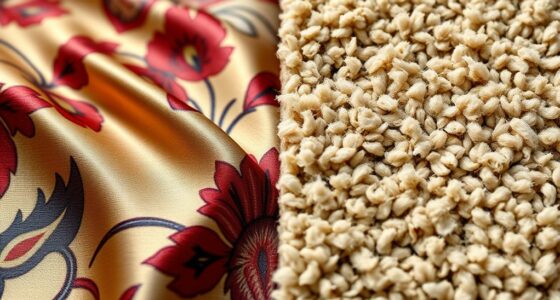
Technology is transforming rug weaving by allowing you to create intricate patterns precisely and consistently with digital looms. Automated dyeing processes ensure vibrant, uniform colors and faster turnaround times. These advancements make production more efficient while expanding your creative possibilities beyond manual limits. You’ll find that craftsmanship can blend seamlessly with modern tech, helping you innovate while preserving traditional techniques. Stay with us to discover how these innovations are shaping the future of rug weaving.
Key Takeaways
- Digital looms enable precise, complex patterns, expanding creative possibilities and ensuring consistency in rug designs.
- Automated dyeing processes improve color accuracy, reduce waste, and accelerate production timelines.
- Technology enhances scalability, allowing artisans to produce intricate rugs more efficiently without sacrificing craftsmanship.
- Integration of digital tools preserves traditional techniques while increasing design experimentation and quality control.
- Overall, technology boosts productivity, innovation, and sustainability in the rug weaving industry.
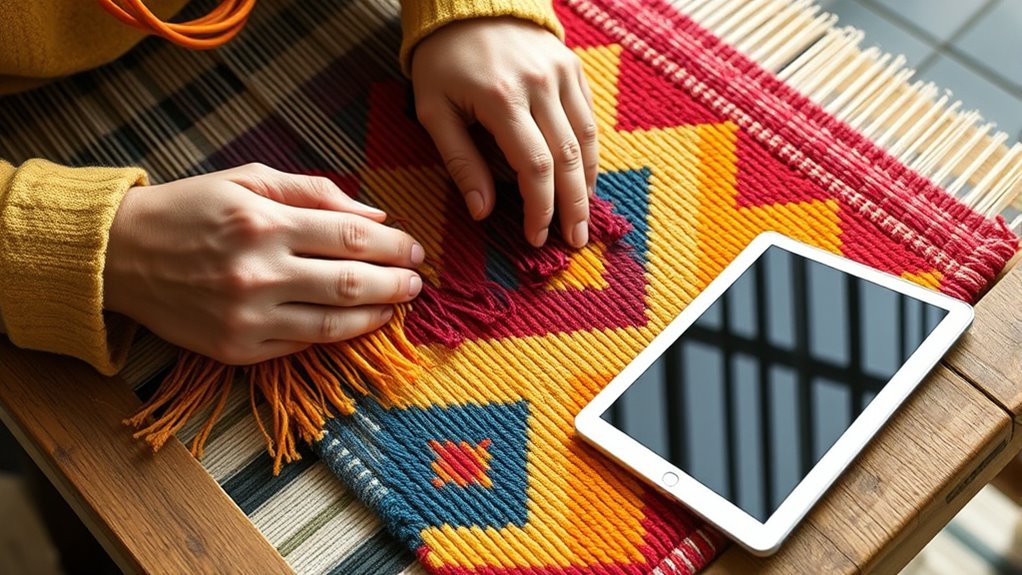
Technology has revolutionized rug weaving, transforming traditional craftsmanship into a more efficient and innovative process. One of the most significant advancements is the introduction of digital looms. Unlike manual looms, digital looms allow you to program intricate patterns directly into the machine, guaranteeing precision and consistency that’s hard to achieve by hand. With the push of a button, complex designs come to life seamlessly, reducing errors and speeding up production. This technology empowers you to experiment with new patterns and textures without the limitations of manual skill, opening doors to creative possibilities previously out of reach. Digital looms also enable you to produce more complex and detailed rugs, meeting the demands of modern markets that value uniqueness and high quality. As a result, your craftsmanship becomes more scalable, allowing you to balance artistry with efficiency.
Alongside digital looms, automated dyeing processes have transformed how you add color to your rugs. Traditional dyeing involves manual mixing and application, which can be time-consuming and inconsistent. Automated dyeing systems streamline this process, guaranteeing uniform color distribution and faster turnaround times. By controlling temperature, dye concentration, and immersion times digitally, you can achieve precise shades and repeatable results with minimal effort. This consistency is especially vital if you’re producing large batches or aiming for specific color standards. Automated dyeing also reduces waste, as you only use the necessary amount of dye, making your operations more sustainable. With these innovations, you can experiment with a broader palette and achieve vibrant, uniform colors that elevate your finished product. Furthermore, automation allows you to focus more on design and quality control, rather than getting bogged down in manual processes.
Together, digital looms and automated dyeing create a synergy that transforms your workflow. You can now produce complex, vibrant rugs more quickly and with greater consistency. These tools also empower you to meet the expectations of a competitive market, where speed and quality are paramount. Instead of spending hours on manual adjustments or repetitive tasks, you’re freed to focus on the creative aspects of your work. This blend of craftsmanship and technology ensures your rugs are not only beautiful but also produced efficiently, helping you stay ahead in the industry. Additionally, embracing technological advancements can help preserve traditional techniques while enhancing productivity. With continual advancements, you’ll find new ways to innovate, improve quality, and expand your offerings—all while maintaining the artisanal spirit that makes your rugs unique.
Frequently Asked Questions
How Has Digital Marketing Improved Rug Sales Globally?
Digital marketing boosts your rug sales globally by making digital advertising and online marketplaces more accessible. You can reach a broader audience through targeted ads and showcase your unique rugs on popular platforms. This increases visibility and attracts buyers from different countries. By leveraging these tools, you make it easier for customers worldwide to discover, trust, and purchase your rugs, ultimately growing your business exponentially.
What Traditional Techniques Are Preserved Despite Technological Advances?
You preserve traditional techniques like hand knotting and dyed wool methods despite technological advances. These methods remain essential because they maintain authenticity and craftsmanship. When you continue to use hand knotting preservation, you honor centuries of tradition. Similarly, dyed wool techniques ensure vibrant, culturally significant patterns. By blending these practices with modern tools, you keep the heritage alive while embracing innovation, creating rugs that are both authentic and beautifully crafted.
How Does Technology Influence Rug Authenticity and Cultural Value?
Technology can dramatically alter rug authenticity and cultural value, sometimes making it feel like a tiny whisper compared to a roaring storm. It risks diluting traditional artisan craftsmanship and cultural preservation, as machines replace handwoven techniques. However, when used thoughtfully, technology can help showcase cultural stories and preserve unique techniques, ensuring future generations continue to cherish the rich heritage embedded in every rug. It’s a delicate balance between innovation and tradition.
Are There Environmental Impacts From Technological Manufacturing Methods?
Yes, technological manufacturing methods can cause environmental pollution and resource depletion. When you use machines and synthetic materials, you often release pollutants into the air and water, harming ecosystems. Additionally, these methods may deplete natural resources faster than traditional techniques, which rely on sustainable, local materials. As a result, you should consider the ecological impact of your choices to help reduce environmental harm and promote more sustainable rug production.
How Does Technology Affect the Employment of Traditional Rug Weavers?
You might notice that technology, especially machine automation, reduces demand for traditional rug weavers. As machines take over repetitive tasks, skill erosion occurs among artisans, threatening their craft. While automation increases production speed and consistency, it diminishes opportunities for skilled weavers to earn a living. Consequently, many traditional artisans struggle to compete, risking the loss of cultural heritage and craftsmanship that has been passed down through generations.
Conclusion
As you embrace technological advances, you’ll find your rug weaving skills transformed beyond recognition. These innovations revolutionize traditional methods, making intricate designs achievable in mere moments—saving you what could have taken a lifetime. While some may fear losing the soul of handcrafted art, you’ll discover that technology amplifies your creativity and efficiency. In this new era, your woven masterpieces can truly rival the beauty of the cosmos itself, proving that progress isn’t just inevitable—it’s spectacular.