Understanding rug materials helps you choose the right one for your space. Wool is durable and stain-resistant, making it ideal for high-traffic areas, while silk offers a luxurious look but needs gentle care in low-traffic spaces. Cotton is versatile and easy to clean, perfect for casual rooms. Synthetic fibers like nylon resist wear and stains, suited for busy households. To get the best results, it’s helpful to explore each material’s unique qualities and care tips further.
Key Takeaways
- Wool is highly durable, stain-resistant, and ideal for high-traffic areas with easy maintenance.
- Silk offers luxurious softness and sheen but requires gentle cleaning and is best suited for decorative spaces.
- Cotton is versatile and easy to clean, often machine washable, making it practical for casual or low-traffic areas.
- Synthetic fibers like nylon, polyester, and polypropylene are durable, stain-resistant, and low-maintenance for busy households.
- Choosing the right material depends on lifestyle, traffic, and aesthetic preferences, balancing durability and care requirements.
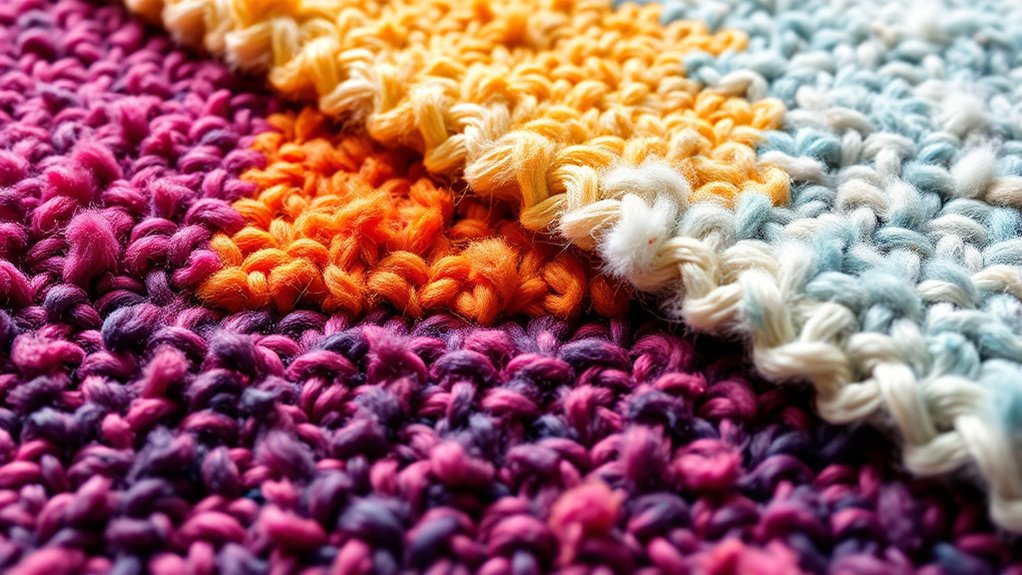
Have you ever wondered what makes a rug durable, soft, or easy to clean? The answer lies largely in the materials used to craft it. Different fibers bring unique qualities to rugs, affecting not just their appearance but also their fiber durability, cleaning, and maintenance needs. When selecting a rug, understanding these characteristics helps you make an informed decision that aligns with your lifestyle and aesthetic preferences.
Choosing the right rug depends on understanding fiber durability, cleaning needs, and your lifestyle.
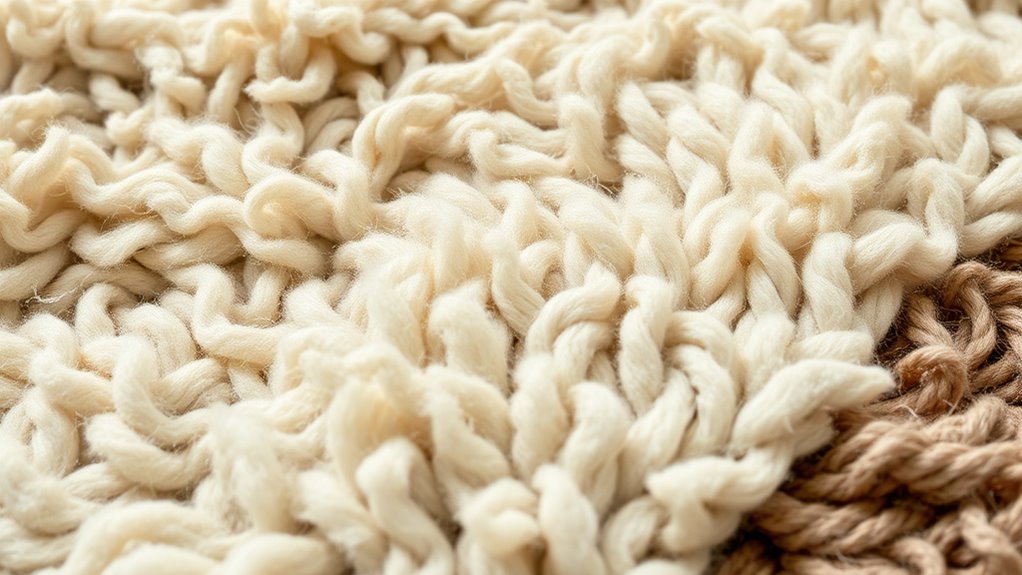
Wool is one of the most popular natural fibers for rugs, known for its exceptional fiber durability. It can withstand heavy foot traffic without showing wear and tear, making it ideal for busy households. Wool rugs also tend to be naturally resistant to stains and dirt, which simplifies cleaning and maintenance. Regular vacuuming keeps dirt from embedding deeply, and for spills, a quick blot usually suffices. When deep cleaning is needed, gentle washing with mild detergent preserves the fibers and maintains its softness over time. Wool’s resilience combined with its softness makes it a favorite for those seeking a cozy yet long-lasting rug. Additionally, wool’s insulating properties can contribute to a warmer atmosphere in your farmhouse bedroom, enhancing comfort.
Silk, on the other hand, offers a different experience altogether. It’s prized for its luxurious sheen and delicate softness, but it’s less fiber durable than wool. Silk fibers are more fragile, so rugs made from silk require gentle cleaning and careful maintenance to prevent damage. Regular vacuuming on a low setting helps keep dust at bay, but you should avoid excessive moisture or harsh chemicals. Professional cleaning is often recommended to preserve the vibrancy of the colors and the integrity of the fibers. Although silk rugs are more delicate, their beauty and refinement make them suitable for low-traffic areas or decorative purposes where they won’t face heavy wear and tear.
Cotton provides a versatile and affordable option, with moderate fiber durability. It’s easier to clean and maintain than silk, as cotton fibers can usually be spot cleaned with water and mild soap. Cotton rugs are lightweight and tend to be machine washable, which appeals to homeowners who prefer DIY cleaning. While they’re not as resistant to heavy traffic as wool, their softness and ease of care make them a practical choice for casual areas or spaces that don’t see constant use. Proper maintenance, like regular vacuuming and prompt stain removal, helps extend their lifespan. Being a natural fiber, cotton also tends to be more breathable and less prone to mold or mildew, especially in well-ventilated spaces like a farmhouse bedroom.
Synthetic fibers, such as nylon, polyester, and polypropylene, have gained popularity for their durability and affordability. These fibers boast excellent fiber durability, resisting stains, fading, and heavy traffic with ease. Cleaning synthetic rugs is straightforward—most can be vacuumed regularly and cleaned with simple solutions. They’re low-maintenance, making them perfect for high-traffic areas or households with children and pets. Their resistance to moisture and stains also means less frequent deep cleaning, saving you time and effort. Understanding how each fiber type behaves helps you maintain your rug’s appearance and longevity, ensuring it remains a beautiful and functional part of your home for years to come.
Frequently Asked Questions
How Do Rug Materials Affect Allergy Sufferers?
If you’re allergy sufferers, rug materials greatly impact your comfort. Hypoallergenic options like silk and certain synthetics tend to retain fewer allergens, reducing irritation. Wool and cotton can trap more dust and pet dander, potentially worsening allergies. Regular cleaning helps, but choosing rugs with hypoallergenic properties minimizes allergen retention, making your space healthier. So, opt for materials designed to reduce allergen buildup and keep your environment more comfortable and allergy-friendly.
Are Synthetic Rugs Environmentally Friendly?
Sure, synthetic rugs are eco-friendly fibers? Imagine a plastic jungle thriving beneath your feet—durability packed in, but at what cost? While they’re tough and easy to clean, their environmental impact isn’t exactly green. They may last ages, but their production often releases toxins. So, if you’re dreaming of a truly eco-friendly rug, synthetic might not be your best bet—think greener, less toxic options instead.
Can Rug Materials Be Recycled or Repurposed?
Yes, rug materials can be recycled or repurposed. You can explore recycling options like donating old rugs to organizations that repurpose fibers or turning them into new items. Repurposing ideas include cutting worn rugs into smaller mats, using them as protective covers, or crafting art projects. By recycling and repurposing, you extend your rug’s life and reduce waste, making a positive impact on the environment.
How Do Rug Materials Influence Indoor Air Quality?
Imagine you’re in a 70s disco, but instead, your rug impacts your indoor air quality. Wool and cotton rugs release minimal airborne fibers and chemical emissions, making them healthier choices. Synthetic rugs, however, often emit more airborne fibers and chemicals, which can irritate your lungs or trigger allergies. Choosing natural materials helps keep your indoor air fresher, so you breathe easier and enjoy a safer, more comfortable environment.
What Are the Best Rug Materials for High-Traffic Areas?
For high-traffic areas, durable materials like nylon or polypropylene are your best options, as they withstand wear and tear. Wool can also work due to its durability and natural stain resistance, but synthetic fibers often offer more variety in aesthetic options. Consider durability considerations and the aesthetic you want; choose a rug that balances longevity with style to keep your space looking great and lasting longer.
Conclusion
Now that you know the differences between wool, silk, cotton, and synthetic rugs, you can make a smarter choice for your space. Did you know that synthetic rugs make up about 60% of the global rug market? This shows how popular they are for affordability and durability. Whatever material you choose, understanding its qualities helps you select a rug that fits your style and needs perfectly. Happy decorating!