TL;DR

Get cleaning gear delivered free with Prime
- Fast, free delivery on millions of items
- Prime Video, Amazon Music and more included
- Member-only deals all year
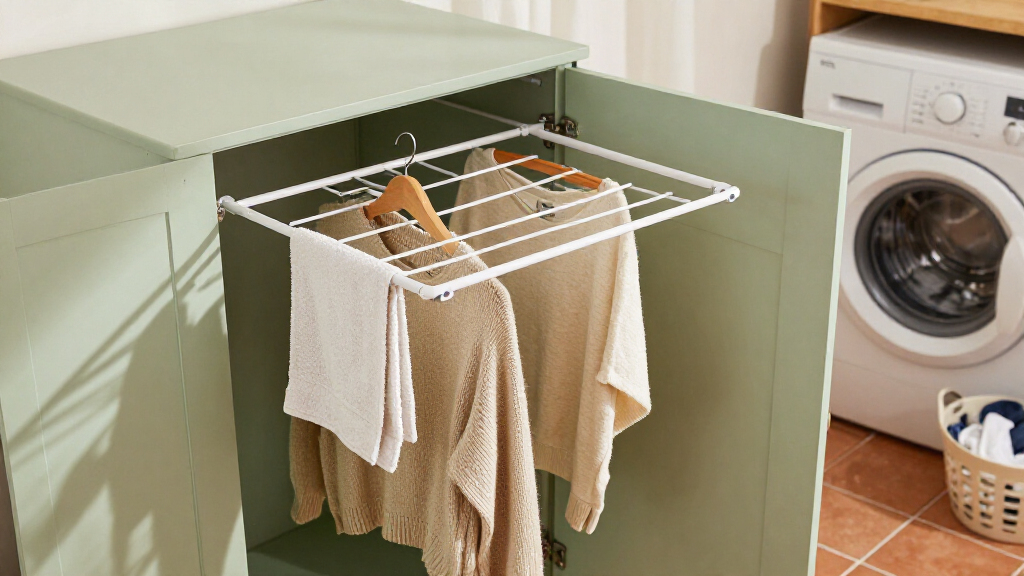
Ideal Home has highlighted a built-in laundry cupboard designed by London homeowner Hatty Parker, with pull-out hanging rails, ventilation and a dehumidifier to help dry clothes indoors. The setup keeps laundry out of the way, but drying times and energy use will depend on the equipment, room conditions and installation.
Ideal Home has reported on a built-in laundry cupboard that uses pull-out clothes rails, ventilation and a dehumidifier to help dry laundry indoors while keeping it out of sight. The design comes from Hatty Parker, a London homeowner, and offers an option for households dealing with wet-weather drying and limited space, though the report does not establish a standard drying time or energy saving.
Parker created the cupboard as part of a laundry room formed by reconfiguring a family bathroom and an adjoining box bedroom in her Victorian terraced house. The cupboard sits beside a stacked washing machine and tumble dryer. Its purpose is to combine the storage of an airing cupboard with a dedicated place for clothes to dry.
In the design described to Ideal Home, pull-out rails provide hanging space, while a dehumidifier and a low-wattage heating element sit at the bottom. Ventilation grilles in the doors allow air to circulate. The dehumidifier is plumbed into the washing machine and tumble dryer waste, according to Parker’s description.
Parker said she had previously used a dehumidifier with a heated clothes airer and wanted to adapt that arrangement into a more permanent, concealed setup. Ideal Home senior digital editor Jenny McFarlane recommended allowing sufficient ventilation and clearance around the appliance, and suggested a compact model for this kind of space. The article does not report independent testing of Parker’s cupboard.
A More Contained Way to Dry Laundry
The arrangement addresses two common indoor-laundry problems: clothes taking up shared living space and damp items drying slowly in cold or wet weather. By putting rails inside a cupboard, households can keep laundry out of the room’s main floor area while giving it a designated place to hang.
The cupboard is not simply storage: its performance depends on the combination of air circulation, moisture removal and suitable clearance. A dehumidifier may help manage moisture in the enclosed space, but the source report provides no measured drying-time comparison, energy figures or evidence that this particular installation will work equally well in other homes. The idea is best understood as a design approach, not a guaranteed solution.
For readers considering a similar project, the practical implications include available cupboard depth, access to drainage and power, appliance dimensions, ventilation and safe installation of any heating element. Those requirements can affect both cost and feasibility, especially in a small room or a home without nearby services.
Products Worth Considering

Blueair Blue Pure 511i Max Smart Air Purifier

Blueair Blue Pure 211i Max Smart Air Purifier

Levoit Core 300S-P Smart Wi-Fi Air Purifier
As an affiliate, we earn on qualifying purchases.
How Parker Designed the Drying Cupboard
Parker told Ideal Home that her household had used a dehumidifier alongside a heated clothes airer before creating the built-in version. She said the combination worked well for them and that she took inspiration from a drying cupboard she found on Pinterest. The report presents this as her experience, rather than a controlled assessment of the equipment.
The laundry room was created by changing the layout of two adjoining rooms, sacrificing a fifth bedroom to make a larger bathroom and a small laundry area. Parker said locating the laundry space on the same floor as the bedroom or bathroom helped make the household’s routine more streamlined. The cupboard is one part of that renovation, positioned beside the washer and dryer.
Ideal Home’s report also points to variation in how a setup could be configured. Its key design elements are a place to hang garments and a means of managing moisture and airflow; the specific appliances and cupboard layout may differ from home to home. McFarlane’s recommendation was to choose a compact dehumidifier and leave enough space for it to operate with ventilation.
“The idea for the drying cupboard … came from wanting a cross between a traditional airing cupboard and a dedicated space where clothes could dry efficiently, but remain neatly out of sight.”
— Hatty Parker, whose home is featured in Ideal Home
Drying Results Depend on the Setup
The report does not give measured drying times, electricity use, installation costs or humidity readings for Parker’s cupboard. It also does not compare the design with a standard heated airer, an open drying rack or a tumble dryer. Parker’s description that her earlier appliance combination worked well is a personal account, not evidence of a universal result.
It is also not clear whether the cupboard’s plumbing and heating arrangements would suit other homes, or what alterations would be needed to install them. The source does not provide detailed specifications for the low-wattage heating element or explain installation requirements. Readers should check appliance instructions and seek qualified help where electrical, plumbing or building work is needed.
Plan the Space Before Building
The source report describes a completed home project but does not announce a commercial product, wider rollout or follow-up testing. For anyone interested in adapting the idea, the next step is to measure the available space and check the selected dehumidifier’s required clearance, drainage options and ventilation needs before choosing rails or cupboard doors.
Households should also confirm that any electrical or plumbing work is suitable for the room and carried out safely by qualified professionals where required. The source gives no cost estimate or performance guarantee, so the results of a similar installation will remain dependent on the home, the equipment and how the cupboard is used.
Key Questions
What is the laundry cupboard hack?
It is a built-in cupboard with pull-out rails for hanging clothes, ventilation grilles and a dehumidifier. Parker’s version also includes a low-wattage heating element and connects the dehumidifier to the washer and dryer waste, according to Ideal Home.
Does the cupboard dry clothes faster?
Parker told Ideal Home that a dehumidifier and heated clothes airer had worked well for her household. The report does not provide measured drying times or independent test results for the built-in cupboard, so performance in other homes is not confirmed.
Does a dehumidifier need ventilation inside a cupboard?
Yes, the design described includes ventilation grilles in the doors. Ideal Home editor Jenny McFarlane advised allowing enough ventilation and clearance for the appliance. Follow the specific manufacturer’s instructions for the model being used.
Can this design fit in any laundry room?
Not necessarily. The cupboard needs room for hanging rails and the appliance, as well as suitable airflow and, in Parker’s design, access to drainage and a heating element. Space, services and installation needs vary, and the report does not provide a standard plan or cost.
Source: idealhome.co.uk