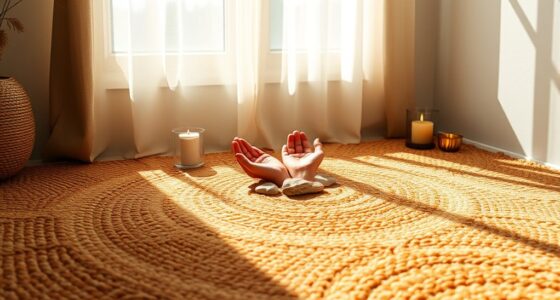
To keep your home allergy-friendly, choose rugs made from hypoallergenic fibers like treated wool or synthetic options designed to resist dust and allergens. Opt for easy-to-clean surfaces with low pile height and non-porous backing, which help prevent allergen buildup and simplify maintenance. Regular vacuuming with a HEPA filter and periodic deep cleaning also boost your indoor air quality. Continue exploring for more tips on selecting and maintaining the best allergy-resistant rugs.
Key Takeaways
- Choose rugs made from hypoallergenic fibers like treated wool or synthetic materials less likely to trap allergens.
- Opt for low pile height rugs for easier vacuuming and better removal of dust and debris.
- Ensure rug backing is non-porous to prevent allergens from seeping into the floor beneath.
- Regularly vacuum with a HEPA-filter vacuum and periodically deep clean to control dust and pet dander.
- Combine hypoallergenic rug choices with good ventilation and air purifiers for a healthier indoor environment.

If you suffer from allergies, choosing the right rug can make a vital difference in your home environment. The key is to find options made from hypoallergenic fibers that don’t trap dust, pollen, or pet dander. Rugs constructed from such fibers can help reduce allergens in your space, making it easier to breathe and minimizing allergy flare-ups. Look for materials like wool treated to resist dust mites, or synthetic fibers designed specifically to be less hospitable to allergens. These fibers are often naturally resistant or can be treated to prevent the buildup of irritants, giving you a cleaner, healthier home.
Choosing hypoallergenic fibers helps reduce dust, pollen, and pet dander for a healthier home environment.
In addition to material choice, the ease of cleaning your rug is equally important. Easy-to-clean surfaces allow you to remove dust and debris quickly, preventing the accumulation of allergens over time. Rugs with low pile heights are typically better because they are easier to vacuum thoroughly, getting deep into the fibers to eliminate particles. Regular vacuuming with a HEPA filter can considerably improve indoor air quality, especially when your rug’s surface is easy to maintain. Some hypoallergenic rugs are also designed with removable, washable pads or covers, which makes deep cleaning straightforward. This keeps your environment fresh and allergen-free without requiring professional cleaning every time.
Another aspect to consider is the backing and construction of the rug. Non-porous backings prevent dust and allergens from seeping into the floor beneath, making cleanup more effective. When you choose a rug with a smooth backing, you reduce the risk of trapping dirt or allergens in hidden crevices. Also, opting for rugs with tightly woven fibers means fewer gaps where allergens can settle. These tightly woven textures are not only more durable but also less likely to harbor irritants, making maintenance simpler and more effective.
Finally, maintaining a regular cleaning routine is vital. Even the best hypoallergenic fibers and easy-to-clean surfaces won’t be sufficient if you neglect routine upkeep. Vacuum frequently, at least once or twice a week, and consider periodic deep cleaning or professional steam cleaning to keep allergens at bay. Using air purifiers and ensuring good ventilation in your home can further help control airborne allergens, complementing your efforts with the right rug choices. Additionally, understanding the specific fiber properties of your rug can help you select the most allergen-resistant options for your needs. By selecting rugs made from hypoallergenic fibers and prioritizing easy-to-clean surfaces, you create a more comfortable, allergy-friendly living space that’s easier to maintain and healthier for you.
Frequently Asked Questions
Are Allergy-Friendly Rugs Suitable for Pets?
Yes, allergy-friendly rugs are suitable for pets because they resist pet accidents and are easy to clean. Their hypoallergenic materials help reduce allergens from pet dander, and quick rug ventilation prevents mold and odor build-up. You can easily spot clean or vacuum these rugs, making maintenance simple. Plus, their durable surfaces withstand pet activity, ensuring your home stays allergy-friendly and comfortable for both you and your pets.
How Often Should Allergy-Friendly Rugs Be Professionally Cleaned?
You should have your allergy-friendly rugs professionally cleaned at least once every 6 to 12 months. Professional cleaning guarantees thorough allergen removal, reducing dust, pet dander, and other irritants that can accumulate over time. Regular professional cleaning not only keeps your rugs fresh but also maintains their allergy-friendly properties, making your living space healthier. Adjust the frequency based on your household’s allergy sensitivities and pet presence.
Can Allergy-Friendly Rugs Be Used Outdoors?
You can absolutely use allergy-friendly rugs outdoors, but only if they’re designed for outdoor durability and weather resistance. Imagine a rug that laughs in the face of rain, dirt, and sun—those are your best bets. Regularly check for signs of wear, and clean them often. Just remember, not all allergy-friendly rugs are built to withstand the elements, so choose wisely for outdoor use to keep them looking fresh and allergen-free.
Do Allergy-Friendly Rugs Emit Any Chemical Odors?
You’ll find that allergy-friendly rugs generally have minimal chemical emissions, making them a good choice if you’re concerned about odors. Most are made from hypoallergenic, non-toxic materials that don’t emit strong chemical odors. However, some rugs might have a slight scent when new due to manufacturing processes. To minimize odor concerns, air out your rug before bringing it inside, and choose options labeled as low-emission or odor-free.
Are Allergy-Friendly Rugs Safe for Children With Sensitivities?
Think of allergy-friendly rugs as a gentle shield for your child’s sensitive skin. They are generally safe, made with hypoallergenic fibers and chemical-free dyes, reducing allergens and toxins. I met a parent whose child with allergies thrived on these rugs, noticing fewer sneezes and irritations. These rugs are designed to minimize reactions, making them a smart choice for children with sensitivities. Always check labels to verify they meet safety standards.
Conclusion
So, after all that fuss about hypoallergenic rugs, you might think you’ve cracked the allergy code. But surprise—no rug is fully allergen-proof. Still, choosing the right materials and regular cleaning can make your space surprisingly allergy-friendly. Irony? The more you try to eliminate allergens, the more you realize that a little dust and a cozy rug might just be the best compromise. Now, go ahead—enjoy your allergy-aware sanctuary, sneeze-free or not!