
Mold-resistant rug pads work effectively by combining antimicrobial treatments, breathable materials, and moisture barriers to prevent mold growth underneath your rugs. They inhibit spores from settling and multiplying while allowing air to circulate and moisture to evaporate. Choosing the right pad—such as one made from rubber or synthetic fibers—further reduces mold risk. If you’re curious about how to keep your space healthier and mold-free, continue exploring for helpful tips and options.
Key Takeaways
- Mold-resistant rug pads contain antimicrobial agents that inhibit mold spores and prevent growth under rugs.
- They are designed to be breathable, promoting air circulation and moisture evaporation to reduce dampness.
- These pads serve as moisture barriers, blocking water from reaching the rug and preventing mold development.
- Proper selection of mold-resistant materials like rubber or synthetic fibers enhances effectiveness.
- Combining mold-resistant pads with good humidity control and regular cleaning offers optimal mold prevention.
How Do Mold-Resistant Rug Pads Work?

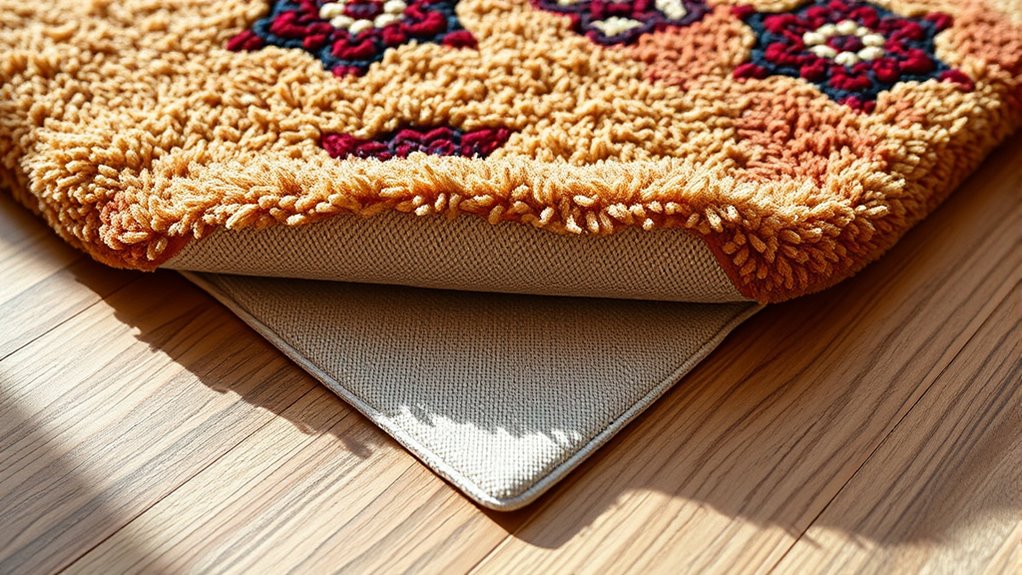
Mold-resistant rug pads work by incorporating materials or treatments that prevent mold growth. These pads often contain antimicrobial agents or special coatings that inhibit mold spores from settling and thriving. They are designed to be breathable, allowing air circulation and moisture evaporation, which reduces dampness underneath your rug. Some pads use synthetic materials like vinyl, rubber, or polyester infused with mold-resistant compounds. These treatments act as a barrier, stopping mold spores from attaching to the pad’s surface. By maintaining a dry environment and resisting mold’s natural growth process, mold-resistant rug pads help keep your space cleaner and healthier. Breathability is a key factor in preventing mold development, as it promotes airflow and moisture control. You’ll notice they’re particularly useful in humid or damp areas where mold tends to develop easily.
Effectiveness of Mold-Resistant Materials
While the effectiveness of mold-resistant materials can vary, many have proven to be highly reliable in preventing mold growth under typical conditions. Here are four reasons why they work well:
- Inhibition of Mold Spore Growth: Mold-resistant materials contain properties that prevent spores from settling and multiplying.
- Moisture Barrier: They effectively block moisture from reaching the rug pad, reducing mold-friendly environments.
- Durability: Many are designed to withstand daily wear, maintaining their mold-resistant qualities over time.
- Low Maintenance: These materials often require less cleaning and treatment, making mold prevention easier for you.
- Compatibility with Energy-Efficient Materials: Many mold-resistant products are designed to be compatible with energy-efficient and sustainable materials, enhancing the overall durability and performance of your rug protection system.
Factors That Influence Mold Growth Under Rugs

Several factors can profoundly influence mold growth beneath rugs, with moisture being the most critical. Excess humidity or water leaks create the perfect environment for mold spores to thrive. Poor airflow underneath your rug traps dampness, further encouraging growth. The type of subfloor also matters; porous surfaces like concrete or wood absorb moisture, increasing mold risk. Dirt, dust, and organic debris act as food sources for mold colonies. If spills or pet accidents aren’t promptly cleaned, residual moisture can persist and promote mold development. Additionally, infrequent cleaning or lack of proper ventilation allows moisture to linger. Indoor air quality also plays a role, as poor ventilation can trap pollutants and moisture, further supporting mold growth. By understanding these factors, you can better assess your environment and take steps to reduce mold growth beneath your rugs.
Tips for Preventing Mold in Humid Areas

Living in humid areas requires proactive measures to prevent mold growth beneath your rugs. Mold thrives in moisture, so keeping your space dry is essential. Here are four tips to help you stay ahead:
- Control indoor humidity with dehumidifiers or air conditioners to maintain levels below 60%.
- Ensure proper ventilation by opening windows or using exhaust fans, especially in high-moisture areas like kitchens and bathrooms.
- Clean and dry rugs regularly to remove moisture and prevent mold spores from settling.
- Use mold-resistant rug pads that allow air circulation and reduce trapped moisture. Additionally, choosing mold-resistant materials for rug pads can further inhibit mold growth.
Choosing the Right Rug Pad for Your Space
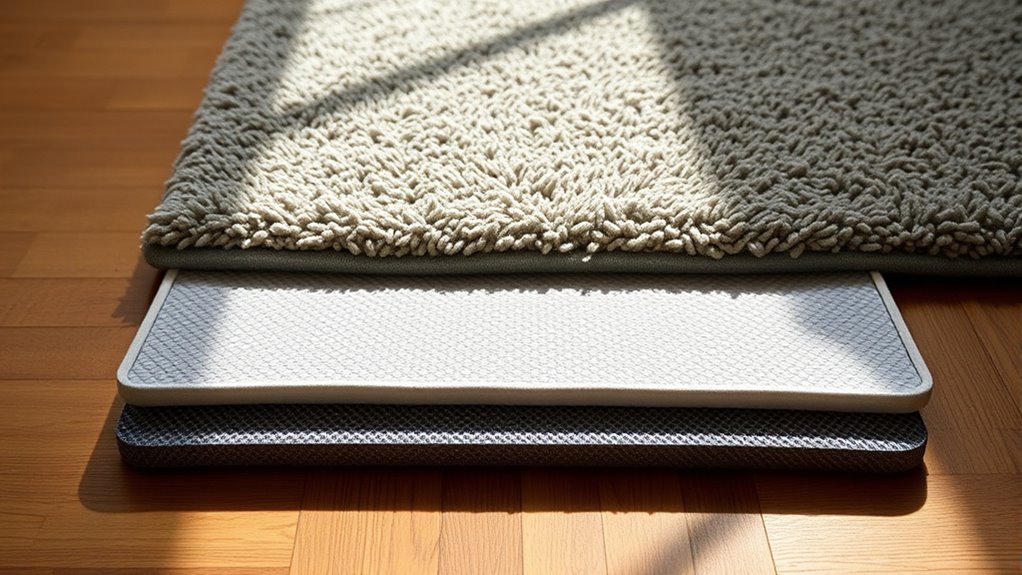
Choosing the right rug pad is essential to prevent mold growth and protect your flooring, especially in humid environments. Start by selecting a pad made from mold-resistant materials like rubber or synthetic fibers designed to breathe and allow air circulation. Avoid foam or felt pads that trap moisture and promote mold growth. Consider the thickness of the pad—thicker pads provide cushioning but can also trap more humidity if not breathable. Make certain the pad fits snugly under your rug to prevent shifting and moisture buildup. If your space is prone to humidity, look for pads with antimicrobial or mold-resistant treatments. Properly choosing and maintaining your rug pad helps keep your space healthy and prevents mold from taking hold. Additionally, selecting a pad with breathable materials can significantly reduce the risk of mold development over time.
Frequently Asked Questions
Are Mold-Resistant Rug Pads Safe for Allergy Sufferers?
You’re wondering if mold-resistant rug pads are safe for allergy sufferers. These pads are generally designed to inhibit mold growth, which can be beneficial if you have allergies. However, some contain chemicals that might trigger sensitivities. It’s best to choose pads made from natural, non-toxic materials and confirm proper ventilation. Always read the label and consult your doctor if you’re uncertain about any product’s safety for your allergies.
How Long Do Mold-Resistant Properties Typically Last?
You’re wondering how long mold-resistant properties last. Typically, these properties remain effective for about 1 to 5 years, depending on the product quality and usage conditions. Regular cleaning and proper maintenance can help extend their lifespan. Over time, exposure to moisture, wear, and cleaning agents may diminish their effectiveness. Check manufacturer guidelines for specific details about your rug pad to guarantee continued mold resistance.
Can Mold-Resistant Rug Pads Be Used Outdoors?
Think of mold-resistant rug pads as your rug’s loyal shield, but even shields have their limits. While they’re great indoors, using them outside is a gamble. Outdoor conditions like rain, humidity, and dirt can wear down that resistance quickly. So, if you want your outdoor space to stay fresh and mold-free, it’s better to choose pads specifically designed for outdoor use. Otherwise, your shield might falter.
Do Mold-Resistant Rug Pads Require Special Maintenance?
You wonder if mold-resistant rug pads need special upkeep. Generally, they don’t require extra maintenance beyond regular cleaning. Just vacuum or spot clean as you would with any rug pad, keeping the area dry and well-ventilated. Avoid excessive moisture or standing water, which can still promote mold growth. Proper care guarantees your mold-resistant pad stays effective and lasts longer, so stay diligent with routine cleaning.
Are Mold-Resistant Rug Pads Environmentally Friendly?
Think of mold-resistant rug pads as a shield for your home’s health. They’re generally eco-friendly because they often avoid harmful chemicals like volatile organic compounds (VOCs). Many are made from sustainable or recycled materials, reducing environmental impact. However, it’s wise to check product labels to verify they’re free of toxic substances. Overall, these pads can be a greener choice, helping protect both your space and the planet.
Conclusion
Think of mold-resistant rug pads as your home’s immune system, fighting off invisible invaders. I once overlooked a damp basement area, and mold quickly took hold—reminding me how vital the right defenses are. By choosing effective, mold-resistant pads and keeping humidity in check, you’re building a fortress against mold’s silent invasion. When you prioritize these steps, you create a healthier, more resilient space—protecting your home like a trusted shield against unseen threats.