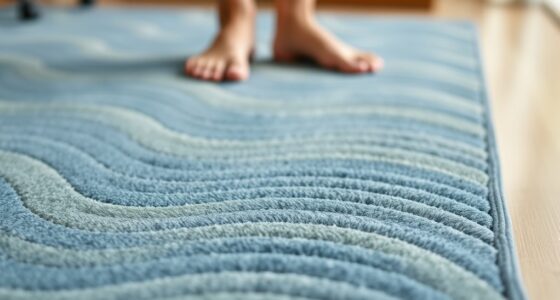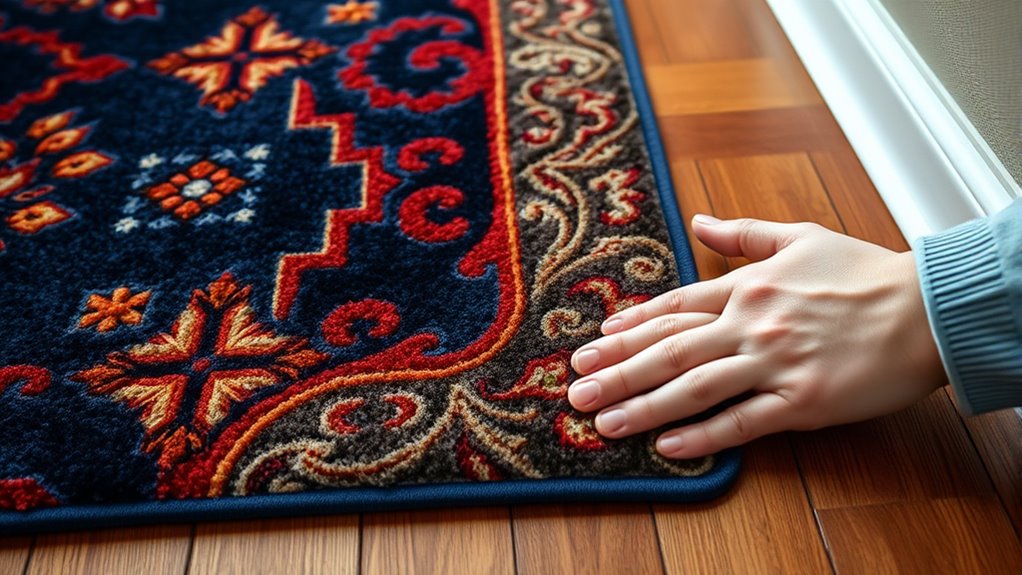

To make floors safer for seniors, choose non-slip rugs with features like low-pile or flat-weave styles to reduce tripping risks. Use slip-resistant padding or double-sided tape underneath to keep rugs securely in place on hardwood, tile, or vinyl floors. Position rugs in well-lit, flat areas and avoid thick or shaggy designs. Regularly check and adjust the placement for continued safety. If you explore further, you’ll find more practical tips to prevent falls and enhance home safety.
Open a free Amazon Business account
Business pricing, bulk buying and tax-exempt orders.
As an affiliate, we earn on qualifying purchases.
Key Takeaways
- Choose low-pile or flat-weave rugs to minimize tripping hazards for seniors.
- Use slip-resistant padding designed to grip flooring and prevent rug movement.
- Secure rug edges with double-sided tape or grippers to prevent slipping or bunching.
- Opt for rugs with non-slip backing combined with padding for maximum safety.
- Place rugs in well-lit, flat areas away from high-traffic zones to reduce fall risks.
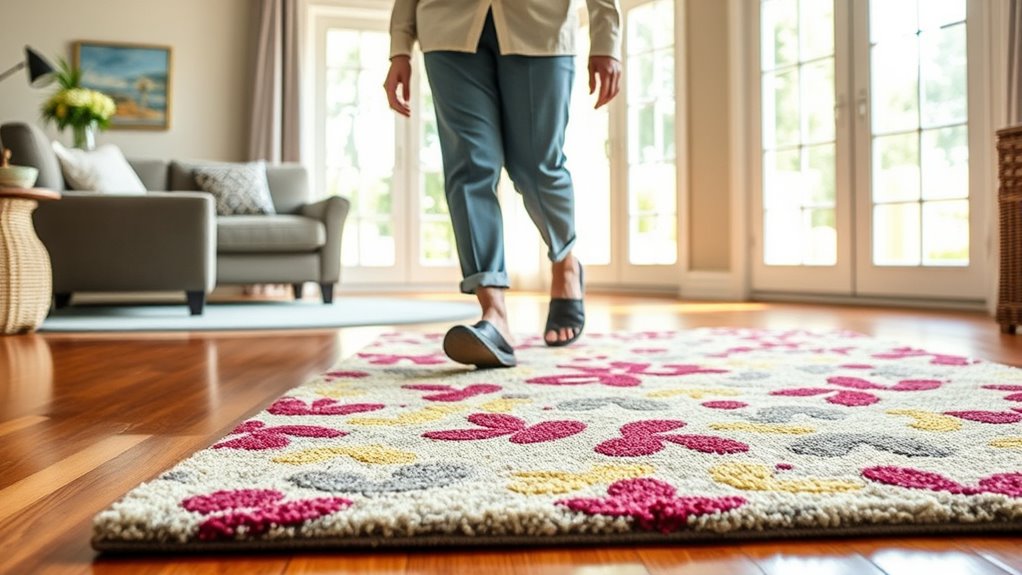
For seniors, safety is a top priority when it comes to home decor, especially with rugs that can pose slipping hazards. Area rugs add warmth and style to your home, but if they’re not secure, they can increase the risk of falls. To keep your space both beautiful and safe, consider options that minimize this danger. One of the most effective methods is using slip resistant padding underneath your area rugs. These pads are designed to grip the floor and prevent the rug from shifting or bunching up as you walk. When you choose a rug with slip resistant padding, you’re creating a stable surface that reduces the likelihood of trips and falls.
Installing slip resistant padding is straightforward and affordable. You simply cut the padding to size and lay it underneath your existing area rugs. This padding works on various flooring types, including hardwood, tile, and vinyl, making it a versatile solution for any room. It also adds a slight cushion, which can make walking more comfortable. Keep in mind that for maximum safety, the padding should be smooth and free of wrinkles, as these can still cause tripping hazards. Regularly check the padding to ensure it remains secure and replace it if it starts to wear out or lose grip. Additionally, choosing rugs made from low-pile or flat-weave materials can further enhance safety by reducing the risk of tripping.
When selecting area rugs for a senior-friendly home, opt for low-pile or flat-weave styles. These are less likely to bunch up or cause tripping. Avoid thick, shaggy rugs that can trap feet or cause uneven surfaces. Additionally, look for rugs with non-slip backing if available, but don’t rely solely on this feature—combine it with slip resistant padding for added security. The right combination of sturdy rugs and reliable padding creates a safer walking environment without sacrificing style.
Keep in mind that placement matters too. Position rugs in well-lit areas and on flat, even surfaces to minimize hazards. If you have high-traffic zones, secure the edges with double-sided tape or rug grippers. These small adjustments, along with slip resistant padding, go a long way in preventing accidents. Regularly inspecting your rugs and padding helps maintain a safe environment, especially as floors and rugs can shift over time.

Ophanie Area Rugs for Living Room Bedroom, Washable Non-Slip Fluffy Soft Grey Shag Carpet, Indoor Floor Gray 4×6 Fuzzy Shaggy Living Room Plush Rug for Kids Home Dorm Decor Aesthetic
- Ultra Soft & Non-slip: Shaggy surface with anti-slip dots
- Stylish Layering Design: Enhances warmth and coziness
- Safe, Comfortable Materials: Made from soft polyester, suitable for kids
As an affiliate, we earn on qualifying purchases.
As an affiliate, we earn on qualifying purchases.
Frequently Asked Questions
Are Non-Slip Rugs Suitable for All Types of Flooring?
Non-slip rugs are suitable for most flooring types, but you should consider area rug durability and rug material safety first. For hardwood or tile, they work well, providing stability and reducing slips. Always choose rugs with non-slip backing or add a rug pad to enhance safety. Be mindful of the rug material, avoiding those that could damage your floor or cause allergies. This way, you guarantee both safety and longevity.
How Often Should Non-Slip Rug Adhesives Be Replaced?
If your non-slip rug begins to lift or lose grip, it’s time to replace the adhesive. Typically, adhesive lifespan varies, but most experts recommend checking every 6 to 12 months. For example, a senior homeowner noticed her rug slipping after eight months, prompting her to replace the adhesive. Regular inspections ensure peak safety, and timely replacement of the adhesive prevents slips and falls, maintaining a secure, non-slip surface.
Can Non-Slip Rugs Be Machine Washed Safely?
Yes, you can machine wash non-slip rugs safely, but you should follow proper rug maintenance and safety tips. Check the care label first, as some rugs require gentle cycles or cold water. Use mild detergent and avoid bleach. Air dry when possible to prevent damage. Regularly inspect the non-slip backing to make sure it stays secure. Proper cleaning maintains safety and prolongs the rug’s lifespan, reducing slips.
Do Non-Slip Rugs Cause Any Tripping Hazards?
You might worry that non-slip rugs could be a trip hazard, but they actually improve rug stability, making your floors safer. When properly secured, these rugs prevent slipping and shifting, reducing the risk of trips and falls. To guarantee safety, always check that the non-slip backing is in good condition and the rug lies flat. Properly maintained, non-slip rugs enhance stability without creating new hazards.
What Is the Cost Difference Between Various Non-Slip Rug Options?
The cost difference between non-slip rug options varies, with rug pad pricing ranging from $10 to $50 depending on size and quality, while adhesive costs are typically between $5 and $15. You’ll find that rug pads offer a reusable, reliable grip, often providing better long-term value despite higher initial costs. Adhesives are cheaper upfront but may need reapplication, making rug pads a smarter, cost-effective choice for safety.
Conclusion
Choosing the right non-slip rug can be like planting a sturdy tree—offering safety, stability, and peace of mind. Imagine your loved one walking confidently across a rug that feels as secure as a fortress, reducing fall risks. With the right non-slip options, you’re not just adding decor; you’re creating a safe haven where your senior can move freely and comfortably. It’s an investment in their independence and your peace of mind.
Baby shower & registry season Picks
baby registry must-haves
As an affiliate, we earn on qualifying purchases.