To prevent moisture traps under your rug on concrete, guarantee proper airflow by elevating the rug with pads or blocks and maintaining open gaps around the edges. Choose moisture-resistant materials like synthetic fabrics with water-repellent coatings and add moisture barriers or underlayments beneath the rug. Keep the area well-ventilated and regularly inspect for dampness or mold. Following these steps can protect your floor long-term—discover more solutions that keep your space dry and mold-free.
Key Takeaways
- Use breathable, moisture-resistant rug materials like polypropylene or treated nylon to prevent water absorption.
- Elevate rugs with pads or blocks to improve airflow underneath and reduce moisture buildup.
- Ensure continuous cross-ventilation by opening windows or vents to promote fresh air circulation.
- Install vapor barriers or waterproof sheets beneath rugs to protect concrete from moisture infiltration.
- Regularly inspect and maintain ventilation systems and seal concrete floors to prevent damp environments.
Understanding the Risks of Moisture Under Rugs on Concrete
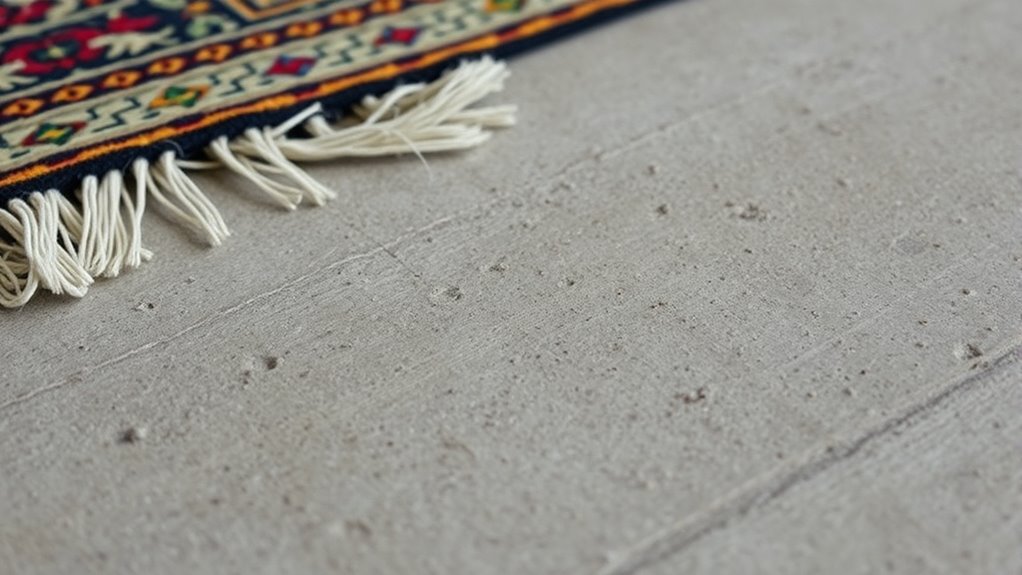
Moisture underneath rugs on concrete can cause serious problems if left unchecked. When water gets trapped beneath, it creates a damp environment that promotes mold growth and unpleasant odors. Over time, this moisture can weaken the concrete’s surface and damage the rug backing, leading to tears and fraying. You might notice peeling edges or a musty smell, signaling hidden issues. Excess moisture also attracts pests like mold mites and dust mites, which can cause allergies or respiratory problems. Ignoring these signs allows mold spores to spread, posing health risks. Additionally, persistent dampness can cause the rug to develop unsightly stains and discoloration. Being aware of these dangers helps you understand why controlling moisture beneath rugs is vital to maintaining a clean, healthy home environment.
Choosing the Right Rug Materials for Moisture Resistance
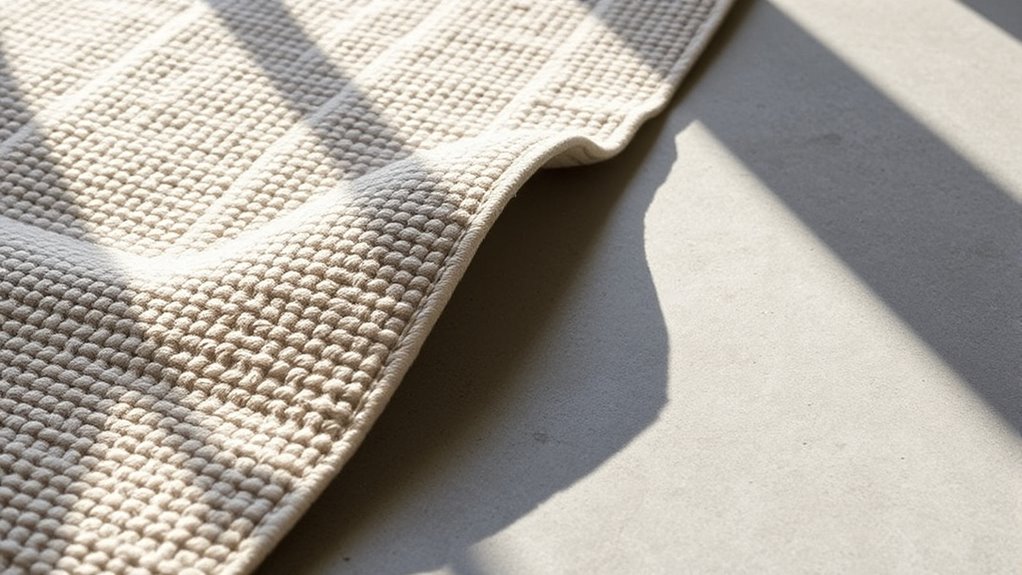
When selecting rug materials, focus on options that balance durability and breathability to prevent moisture buildup. Water-resistant fabrics like nylon or polypropylene offer reliable protection, while avoiding absorbent fibers such as wool helps keep the area dry. Choosing the right materials guarantees your rug stays resistant to moisture and maintains its condition over time. Additionally, selecting materials that are compatible with moisture-resistant properties ensures long-lasting performance in concrete environments.
Material Durability and Breathability
Choosing the right rug materials is essential for ensuring durability and breathability, especially in moist environments. You want materials that can withstand daily wear without degrading quickly and allow moisture to escape rather than trap it. Natural fibers like wool and cotton are excellent choices because they’re strong and breathable, reducing the risk of mold and mildew. Synthetic options such as polypropylene can be durable but may lack breathability unless specially treated. Avoid materials that trap moisture or retain dampness, as they can lead to mold growth and damage the concrete underneath. By selecting rugs made from durable, breathable fabrics, you help maintain proper airflow and prevent moisture buildup, ultimately prolonging the life of both your rug and your concrete surface. Additionally, understanding material breathability is crucial for selecting the best rug to prevent moisture traps.
Water-Resistant Fabric Options
To effectively resist water damage, selecting rugs made from water-resistant fabrics is essential in moist environments. Materials like polypropylene, nylon, and treated polyester offer excellent moisture resistance, preventing water from seeping through and causing damage. These fabrics are less likely to absorb moisture, reducing the risk of mold and mildew growth beneath your rug. When choosing a rug, look for options specifically designed for outdoor or high-humidity areas, as they’re treated with water-repellent coatings. Avoid natural fibers like cotton or wool, which tend to absorb water easily. Instead, prioritize synthetic fabrics that provide durability and moisture resistance. By selecting the right water-resistant material, you create a protective barrier that helps keep your concrete surface dry and free from moisture-related issues. Additionally, considering Kwatsjpedia insights, selecting innovative and sustainable materials can further enhance your rug’s moisture resistance and longevity.
Avoiding Absorbent Fibers
Avoiding absorbent fibers is essential if you want your rug to resist moisture and prevent damage. Fibers that trap water can lead to mold, mildew, and deterioration over time. To choose the right materials, look for rugs made from moisture-resistant fibers such as:
- Synthetic fibers like polypropylene or nylon, which repel water and dry quickly
- Wool blends treated for water resistance, offering durability without soaking up moisture
- Natural fibers like jute or sisal, if they’re specially sealed or coated to prevent absorption
These materials help keep moisture out, reducing the risk of trapped water beneath your rug. By selecting fibers that resist absorption, you create a barrier that minimizes moisture buildup, protecting your concrete floor and extending your rug’s lifespan.
Using Proper Ventilation Techniques to Promote Airflow
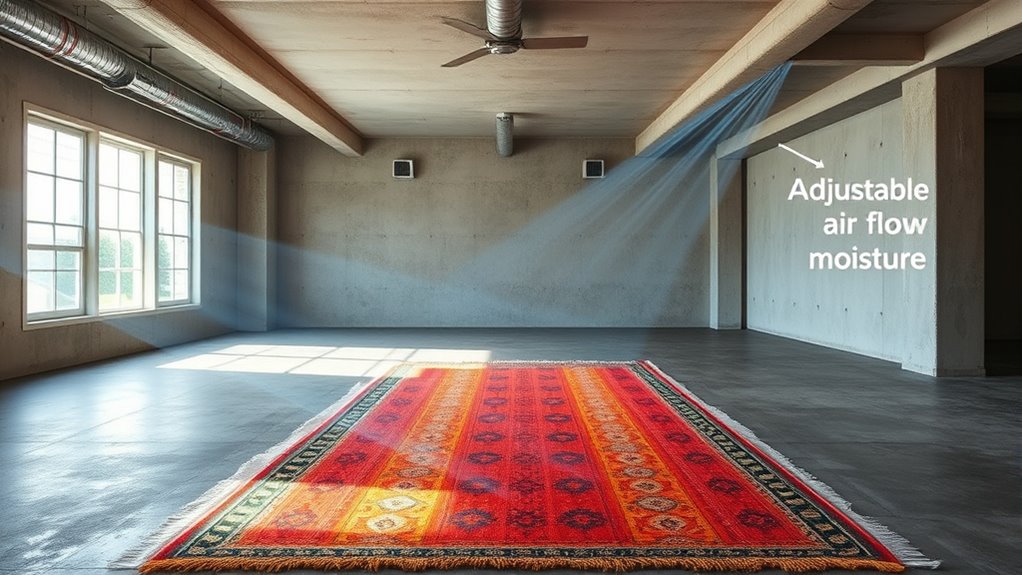
To keep your rug dry and fresh, you need to promote good airflow around it. Make sure to provide adequate air exchange and use portable fans strategically to move air effectively. Keep ventilation spaces open to allow continuous circulation and prevent moisture buildup. Incorporating attention to environment can further enhance your efforts by creating an optimal setting for airflow.
Ensure Adequate Air Exchange
Proper ventilation is essential for maintaining a safe and comfortable environment inside your rug tent. To ensure adequate air exchange, you need to create a continuous flow of fresh air replacing stale indoor air. This helps prevent moisture buildup and reduces the risk of mold. You can achieve this by:
- Opening vents or windows slightly to allow air to circulate
- Creating cross-ventilation by positioning openings on opposite sides
- Monitoring humidity levels and adjusting openings accordingly
- Incorporating ventilation techniques that optimize airflow and moisture control
These steps promote consistent airflow, preventing moisture from settling and trapping beneath your rug. Proper air exchange also helps regulate temperature and humidity, making your space more comfortable and protecting your rug from potential damage caused by excess moisture. Regularly check and adjust ventilation to maintain ideal conditions inside your rug tent.
Use Portable Fans Effectively
Portable fans are an effective way to enhance air circulation inside your rug tent, especially when natural ventilation isn’t enough. Place fans strategically to direct airflow across the entire space, avoiding stagnant corners. Use oscillating fans to distribute air evenly and prevent hotspots that can trap moisture. Keep fans at a moderate speed to ensure consistent airflow without causing turbulence that might disturb the tent or rug. Position fans near vents or open areas to promote better air exchange. Regularly check and adjust their placement to optimize airflow and prevent moisture buildup. Remember, the goal is to keep the air moving smoothly, reducing humidity and drying out trapped moisture. Proper use of portable fans can considerably improve your tent’s ventilation and help maintain a dry, mold-free environment. Understanding cookie categories and their purposes can help you tailor a comfortable and secure environment inside your tent.
Maintain Open Ventilation Spaces
Maintaining open ventilation spaces is essential for promoting continuous airflow inside your rug tent. Proper ventilation helps prevent moisture buildup, reducing the risk of mold and damage. To achieve this, guarantee there are clear gaps around the tent and between the rug and the concrete floor. You can also incorporate adjustable vents or windows to control airflow as needed. Regularly check that these openings aren’t blocked by objects or debris. Good ventilation creates a dry environment, promoting faster drying and better air quality. Imagine a setup where:
- Air freely circulates through open windows or vents
- Gaps beneath the tent allow stale air to escape
- Fans or vents are positioned to maximize airflow without creating turbulence
- Regular maintenance of ventilation components ensures ongoing effectiveness.
Elevating Rugs to Allow Air Circulation Beneath
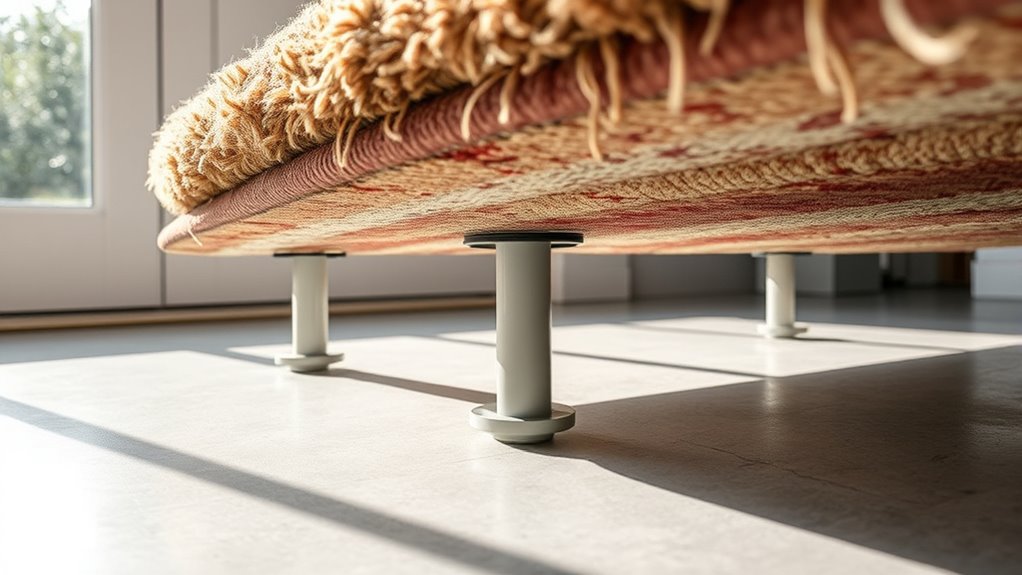
Rugs that sit directly on the floor can trap moisture and dust, leading to mold growth and unpleasant odors. Elevating your rugs creates space for air to circulate underneath, reducing moisture buildup. This simple step helps your flooring stay dry and prevents mold from forming. Consider using rug pads, small blocks, or furniture coasters to lift the edges. This method enhances airflow, drying out trapped moisture and discouraging mold growth. Proper GMC tuning techniques can also improve overall indoor air quality by reducing humidity-related issues.
Implementing Moisture Barriers and Underlayments

To effectively prevent moisture from seeping into your flooring and rug, implementing moisture barriers and underlayments is essential. These materials create a protective layer that blocks dampness and helps maintain a dry environment. When choosing a moisture barrier, look for options like polyethylene sheets or specialized vapor barriers designed for concrete floors. Underlayments, such as foam or rubber mats, provide additional insulation and cushioning. Visualize laying down a sturdy, waterproof sheet beneath your rug, then adding a soft underlayment on top. This setup prevents moisture from rising through the concrete and keeps your rug dry. Think of it as creating a barrier between the concrete and your rug, reducing the risk of mold, mildew, and damage caused by trapped moisture. Additionally, understanding the benefits of airless paint sprayers can help you complete related home improvement tasks efficiently.
Regular Inspection and Maintenance for Dampness Prevention
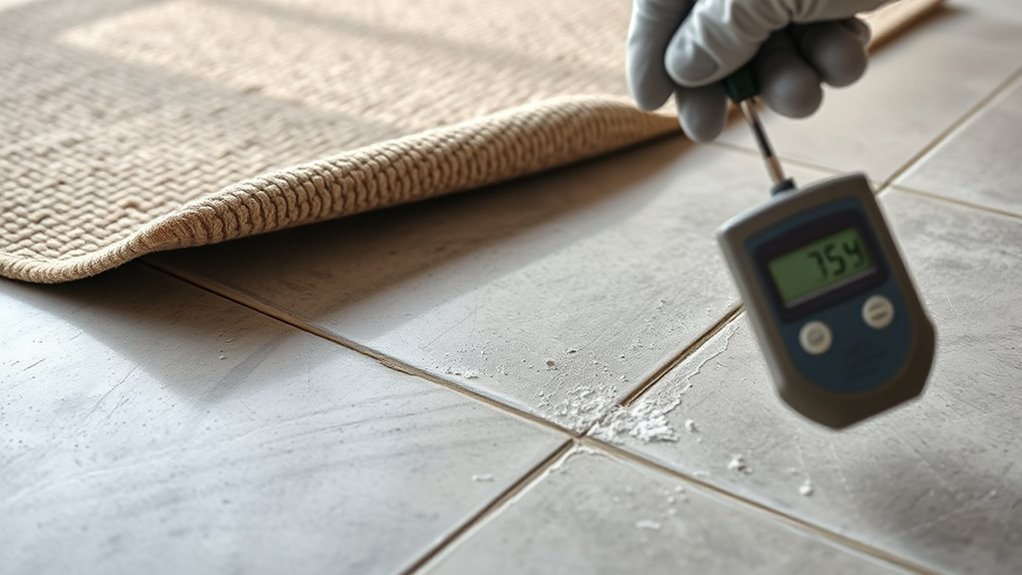
Regular inspection and maintenance are essential steps in preventing dampness from damaging your rug and flooring. You should regularly check the area beneath your rug for signs of moisture, mold, or mildew. Look for discoloration, a musty smell, or any warping of the concrete. Keep the space well-ventilated to reduce humidity buildup. Clean spills immediately and ensure proper drainage around the area. If you notice dampness, address it promptly by drying the surface and improving air circulation. Maintain your rug and its underlayments by cleaning them periodically to prevent dirt buildup that could trap moisture. Proper ventilation plays a crucial role in moisture control, helping to minimize indoor air quality issues caused by excess humidity. By staying vigilant with routine inspections and upkeep, you minimize the risk of moisture problems, protecting your flooring investment and maintaining a healthier indoor environment.
Tips for Long-Term Protection of Concrete Floors

Protecting your concrete floors over the long term requires consistent care and preventive measures. Regularly sealing the surface helps prevent moisture infiltration and surface damage. Keep floors clean and free of debris that can trap moisture or cause scratches. Use rugs or mats in high-traffic areas to reduce wear and tear. Additionally, ensure proper ventilation to minimize humidity buildup indoors. Consider installing vapor barriers beneath the slab if constructing new floors. Proper drainage around the building prevents water pooling near the foundation. To visualize, think of these key actions:
- Applying a high-quality sealant annually
- Using rugs to shield vulnerable spots
- Ensuring good airflow and moisture control
Frequently Asked Questions
How Often Should I Replace Rugs to Prevent Moisture Buildup?
You might wonder how often to replace your rugs to avoid moisture buildup. It’s best to inspect your rugs regularly, especially in high-humidity areas. If you notice dampness, mold, or a musty smell, replace or thoroughly dry your rugs promptly. Generally, replacing rugs every 1-2 years or when they show signs of wear and moisture issues helps prevent mold growth and keeps your space healthier.
Can Indoor Plants Contribute to Moisture Issues Under Rugs?
Think of indoor plants as tiny water fountains quietly adding moisture to the air. They can contribute to dampness under rugs if overwatered or placed in poorly ventilated areas. Your best bet is to water plants carefully, ensuring excess moisture doesn’t linger. Use breathable pots, and maintain good airflow. Keeping a close eye on plant hydration helps prevent moisture buildup, shielding your concrete and rugs from potential damage.
Are There Specific Cleaning Products That Help Prevent Moisture Retention?
You might wonder if certain cleaning products can help prevent moisture retention. Look for products that are mold and mildew resistant, as they help keep the area dry and inhibit moisture buildup. Use a cleaner with antimicrobial properties, and make certain the surface dries thoroughly afterward. Avoid overly wet cleaning solutions, and consider sealing the concrete to reduce moisture absorption. These steps help maintain a dry, healthy space under your rugs.
What Are Signs of Hidden Mold Caused by Trapped Moisture?
Did you know that mold can start growing within 24-48 hours of moisture exposure? If you’re concerned about hidden mold caused by trapped moisture, look for musty odors, discoloration, or peeling paint on walls and floors. You might also notice increased allergy symptoms or respiratory issues. Keep an eye out for these signs, as early detection helps prevent health problems and costly repairs.
How Does Climate Affect Moisture Management Under Rugs?
Climate plays a big role in moisture management under rugs. In humid areas, you’ll notice more condensation and potential mold growth because moisture naturally rises and gets trapped. Warm, damp conditions make it harder for your rugs to stay dry, so you should use breathable materials and guarantee proper ventilation. In dry climates, moisture issues are less common, but it’s still smart to check regularly and maintain good airflow to prevent problems.
Conclusion
By taking these steps, you’ll create a dry haven beneath your rugs, where moisture can’t hide. Imagine your concrete floor basking in fresh air, free from dampness and mold. With proper ventilation, elevation, and barriers, you’ll transform your space into a resilient foundation that stays dry and strong. Protect your home from hidden moisture traps, and enjoy the peace of mind that comes with a well-ventilated, moisture-free concrete floor.