To improve indoor air quality, choose rugs made from natural fibers like wool, jute, or sisal, which tend to off-gas less than synthetic options. Look for low-VOC labels or certifications such as Green Label Plus, and avoid rugs treated with chemicals or synthetic backing. Regularly ventilate your space and vacuum with a HEPA filter to reduce allergens and chemical buildup. Staying informed on eco-friendly rug choices can help create a healthier environment for you and your family.
Key Takeaways
- Choose rugs made from natural fibers like wool, jute, or sisal to minimize VOC emissions and chemical off-gassing.
- Look for eco-friendly certifications such as Green Label Plus indicating low chemical emissions.
- Allow new rugs to off-gas in well-ventilated areas before placement in high-traffic spaces.
- Regularly vacuum with a HEPA filter and clean to reduce allergens and improve indoor air quality.
- Use air purifiers with activated carbon filters to help remove VOCs and airborne pollutants from indoor environments.
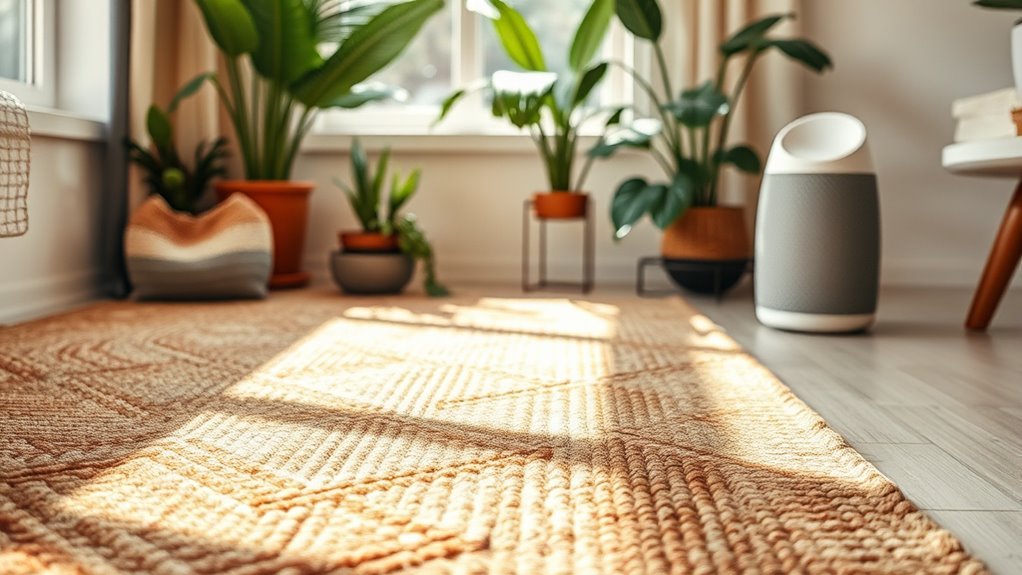
Rugs can substantially impact your home’s air quality, as they tend to trap dust, pollen, pet dander, and other allergens. If you or your family members suffer from allergies or respiratory issues, this can be a significant concern. Not only do indoor allergens accumulate within the fibers of your rugs, but some materials can also contribute to chemical off gassing, which further affects air quality. Chemical off gassing occurs when volatile organic compounds (VOCs) are released from new or untreated rugs, adding to indoor air pollution and potentially causing headaches, dizziness, or respiratory irritation.
Rugs can trap allergens and emit VOCs, impacting indoor air quality and health.
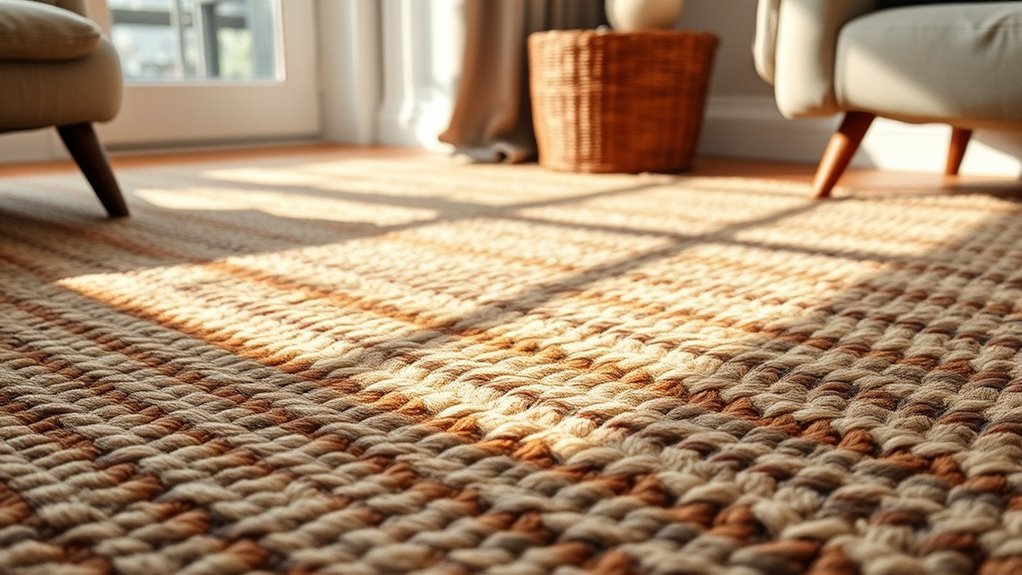
Choosing the right type of rug can make a noticeable difference. Many traditional rugs are made with synthetic fibers and backing materials that emit VOCs over time. These emissions can linger in your home’s air, especially in poorly ventilated spaces, making it harder to breathe comfortably. On the other hand, opting for low-VOC or natural fiber rugs minimizes this risk. Natural materials like wool, jute, or sisal tend to off-gas far less than synthetic options, creating a healthier environment. Additionally, rugs made from organic or sustainably sourced fibers reduce exposure to chemicals used during manufacturing, which can be present in some conventional rugs.
When you shop for rugs, look for labels that specify low-VOC emissions or natural, untreated materials. It’s also wise to give new rugs plenty of time to off-gas before placing them in high-traffic areas. Ventilating the space by opening windows or using air purifiers with activated carbon filters can help accelerate the off-gassing process and clear out chemicals from the air. Regular vacuuming with a HEPA filter can also help reduce indoor allergens trapped within the rug fibers, making the environment safer and more comfortable.
Furthermore, choosing rugs made from natural fibers that are free from chemical treatments can significantly improve indoor air quality. Another step you can take is to choose rugs that are certified by eco-friendly standards, such as the Green Label Plus or similar programs. These certifications ensure the product has been tested for low chemical emissions and has met strict standards for indoor air quality. Remember, even natural rugs benefit from proper maintenance—frequent cleaning reduces dust and dander buildup, which can otherwise exacerbate allergies.

SAFAVIEH Area Rug 9×12 – Natural Fiber Collection – Large – Natural Brown, Handmade Jute, Farmhouse Style, Chunky Textured Thick Pile (NF447A)
[HANDMADE CRAFTSMANSHIP]: Expertly hand-woven by skilled artisans from 100% plant-based jute fibers for a thick, richly textured surface…
As an affiliate, we earn on qualifying purchases.
As an affiliate, we earn on qualifying purchases.
Frequently Asked Questions
How Do Natural Rugs Compare in Durability to Synthetic Options?
Natural rugs generally offer good longevity, but synthetic options often have superior durability for high-traffic areas. You might find that synthetic fibers resist wear and stains better over time, making them a practical choice if durability is your main concern. However, natural rugs can last many years with proper care, providing a more eco-friendly and authentic aesthetic. Your choice depends on balancing natural longevity versus synthetic durability for your specific needs.
Are Low-Voc Rugs Suitable for Allergy Sufferers?
If you’re allergy-prone, low-VOC rugs are a smart choice. For example, a family with asthma found that switching to a natural, low-VOC rug markedly reduced their allergy triggers. These rugs emit fewer chemical off-gassing, helping you breathe easier and avoid irritants. They’re designed to minimize allergens, making them suitable for allergy sufferers seeking cleaner, healthier indoor air.
What Maintenance Routines Help Preserve Air Quality?
You should clean your rugs regularly, ideally once a week, to reduce dust and allergens that can impact air quality. Use a vacuum with a HEPA filter to improve air filtration and trap tiny particles. Also, consider deep cleaning every few months to keep your rugs fresh. Proper maintenance not only preserves your rugs but also helps create a healthier indoor environment for allergy sufferers.
Can Rug Padding Impact Indoor Air Pollution Levels?
Yes, rug padding can impact indoor air pollution levels. It can trap dust, mold, and odors, which may cause indoor odors and contribute to VOC off-gassing, especially if the padding contains synthetic materials. Choosing natural, low-VOC padding helps reduce these pollutants. Regular cleaning and ventilation also help minimize indoor odors, ensuring better air quality and a healthier living environment.
Are There Specific Brands Known for Eco-Friendly Rugs?
Yes, you can find eco-friendly rugs from brands committed to sustainable manufacturing and eco-friendly certifications like Green Label Plus or OEKO-TEX. These brands prioritize natural materials, low-VOC dyes, and environmentally responsible processes. When shopping, look for certifications and transparency about their manufacturing practices. By choosing these brands, you guarantee your rug supports healthier indoor air quality and reduces your environmental impact.
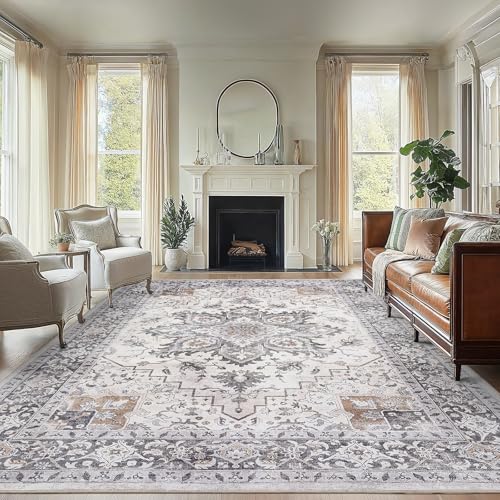
AMADA HOMEFURNISHING 8×10 Area Rugs, Low-Profile Large Washable Area Rug with Non-Slip Backing & Durable Edge Binding, Vintage Rugs for Living Room, Bedroom, Dinning Room
Machine Washable: The short pile design of this washable rug is easy to maintain using an upright vacuum…
As an affiliate, we earn on qualifying purchases.
As an affiliate, we earn on qualifying purchases.
Conclusion
By choosing low-VOC and natural rugs, you can dramatically improve your home’s air quality—transforming it into a sanctuary of freshness. Don’t let synthetic fibers turn your space into a toxic nightmare; instead, opt for eco-friendly options that breathe new life into your environment. Every small change counts, and your decision to prioritize natural materials could be the difference between a stale, polluted air trap and a vibrant, healthy home. Take action today—your lungs will thank you!

SAFAVIEH Area Rug 8×10 – Revive Collection – Large – Green, Trellis Pattern, Non-Shedding & Easy Cleaning, Ideal for Living Room, Bedroom, Office, Dining Space (REV104Y)
[STAIN RESISTANT & NON-SHEDDING]: Expertly machine-woven from enhanced synthetic durable fibers with a virtually non-shedding pile height
As an affiliate, we earn on qualifying purchases.
As an affiliate, we earn on qualifying purchases.

MOOKA Air Purifiers for Home Large Room up to 1076ft², H13 True HEPA Air Filter Cleaner, Odor Eliminator, Remove Smoke Dust Pollen Pet Dander, Night Light, B-D02L White
MOOKA B-D02L AIR PURIFIER FOR LARGE ROOM: With the high-efficiency filtration system, the air purifier covers an area…
As an affiliate, we earn on qualifying purchases.
As an affiliate, we earn on qualifying purchases.