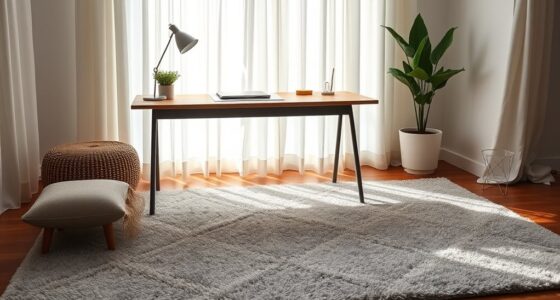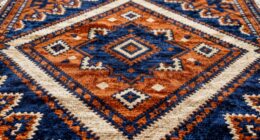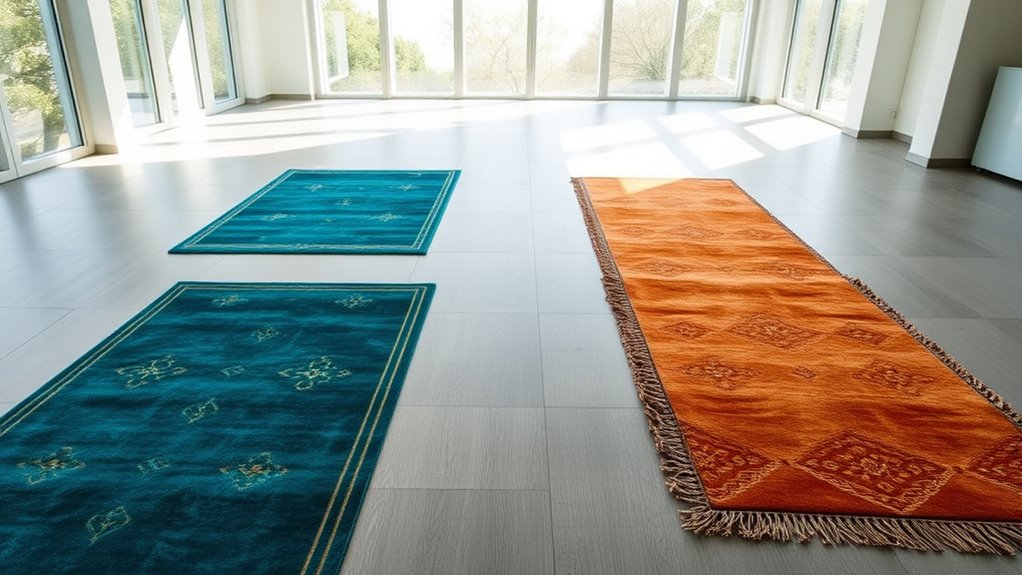

Using rugs is a simple way to create clear zones in your open-plan wellness space. Place larger rugs under seating areas or meditation zones to define relaxation spots, while smaller rugs at entry points guide movement subtly. Choose sustainable materials like natural fibers to enhance the calming vibe. Layering rugs adds texture and warmth, making your space feel inviting and organized. Keep exploring to discover more tips on transforming your wellness environment seamlessly.
Key Takeaways
- Use large rugs beneath seating or yoga areas to create distinct, functional zones within open-plan wellness spaces.
- Incorporate smaller rugs at entry or meditation spots to subtly signal zone transitions.
- Layer textured, sustainable rugs to add depth and define multiple zones, enhancing visual and tactile separation.
- Select rugs in natural, earthy tones to promote a calming ambiance and reinforce the wellness environment.
- Ensure rugs are placed on non-slip surfaces to safely delineate zones during movement or exercises.
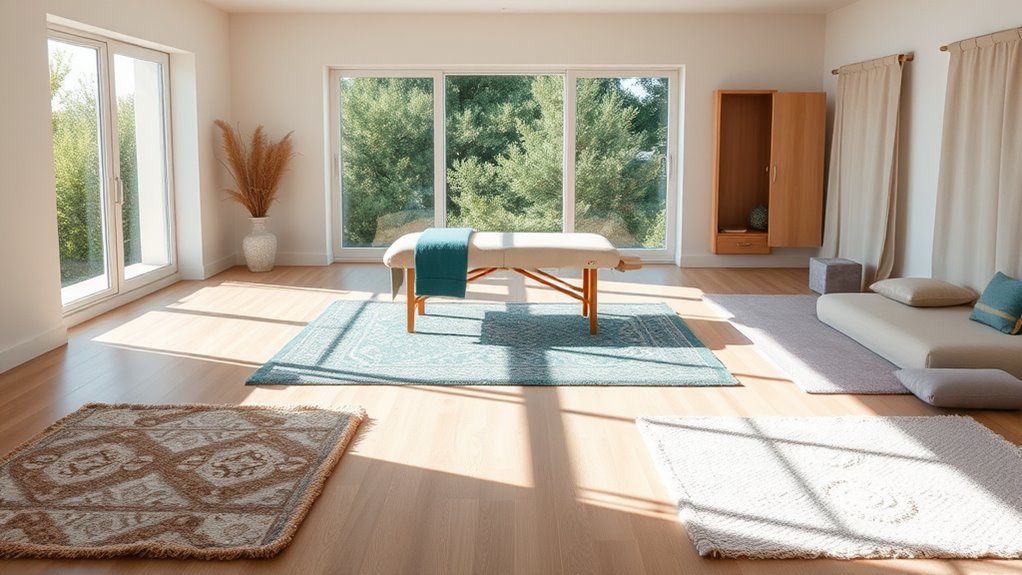
Open-plan wellness spaces often feel expansive and open, but without clear boundaries, they can also become chaotic or overwhelming. Using rugs thoughtfully helps you carve out distinct zones, making the area feel organized and inviting. When selecting rugs, prioritize sustainable rug materials to align with the wellness vibe and promote eco-friendliness. Natural fibers like jute, hemp, or organic wool not only add texture and warmth but also reduce environmental impact. These materials are durable, breathable, and age gracefully, ensuring your space stays beautiful over time. Plus, their earthy tones contribute to a calming atmosphere essential for wellness environments.
Once you’ve chosen the right rugs, focus on ergonomic rug placement. This means positioning rugs in a way that enhances comfort and functionality without cluttering the space. For example, place a large rug beneath a seating or yoga area to define it clearly, encouraging relaxation and focus. Alternatively, position smaller rugs at entry points or around meditation corners to subtly signal shifts between zones. The goal is to create visual anchors that guide movement naturally, helping you and your visitors navigate the space effortlessly.
You should also think about the size and shape of each rug in relation to its zone. A generously sized rug under a meditation cushion or massage table makes the space feel cozy and intentional. Conversely, using multiple smaller rugs can delineate different activities without overwhelming the open layout. Keep in mind that ergonomic placement isn’t just about aesthetics; it’s about comfort and ease. For instance, placing rugs on even, non-slip surfaces prevents accidents and ensures stability during movement or exercises.
In addition, layering rugs can add depth and personality to your wellness space. A textured, sustainable rug layered over a smooth one can define multiple zones within a larger area, such as a relaxation nook or a small group session space. This technique also helps absorb sound and adds a tactile element that enriches the environment. Incorporating sustainable rug materials ensures your space remains eco-friendly while supporting your wellness goals.
Ultimately, the way you incorporate rugs—through thoughtful material choices and strategic placement—can transform an open-plan wellness area into a harmonious sanctuary. You’re not just adding decor; you’re crafting a functional, sustainable, and emotionally soothing environment. By paying attention to these details, you ensure each zone serves its purpose comfortably and beautifully, helping you and your visitors feel grounded, refreshed, and ready to engage fully in your wellness practices.

SAFAVIEH Area Rug 6×9 – Natural Fiber Collection – Natural & Beige, Seagrass, Basketweave Pattern with Border (NF114A)
[EXPERTLY CRAFTED]: Machine-woven by skilled artisans from plant-based seagrass fibers for a rich, textured look and natural feel;…
As an affiliate, we earn on qualifying purchases.
As an affiliate, we earn on qualifying purchases.
Frequently Asked Questions
How Do I Choose the Right Rug Size for Each Zone?
To choose the right rug size for each zone, follow rug size guidelines and zone-specific rug measurements. Measure your space carefully, leaving enough room around furniture to create a balanced look. For seating areas, opt for larger rugs that anchor furniture, typically 6×9 feet or bigger. In smaller zones, smaller rugs of 3×5 feet work well. Always aim for a rug that complements the space without overwhelming it.
What Materials Are Best for High-Traffic Wellness Areas?
For high-traffic wellness areas, you should choose rugs made from durable materials like nylon, polypropylene, or wool blends, as they stand up well to wear and tear. Consider durability considerations along with aesthetic appeal to guarantee the rug complements your space while lasting over time. Opt for low-pile or flat-weave designs, which are easier to clean and maintain, making them ideal for busy zones where longevity is key.
How Can Rugs Improve Acoustics in Open-Plan Spaces?
Rugs markedly improve acoustics in open-plan spaces by absorbing sound and reducing noise levels. When you place rugs strategically, they dampen echo and minimize background noise, creating a calmer, more serene environment. Opt for thick, dense rugs made from sound-absorbing materials like wool or felt. This enhances sound absorption and noise reduction, making your wellness space more comfortable and conducive to relaxation and focus.
Are There Allergy-Friendly Rug Options for Wellness Centers?
You might think all rugs cause allergies, but allergy-friendly options exist. You can choose rugs made from hypoallergenic fibers and treated with antimicrobial solutions, reducing dust and mold buildup. These rugs are perfect for wellness centers, offering comfort without triggering allergies. It’s ironic how something so cozy can also be safe for sensitive noses, proving that wellness spaces can be both inviting and allergy-conscious.
How Do I Maintain and Clean Rugs in a Wellness Environment?
To maintain and clean rugs in a wellness environment, vacuum regularly to prevent dust buildup and maintain hygiene. Keep an eye on vacuum maintenance, ensuring filters and brushes are clean for peak performance. For stain prevention, address spills immediately with a gentle, eco-friendly cleaner. Regular professional deep cleaning helps eliminate allergens and keeps your rugs fresh, ensuring a safe, welcoming space for everyone.

Yoga Mat Non Slip, Eco Friendly Fitness Exercise Mat with Carrying Strap,Pro Yoga Mats for Women,Workout Mats for Home, Pilates and Floor Exercises (Matcha Green/Black, Thickness-6mm)
NEW ECO FRIENDLY MATERIAL: The upgraded Gruper Yoga mat is made with premium friendly material. It costs more…
As an affiliate, we earn on qualifying purchases.
As an affiliate, we earn on qualifying purchases.
Conclusion
By choosing the right rugs, you create distinct zones that invite relaxation and focus. Like a painter’s brush, your rugs add color and clarity to your open-space canvas, transforming chaos into calm. So, don’t underestimate their power—use them to sculpt your wellness sanctuary. With each carefully placed rug, you weave a tapestry of tranquility that guides your mind and body to harmony. After all, isn’t a peaceful space the foundation of true well-being?

SHACOS Soft Cozy Fluffy Arch Pattern High-Low Pile Textured Area Rug 5'3"x7'3" Non Slip Washable Modern Geometric Rug Stain Resistant Contemporary Carpet for Living Room Bedroom Dining Room, Beige
Rainbow Arch Textured Rug with High Low Tuft Piles: This scandinavian rug is not printed, it is woven…
As an affiliate, we earn on qualifying purchases.
As an affiliate, we earn on qualifying purchases.

raajsee Purple Round Beach Tapestry Hippie/Boho Beach Blanket Mandala/Indian Cotton Throw – Round Tablecloth/Home Decor/Indie Rug Yoga Mat Meditation Picnic Rugs 178 CM / 70 INCHE Circle
◆ Please Note : This is a COTTON SHEET type material and NOT A TERRY TOWEL material but…
As an affiliate, we earn on qualifying purchases.
As an affiliate, we earn on qualifying purchases.