
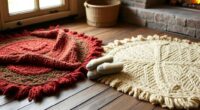
To soundproof floors with rugs, choose thick, dense materials like wool or shag that absorb sound effectively. Place large rugs over high-traffic or noise-sensitive areas, ensuring they lay flat and secure them with non-slip pads to prevent gaps and movement. Layering your rugs with underlays like cork or foam can boost insulation. Strategically positioning rugs and combining them with other soundproofing methods can create a quieter environment—keep exploring for more helpful tips.
Key Takeaways
- Use thick, dense rugs like wool or shag to absorb sound effectively.
- Cover high-traffic or noisy areas with large rugs for maximum noise reduction.
- Secure rugs with non-slip pads or tape to prevent movement and gaps that cause sound leaks.
- Layer rugs with sound-absorbing underlays such as cork or foam for enhanced insulation.
- Strategically place multiple smaller rugs in hallways or busy zones to distribute soundproofing evenly.

If you’re looking for an easy way to reduce noise transmission between floors, rugs can be a highly effective solution. They act as a barrier, absorbing sound waves and minimizing the noise that travels through your floors. To maximize their benefits, focus on strategic rug placement, ensuring they cover high-traffic or sound-sensitive areas. Position your rugs in living rooms, bedrooms, or above shared spaces where noise tends to travel most. The key is to cover as much surface area as possible without making the space feel cluttered.
Strategically place rugs over high-traffic and sound-sensitive areas to effectively reduce noise transmission between floors.
When considering acoustic insulation, it’s important to choose the right rug materials. Thicker, dense fibers like wool or shag are better at absorbing sound compared to thinner synthetics. These materials trap air within their fibers, dampening sound vibrations before they reach other floors. Additionally, layering rugs can markedly boost soundproofing. For example, placing a plush rug on top of a cork or foam underlay creates a dual-layer effect that enhances acoustic insulation. This combination not only reduces noise but also adds comfort underfoot.
Proper rug placement is vital. Position your rugs directly over the areas where sound transmission is most problematic. If you notice noise coming from the room below, place a large rug covering the center of that space. For hallways or areas with high foot traffic, consider multiple smaller rugs to distribute sound absorption evenly. Also, pay attention to the edges of your rugs; ensuring they lay flat and don’t curl up helps prevent sound leaks around the borders, which can diminish overall effectiveness.
Another tip is to secure the rugs with non-slip pads or tape. This prevents movement that could create gaps at the edges, reducing the effectiveness of your acoustic insulation. It also keeps the rug in place, preventing tripping hazards. For added soundproofing, consider combining rugs with other materials like door sweeps or acoustic panels on walls and ceilings. While rugs alone can greatly cut down noise, layering solutions provides a more all-encompassing approach.
In essence, the right rug placement paired with suitable materials can dramatically improve your floor’s soundproofing. Think of your rugs as a first line of defense against noise transmission, absorbing and dispersing sound waves before they become a disturbance in another part of your home. With thoughtful selection and strategic positioning, you can enjoy a quieter, more peaceful environment without extensive renovations. Additionally, choosing sound-absorbing materials for your rugs can further enhance their effectiveness in reducing noise.
Frequently Asked Questions
Can Rugs Completely Eliminate Floor Noise?
Rugs can’t completely eliminate floor noise, but they do considerably reduce it. To enhance soundproofing, you should add floor insulation beneath the rug and consider acoustic panels on walls or ceilings for better results. These layers absorb sound vibrations, making your space quieter. Keep in mind that combining rugs with insulation and acoustic panels creates a more effective soundproofing system, giving you a noticeable reduction in noise levels.
Which Rug Materials Are Best for Sound Absorption?
You’ll want rugs made from dense, plush materials like wool or memory foam for premier sound absorption. While durability matters, focus on thick fibers that trap sound waves effectively. Brightly patterned designs can hide wear, but plain, dense textures often absorb noise better. Combining these factors ensures your rug not only lasts but also enhances soundproofing, turning your space quieter and more comfortable with minimal effort.
How Thick Should a Rug Be for Effective Soundproofing?
For effective soundproofing, aim for a rug thickness of at least 1/2 inch, combined with proper underlay installation. Thicker rugs absorb more sound, but pairing them with a dense underlay enhances their effectiveness. Make certain you select a rug with substantial padding and install an underlay that adds cushioning and sound insulation. This combination minimizes noise transmission and creates a quieter space, making your floors considerably more soundproof.
Do Rug Pads Improve Soundproofing?
Yes, rug pads do improve soundproofing by adding an extra layer of insulation and reducing noise transmission. Using soundproof underlays beneath your rugs enhances their effectiveness, especially when combined with proper rug placement techniques. Make sure to choose a thick, dense pad that fits well under your rug to maximize sound absorption. This simple step can markedly reduce footstep noise and echo, creating a quieter, more comfortable space.
Are There Specific Rug Styles Ideal for Soundproof Floors?
You should choose rugs with dense, plush textures for better soundproofing. Decorative rug patterns, like thick geometric or shaggy styles, help absorb sound more effectively. When using rug placement techniques, focus on layering rugs in high-traffic areas and under furniture to maximize sound absorption. Combining these styles and techniques creates a quieter environment, reducing noise transmission and enhancing comfort on your soundproofed floors.
Conclusion
While rugs might seem like simple decor, they’re powerful tools for soundproofing your floors. Think of them as quiet guardians, muffling footsteps and echoes, yet they bring warmth and style to your space. The contrast between their delicate appearance and their practical purpose creates a surprising harmony. So, don’t underestimate the strength of a well-placed rug—sometimes, the smallest change can make the biggest difference in peace and comfort.


