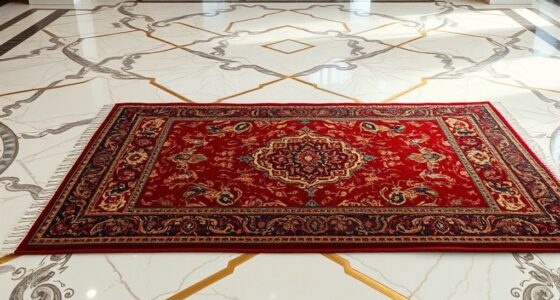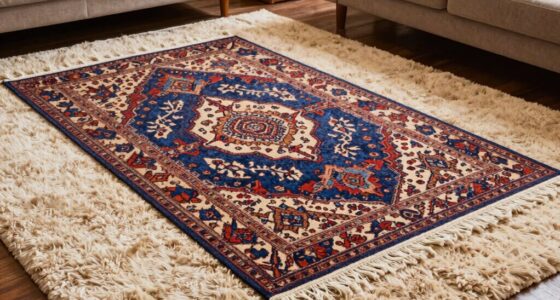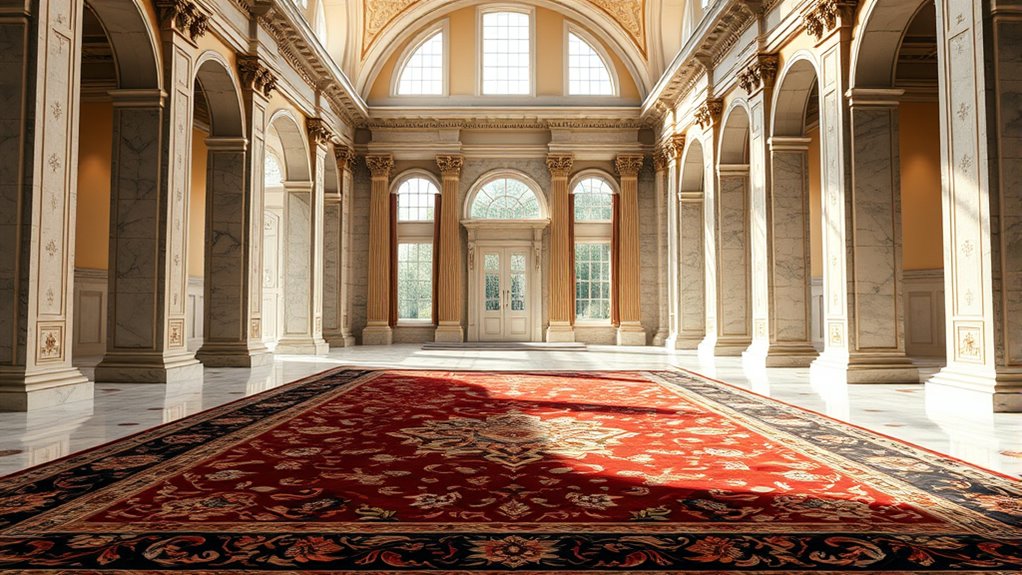

To accentuate your architectural features with rugs, position your rug to frame or complement design details like beams or built-ins, and extend it beyond seating areas to draw attention upward. Choose colors and patterns that reflect the tones and textures of your features, whether warm woods or bold painted walls. Proper placement creates a flowing, cohesive space that highlights your features beautifully. Keep exploring ways to optimize your decor for a stunning, harmonious look.
Key Takeaways
- Position rugs to frame or highlight architectural details like beams or built-ins for emphasis.
- Extend rugs beyond seating areas to draw attention upward and create visual flow.
- Match rug colors and patterns with the tones and textures of architectural features for harmony.
- Use textured rugs to enhance rough materials like brick or wood, adding dimension.
- Align rug edges with architectural lines to create a cohesive, intentional space layout.
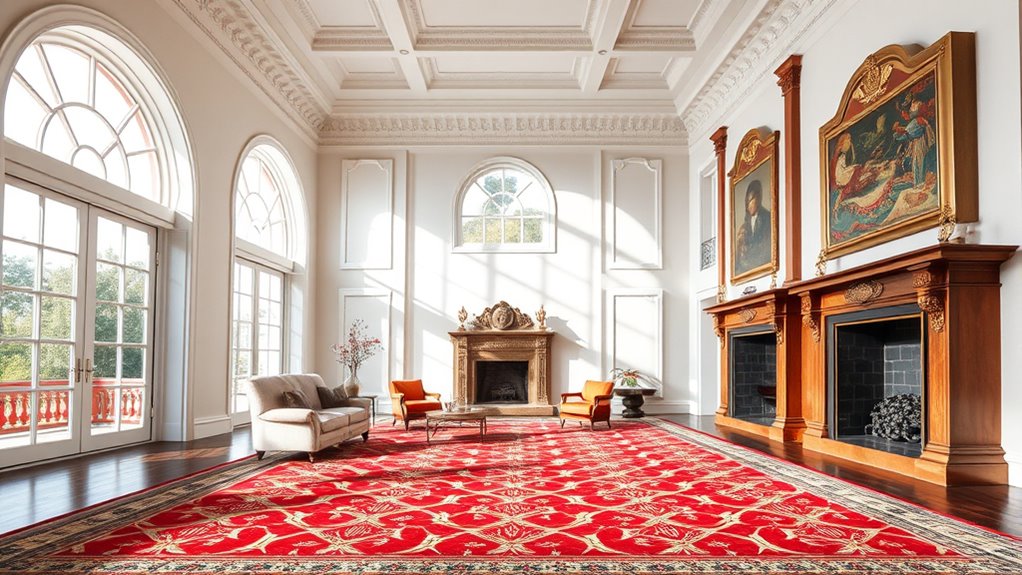
Architectural features like archways, built-in shelving, or exposed beams can transform a space, but they often need a little extra attention to truly shine. One of the most effective ways to highlight these elements is through thoughtful rug placement and color coordination. When you select the right rug, you create a visual anchor that draws the eye toward these features, enhancing their beauty and making the room feel more cohesive.
Start with rug placement. Instead of simply tossing a rug in the center of a room, consider positioning it to frame or complement your architectural details. For instance, if you have an exposed beam overhead, place a rug that extends beyond the main seating area so that it naturally directs attention upward. Align the edges of the rug with the architectural feature, creating a seamless flow that emphasizes the design. If you’re working with built-in shelving, position a rug in front of it to anchor the space, making the shelves look intentional and integrated into the room’s layout. Avoid placing rugs too far from the feature, as it can diminish the focus and make the space feel disjointed.
Position rugs to frame architectural features, enhancing flow and creating intentional, cohesive spaces.
Color coordination plays a vital role in accentuating these architectural elements. You want your rug’s colors to complement or contrast with the feature itself. For example, if your exposed beams are a rich, warm wood tone, choose a rug with earthy hues or subtle patterns that enhance that warmth without overpowering it. Conversely, if the feature is painted a bold color, opt for a rug in neutral tones or a complementary shade to make the feature pop without clashing. Mixing patterns and textures thoughtfully can also add depth; a textured rug can highlight the roughness of exposed brick or wood, while a sleek, solid rug can provide a clean contrast against intricate architectural details. Additionally, understanding seasonal variations and how they influence the overall ambiance can help you select rugs that enhance architectural features year-round.
Finally, don’t forget the overall harmony of your space. The rug should not only highlight the feature but also tie the room together. Pay attention to the other elements in the room—furniture, wall color, and accessories—and ensure all components work in harmony. When you master the art of color coordination and rug placement, you create a room that feels both intentional and inviting. Your architectural features will stand out naturally, giving your space a curated, polished look that reflects your style and attention to detail.

Rugshop Sky Collection Modern Abstract Area Rug 4' x 6' Multi
100% polypropylene machine made area rug with jute backing.
As an affiliate, we earn on qualifying purchases.
As an affiliate, we earn on qualifying purchases.
Frequently Asked Questions
How Do I Choose the Right Rug Size for Architectural Emphasis?
You should choose an area rug that’s large enough to highlight your architectural features, like a fireplace or built-in shelving. Opt for a rug that extends beyond these features, creating a layered look through rug layering techniques. For a cohesive appearance, make sure the rug’s size complements the space, covering key areas without overwhelming the room, so your architectural details stand out beautifully.
What Rug Materials Best Highlight Intricate Architectural Details?
Think of your rug as a painter’s brush, bringing out architectural details with vibrant textural contrast and perfect color coordination. Opt for materials like plush wool or textured jute that add depth and highlight intricate carvings or moldings. These textures catch the light and draw the eye, making architectural features pop. By choosing rugs with engaging textures and harmonious hues, you create a stunning visual dialogue between the floor and the architecture above.
Can Rugs Improve the Acoustics of a Space With Architectural Features?
Yes, rugs can improve the acoustics of a space with architectural features. By adding sound dampening qualities, they reduce echoes and noise, making the environment more comfortable. Additionally, rugs create visual balance by grounding architectural details, drawing attention to them while softening harsh lines. Choose thicker, textured rugs for better sound absorption, and strategically place them to enhance both the aesthetic and acoustic harmony of your space.
How Do I Coordinate Rug Patterns With Architectural Styles?
Ever wonder how your rug can perfectly match your home’s style? To coordinate rug patterns with architectural features, focus on color coordination and texture mixing. Opt for patterns that complement your architectural elements—sleek lines for modern, ornate designs for classic styles. Mix textures to add depth and interest, creating harmony between your rug and the space. This approach guarantees your rug enhances the architectural features, making your home feel cohesive and thoughtfully styled.
Are There Specific Rug Placement Tips for Highlighting High Ceilings?
To highlight high ceilings, place a large rug that extends beneath your furniture, drawing the eye downward and creating a sense of balance. Use lighting accents like pendant lights or chandeliers to emphasize the ceiling height further. Keep the rug’s pattern simple or bold, depending on your style, and position furniture to frame the space, making the ceiling feel even more impressive and your room more cohesive.

Country Rustic Brown Stone Brick Wall Texture Outdoor Rug 2×3 for Porch Patio Deck Machine Washable No Slip Durable Large Carpet in Veranda Balcony Backyard Foyer Natural Unique Design Outside Rugs
Realistic Stone Wall Texture Design – This outdoor rug features a stone wall pattern that mimics the natural…
As an affiliate, we earn on qualifying purchases.
As an affiliate, we earn on qualifying purchases.
Conclusion
By choosing the right rug, you’re not just adding warmth—you’re highlighting the soul of your space. It’s like a tapestry that whispers stories of craftsmanship and history, drawing attention to architectural details that might otherwise go unnoticed. When you carefully select and position your rug, you’re fundamentally giving your home a heartbeat, a symbol of your appreciation for beauty. Let your rug be the silent guardian that elevates your space into an artful expression of life’s finer details.
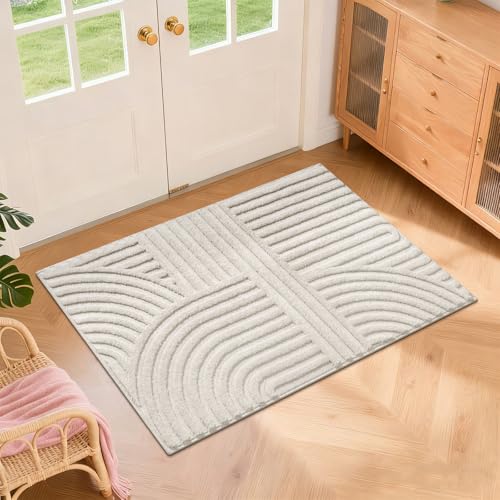
Pauwer 2×3 Washable Area Rugs for Living Room Modern Beige Solid Color Soft Fluffy Rugs for Bedroom Non Slip Boho Accent Indoor Mat Floor Carpet Cover for Kids Room Dining Room Kitchen Office, Beige
SOFT FLUFFY RUGS for BEDROOM: With its plush high-low piles, this 2×3 area rugs delivers an incredibly comfortable…
As an affiliate, we earn on qualifying purchases.
As an affiliate, we earn on qualifying purchases.

Loloi Amber Lewis Billie Collection, Ocean & Brick 7'-6" x 9'-6" Area Rug – Antique & Distressed Accent Rugs for Living Room, Bedroom, Entryway & Hallway, No Shed High Traffic Area Home Decor Rug
Timeless Area Rug for Living Room and More: The Billie Collection area rugs capture the look of a…
As an affiliate, we earn on qualifying purchases.
As an affiliate, we earn on qualifying purchases.