To stop bumping your knees, measure your seating area carefully, leaving about 18-24 inches of space around the table, and choose a height close to your sofa’s seat (16-18 inches). Opt for a proportionate size that fits well without overwhelming the room. If your table isn’t the right height, consider adjusting its legs or adding risers. Keep in mind, additional knee clearance and style harmony matter—click here to discover more tips.

Get cleaning gear delivered free with Prime
- Fast, free delivery on millions of items
- Prime Video, Amazon Music and more included
- Member-only deals all year
Key Takeaways
- Measure the distance between your sofa and intended coffee table area, leaving 18-24 inches for comfortable knee space.
- Ensure the table height is 16-18 inches, matching your seated knee level to prevent bumping.
- Allow at least 2-4 inches of clearance underneath the table for easy knee movement.
- Adjust table height with risers or modify legs to align with ergonomic seating comfort.
- Choose a proportionate, appropriately sized table that complements your room’s layout to avoid overcrowding.
coffee table with adjustable height
As an affiliate, we earn on qualifying purchases.
As an affiliate, we earn on qualifying purchases.
Why Choosing the Right Coffee Table Size Matters for Your Comfort
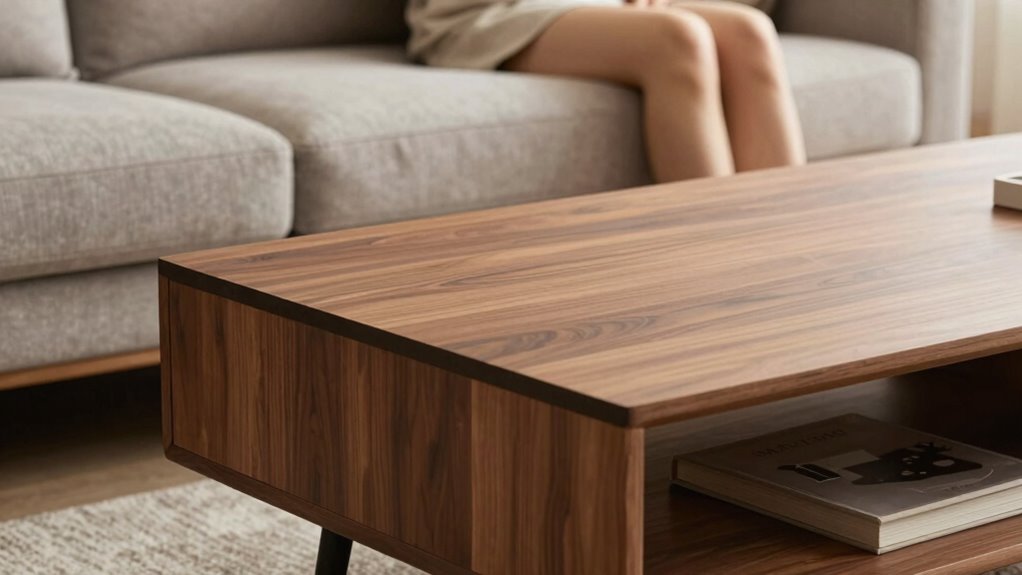
Choosing the right coffee table size is essential because it directly impacts your comfort and functionality in the space. An appropriately sized table with an ergonomic design guarantees you can reach for items easily without straining or bumping your knees. When the table fits well within your living area, it promotes aesthetic harmony, making the room feel balanced and inviting. A table that’s too small may feel out of place, while one that’s too large can overwhelm the space and hinder movement. By selecting a size that complements your seating arrangement, you create a seamless flow that enhances both practicality and style. Additionally, considering ergonomic design principles can help ensure that your furniture choices support your health and comfort. Ultimately, the right size makes your living area more comfortable and visually appealing, encouraging relaxed gatherings and everyday use.
How to Measure Your Space for the Perfect Coffee Table
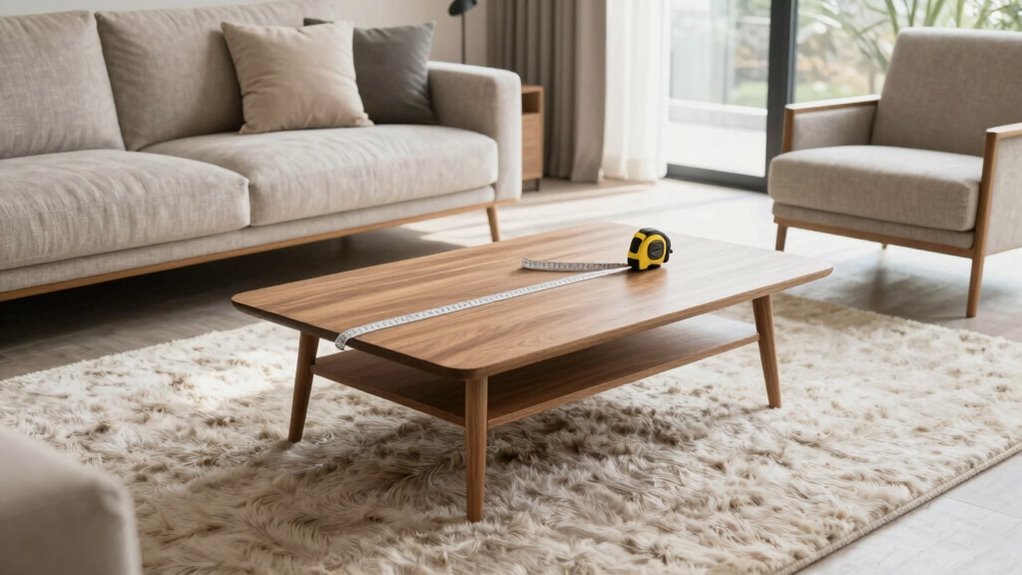
To find the perfect coffee table size, start by measuring your available space carefully. Effective space planning is essential to ensure your furniture arrangement feels balanced and functional. Measure the length and width of the area where you want to place the table, leaving enough room for movement. A good rule of thumb is to leave about 18 to 24 inches between the coffee table and surrounding seating, allowing easy access without crowding. Use a tape measure to note these dimensions accurately. Consider the overall layout, including nearby furniture, windows, and doors. Properly measuring your space helps you select a table that fits comfortably without bumping knees or obstructing pathways, creating a harmonious and inviting living room environment. Additionally, understanding furniture proportions can help you choose a table that complements your existing decor and maintains visual balance.
What Is the Ideal Coffee Table Height and Size for Your Living Room?

To find the perfect coffee table, start by considering standard height guidelines to guarantee comfort and accessibility. You’ll also want to match the size to your room’s proportions, so it complements your furniture without overwhelming the space. Keep room size in mind to select a table that balances style and functionality seamlessly. Additionally, choosing a workspace and tech gear that integrates well with your living area can enhance both aesthetics and practicality.
Standard Height Guidelines
A well-sized coffee table should complement your sofa height, creating a comfortable and functional space. Standard height guidelines suggest that your coffee table should be roughly 1 to 2 inches lower than your sofa’s seat height, typically between 16 to 18 inches. This promotes proper coffee table ergonomics, allowing you to reach for items without straining or bending awkwardly. Consistent height also enhances aesthetic harmony, making your living room look balanced and cohesive. Keep in mind that while these guidelines serve as a helpful starting point, personal preferences and room layout may influence your choice. Selecting a table within this standard range ensures functionality without bumping knees, maintaining both comfort and visual appeal. In urban areas like Harrisburg and Washington D.C., cultural activities often influence interior design styles, including furniture choices, to reflect local tastes and vibrancy.
Ideal Proportions for Comfort
Finding the ideal coffee table height and size involves balancing comfort and proportion within your living room. A well-sized table should be easy to reach without straining your back or knees. Typically, aim for a height that aligns with the top of your sofa cushions, creating a seamless look. In terms of size, make certain the table is proportional to your seating area—neither too large nor too small—so it complements your space without overwhelming it. Consider decorative accents like trays or vases, which can add visual interest without cluttering. Additionally, color coordination matters; choosing a table hue that complements your room’s palette helps tie everything together. The right proportions create a harmonious environment, making your living space both functional and inviting. Proper heat buffering techniques can also help preserve your table’s finish, especially if you often place hot beverages or dishes on it.
Room Size Considerations
Choosing the right size and height for your coffee table depends heavily on your living room’s dimensions. If your space is small, opt for a compact table that doesn’t overwhelm the room, making it feel cramped. For larger rooms, you can select a bigger table that anchors the furniture arrangement without dominating the space. Decorating tips suggest maintaining enough clearance—at least 16-18 inches between the table and surrounding seating—to keep movement comfortable. Consider your furniture layout to ensure the table complements the room’s flow. A well-sized coffee table enhances functionality without sacrificing style, regardless of room size. Remember, proportion matters: the table shouldn’t be so large that it limits walking space or so small it looks out of place. Additionally, room size considerations can help guide you toward the ideal dimensions for both height and width.
Tips for Picking a Coffee Table That Fits Your Room Layout and Style
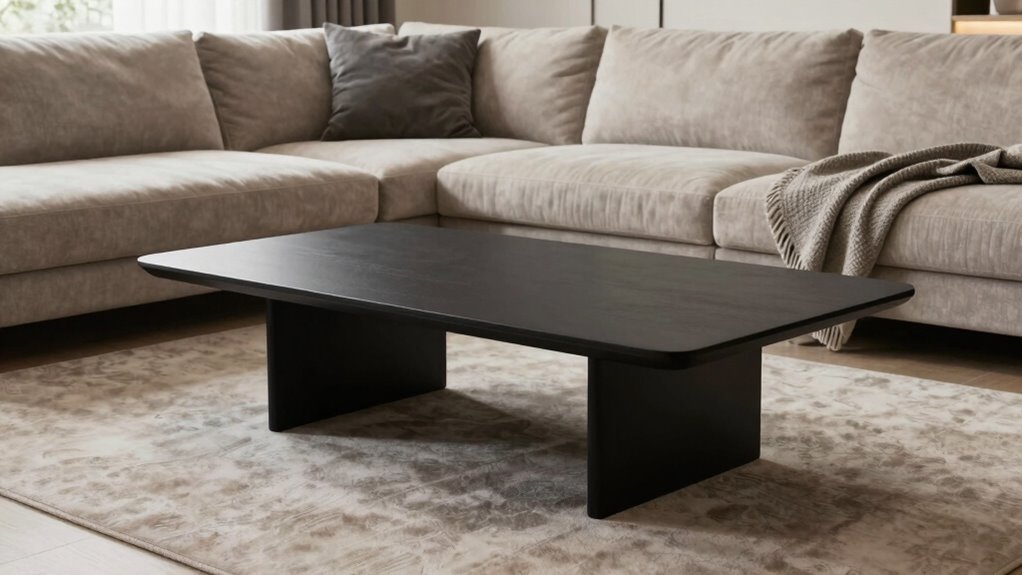
Selecting a coffee table that complements your room’s layout and style starts with understanding the space you’re working with. Consider your decorating style—whether modern, rustic, or eclectic—and choose a table that harmonizes with that vibe. For example, sleek glass or metal tables suit contemporary spaces, while wooden pieces work well in traditional or rustic rooms. Material choices impact both look and durability, so pick materials that match your lifestyle and aesthetic. Keep in mind the size and shape that best fit your room’s layout, ensuring enough space for movement without overpowering the area. Additionally, considering the appropriate scale of the coffee table helps prevent bumping your knees and maintains comfort. By aligning your table’s style and materials with your room’s design, you create a cohesive and inviting space that feels just right.
Common Coffee Table Sizing Mistakes and How to Avoid Them
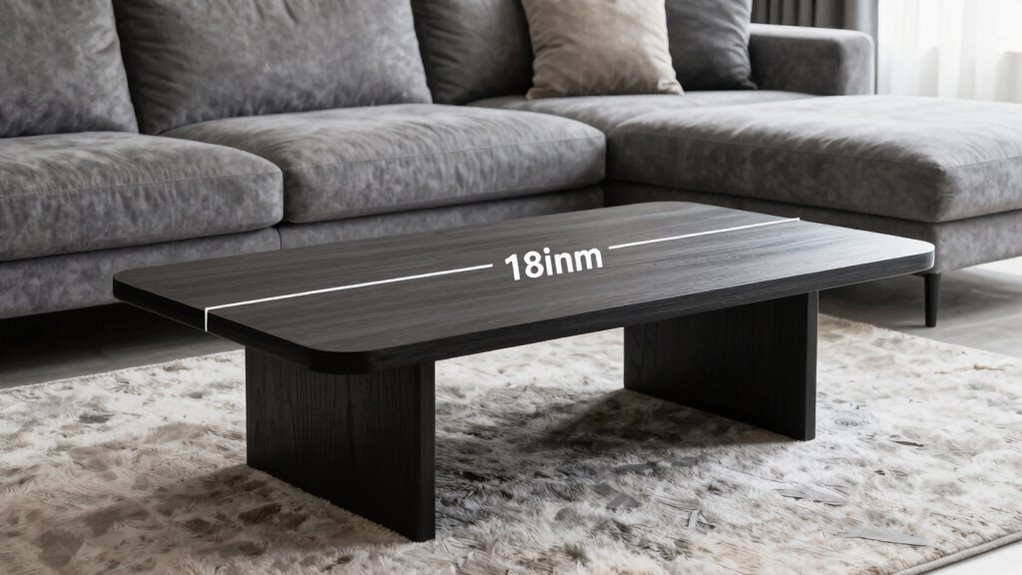
One common mistake people make is choosing a coffee table that’s either too large or too small for their space. This often happens when frame proportions aren’t considered; a bulky table can overwhelm a room, while a tiny one looks out of place. To avoid this, measure your area carefully and aim for a table that’s about 1.5 to 2 feet in width, fitting comfortably between seating. Material durability is also vital—opt for sturdy materials that can withstand daily use, especially if you have kids or pets. Avoid tables that look fragile or overly delicate, as they may require frequent replacement. Additionally, understanding wall surface finishes can help you select the right furniture style and placement to complement your overall decor. By paying attention to frame proportions and selecting durable materials, you’ll guarantee your coffee table enhances your space without causing discomfort or inconvenience.
How to Adjust or Modify Your Coffee Table to Prevent Knee Bumps

If your coffee table causes knee bumps or discomfort, simple modifications can make a big difference. First, check the table height; ideally, it should be about the same height as your bent knees when seated. If it’s too tall, consider lowering the table by adding furniture risers or replacing it with a shorter piece. Conversely, if it’s too low, replacing or adjusting the legs can help. Ensuring ample knee clearance is also essential—aim for at least 2-4 inches under the table to give your knees room to move comfortably. You can add padding or cushions to the edges if they’re sharp or if the table is close to your seating. These small changes can greatly improve your comfort and prevent those annoying knee bumps. Additionally, selecting a properly designed table with ergonomic considerations can help maintain better posture and reduce discomfort over time.
Frequently Asked Questions
Can I Use a Coffee Table of Different Shapes and Sizes Together?
Yes, you can definitely mix styles and sizes of coffee tables together. Combining different shapes and stacking options creates visual interest and functionality in your space. Just guarantee they complement each other by balancing the overall look, like pairing a round table with rectangular ones. Play with heights and materials to keep it cohesive, and you’ll have a stylish, practical setup that avoids bumping knees while adding personality.
How Do I Choose a Coffee Table for a Small or Oddly Shaped Room?
To choose a coffee table for a small or oddly shaped room, consider your decorating style and budget options. Opt for a compact, multi-functional piece that fits well without crowding the space. Round tables work great for irregular layouts, while sleek, minimalist designs maximize room. Prioritize versatility and scale to avoid bumping knees, and look for affordable options that complement your overall decor to create a balanced, inviting environment.
Are There Specific Materials That Work Better for Adjustable-Height Tables?
Think of adjustable-height tables as chameleons blending both style and function. Opt for materials like solid wood or metal, which offer excellent material durability and can handle frequent adjustments without wear. These materials also bring a sleek, modern aesthetic appeal that complements various decor styles. Avoid delicate veneers or glass, as they may crack or chip over time. Choose wisely, and your table will adapt beautifully to your needs while lasting for years.
How Do I Incorporate Storage Features Into My Coffee Table Size?
To incorporate storage features into your coffee table size, choose a multi-functional design with hidden compartments or lift-top surfaces. These clever features maximize storage without sacrificing style or space. Look for tables with drawers, shelves, or hidden drawers built into the design. By selecting versatile pieces, you keep your living area organized and clutter-free, making the most of your coffee table’s size and functionality.
What Are the Best Ways to Test a Coffee Table’s Comfort Before Buying?
You might stumble upon your ideal coffee table during a visit or while browsing—so, take advantage of that coincidence. To test its comfort, perform ergonomic testing by sitting or leaning on it in a natural position, ensuring it supports your needs. Also, consider aesthetic considerations to see if it complements your space. This way, you’ll feel confident about your choice, knowing it’s both practical and visually appealing.
Conclusion
Choosing the right coffee table size keeps your space cozy, not cramped—think of it like fitting a vintage record album perfectly into your shelves. Measure carefully, consider your room’s layout, and avoid common sizing mistakes to prevent bumping knees. With a little planning, your living room will feel as welcoming as a well-loved armchair, making every visit feel like a warm hug in a well-choreographed dance. Now, enjoy your perfectly sized centerpiece!
Evergreen bestsellers Picks
bestsellers
As an affiliate, we earn on qualifying purchases.