
TL;DR

Get cleaning gear delivered free — and shop member deals
- Fast, free delivery on millions of items
- Access to Prime Big Deal Days deals on October 6–7
- Prime Video, Amazon Music and more included
A House Beautiful report says interior designers recommend choosing a room’s paint color after settling less changeable elements such as flooring, counters, rugs and furniture. Designers also advise checking undertones and viewing samples on the wall in the room’s own light.
Interior designers cited by House Beautiful recommend choosing a room’s paint color after its less changeable finishes and furnishings, arguing that the sequence can help homeowners avoid colors that clash with flooring, counters, cabinets or large furniture. The advice offers a practical way to narrow an otherwise broad range of paint choices, though the report presents professional guidance rather than research showing a measured outcome.
Dana Arazi Levine told House Beautiful that paint colors are effectively plentiful, while items such as rugs, curtains, upholstery and art offer fewer options. Choosing wall color too early, she said, can restrict later decisions or lead to extra spending on custom pieces that fit the color scheme. Her recommendation is to settle those room elements before committing to paint.
Lisa Quinn similarly said she selects paint after decisions about items that are difficult to paint or replace, including flooring, counters, cabinets and large furniture. She said colors that appear similar on store samples can look different beside existing surfaces: a neutral-looking chip, for example, may not work with honey oak flooring or cool marble. The report does not identify this as a universal rule, but presents it as a method these designers use.
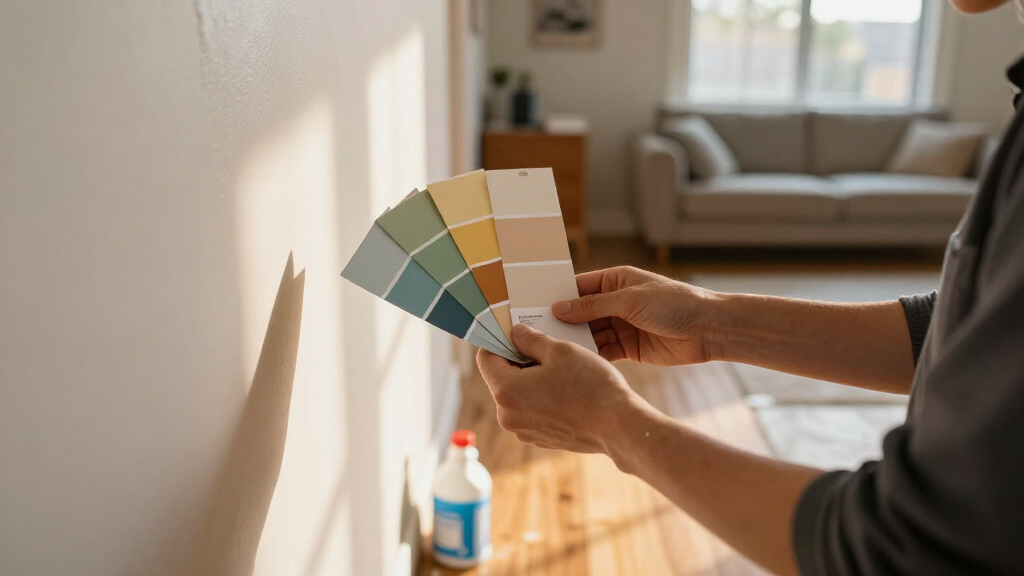
The report also includes advice for evaluating the short list. Lauren Grant said she chooses a paint sample that is more subdued or neutral than the color she imagines for the finished room, because reflections from other walls can make the painted color appear stronger. Quinn recommends comparing undertones, asking whether a brown leans yellow, pink, purple or green. Lindsay Atapattu advises bringing finalists home, painting samples on the wall and observing them for at least 24 hours.
A Paint Choice That Fits the Room
The order of decisions can affect both the appearance and cost of a decorating project. A wall color selected first may leave homeowners trying to coordinate later purchases around it; Levine said that can limit choices or prompt spending on custom furnishings. Choosing paint after fixed finishes gives those existing commitments a role in the decision.
Testing paint in the actual room also addresses a basic limitation of store chips: they cannot show how a color will look beside a particular floor, countertop or piece of furniture under that room’s lighting. The designers’ suggestions give readers a process for making a choice with more of the relevant surroundings in view, while leaving the final judgment to the homeowner.
From Store Chip to Finished Room
The House Beautiful report frames paint selection as one part of furnishing and finishing a room. It names flooring, counters, cabinets and large furniture as examples of choices to make first, alongside rugs, curtains, upholstery and art. These objects can be more difficult to replace or adapt than wall paint, according to the designers quoted.
After those decisions, the report recommends comparing paint candidates in the home rather than relying only on how they look at the store. Light, room direction and existing decor can affect how a sample appears, Atapattu said. The article includes a photograph caption identifying a Wisconsin billiards room designed by Emily Winters Posselt and painted in Benjamin Moore’s Sioux Falls; that example illustrates a completed design, but the source does not describe it as a test of the advice.
““A color that looks neutral on a chip can clash the very second it meets honey oak flooring or cool marble.””
— Lisa Quinn, interior designer
What the Advice Does Not Establish
The source is a design report based on interviews, not a comparative study. It does not provide data showing how often choosing paint last prevents a mismatch, reduces costs or improves satisfaction. The recommendations are attributed to individual designers and may not fit every project, especially where paint is itself a fixed part of a larger design plan.
The report also does not specify how large a sample should be, whether it should be painted directly on a wall or on a movable board, or how many lighting conditions homeowners should check. Atapattu’s advice is to observe samples for at least 24 hours; the source does not claim that this period captures every seasonal or daily lighting variation.
How Homeowners Can Apply It
For a room being refreshed, the sequence suggested in the report is to decide first on the harder-to-change surfaces and major furnishings, then shortlist paint colors that coordinate with them. Compare undertones among similar shades, bring the leading candidates home and place samples in the room before deciding. Observe them over at least a day, as Atapattu recommends, and consider how the color reads beside the room’s finishes and decor.
The report names no product launch, industry change or follow-up study. The next step rests with individual homeowners: apply the designers’ process to their own room and decide whether one of the tested shades works with the choices already in place.
Key Questions
What is the main paint-color rule in the report?
The designers recommend choosing paint after major furnishings and finishes, including flooring, counters, cabinets, rugs and large furniture.
Why choose paint after those room elements?
Dana Arazi Levine said choosing a wall color too early can limit later choices or lead to spending more on custom pieces. Lisa Quinn said nearby surfaces can change how a paint color appears.
How long should paint samples be viewed at home?
Lindsay Atapattu advises painting samples in the room and sitting with them for at least 24 hours to see how they shift in the light.
What should homeowners compare between similar shades?
Lisa Quinn recommends checking undertones, such as whether a brown leans yellow, pink, purple or green, instead of judging shades by their broad color family alone.
Source: rss
Halloween Picks
halloween
As an affiliate, we earn on qualifying purchases.