
TL;DR

Get cleaning gear delivered free with Prime
- Fast, free delivery on millions of items
- Prime Video, Amazon Music and more included
- Member-only deals all year
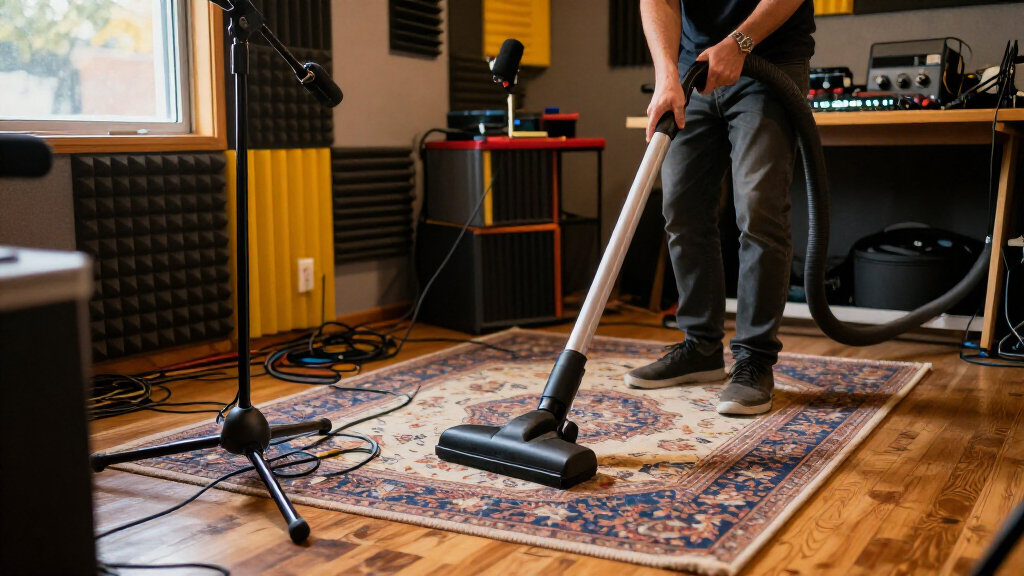
Designers working on podcast spaces for creators including Jake Shane and Jay Shetty say the move toward video and short-form clips is bringing more attention to studio interiors. The familiar mix of dark walls, acoustic foam, neon signs and bookshelves reflects the format’s audio origins, but some new designs are prioritizing identity, comfort and visual texture.
Designers behind podcast studios for creators including Jake Shane and Jay Shetty are rethinking the familiar dark-wall, neon-sign look as more shows compete for viewers through video and short clips. In a report, Livingetc describes a shift toward sets designed to communicate a show’s identity on screen, rather than treating the studio chiefly as a place to record audio.
The report identifies two recurring studio styles: a bookcase-and-timber arrangement, and a darker setup with gray acoustic panels, black walls and a neon logo. Interior designer Emily Cunnane calls the standard set “almost uniform,” describing these as familiar templates rather than spaces with a distinct identity. Livingetc says the look is not limited to one type of show or subject.
Harrison Sheinberg, co-founder of Interwoven Studios, says the change in how audiences encounter podcasts is part of the reason designers are revisiting the sets. “Now someone’s first encounter with a show might be a fifteen-second clip,” he told Livingetc. “That little window needs to feel like a world you want to spend more time in.” Interwoven has worked on sets including Jake Shane’s Therapuss and Alix Earle’s Get Real With Me.
For the previous studio of Jay Shetty’s On Purpose, designer Hema Persad of Sagrada Studio focused on making the room feel hospitable to guests. Livingetc reports that the design used dark walls and warm furnishings, departing from the more common “wood, white, and beige” palette. The article also features a render for Shane’s studio by Interwoven, though it does not provide a detailed account of the finished room or its production specifications.
Video Clips Put Sets in View
The studio has become part of the content audiences see, not merely a room that supports an audio recording. A distinctive set can help establish a show’s visual identity when a viewer encounters a short clip without knowing its name or host. That gives interior decisions a role in how a podcast presents itself across video platforms.
The shift also reflects a broader change in podcast production: the report describes shows as moving beyond audio-only distribution and notes that video has become a larger part of the format. It does not establish that a redesigned room increases audience numbers or improves a show’s performance. The practical case presented by designers is narrower: a set can look less generic and provide a more considered environment for hosts and guests.
acoustic wall panels for podcast studio
As an affiliate, we earn on qualifying purchases.
As an affiliate, we earn on qualifying purchases.
From Audio Booth to Video Set
Podcast studios were often arranged around sound recording, according to Haley Draznin, a former CNN journalist who founded The Chat Room, a studio focused on set design. “For a long time, podcast studios were really designed for your ears, not your eyes,” she told Livingetc. As shows adopted video, that older approach left many rooms with a look that was not developed for the camera.
Livingetc describes the familiar “bricks and books” formula as a template that was easy to repeat and broadly inoffensive. Bookshelves suggested a cozy setting, while branded objects and acoustic treatments made the room recognizable as a recording space. The article’s central point is not that every podcast studio follows the same design, but that a small number of visual conventions have been widely reused.
The report frames the change through designers’ projects and opinions rather than an industry-wide survey. It cites the large audiences some video podcasts attract, but gives no comparable data linking studio design to viewership or showing how common redesigned sets have become.
“Now someone’s first encounter with a show might be a fifteen-second clip. That little window needs to feel like a world you want to spend more time in.”
— Harrison Sheinberg, co-founder of Interwoven Studios
How Broad Is the Design Shift?
The report offers examples of studios and comments from designers, but does not quantify how many podcasts are changing their sets or whether the shift is widespread across the industry. It also does not provide audience research showing that viewers respond more strongly to designed interiors, or evidence that a particular look affects listening or viewing figures.
Some details about the featured projects remain limited. The source does not specify the costs, construction timelines, acoustic performance or final production outcomes for the studios discussed. It is also unclear how many of the newer designs are completed spaces rather than concepts or renders.
More Sets Built for the Camera
The development described is a design trend, not a scheduled industry change or a formal announcement. The next evidence will come from completed studios and how producers choose to use them as video remains part of podcast distribution. Livingetc does not name a future launch date or further project milestone for the studios in its report.
For now, the designers’ comments point to a practical shift in priorities: podcast rooms increasingly need to work for microphones and cameras, while giving each show a recognizable setting. Whether that produces a lasting move away from familiar templates remains to be seen.
Key Questions
What is changing in podcast studio design?
Some designers are moving away from generic dark walls, acoustic foam, neon signs and bookshelves toward rooms with more distinct materials, warmth and show-specific identity.
Why are podcast sets getting more attention?
More podcasts use video, and audiences may first see a show through a short clip. Designers say the studio therefore has a role in how the show looks and feels on screen.
Which podcast projects are mentioned in the report?
Livingetc names Jake Shane’s Therapuss, Alix Earle’s Get Real With Me and Jay Shetty’s On Purpose.
Does the report show that better-designed studios attract more viewers?
No. It discusses designers’ views on visual identity and video, but provides no audience data showing that studio design increases viewership.
Source: rss
Fall Picks
fall essentials
As an affiliate, we earn on qualifying purchases.