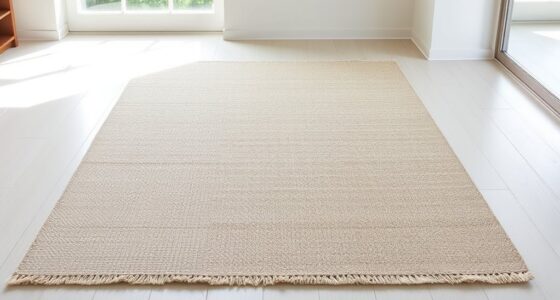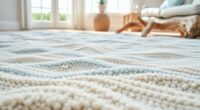
To choose a minimalist rug that emphasizes subtlety and simplicity, opt for neutral colors like beige, gray, or off-white with understated textures such as flatweaves or natural fibers like jute or sisal. Avoid busy patterns or shaggy styles to keep your space calm and cohesive. Focus on clean, refined options that add gentle visual interest without overpowering the room. Exploring more will help you find the perfect balance for a truly serene minimalist look.
Key Takeaways
- Choose rugs with simple textures like flatweaves, looped piles, or smooth fibers for understated elegance.
- Opt for solid, neutral colors such as off-white, beige, or soft gray to maintain a calm, cohesive look.
- Avoid plush or shaggy designs to preserve the room’s sleek, minimalist aesthetic.
- Incorporate natural fibers like jute or sisal for subtle, understated textures.
- Keep patterns minimal or absent to enhance simplicity and visual harmony in the space.

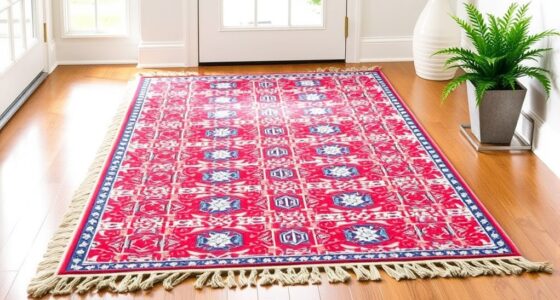
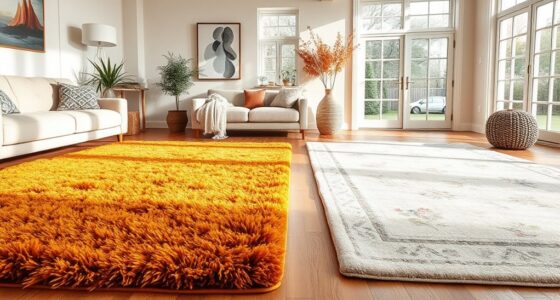
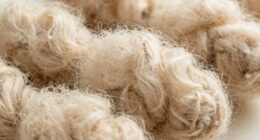
When designing a minimalist space, choosing the right rug can make all the difference in creating a clean, cohesive look. Your rug acts as a foundation, tying together the room’s elements while enhancing its simplicity. To achieve this, consider the texture options carefully. Opt for rugs with subtle textures like flatweaves, looped piles, or smooth fibers. These textures add just enough visual interest without overwhelming the space. For example, a tightly woven jute or sisal rug offers a natural, understated texture that complements minimalist decor. Avoid overly plush or shaggy rugs that can disrupt the sleekness you’re aiming for. Instead, look for options that feel refined and understated, grounding your space without competing with other design elements. Additionally, selecting a rug with a simple pattern or solid color ensures it remains unobtrusive and enhances the room’s tranquil aesthetic. Color palettes are equally important. Minimalist spaces thrive on neutral, muted tones that promote calmness and clarity. When choosing a rug, go for shades like off-white, beige, soft gray, or even muted earth tones. These colors seamlessly blend with walls and furniture, creating a harmonious environment. If you want to introduce a bit of contrast, consider a rug in a darker hue within the same neutral palette—think charcoal or slate gray—but keep the overall tone subdued. Bright or bold colors tend to disrupt the minimalist aesthetic, so if you’re drawn to color, opt for subtle variations or small accents that don’t dominate the space. This way, your rug enhances the room’s serenity while adding depth and texture.
Frequently Asked Questions
How Do I Maintain a Minimalist Rug’s Appearance Over Time?
To keep your minimalist rug looking fresh, regularly vacuum to remove dust and dirt, and spot clean spills immediately with gentle cleaning tips. Rotate the rug occasionally to prevent uneven wear and match it with your decor for cohesive style coordination. Avoid harsh chemicals that can damage the fibers, and keep it out of direct sunlight to prevent fading. With consistent care, your rug stays sleek and stylish over time.
Are There Specific Materials Best Suited for Minimalist Rugs?
Like a quiet whisper of nature, the best materials for minimalist rugs are natural fibers such as wool, jute, and cotton. These materials offer durability and a soft, low pile texture that complements simplicity. They age gracefully, developing a beautiful patina over time. Choosing natural fibers guarantees your rug remains understated yet rich with understated elegance, echoing the serenity of a peaceful landscape in your space.
Can Minimalist Rugs Work in Small Spaces Effectively?
Yes, minimalist rugs work well in small spaces. You should choose versatile color palettes like neutral tones or soft shades that make the room feel open. Opt for solid designs to keep the look simple and uncluttered, or consider subtle patterns for a bit of texture without overwhelming the space. This approach enhances the room’s sense of openness and maintains the minimalist aesthetic effectively.
How Do I Choose the Right Size for a Minimalist Rug?
You should choose a rug that’s proportionate to your space, typically extending beyond furniture edges for a balanced look. To enhance your minimalist style, layer textures and keep the color coordination subtle, such as neutral tones that blend seamlessly. Opt for a size that anchors the room without overwhelming it, ensuring the rug complements your furniture and maintains an open, airy feel.
What Are Common Mistakes to Avoid With Minimalist Rug Choices?
Choosing a minimalist rug is like walking a tightrope—you want balance without overdoing it. Avoid common mistakes like ignoring color coordination, which can clash with your room’s palette, or selecting patterns that are too busy, disrupting the subtle vibe. Stick to simple, cohesive hues and subtle textures. Remember, the goal is harmony; don’t let your rug become an unwelcome distraction in your space.
Conclusion
So, after all this talk about subtlety and simplicity, you might think choosing a minimalist rug is a breeze. Ironically, it’s the hardest to pick—less is more, but that “less” can be surprisingly tricky. You’ll find yourself second-guessing every neutral hue and understated pattern. But in the end, isn’t it amusing how embracing simplicity actually takes a bit of effort? Sometimes, the quietest choices speak the loudest.