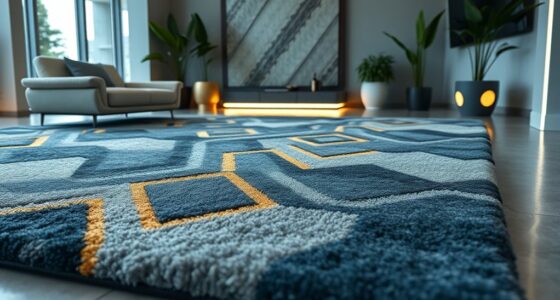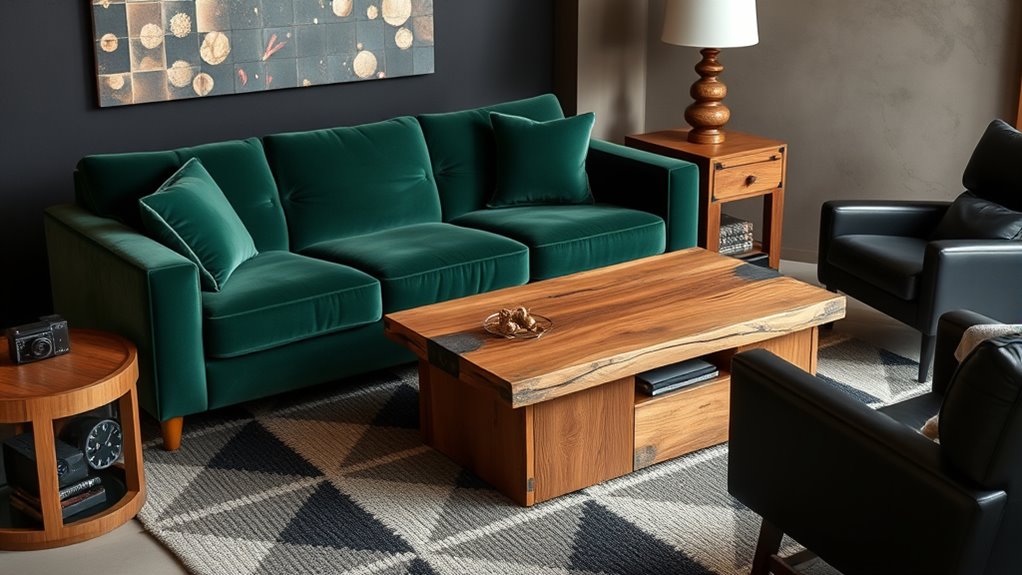

Mixing textures like rugs, leather, wood, and velvet helps create visual interest and tactile richness in your space. Pair a plush velvet sofa with a woven rug for cozy contrast, or combine smooth leather with textured wood accents for balance. Layering these elements adds depth and personality while guiding the eye naturally through the room. Keep in mind how contrasting finishes work together—if you’re curious about perfect combinations, stay tuned for more tips.
Key Takeaways
- Pair plush rugs with leather and velvet for tactile contrast that adds depth and visual interest.
- Use textured wood elements alongside rugs to create a warm, layered foundation.
- Balance glossy finishes with matte textures in rugs, leather, and wood to enhance sophistication.
- Incorporate soft fabrics like velvet with rougher textures such as wood for harmonious contrast.
- Layer different textures deliberately to develop cohesion, rhythm, and personalized style in the space.
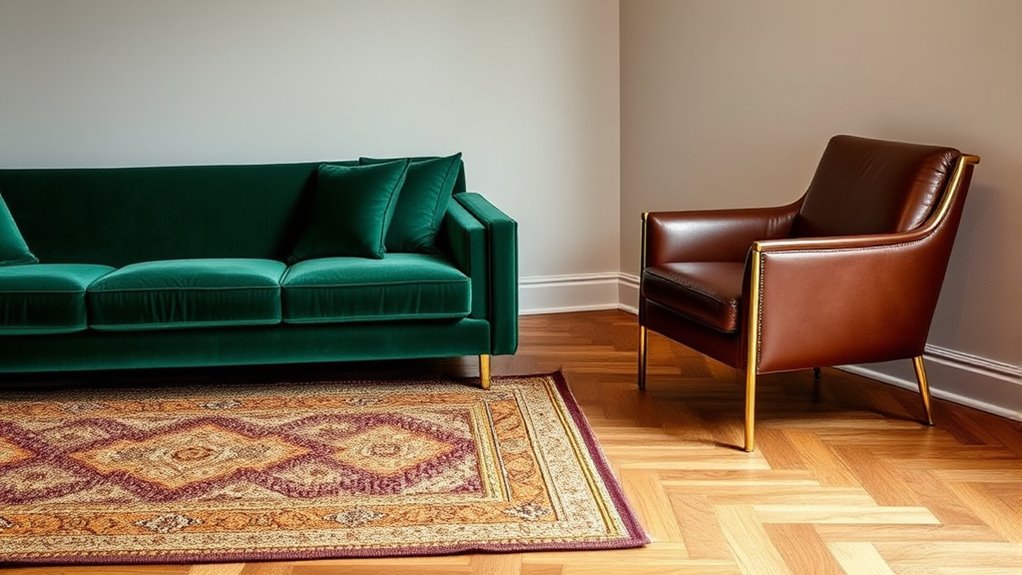
Have you ever wondered how to create a dynamic and inviting space? The secret lies in mastering the art of mixing textures. When you combine different materials, you add depth and personality to your room. One effective way to do this is by layering fabrics, which introduces variety and comfort. Think about pairing a plush velvet sofa with a cozy woven throw or stacking different rugs to create a rich, textured foundation. This technique not only makes your space more visually interesting but also invites touch—giving your room a warm, welcoming feel.
Contrasting finishes play a essential role in elevating your design. Combining smooth leather with rough-hewn wood, or glossy surfaces with matte textures, creates a striking balance that keeps the eye moving. When you incorporate contrasting finishes, you emphasize individual elements and make each material stand out. For example, placing a sleek leather armchair next to a rustic wooden coffee table highlights their differences, making each piece more noticeable and adding sophistication. This interplay of finishes keeps your space lively rather than monotonous, guiding attention naturally around the room.
Contrasting finishes highlight elements and add sophistication, balancing smooth and rough textures for a lively, engaging space.
Mixing textures isn’t just about visual appeal; it’s about creating harmony through deliberate contrasts. When you choose a soft velvet rug under a leather sofa, you’re layering fabrics that serve different tactile purposes, making the space feel lush and inviting. Adding a metallic accent piece against a matte wall introduces an unexpected contrast that catches the eye without overwhelming. The key is to select elements that complement each other while maintaining enough contrast to avoid a flat appearance. This careful balance makes your room feel thoughtfully curated rather than cluttered.
Using layering fabrics and contrasting finishes allows you to craft a room that’s full of character. You don’t have to stick to a single style or material; instead, mix and match different textures to reflect your personality. For instance, pairing a sleek glass table with a textured linen curtain creates a sophisticated yet approachable look. When you experiment with these elements, you develop a sense of rhythm and flow, guiding the eye seamlessly from one area to another.
Ultimately, mastering the art of mixing textures through layering fabrics and contrasting finishes is about creating a space that feels alive and personalized. It’s about combining softness with hardness, shine with matte, and smooth with rough, all while maintaining balance. Incorporating vetted design principles like these ensures your space remains cohesive and stylish. When you do this thoughtfully, your room transforms from simply functional to truly inspiring—an environment that invites touch, sparks curiosity, and makes everyone feel at home.

Sour Lemon 8×10 Area Rugs for Living Room, Soft Large Area Rug Fluffy Rugs for Bedroom,Machine Washable Area Rug Non Slip Carpet Rug for Living Room Playroom Kids Room Home Decor
【SUPER SOFT FEELING】- The Area Rugs for Living is made of premium short wool coral fleece, The surface…
As an affiliate, we earn on qualifying purchases.
As an affiliate, we earn on qualifying purchases.
Frequently Asked Questions
How Do I Choose the Right Rug Size for Different Rooms?
To choose the right rug size for your room, start by measuring the space accurately. Consider rug shape options like rectangular, round, or runner to suit your layout. For high-traffic areas, opt for durable materials like wool or polypropylene that withstand wear. Make certain the rug fits well with your furniture arrangement, either framing the entire room or just anchoring key pieces, creating a balanced, inviting space.
Can I Mix Multiple Textures in One Space Effectively?
Yes, you can mix multiple textures effectively by layering different textures and balancing tactile elements in your space. Use a variety of materials like leather, velvet, and wood to create visual interest, but guarantee they complement each other. Incorporate rugs with different textures to add depth and warmth, and avoid clutter by keeping a cohesive color palette. This approach results in a dynamic, inviting environment that feels thoughtfully curated.
What Color Palettes Complement Leather, Wood, and Velvet?
A well-chosen color palette acts like a symphony, harmonizing the diverse textures of leather, wood, and velvet. Neutrals like beige, taupe, and soft greys create a versatile, calming backdrop, while rich jewel tones such as emerald or sapphire add depth and elegance. For material pairing, consider warm earth tones for a cozy feel or sleek blacks and whites for modern contrast, ensuring your space feels cohesive and inviting.
How Do I Maintain and Clean Textured Rugs?
To keep your textured rugs looking great, vacuum regularly using gentle, slow-moving techniques to avoid damage. For stains, act quickly with stain removal methods like blotting with a clean cloth and using a mild detergent or specialized rug cleaner. Avoid harsh chemicals and excessive scrubbing. Regular maintenance preserves the rug’s texture and color, ensuring it stays beautiful and durable over time.
Are There Specific Lighting Tips for Textured Decor?
Brighten your space with brilliant lighting tips! To enhance textured decor, focus on creating mesmerizing lighting ambiance through spotlight techniques. Use directional lights to cast gentle shadows, highlighting the rich details of rugs, leather, wood, and velvet. Layer your lighting with warm, soft tones to emphasize textures without overpowering. By carefully controlling light levels and angles, you’ll accentuate the tactile beauty of your decor, making every element pop with personality and warmth.

Yaheetech PU Leather Accent Chair, Mid-Century Modern Armchair with Solid Wood Legs, Reading Leisure Chair with High Back for Living Room Bedroom Waiting Room, Brown
Superior Construction: This accent chair is built of a solid wood & manufactured wood frame and cushioned artificial…
As an affiliate, we earn on qualifying purchases.
As an affiliate, we earn on qualifying purchases.
Conclusion
Just as a master chef balances flavors to create a memorable dish, blending textures like rugs, leather, wood, and velvet adds depth and harmony to your space. Don’t shy away from mixing these elements—embrace the art of contrast. Remember, as Picasso once said, “Every act of creation is first an act of destruction.” So, break the rules, experiment boldly, and let your home become a canvas of beautiful, textured storytelling.

knoworld 47-Inch Rectangle Coffee Table, Wood Rectangular Center Tables, Farmhouse Low Cocktail Tea Table for Living Room, Thick Base/Easy Assembly, Natural
Natural Simplicity: This long coffee table features a warm oak-toned texture and minimalist geometric design, perfectly blending rustic…
As an affiliate, we earn on qualifying purchases.
As an affiliate, we earn on qualifying purchases.

Srugn Double Layers 8×10 Area Rugs for Living Room- Upgraded Removable(Upper Layer+Lower Layer) Washable Area Rugs for Bedroom,Dining Room- Large Vintage Carpets with Cushioned Pad for Home Office
CUSHIONED AND SOFT:Most washable rugs are designed with just a single layer, measuring only about 1.77 inches thick,…
As an affiliate, we earn on qualifying purchases.
As an affiliate, we earn on qualifying purchases.