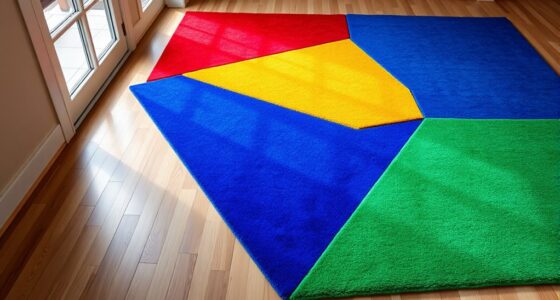
Using rugs to anchor open-plan living areas helps you define separate zones while keeping the space feeling spacious and cohesive. Place larger rugs beneath furniture to unify seating or dining areas, and smaller rugs to highlight cozy corners or entryways. Layering textures and coordinating colors adds visual interest and harmony. With smart placement, your space will feel inviting and organized. Keep exploring to find how these tips can transform your open-plan layout even further.
Open a free Amazon Business account
Business pricing, bulk buying and tax-exempt orders.
As an affiliate, we earn on qualifying purchases.
Key Takeaways
- Use large rugs to define and ground multiple furniture zones within an open space.
- Layer rugs to add texture and visual interest, creating a cohesive look throughout the area.
- Coordinate rug colors and patterns with furniture for seamless visual flow and room harmony.
- Place rugs strategically under seating or dining areas to establish clear boundaries.
- Incorporate non-slip pads for safety and longevity, ensuring rugs stay in place in high-traffic zones.

Open-plan living areas can feel spacious and inviting, but without clear boundaries, they may also seem chaotic or disconnected. That’s where rugs come in—they serve as visual anchors, helping you define different zones while maintaining an open flow. To make this work seamlessly, you want to focus on layering textures and color coordination. When you layer textures, you’re adding depth and interest to your space, preventing it from feeling cold or flat. Think of combining a plush shag rug with sleek leather furniture or a jute rug beneath a wooden coffee table. This mix of textures invites touch and adds richness, making each zone feel intentional and cozy.
In addition, considering the size and placement of your rugs is crucial; properly positioned rugs can enhance the perception of space and flow. Color coordination is equally important. Your rugs should complement the overall palette of your room, tying different areas together visually. For instance, if your sofa is a cool gray, choose a rug with hints of blue or charcoal to create harmony. If your walls are warm beige, a rug with earthy tones like terracotta or rust can enhance the warmth and tie the space together. You don’t need everything to match perfectly, but aim for cohesion so your zones flow naturally into each other.
When placing rugs, consider their size carefully. Larger rugs that extend beneath furniture help define a seating area or dining zone, making the space feel grounded. Smaller rugs can work to delineate a reading nook or entryway without overwhelming the room. Layering rugs is also an option—placing a smaller, patterned rug over a larger neutral one adds visual interest and demarcates different functions within the open space. Just ensure the overlapping edges are tidy and the styles complement each other.
Maintaining a consistent color scheme across your rugs and furniture helps create a unified look. If you’re using bold patterns, balance them with more subdued, solid-colored pieces. Conversely, if your furniture is neutral, a rug with vibrant colors or interesting patterns can serve as the focal point. Think of your rugs as the foundation for your design; they set the tone and help each zone feel connected yet distinct.
Ultimately, by layering textures and coordinating colors thoughtfully, your rugs will do more than just add comfort—they’ll shape the entire flow of your open-plan living area. With these strategies, you can enjoy a space that feels both spacious and well-organized, inviting you to relax and entertain with ease. Incorporating safety considerations such as non-slip pads can also enhance the functionality and security of your space.

UERMEI 12×15 Area Rug for Living Room Washable Abstract Golden Brown Carpet
- Ultra-soft & Comfortable: Made from skin-friendly polyester for plush comfort
- Washable & Easy to Maintain: Machine washable with stain-resistant, lightweight design
- Kid & Pet Friendly: Anti-slip backing and hypoallergenic materials for safety
As an affiliate, we earn on qualifying purchases.
As an affiliate, we earn on qualifying purchases.
Frequently Asked Questions
How Do I Choose the Right Rug Size for My Open-Plan Space?
To choose the right rug size for your open-plan space, consider how it helps with area delineation and creates visual harmony. You want a rug large enough to anchor all key furniture pieces, like sofas and coffee tables, to avoid floating furniture. Measure your space carefully, leaving enough room around the edges, and select a size that balances the room’s proportions. This guarantees a cohesive and inviting look.
What Materials Are Best for High-Traffic Open-Plan Areas?
For high-traffic open-plan areas, choose area rugs made from durable materials like nylon, polypropylene, or wool. These materials resist wear and stains, ensuring your rug stays looking fresh longer. Nylon and polypropylene are especially tough and easy to clean, perfect for busy spaces. Wool also offers durability and a soft feel, making it a stylish yet practical choice. Prioritize these materials to keep your space looking great over time.
How Can I Ensure the Rug Complements Different Zones?
Think of your rug as a storyteller, weaving harmony across your space. To guarantee it complements different zones, focus on color coordination, choosing hues that flow seamlessly from one area to another. Mix patterns sparingly, like a well-curated gallery, so each zone feels connected yet distinct. This approach creates a cohesive look, making your open-plan living area feel intentional and inviting, just like a masterfully composed symphony.
Are There Safety Concerns With Large Rugs in Open Spaces?
Yes, large rugs can pose slip hazards if not secured properly, so you should use non-slip rug pads to prevent accidents. Also, verify the rug is fire-safe by choosing materials that meet fire safety standards. Regularly check for wear and tear, and keep the rug clean to avoid tripping. Prioritizing these safety measures lets you enjoy your open space without worry.
How Do I Maintain and Clean Rugs in Open-Plan Living Areas?
To keep your rugs clean in open-plan living areas, vacuum regularly to remove dirt and debris. Address spills immediately using stain removal techniques like blotting with a clean cloth and using a mild detergent or specialized cleaner. Avoid harsh scrubbing to prevent damage. Regular maintenance helps preserve your rug’s appearance and ensures a safe, attractive space. Keep a routine to maintain both cleanliness and longevity for your rugs.
Conclusion
Think of rugs as the heartbeat of your open-plan space, grounding each area like a steady drum in a lively symphony. When you choose the right rug, you create a cozy island amid the bustling room, inviting everyone to gather and relax. So, lay down that perfect rug and watch your open-plan living area transform into a harmonious haven—an artistic tapestry woven with comfort, style, and a touch of magic.
Summer Picks
summer essentials
As an affiliate, we earn on qualifying purchases.