Deciding between professional and DIY stair runner installation depends on your skill, budget, and how perfect you want it. If you’re comfortable with measuring, cutting, and handling tools, a DIY approach can save money and be satisfying. However, professionals offer quick, precise work with advanced tools and experience, reducing mistakes. If you’re unsure or want a flawless finish, considering expert installation is wise. Keep exploring to discover tips for a durable, beautiful stair runner.
Key Takeaways
- Professional installation offers faster completion, greater precision, and reduces the risk of measurement or fitting errors.
- DIY installation provides cost savings but requires time, skill, and attention to detail for a polished finish.
- Professionals utilize specialized tools and techniques for a more durable, seamless, and professionally finished stair runner.
- DIY projects may involve a steeper learning curve and potential mistakes, affecting the overall look and longevity.
- Choosing between professional and DIY depends on skill level, budget, project complexity, and desired quality outcome.
Assessing Your Skill Level and Experience

Before starting your stair runner project, it’s important to honestly evaluate your skill level and experience with similar tasks. If you’ve handled home improvement projects like measuring, cutting, or installing flooring, you’re likely more prepared. However, if you’re new to these types of tasks, consider whether you feel comfortable using tools like a saw or staple gun. Think about your attention to detail, as precise measurements and alignment are essential. Assess whether you can follow detailed instructions or tutorials effectively. Remember, rushing into installation without confidence might lead to mistakes or uneven results. Be honest about your abilities; if you’re unsure, it’s wise to seek help or hire a professional. Proper assessment ensures you choose the right approach and avoid unnecessary frustration.
Evaluating Cost and Budget Considerations

Understanding your budget is essential to guarantee your stair runner project stays on track financially. When evaluating costs, consider all factors that impact your overall expenses. Think about:
Knowing your budget helps keep your stair runner project on track financially and stress-free.
- The price of high-quality materials and if they fit within your budget
- Potential costs for professional installation if you’re not doing it yourself
- The tools and supplies needed for a DIY job
- Additional expenses like measuring and preparation
- Unexpected costs, such as repairs or adjustments during installation
Being aware of these elements helps you avoid surprises and make informed decisions. Setting a clear budget upfront allows you to prioritize quality versus savings and determine whether you’ll hire a pro or go the DIY route. Staying within your financial limits ensures a smooth process and satisfying results. For example, knowing about necessary cookies can help you understand how website data tracking might influence your decision-making process.
Choosing the Right Materials and Tools

When selecting materials, consider both durability and style to guarantee your stair runner lasts and complements your home. You’ll also need essential tools like a tape measure, scissors, and a staple gun to make the installation smooth. Don’t forget to explore cost-effective options that fit your budget without sacrificing quality.
Material Durability and Style
Choosing the right materials and tools is essential for ensuring your stair runner is both durable and stylish. You want something that can withstand foot traffic while complementing your decor. Durable options like wool or nylon offer resilience and longevity, resisting stains and wear. For a more modern look, consider patterns or textures that add visual interest to your stairs. When selecting materials, think about how they’ll feel underfoot and how easy they are to clean.
Imagine a plush wool runner with intricate patterns, a thick nylon strip with a subtle sheen, or a natural fiber like jute for rustic charm. These choices can transform your stairs into a statement piece, blending durability with style seamlessly.
Essential Installation Tools
Selecting the right tools to install your stair runner is just as important as picking durable materials. You’ll need a few essential items to guarantee a smooth installation. A measuring tape helps you determine the correct runner length and width, while a straightedge guides straight cuts. A utility knife or carpet cutter is crucial for trimming the runner to fit perfectly. A staple gun or heavy-duty stapler secures the runner to the stairs, and a hammer or mallet can help set staples evenly. For marking, use a pencil or chalk to outline cutting lines. A level ensures your runner stays straight, and scissors or shears are useful for trimming any excess material. Having these tools ready will make your installation more precise and efficient.
Cost-Effective Material Choices
Opting for cost-effective materials can considerably reduce your stair runner project expenses without sacrificing quality. To do this, choose durable yet affordable options that meet your style and comfort needs. Look for synthetic fibers like polyester or nylon, which mimic the look of natural materials but cost less. Consider pre-cut or standard sizes to avoid extra trimming costs. Reuse leftover or surplus materials from previous projects when possible. Shopping at clearance sales or discount stores can also save you money. Additionally, selecting high-quality adhesive tapes can ensure your runner stays securely in place without the need for costly professional installation.
Time Investment and Project Duration
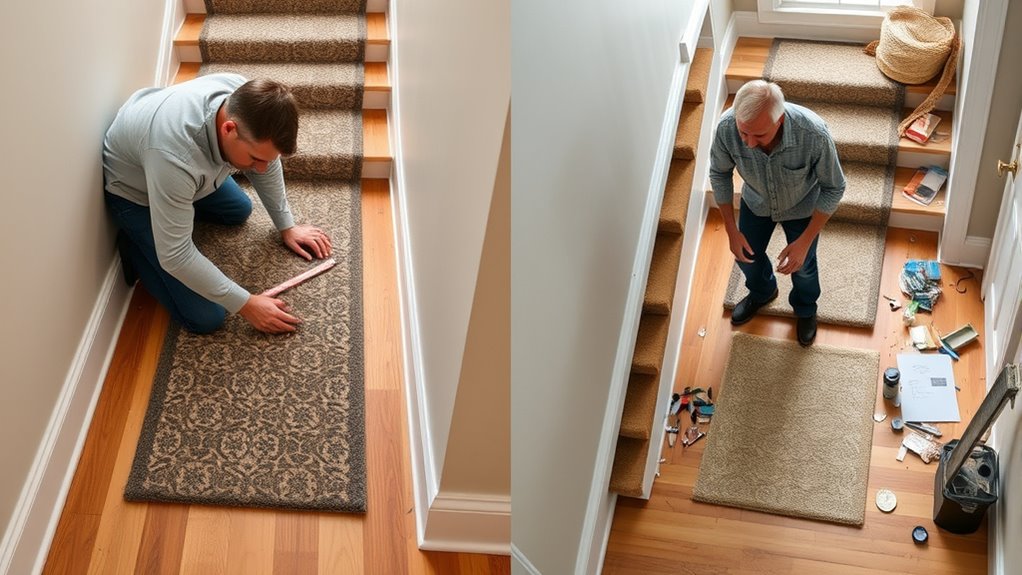
Installing a stair runner takes a certain amount of time, which varies based on the size of your staircase and your experience. If you do it yourself, it might take longer, but a professional can complete the job more quickly. Understanding the expected project duration helps you plan accordingly and set realistic expectations. Incorporating proper techniques can also influence the overall efficiency of the installation process, especially when considering sound vibrations to create a calming workspace.
Installation Time Estimates
Estimating the time needed for stair runner installation depends on several factors, including the staircase’s size, complexity, and the type of materials used. A simple, straight staircase might take a few hours, while a winding or ornate staircase could require a full day or more. Factors influencing the timeline include measuring and cutting, securing the runner, and finishing touches like trimming or sealing. Additionally, ensuring proper storage conditions for materials can help maintain their quality throughout the project. Imagine:
- Carefully measuring each step for a perfect fit
- Unrolling the runner along the stairs
- Securing it with adhesive or staples
- Aligning patterns or borders precisely
- Cleaning up debris and excess materials
These steps can vary in duration based on your experience and the methods you choose. Planning ahead helps guarantee a smoother, more predictable project timeline.
DIY vs. Professional Speed
When comparing DIY and professional stair runner installation, the time involved can vary considerably. On average, a DIY project may take 4–8 hours depending on your experience and staircase complexity. Professionals, however, often complete the job in 2–4 hours due to their expertise and efficiency. To illustrate, consider the following:
| Method | Estimated Time | Key Factor |
|---|---|---|
| DIY | 4–8 hours | Skill level and prep work |
| Professional | 2–4 hours | Experience and tools used |
| Both | Vary based on staircase complexity and size | Job specifics |
While DIY takes longer, it offers flexibility, whereas professionals deliver speed and precision, saving you time in the long run. Additionally, understanding the variety of planter designs can help you create a more appealing space for your staircase decor.
Project Completion Duration
The time investment for completing a stair runner project depends on several factors, including the size of your staircase, the complexity of the layout, and whether you choose to do it yourself or hire professionals. DIY projects often take longer, as you handle measurement, cutting, and installation step-by-step. Professionals, however, usually finish faster due to their experience and tools. Expect the following during the process:
- Measuring each step precisely to ensure a perfect fit
- Cutting the runner accurately for a seamless appearance
- Applying adhesive or staples steadily along the staircase
- Adjusting and aligning sections to avoid gaps
- Cleaning up debris and excess materials afterward
- Considering project planning and preparation can significantly streamline the installation process.
Ensuring Safety and Proper Installation Techniques

To guarantee safety and achieve a proper installation, you must carefully follow specific techniques and precautions throughout the process. Start by clearing the stairs of any debris, ensuring a clean, dry surface for better adhesion. Use a level to check that each step is even, preventing slips or uneven wear. When measuring and cutting the runner, double-check dimensions to avoid waste and mistakes. Secure the runner with quality adhesive and finish with non-slip stair treads or nosing strips to enhance safety. Always wear protective gear like gloves and safety glasses, especially when handling tools. Take your time, work methodically, and avoid rushing. Proper preparation and attention to detail are essential to ensure your stair runner is safe, secure, and properly installed. Additionally, selecting appropriate materials can significantly impact the longevity and safety of your installation.
Achieving a Professional Finish and Long-Term Durability
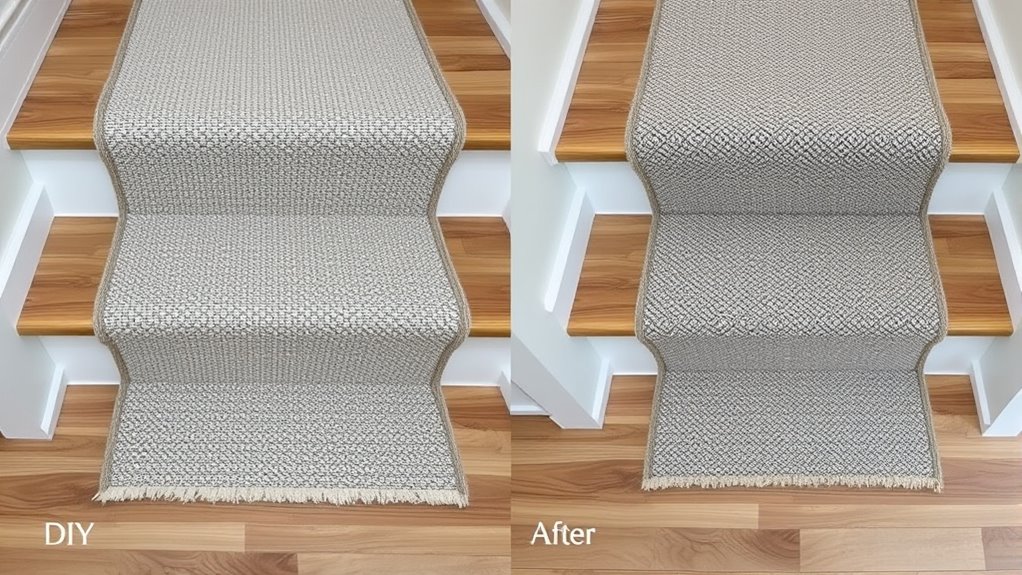
Achieving a professional finish and ensuring long-term durability requires careful attention to detail during installation and finishing. You want your stair runner to look seamless and withstand daily wear. Start by precisely aligning the runner, smoothing out bubbles, and securely attaching edges. Use quality adhesives and durable staples or tacks to prevent shifting over time. Pay close attention to the corners and connectors, ensuring clean, crisp lines. Properly sealing the edges with finishing strips or binding adds a polished look and protects against fraying. Consider applying a protective sealant if your runner material allows. Additionally, selecting the appropriate stair runner material can significantly influence the longevity and appearance of your installation.
- Smooth, even surface with no wrinkles or bubbles
- Sharp, clean edges that align perfectly
- Secure fastening without loose sections
- Consistent pattern matching at connectors
- Sealed edges for added protection
Frequently Asked Questions
What Are Common Mistakes to Avoid During Stair Runner Installation?
When installing a stair runner, you should avoid common mistakes like measuring incorrectly, which can cause misaligned patterns or gaps. Don’t forget to secure the runner properly with the right adhesive or staples, or it might slip. Also, avoid rushing the process; take your time to ensure even spacing and straight lines. Carefully cut and fit the material to prevent wrinkles or uneven edges, creating a polished, professional look.
How Can I Modify a Stair Runner to Fit Unusual Staircase Shapes?
When modifying a stair runner for unusual shapes, you need to measure carefully and plan your cuts precisely. Use a flexible measuring tape to capture all curves and angles, then mark your fabric with chalk or a fabric pencil. Cut slowly and smoothly, ensuring the edges follow the staircase’s contours. Pin or clip the runner in place before attaching it, so you can make adjustments for a perfect fit.
Are There Eco-Friendly or Sustainable Materials Suitable for Stair Runners?
Imagine a lush forest contrasting with a sleek, modern home—this is the beauty of eco-friendly stair runners. You can choose materials like bamboo, jute, or recycled wool that are sustainable, biodegradable, and stylish. These options reduce your environmental impact while adding natural texture to your stairs. By selecting eco-conscious fabrics, you create an inviting, eco-friendly space that aligns with your values and enhances your home’s aesthetic.
How Do I Maintain and Clean My Stair Runner Long-Term?
You want to keep your stair runner looking great long-term, so regular maintenance is key. Vacuum it weekly to remove dirt and debris, and spot clean stains immediately with a gentle cleaner. Periodically, deep clean using a carpet cleaner or steam cleaner suited for your material. Avoid harsh chemicals, and check for fraying or wear. With consistent care, your stair runner stays vibrant and in good shape for years.
Can I Install a Stair Runner on Stairs With Unusual Dimensions or Angles?
You can install a stair runner on stairs with unusual dimensions or angles, but it requires careful planning and precision. Measure each step accurately, and consider using custom-cut materials or flexible options like a non-slip rug pad. If the stairs have irregular angles or shapes, you might need to create custom templates or seek professional help to guarantee a perfect fit and safe installation.
Conclusion
Whether you choose to tackle your stair runner project yourself or hire a professional, remember that each approach has its merits. If you’re confident and prepared, DIY can feel like crafting a fine piece of art—rewarding and personal. However, for a flawless finish and lasting durability, a professional’s touch might be your best bet. Ultimately, weighing your skills and budget will help you make the right choice, turning your stairs into a stunning focal point like a well-composed masterpiece.