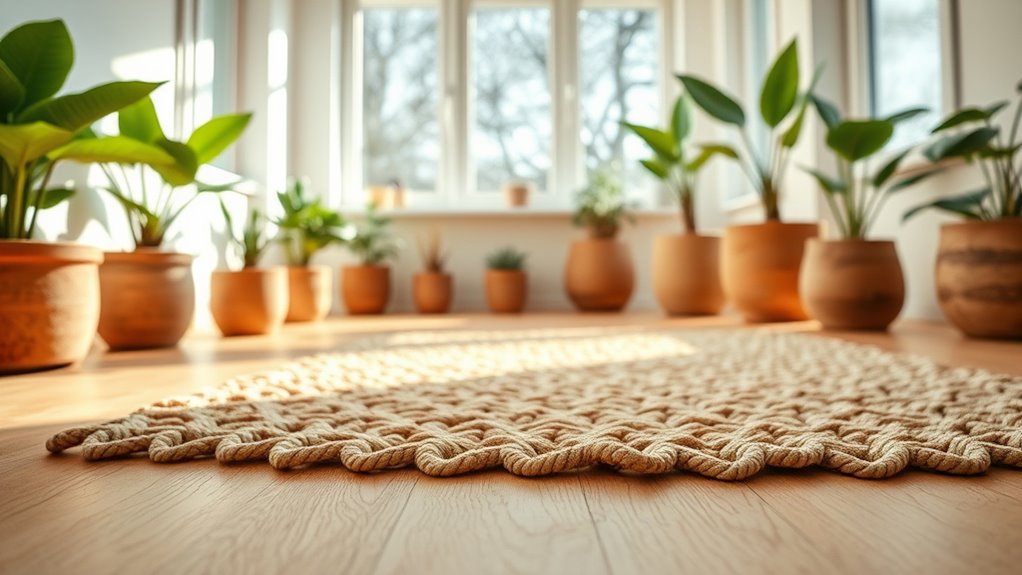

Choosing cork flooring and rugs benefits the environment because they use renewable, biodegradable materials that protect forests and reduce waste. Since cork is sustainably harvested, it doesn’t damage trees and can be replenished easily. It also decomposes naturally without harmful toxins, minimizing pollution. Plus, cork requires less chemical treatment, which lowers environmental impact. If you want to discover more about how cork helps preserve ecosystems and promotes eco-friendly living, keep exploring!

Get cleaning gear delivered free with Prime
- Fast, free delivery on millions of items
- Prime Video, Amazon Music and more included
- Member-only deals all year
Key Takeaways
- Cork is sustainably harvested, allowing continuous growth without harming trees, supporting renewable resource use.
- Cork is biodegradable, breaking down naturally and reducing long-term waste and environmental pollution.
- Cultivating cork supports ecosystem preservation and biodiversity in Mediterranean regions.
- Its natural properties reduce the need for chemical treatments, lowering environmental impact during production.
- Cork flooring and rugs promote eco-friendly living by minimizing waste, pollution, and supporting responsible land management.
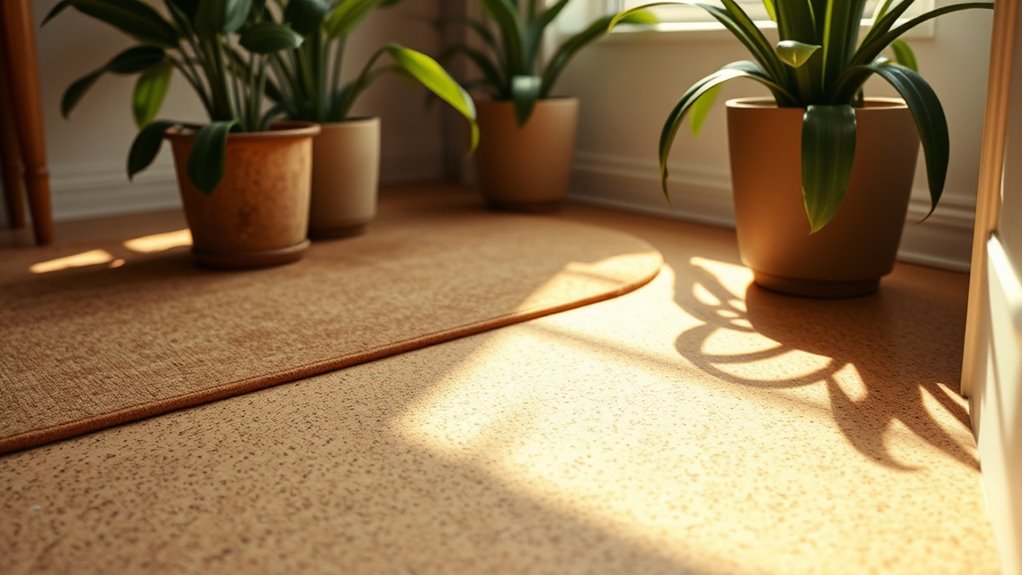
Cork flooring and rugs offer notable environmental benefits that make them an eco-friendly choice for your home. When you choose cork, you’re opting for a material that is sustainably harvested, meaning the cork oak trees are carefully managed to ensure their health and longevity. This sustainable harvesting process involves stripping the bark from the trees without damaging them, allowing the trees to continue growing and absorbing carbon dioxide from the atmosphere. Because the bark regenerates over time, cork is a renewable resource that can be harvested repeatedly without harming the environment, making it a smart choice for eco-conscious homeowners.
Cork is sustainably harvested, allowing continuous growth and environmental benefit without harming the trees.
In addition to its sustainable harvesting, cork is inherently biodegradable. When your cork flooring or rugs reach the end of their life cycle, they won’t linger in landfills for centuries. Instead, they naturally break down over time, returning to the earth without releasing harmful toxins. This biodegradability reduces waste and minimizes your home’s environmental footprint. Unlike synthetic flooring options that may contain plastics and chemicals, cork decomposes safely, contributing less to pollution and environmental degradation.
Choosing cork also supports the preservation of forests and ecosystems. Since cork oak trees thrive in Mediterranean regions, their cultivation encourages sustainable land use and prevents deforestation. This not only helps maintain biodiversity but also promotes responsible resource management. By supporting cork products, you’re indirectly promoting practices that prioritize ecological balance, ensuring these essential ecosystems remain healthy for future generations.
Furthermore, cork’s natural properties mean it requires less chemical treatment during production. Its resilience and antimicrobial qualities reduce the need for chemical preservatives or finishes that could be harmful to the environment or indoor air quality. This low-impact production process aligns with environmentally responsible practices, allowing you to enjoy a beautiful, functional flooring or rug without worry about toxic emissions.
In essence, cork flooring and rugs offer a sustainable and environmentally friendly alternative to conventional materials. Their sustainable harvesting methods ensure that trees are maintained and replenished, while their biodegradability minimizes waste and pollution. When you choose cork, you’re supporting renewable resources, protecting ecosystems, and reducing your overall environmental impact—all while adding a warm, natural aesthetic to your home. It’s a smart, responsible choice that benefits both the planet and your living space.
As an affiliate, we earn on qualifying purchases.
Frequently Asked Questions
How Does Cork Flooring Impact Indoor Air Quality?
Cork flooring positively impacts your indoor air quality by actively reducing VOC emissions, creating a healthier environment. Its natural properties help improve air quality, minimizing airborne pollutants and allergens. You’ll notice fewer irritants and better overall air quality, as cork absorbs and releases fewer volatile organic compounds. By choosing cork, you support air quality improvement and enjoy a safer, cleaner space for you and your family.
Is Cork Flooring Biodegradable and Eco-Friendly at End of Life?
Yes, cork flooring is biodegradable and eco-friendly at the end of its lifecycle. Its biodegradable properties mean it naturally decomposes without harming the environment. During its eco-friendly lifecycle, cork can be recycled or composted, reducing waste and environmental impact. By choosing cork, you’re supporting sustainable practices, as it’s a renewable resource that minimizes landfill contributions and promotes a healthier planet long-term.
Can Cork Flooring Be Recycled or Repurposed?
Yes, cork flooring can be recycled and repurposed. You can participate in recycling processes that break down cork into raw materials for new products. Additionally, repurposing options include using old cork tiles for crafts, insulation, or DIY projects. By choosing cork, you’re supporting eco-friendly practices, as its natural properties make it easy to reuse or recycle, reducing waste and extending its lifespan in sustainable ways.
What Are the Carbon Footprint Differences Between Cork and Other Flooring Types?
Did you know cork flooring has a 70% lower carbon footprint than concrete? You’ll find cork is a highly sustainable harvesting, renewable resource that absorbs CO2 during growth, reducing overall emissions. Compared to vinyl or hardwood, cork’s production emits markedly less greenhouse gases. By choosing cork, you’re making an eco-friendly choice that helps combat climate change while enjoying durable, stylish flooring.
How Does Cork Harvesting Affect Local Ecosystems and Biodiversity?
When you choose sustainable harvesting of cork, you’re helping protect local ecosystems and biodiversity. Harvesters strip the bark without damaging the cork oak trees, allowing them to regrow and continue supporting wildlife. This practice preserves biodiversity by maintaining habitat stability and encouraging diverse species. By supporting sustainable cork harvesting, you contribute to healthier ecosystems, ensuring that the natural balance remains intact while benefiting from eco-friendly flooring options.
Conclusion
Choosing cork flooring and rugs not only enhances your space but also benefits the environment. Did you know that cork harvesting is sustainable and regenerates every nine years without harming the trees? This means you can enjoy beautiful, eco-friendly floors that reduce your carbon footprint. By opting for cork, you’re supporting a renewable resource that helps conserve forests and promote biodiversity. Make the switch today—your home and the planet will thank you for it.
Halloween Picks
halloween
As an affiliate, we earn on qualifying purchases.