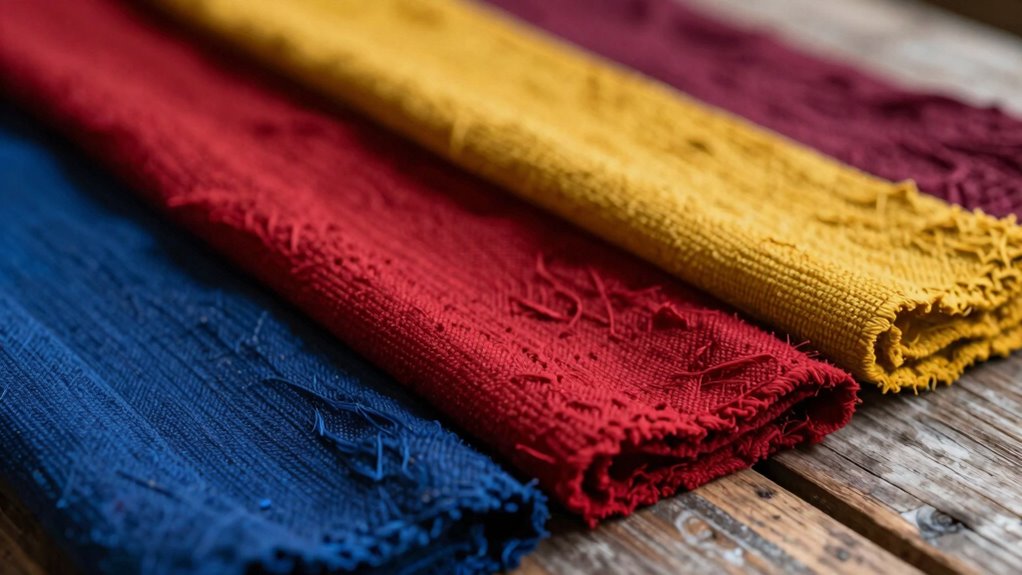

Many people believe natural dyes can’t match synthetic ones for color fastness, but the truth is, their durability depends on how you use them. Proper mordanting, controlling pH levels, and careful fixing techniques can considerably improve their resistance to fading. While natural dyes may fade faster without these precautions, you can extend their life with proper care. Stay with us to discover the real secrets behind making natural dyes last longer.

Get cleaning gear delivered free — and shop member deals
- Fast, free delivery on millions of items
- Access to Prime Big Deal Days deals on October 6–7
- Prime Video, Amazon Music and more included
Key Takeaways
- Natural dyes tend to fade faster than synthetic dyes without proper mordanting and protection.
- Using mordants like alum or iron significantly improves color fastness and dye longevity.
- Proper storage in dark, cool, and dry conditions helps natural dyes resist fading over time.
- Over-washing and harsh detergents accelerate fading of natural dyed fabrics.
- The myth is that natural dyes cannot be made color-fast; with correct techniques, durability can be improved.
As an affiliate, we earn on qualifying purchases.
What Are Natural Dyes and How Are They Made?
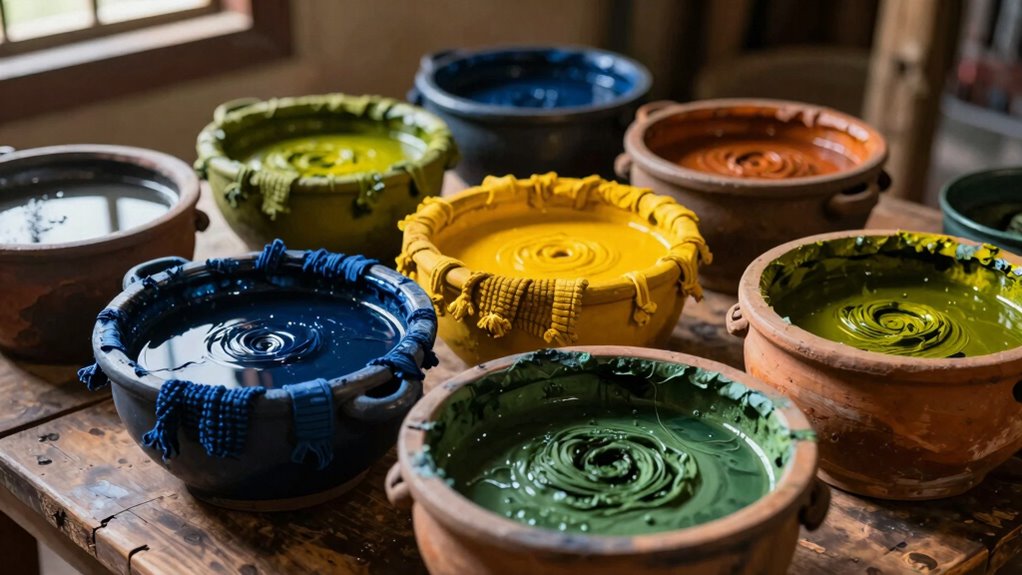
Natural dyes are colors derived from plants, minerals, and other organic materials, offering an eco-friendly alternative to synthetic dyes. To create these dyes, you start with plant extraction, where you carefully boil or soak plant parts like leaves, roots, or barks to release their pigments. Once you have the dye extract, mordant techniques come into play; these are methods used to fix the dye onto fabrics and enhance colorfastness. Common mordants include alum, iron, and tannin, which bond with the natural pigments and improve durability. The process varies depending on the plant material and desired color, but the goal remains the same: to produce vibrant, sustainable dyes that can be applied to textiles without harmful chemicals. Enhancing durability can be achieved through proper mordanting techniques, ensuring the colors stay vibrant over time.
Do Natural Dyes Fade Faster Than Synthetic Dyes?
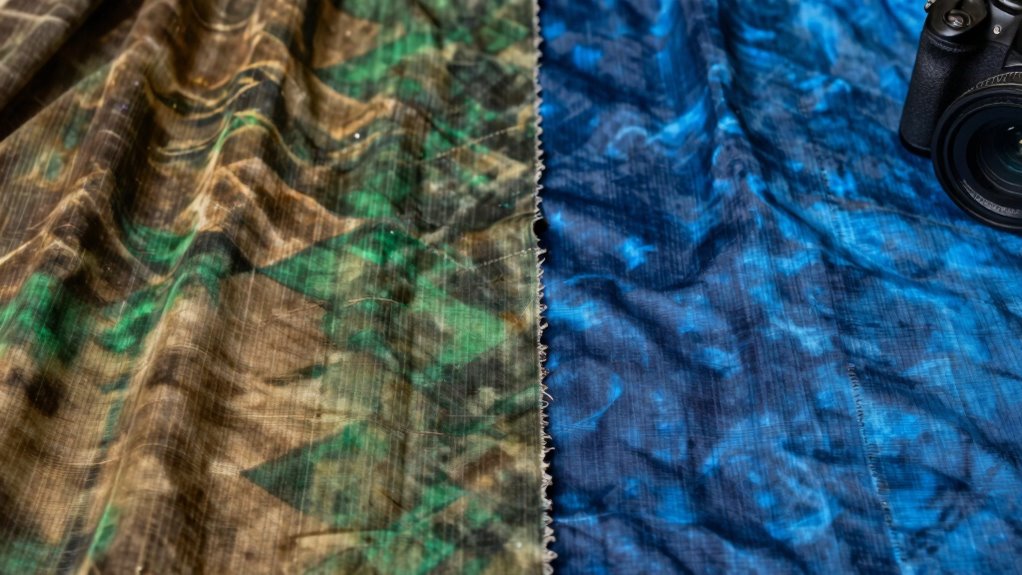
While natural dyes can produce stunning and unique colors, questions often arise about their longevity compared to synthetic dyes. Many wonder if natural dyes fade faster over time, affecting dye fading and overall color longevity. The truth is, natural dyes tend to fade more quickly if not properly fixed or protected, especially when exposed to sunlight and washing. Proper use of fixatives or mordants can significantly enhance their resistance to fading. However, with proper mordants and gentle care, you can considerably improve their resistance to fading. Synthetic dyes generally offer greater color stability, making them more durable for everyday wear. Still, natural dyes bring a rich, authentic look that many value despite their potentially shorter lifespan. Ultimately, understanding how to care for natural dyes can help maintain their vibrancy longer.
What Factors Affect the Color Fastness of Natural Dyes?
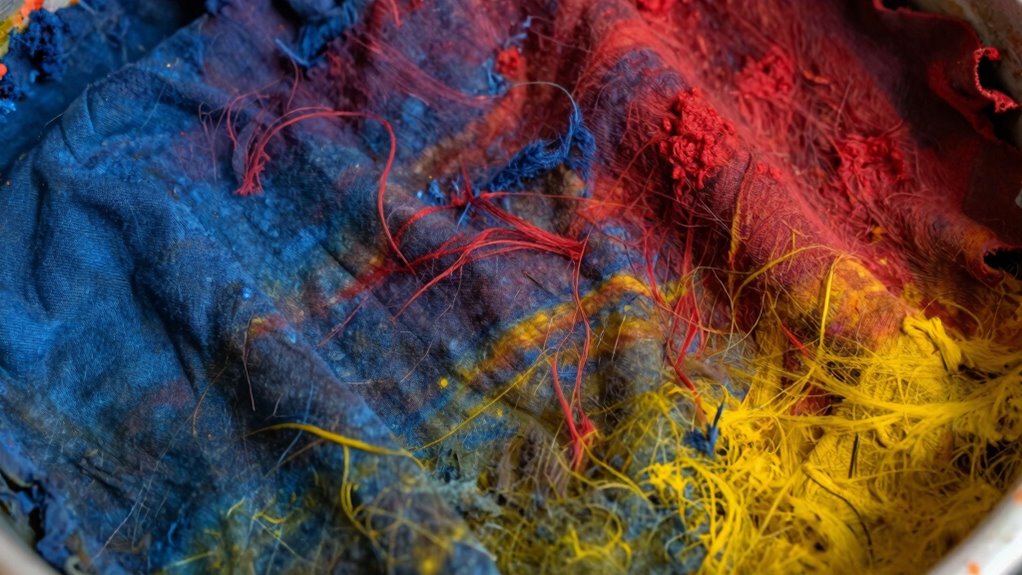
Several factors influence how well natural dyes hold their color over time, and understanding these can help you improve their longevity. One key factor is pH levels, which affect how the dye bonds with the fiber. A pH that’s too acidic or alkaline can cause fading or uneven color. Mordant types also play an essential role; different mordants, like alum or iron, form stronger or weaker bonds with dyes. Using the right mordant enhances color fastness and prevents fading. Additionally, the fiber type and mordant combination impact durability. Proper pre-treatment and post-dye fixing methods further improve longevity. Proper dye fixation techniques are also crucial for enhancing the durability of natural dyes. By controlling pH levels and selecting appropriate mordant types, you can notably boost the color fastness of your natural dyed textiles.
How Do Natural Dyes Compare in Durability to Synthetic Alternatives?
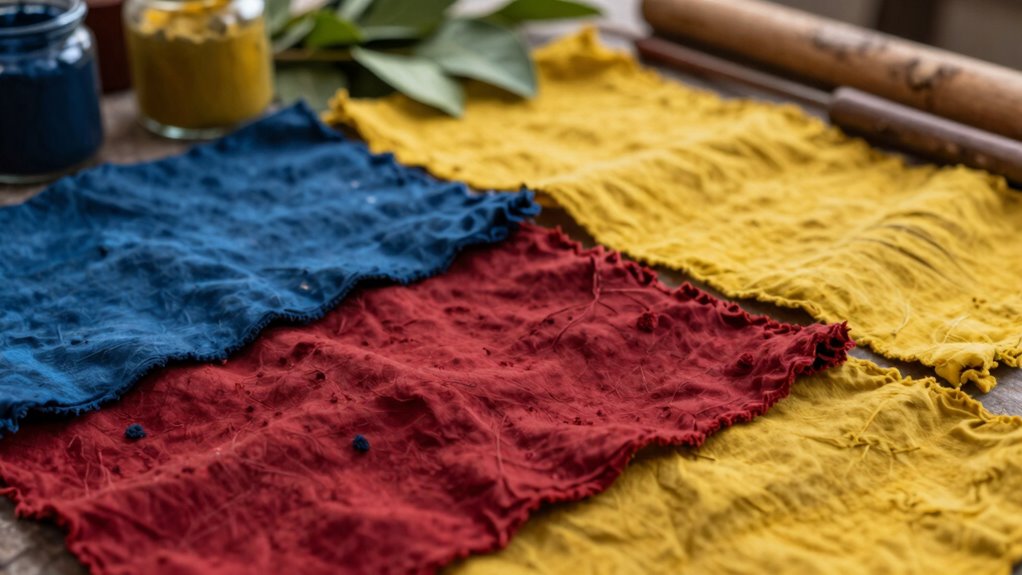
Synthetic dyes generally outperform natural dyes in durability, thanks to their chemical formulations designed for long-lasting color. They offer superior color retention and fade resistance, making them ideal for applications requiring prolonged exposure to light, washing, or wear. Natural dyes tend to fade more quickly over time, especially when exposed to sunlight or frequent washing, which can diminish their vibrancy. While some natural dyes can be mordanted or treated to improve their longevity, they rarely match the durability of synthetic options. If you prioritize color retention and fade resistance, synthetic dyes are generally more reliable. Additionally, the chemical stability of synthetic dyes contributes to their enhanced durability, ensuring colors remain vivid for extended periods. However, natural dyes often appeal for their eco-friendliness and unique hues, even if they require more careful handling to maintain their appearance over time.
How Can You Make Natural Dyes Last Longer?
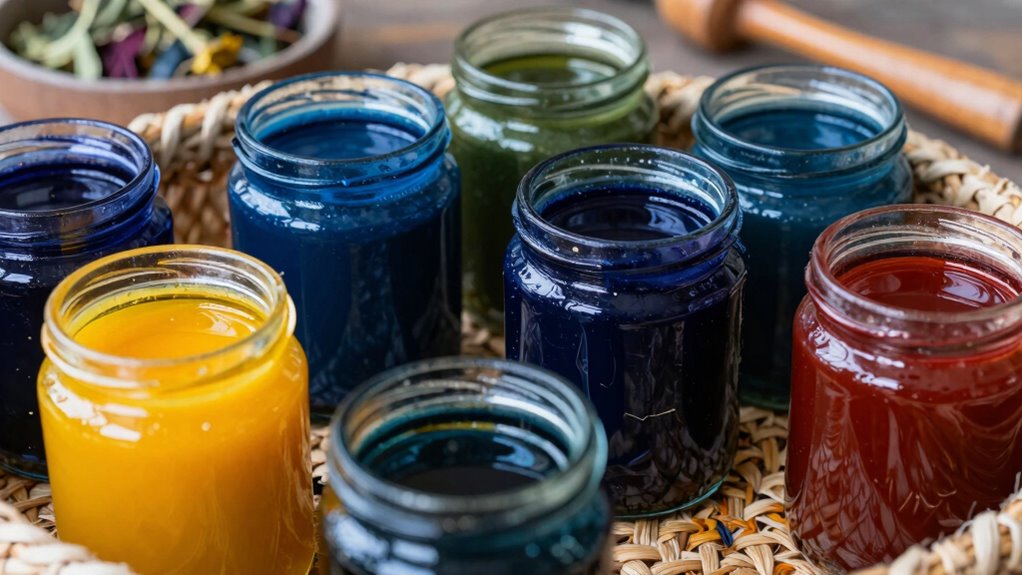
To make natural dyes last longer, you should start by preparing the fabric properly. Use a mordant like alum or iron to fix the dye, ensuring better color retention. Incorporate chemical additives carefully—small amounts can improve durability but avoid overuse. Proper storage conditions are also vital; keep dyed fabrics in a cool, dark, and dry place to prevent fading. Avoid exposure to direct sunlight and moisture, which can weaken the dye’s bond over time. Additionally, choosing appropriate body jewelry materials can help prevent damage or fading of the dye when wearing dyed fabrics.
Common Mistakes That Reduce Natural Dye Longevity
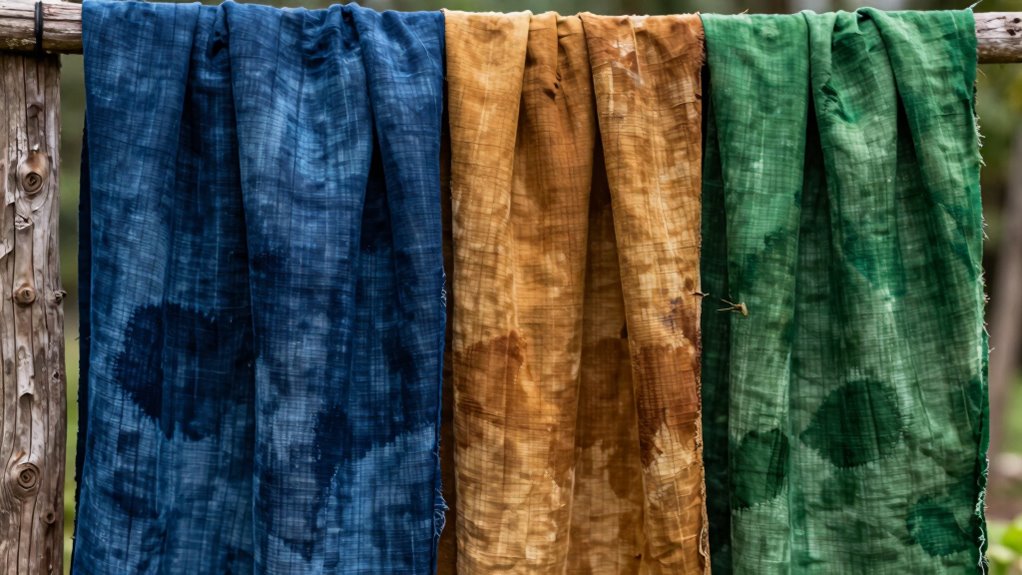
Using the wrong fixatives or skipping them can cause your dye to fade faster over time. Washing your dyed items too aggressively or too often will also wear down the color prematurely. Paying attention to proper techniques can help your natural dyes stay vibrant longer. Additionally, exposure to indoor air pollutants, such as dust and microplastics, may contribute to the deterioration of natural dyes over time.
Improper Fixatives Use
One of the most common mistakes in natural dyeing is choosing the wrong fixative or applying it improperly, which can cause your colors to fade quickly. Many believe fixative myths that certain substances guarantee dye preservation, but these aren’t always effective. Using the wrong fixative or neglecting proper application can break the dye’s bond with the fiber, leading to fast fading or uneven color. It’s essential to understand that fixatives are tools to enhance longevity, not magic solutions. Testing different options and following proper procedures improves results. Relying on misconceptions about fixative myths can undermine your efforts and reduce dye fastness. Proper application techniques are crucial for achieving vibrant, long-lasting colors.
Excessive Washing Techniques
Many natural dye projects suffer when fibers are washed too often or too aggressively, causing colors to fade quickly. Excessive washing strips dye molecules, diminishing vibrancy over time. Using harsh detergents accelerates this process, breaking down natural pigments faster. To prevent this, limit washing frequency and choose gentle, pH-neutral detergents. Additionally, understanding ethical considerations surrounding natural dyes can help consumers make more sustainable choices.
Should You Use Natural Dyes Despite Their Limitations?
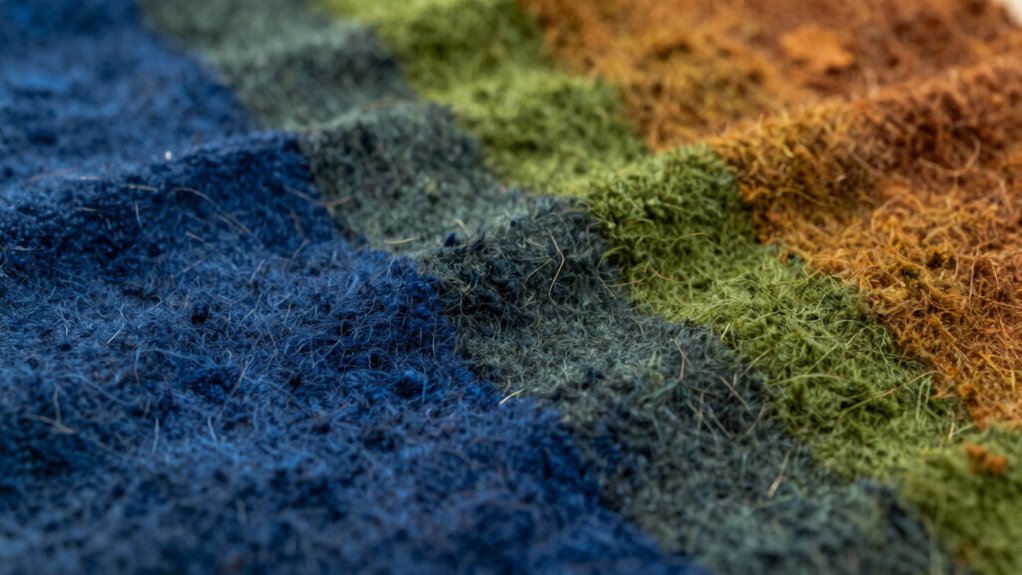
While natural dyes have their limitations, they remain an appealing choice for eco-conscious crafters and artists. Their environmental impact is particularly lower than synthetic dyes, reducing chemical waste and pollution. If you value cultural authenticity, natural dyes connect your work to centuries-old traditions and indigenous practices, enriching your craft with meaningful history. Although they may fade faster and require careful handling, many believe the benefits outweigh these challenges. Using natural dyes supports sustainability and preserves cultural heritage, making your projects more than just visually appealing—they become a statement of respect for the environment and cultural diversity. Additionally, natural dye extraction methods often utilize locally available plant materials, making them a sustainable option for small-scale artisans. So, even with their limitations, choosing natural dyes can align with your ethical values and passion for authentic, eco-friendly art.
Frequently Asked Questions
Are There Natural Dyes Suitable for All Fabric Types?
Not all natural dyes suit every fabric type, as fiber compatibility varies. You need to choose dyes that work well with specific fibers like cotton, wool, or silk. Using the right dye mordants is vital—they help fix the dye to the fabric and improve color fastness. Experimenting with different mordants and understanding fiber compatibility ensures vibrant, lasting results on your chosen textiles.
How Do Environmental Conditions Impact Natural Dye Longevity?
Environmental conditions considerably impact natural dye longevity. You’ll notice UV fading when fabrics are exposed to sunlight for extended periods, causing colors to fade faster. Moisture effects, like humidity or frequent washing, can also weaken dye bonds, leading to quicker fading. To extend your natural dyes’ vibrancy, keep your textiles away from direct sunlight, store them properly, and wash gently with mild detergents.
Can Natural Dyes Be Heat or Chemical Resistant?
Natural dyes generally lack strong heat and chemical resistance compared to synthetic dyes. You might find that exposure to high heat or harsh chemicals can cause fading or damage to natural-colored fabrics. To improve heat resistance, you can pre-treat your textiles with mordants, but chemical resistance remains limited. For long-lasting results, it’s best to avoid prolonged exposure to heat and chemicals, or consider blending natural dyes with synthetic options for added durability.
Are Natural Dyes Safe for Sensitive or Allergy-Prone Skin?
If you have sensitive or allergy-prone skin, natural dyes can be a safer option, but caution is key. Some natural dye ingredients may trigger skin sensitivity or allergy concerns, especially if you have known allergies to certain plants or substances. To stay safe, do a patch test before full use, choose dyes with minimal additives, and consult with a dermatologist if you’re unsure. This proactive approach helps protect your skin.
What Are the Best Practices for Natural Dye Preservation Over Time?
You’re risking your dye’s future if you ignore preservation! Keep your natural dyes vibrant by maintaining proper pH balance—acidic or alkaline solutions can make or break the color. Use mordants carefully, as their effects linger, locking in shades or causing fading. Store your dyed textiles away from sunlight and moisture, and avoid harsh detergents. Follow these tips, and your beautiful hues will stay stunning for years—without a magic spell.
Conclusion
While natural dyes may seem like delicate whispers of color, with proper care, they can stand the test of time like a steadfast friend. Understanding their limitations and treating them with gentle patience allows your fabrics to retain their vibrant hues. Think of natural dyes as a garden in full bloom—nurture them carefully, and their beauty will flourish, reminding you that true color’s worth often grows through mindful tending.
Fall Picks
fall essentials
As an affiliate, we earn on qualifying purchases.