You can creatively repurpose old rugs by cutting them into smaller sections to make new items like cushion covers, placemats, or wall hangings. Patchwork and quilting with worn areas turn them into stylish decorative pieces. Unravel fibers for braided rugs or use remnants as padding or pet beds. These upcycling ideas help reduce waste and support eco-friendly practices. Keep exploring different techniques, and you’ll discover even more innovative ways to give your old rugs a new life.

Get cleaning gear delivered free with Prime
- Fast, free delivery on millions of items
- Prime Video, Amazon Music and more included
- Member-only deals all year
Key Takeaways
- Upcycle old rugs by cutting into smaller pieces for use as placemats, coasters, or wall hangings.
- Create patchwork or braided rugs from worn sections to craft new decorative floor coverings.
- Transform remnants into DIY home decor items like cushion covers, table runners, or storage baskets.
- Use rug fibers to make eco-friendly crafts such as wall art, fabric coasters, or braided mats.
- Donate usable rugs for textile recycling programs or repurpose them into insulation and industrial materials.

Recycling old rugs is a practical way to reduce waste and give new life to worn-out textiles. Instead of tossing them into the trash, you can explore creative upcycling techniques that transform these bulky items into something useful and attractive. Upcycling allows you to repurpose your old rugs into home decor, functional items, or even art, giving them a second chance while minimizing environmental impact. When considering eco-friendly disposal options, it’s important to evaluate whether your rug can be upcycled or if it’s better suited for donation or specialized recycling programs. This approach guarantees you’re making environmentally conscious choices rather than contributing to landfill overflow.
One of the simplest upcycling techniques involves cutting and sewing sections of the rug to create unique rugs, table runners, or cushion covers. If you’re handy with a sewing machine, you can turn worn-out or stained areas into patchwork pieces that add character to your living space. You can also unravel some rugs to repurpose the fibers into new projects, such as braided rugs or decorative wall hangings. This method not only preserves the material but also keeps it out of the waste stream, supporting eco-friendly disposal practices. For those who enjoy DIY crafts, rug remnants can be used to make placemats, coasters, or even small storage baskets, further extending the life of the textiles.
Another effective approach is repurposing old rugs as protective mats or insulation around your home. For example, you might cut sections to line pet beds or create padding for furniture or delicate items. This use not only prevents waste but also adds a layer of functionality to your space. If the rug is too worn for these purposes, consider donating it to organizations that accept textile recycling or upcycling projects. Many communities have programs that transform old textiles into insulation, upholstery stuffing, or industrial materials. This eco-friendly disposal method assures the fibers are recycled efficiently, reducing environmental harm and supporting sustainable practices.
Additionally, understanding that construction materials can often be reclaimed from textiles encourages creative reuse, further reducing environmental impact. Ultimately, the key is to think creatively about how you can give your old rugs a new purpose, whether through upcycling techniques or proper recycling channels. Avoid simply throwing them away, as this contributes to landfill buildup and wastes valuable materials. Instead, explore ways to breathe new life into your worn-out rugs or find responsible disposal options that support environmental health. By doing so, you not only reduce waste but also participate in a more sustainable lifestyle that benefits both your home and the planet.
As an affiliate, we earn on qualifying purchases.
Frequently Asked Questions
How Do I Clean Old Rugs Before Repurposing Them?
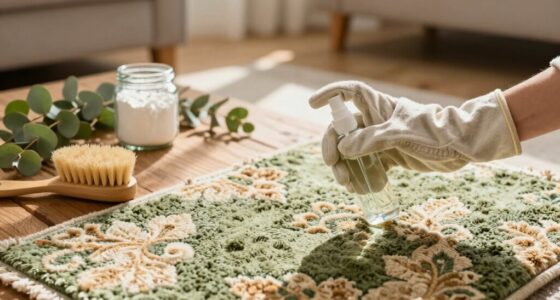
To clean your old rug before repurposing, start with vacuuming to remove loose dirt. Use effective rug cleaning techniques like gentle spot cleaning with a mix of mild detergent and water for stain removal methods. For tougher stains, apply a specialized stain remover and blot gently. Avoid soaking the rug completely, and let it dry thoroughly. This guarantees your rug is clean, fresh, and ready for creative reuse.
What Tools Are Needed to Cut and Reshape Rugs Safely?
To cut and reshape rugs safely, you need safety gloves to protect your hands and sharp scissors for precise cuts. You’ll also want a straight edge or ruler to guide your cuts and a marker to mark your measurements. Wearing safety gloves, wielding sharp scissors, aligning your ruler, and marking your design make certain your project stays safe and accurate. These tools keep your work efficient and injury-free.
Can Old Rugs Be Recycled Through Local Waste Management?
You can check if your local waste collection offers rug recycling programs, as many communities now accept old rugs for eco-friendly disposal. Contact your local waste management facility to see if they accept rugs or if there’s a designated collection day. If rug recycling isn’t available, explore other options like donation centers or specialized recycling facilities. Participating in local waste collection programs helps reduce landfill waste and promotes sustainability.
Are There Eco-Friendly Dyes for Re-Dyeing Rugs?
Yes, you can find eco-friendly dyes for re-dyeing rugs. Look for natural rug coloring options made from plant-based or mineral ingredients, which are safer for the environment. These eco-friendly dyes reduce chemical runoff and indoor air pollution while offering vibrant, lasting colors. By choosing natural rug coloring, you not only refresh your old rug but also contribute to a healthier planet, making your project both beautiful and sustainable.
How Can I Prevent Mold and Pests in Repurposed Rugs?
Did you know that pests and mold cause over $1 billion in damages annually? To prevent mold and pests in your repurposed rugs, you should regularly clean and vacuum them thoroughly. Use mold prevention techniques like reducing moisture and ensuring proper ventilation. For pest control, consider natural repellents like cedar or lavender. Keep rugs dry and inspect them frequently to catch issues early, ensuring your repurposed rugs stay fresh and pest-free.
Conclusion
So, seize the scene, and transform tired textiles into treasures. With a little creativity, you can craft colorful cushions, charming compost covers, or cozy pet pads. Recycling rugs not only reduces waste but also revives your space with unique, upcycled wonders. Embrace this eco-friendly effort, and let your imagination mold memories from your old rugs. Remember, recycling isn’t just responsible—it’s rewarding, resourceful, and remarkably invigorating for your home and the planet.
Halloween Picks
halloween
As an affiliate, we earn on qualifying purchases.