
Choosing vintage rugs gives you an eco-friendly home upgrade by reusing natural, handcrafted pieces made with traditional methods and dyes, which reduces waste and energy use. These rugs are durable, often lasting decades, and support artisan communities, promoting ethical practices. Their timeless appeal adds character while decreasing demand for new, resource-intensive production. If you want to learn how vintage rugs genuinely benefit the planet and your space, discover more about their unique qualities and cultural significance.

Get cleaning gear delivered free — and shop member deals
- Fast, free delivery on millions of items
- Access to Prime Big Deal Days deals on October 6–7
- Prime Video, Amazon Music and more included
Key Takeaways
- Vintage rugs are handcrafted using natural dyes and fibers, making them eco-friendly and biodegradable.
- Their durability extends lifespan, reducing waste and the need for frequent replacements.
- Reusing vintage rugs supports circular fashion by repurposing existing textiles and minimizing resource consumption.
- Supporting artisanal craftsmanship preserves cultural heritage and promotes ethical practices with fair wages.
- Vintage rugs add timeless aesthetic value while minimizing environmental impact compared to new, synthetic carpets.
As an affiliate, we earn on qualifying purchases.
Why Are Vintage Rugs the Eco-Friendly Choice for Your Home?

Vintage rugs are considered an eco-friendly choice because they often require less energy and fewer resources than producing new ones. By choosing vintage, you’re supporting sustainable sourcing, which reduces the demand for new materials and minimizes environmental impact. Many vintage rugs are made using traditional techniques that rely on natural, eco-friendly dyes, avoiding synthetic chemicals common in modern manufacturing. These dyes are typically derived from plants, minerals, or insects, making them safer for the environment and your home. Restoring or repurposing vintage rugs extends their lifespan, preventing waste and reducing the need for new production. Additionally, the durability of vintage rugs means they can last for decades, decreasing the frequency of replacement and further conserving resources. Overall, opting for vintage rugs helps conserve resources, cut down on pollution, and promotes environmentally responsible decorating.
How Are Vintage Rugs Made Differently From Modern Carpets?
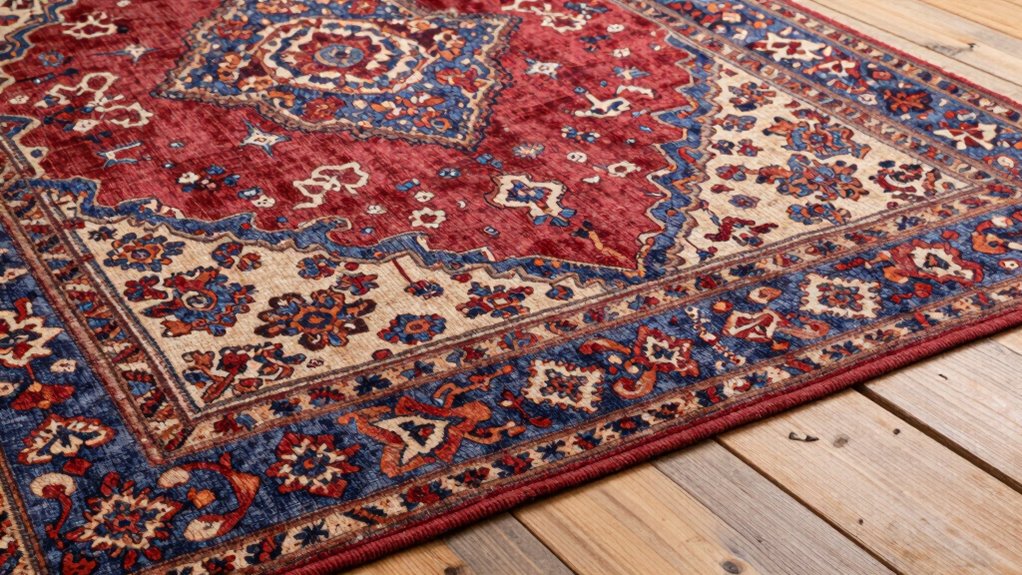
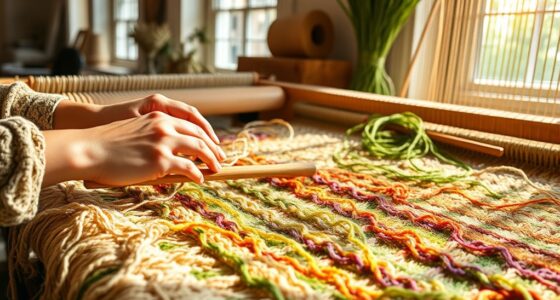
Unlike modern carpets, which are often mass-produced using synthetic fibers and machine-driven processes, vintage rugs are crafted by hand using traditional techniques passed down through generations. You’ll notice that artisans employ handmade techniques, ensuring each rug is unique and meticulously woven. They often use natural dyes derived from plants, minerals, and insects, which give vintage rugs their rich, lasting colors. These dyes are environmentally friendly and require less energy than synthetic alternatives. The hand-knotting process involves careful attention to detail, resulting in durable, high-quality rugs that can last for decades. This craftsmanship not only preserves cultural heritage but also minimizes environmental impact, setting vintage rugs apart from their modern, mass-produced counterparts. Vetted – Floating on Water
How Do Vintage Rugs Support Circular Fashion and Reduce Waste?
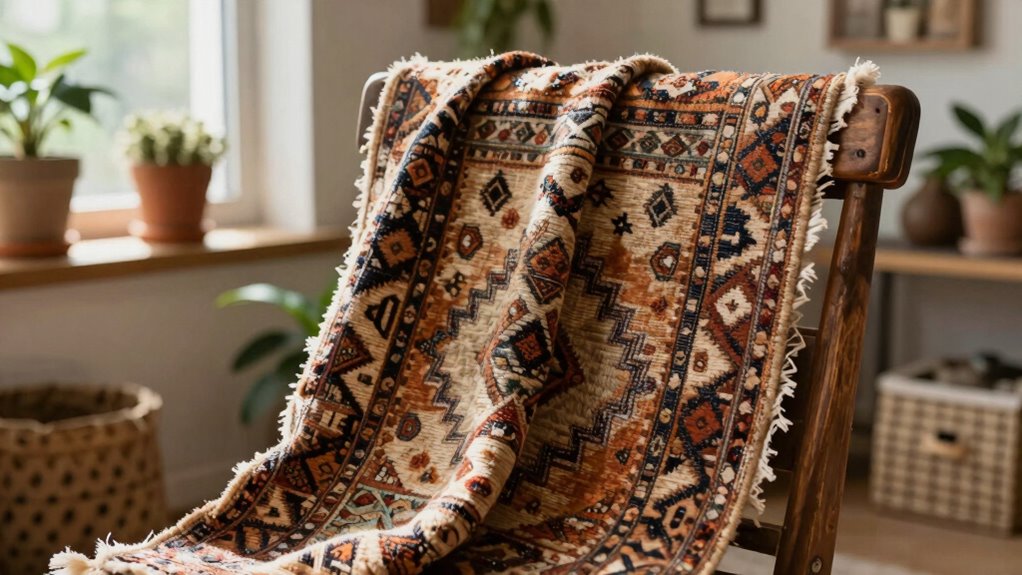
By choosing vintage rugs, you actively participate in supporting circular fashion, which emphasizes reuse and sustainability. Vintage rugs extend the life of textiles, reducing waste and lessening the demand for new fibers. This practice promotes textile recycling, keeping materials out of landfills and conserving resources. Traceability systems help ensure the authenticity and sustainability of vintage textiles, providing transparency for eco-conscious consumers. Here are three ways vintage rugs support this eco-friendly movement:
- Textile Recycling: Vintage rugs are repurposed textiles, giving old materials a new life instead of disposal.
- Fiber Sustainability: They often use natural fibers, which are biodegradable and less harmful to the environment.
- Waste Reduction: By choosing vintage, you help decrease the amount of waste generated by fast fashion and new manufacturing.
Supporting vintage rugs directly aligns with sustainable practices, reducing environmental impact and fostering a circular economy.
How to Identify Authentic Vintage Rugs and Check Their Eco Impact
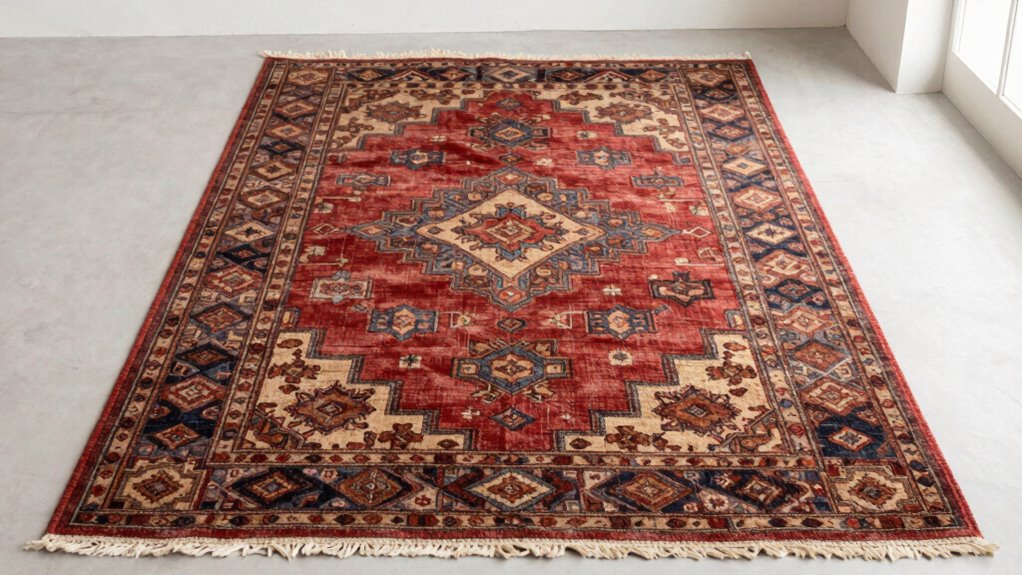
To guarantee you’re purchasing authentic vintage rugs with a genuine eco impact, start by examining their construction and materials. Look closely at the rug’s weave, noting traditional weaving techniques that indicate skilled craftsmanship, often done by hand. Authentic vintage rugs typically feature natural fibers like wool or silk, which come from eco-friendly sources. Pay attention to rug dyeing—if the colors are rich yet uneven or slightly faded, it’s likely created with natural dyes, not synthetic ones. Synthetic dyes are less eco-friendly and often used in modern reproductions. Authentic vintage rugs usually show signs of age, such as minor wear or patina, confirming their history and craftsmanship. Recognizing handmade techniques can further assure the rug’s authenticity and eco credentials. These indicators help guarantee you’re choosing a genuinely eco-conscious piece with a low environmental footprint.
What Are the Benefits of Choosing Vintage Rugs for Your Home?
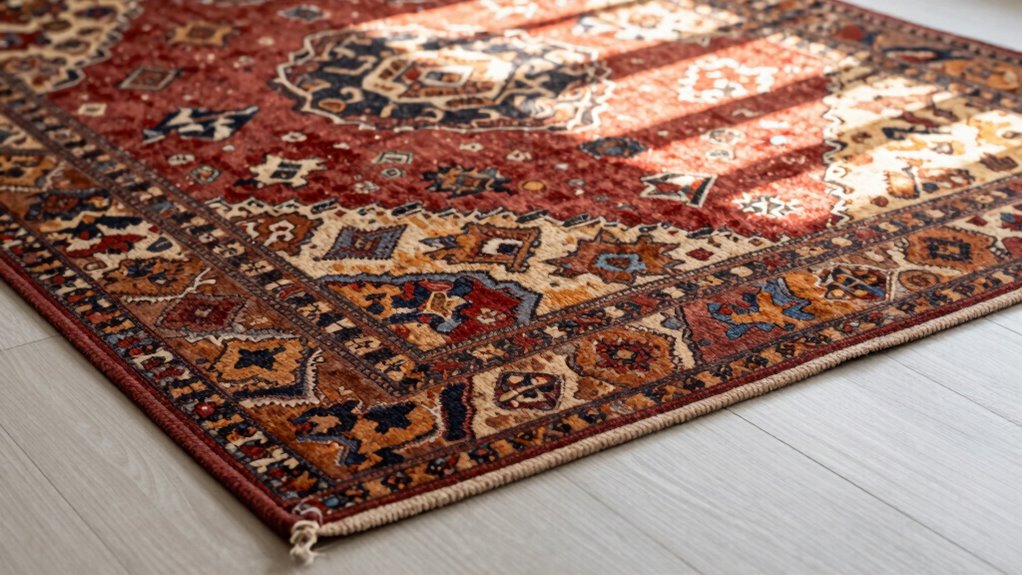
Choosing vintage rugs can considerably enhance your home’s aesthetic and sustainability. When you opt for vintage, you embrace sustainable sourcing by reusing existing materials, reducing waste, and lowering environmental impact. Plus, vintage appeal adds character and uniqueness that newer rugs often lack. Here are some key benefits:
- Eco-friendly choice – Vintage rugs are a form of recycling, minimizing the need for new production and decreasing your carbon footprint. Sustainable sourcing also supports the preservation of traditional craftsmanship and cultural heritage.
- Durability and quality – Many vintage rugs are handmade with high-quality materials, making them last longer and age beautifully.
- Timeless style – Their unique designs and rich history give your space a sense of authenticity and charm.
Choosing vintage isn’t just stylish; it’s a smart, eco-conscious decision for your home.
How Can You Style Vintage Rugs for a Timeless, Eco-Friendly Look?
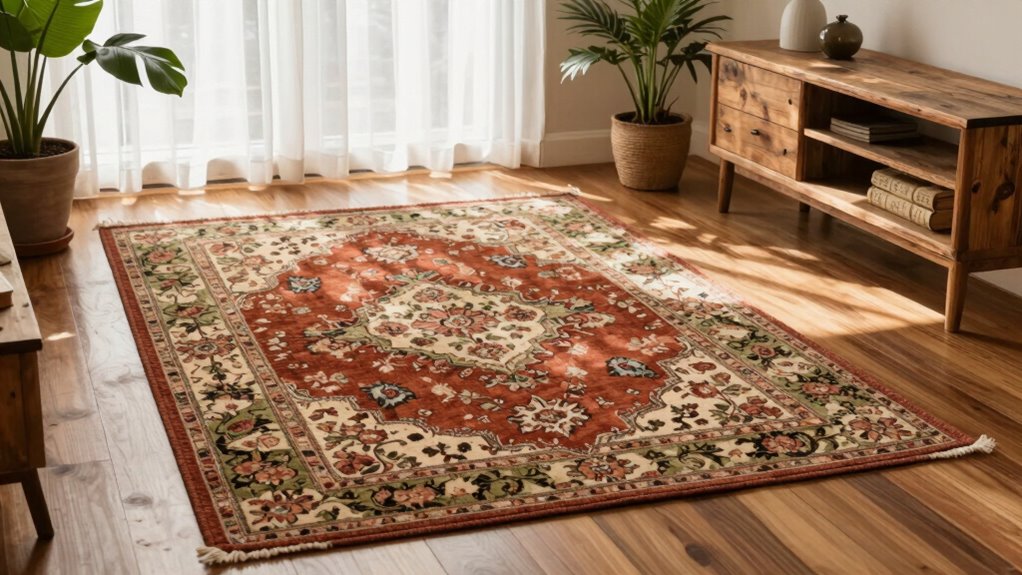
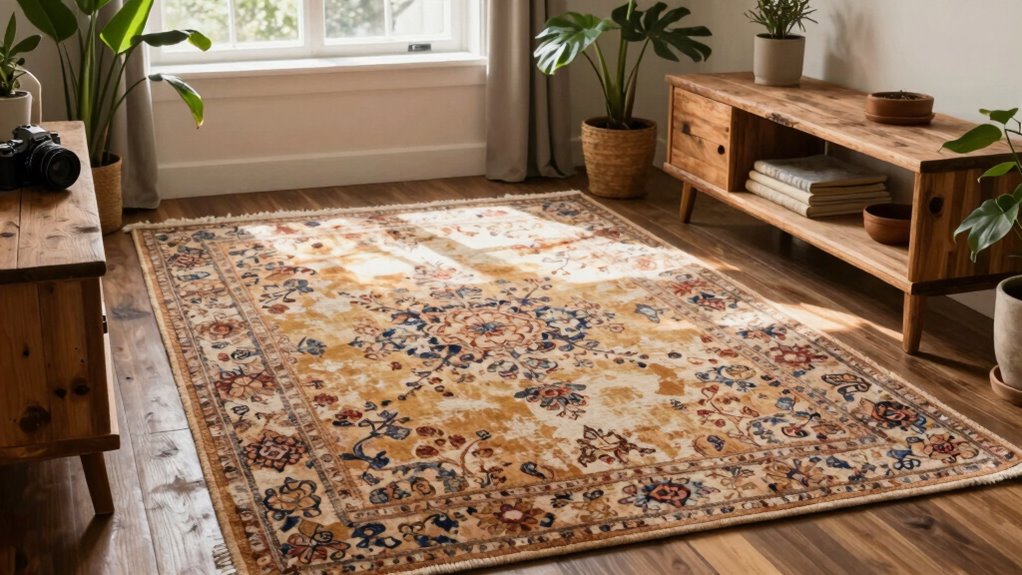
Vintage rugs bring a distinctive charm that can define a timeless, eco-friendly aesthetic in your home. To achieve this look, focus on color coordination by selecting furniture and decor that complement the rug’s hues. Neutral tones like beige, cream, or soft pastels work well and keep the space feeling fresh and harmonious. When pairing furniture, opt for natural materials such as wood, bamboo, or wicker, which enhance the eco-conscious vibe. Keep furniture simple and streamlined to let the rug be the focal point. Incorporate vintage or handcrafted pieces to add character and authenticity. By balancing colors and choosing sustainable furniture, you create a cohesive, stylish environment that celebrates eco-friendliness and timeless elegance. Additionally, considering eco-friendly materials can further enhance your space’s sustainability and style.
Are Vintage Rugs a Durable Investment That Lasts for Decades?
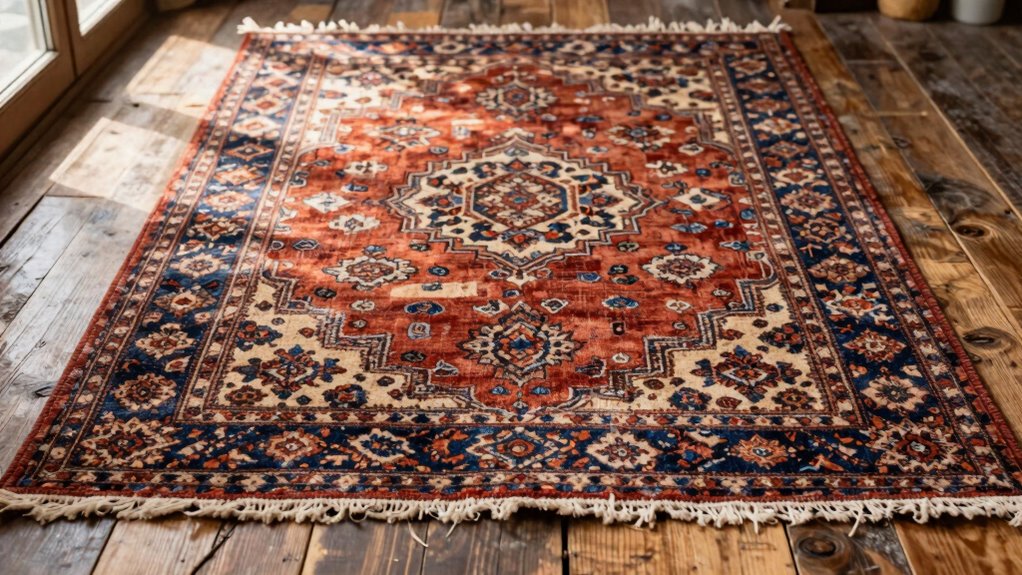
You might wonder if vintage rugs can truly withstand the test of time. Their durability often comes down to quality craftsmanship and the materials used, which were built to last. When you invest in a vintage rug, you’re choosing a piece designed to stay beautiful for decades. Safety considerations for vintage rugs ensure that their longevity is complemented by proper maintenance and care.
Timeless Durability Factors
Because of their high-quality craftsmanship and natural materials, vintage rugs often prove to be incredibly durable investments that can last for decades. Unlike modern manufacturing, which relies heavily on synthetic fibers that can degrade over time, vintage rugs are crafted from natural wool, silk, or cotton, ensuring longevity. Their intricate knotting and weaving techniques contribute to their resilience. Here are three factors that enhance their durability:
- Natural fibers – These fibers are more resistant to wear and tear compared to synthetic alternatives.
- Traditional craftsmanship – Hand-knotting and hand-weaving create tighter, stronger rugs.
- Aging grace – Over time, vintage rugs develop a patina that not only adds character but also indicates their enduring quality.
This combination makes vintage rugs a lasting, eco-friendly choice that can be enjoyed for generations.
Quality Craftsmanship and Materials
High-quality craftsmanship and natural materials make vintage rugs exceptional investments that can last for decades. Skilled artisans use intricate weaving techniques, ensuring each rug’s durability and unique character. These traditional methods create dense, tightly woven fibers that withstand daily wear. Additionally, the natural dyeing processes used in vintage rugs result in vibrant, enduring colors that age gracefully over time. Unlike modern synthetic dyes, these dyes penetrate deeply into the fibers, preventing fading and maintaining the rug’s beauty. When you choose a vintage piece, you’re investing in a product crafted with care and expertise, designed to stand the test of time. This combination of expert weaving and natural materials guarantees longevity, making vintage rugs not just stylish but a truly lasting, eco-friendly investment.
How Do Vintage Rugs Compare in Cost and Environmental Footprint?
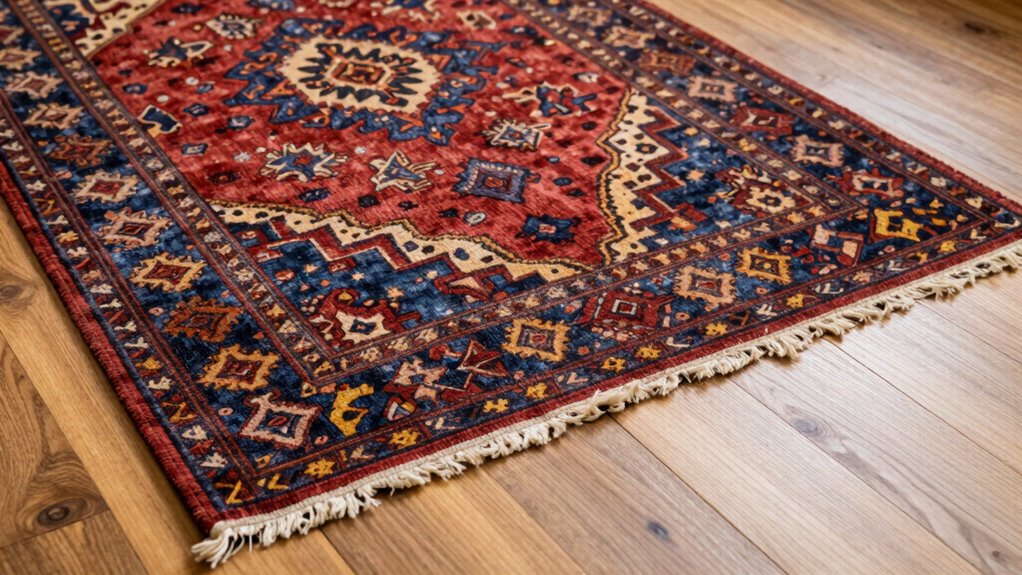
Vintage rugs often cost less than newly manufactured ones, primarily because they are pre-owned and already produced, making them a more budget-friendly option. They also have a lower environmental footprint since they avoid the resource-intensive processes of modern manufacturing and synthetic fibers. Here are three reasons why they’re eco-friendly and cost-effective:
- Reduced resource use: Vintage rugs are repurposed, so no new raw materials are needed.
- Less energy consumption: Their production didn’t rely on energy-intensive modern manufacturing processes.
- Longevity: Vintage rugs often last longer, reducing the need for replacements and waste.
- Unique craftsmanship: Many vintage rugs feature handmade techniques, which require less industrial energy and support traditional artisans.
Compared to synthetic fibers used in modern manufacturing, vintage rugs avoid the pollution associated with synthetic production, making them a smarter eco and financial choice.
Why Supporting Artisans With Vintage Rugs Promotes Ethical Craftsmanship
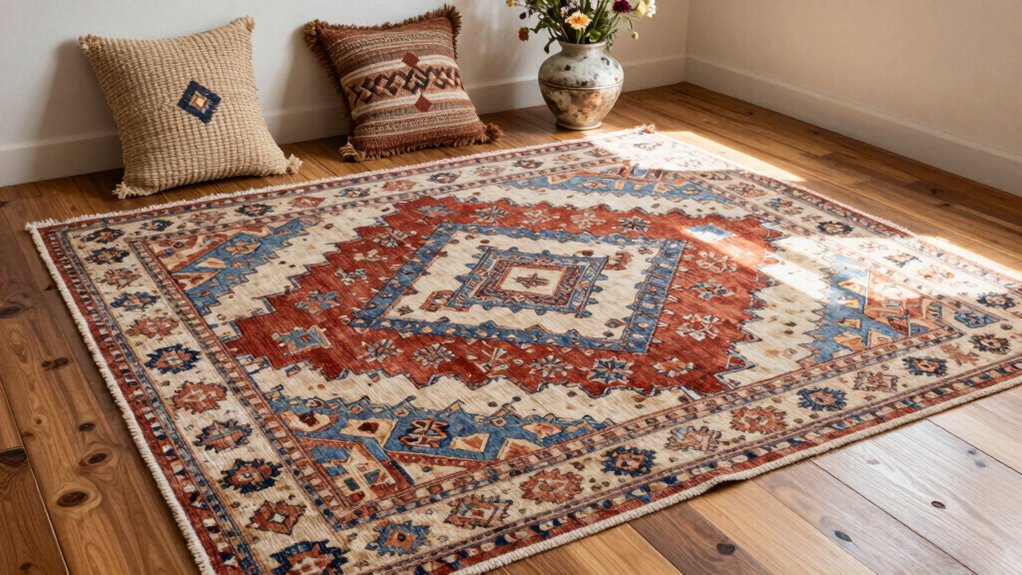
Supporting artisans through vintage rugs helps maintain traditional craftsmanship and guarantees their skills stay alive. When you choose vintage rugs, you support artisan stories that have been passed down through generations, preserving unique techniques and cultural heritage. These rugs embody cultural preservation, ensuring that age-old craft methods aren’t lost to modernization. By investing in vintage pieces, you promote ethical craftsmanship, encouraging fair wages and respectful working conditions for artisans. Your purchase directly sustains communities that rely on these skills for their livelihood. This conscious choice helps keep traditional art forms relevant and valued in today’s world. Additionally, understanding the plant properties involved in traditional rug-making techniques can further deepen appreciation for these artisanal crafts. Ultimately, supporting artisans with vintage rugs isn’t just about aesthetics; it’s about honoring cultural histories and fostering ethical practices that benefit both artisans and the environment.
Frequently Asked Questions
How Do Vintage Rugs Impact Local Economies and Artisan Communities?
You support local economies and artisan communities when you buy vintage rugs, as your purchase promotes artisan craftsmanship and sustains local employment. By choosing vintage, you help preserve traditional skills and keep artisans engaged in their craft. Your decision encourages economic growth within these communities, fostering cultural heritage and ensuring artisans can thrive. This eco-friendly choice makes a meaningful impact, empowering local creators and strengthening their livelihoods.
Are Vintage Rugs More Environmentally Friendly Than Synthetic Alternatives?
Think of vintage rugs as the original eco choice—more environmentally friendly than synthetic alternatives. They avoid harsh chemicals used in modern manufacturing processes, ensuring better chemical safety for your home. Plus, vintage rugs are a sustainable option since they’re repurposed, reducing waste and energy use. Unlike synthetics, which often shed microplastics, vintage rugs are natural, durable, and timeless, making them a smarter, greener choice for eco-conscious buyers.
What Are the Common Myths About Vintage Rugs’ Durability?
You might believe vintage rugs aren’t durable, but that’s a restoration myth. In reality, their rug longevity often surpasses modern carpets because quality antique rugs are crafted with durable materials and expert techniques. Proper care enhances their durability, proving they’re a long-lasting eco choice. Don’t let myths about fragility deter you—vintage rugs can be just as resilient, if not more so, than newer synthetic options.
How Can Vintage Rugs Be Sustainably Restored or Maintained?
You can sustainably restore or maintain vintage rugs by using eco-friendly dyes and opting for natural restoration techniques. Avoid harsh chemicals and instead choose organic treatments that preserve the rug’s fibers and colors. Regular gentle vacuuming and spot cleaning help maintain its beauty without damaging the material. By prioritizing eco-friendly dyes and natural restoration, you extend your rug’s life while minimizing environmental impact, making it a truly sustainable and stylish choice.
Do Vintage Rugs Contain Any Harmful Chemicals or Dyes?
Think of vintage rugs like time-traveled treasures, holding stories in every fiber. They typically don’t contain harmful chemicals, as many were made before synthetic dyes emerged. You can trust their dye authenticity, ensuring chemical safety for your home. Since eco-conscious choices matter, vintage rugs offer peace of mind—no toxic surprises—making them a safe, sustainable, and authentic addition to your space.
Conclusion
So, next time you’re tempted by cheap, mass-produced carpets, remember you’re not just choosing a rug—you’re opting for a piece of history, a splash of sustainability, and a subtle act of rebellion against fast fashion. Vintage rugs quietly whisper, “I’ve got longevity,” while your eco-conscious choice boldly says, “I care.” Who knew that saving the planet could look so stylish and sophisticated? Now, go ahead—be the eco-chic rebel your home’s been waiting for.
Fall Picks
fall essentials
As an affiliate, we earn on qualifying purchases.